- by Daily Talkin Staff
- July 8, 2026
-

-
-
Loading
Loading
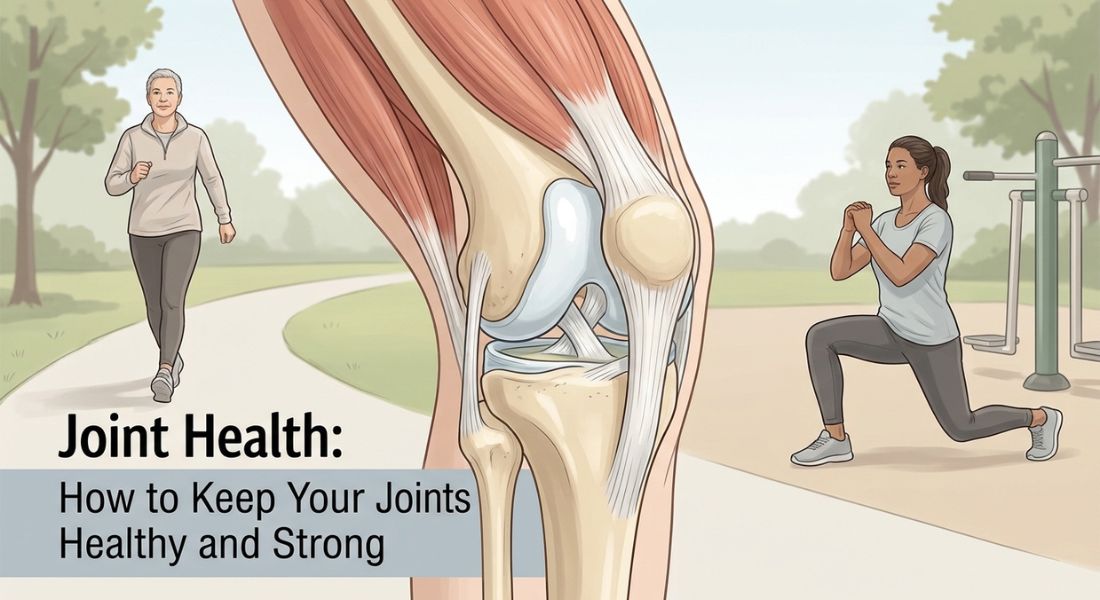
Joint health means maintaining the normal movement, stability, structure and function of your joints. Healthy joints rely on cartilage, synovial fluid, bones, ligaments, tendons and supporting muscles working together.
Regular movement, strength, mobility, nutrition, healthy weight management and injury prevention can all support joint function. Joint health does not mean being completely free from pain or disease because symptoms can have many causes.
Persistent pain, swelling, warmth, restricted movement or difficulty bearing weight may require assessment by a healthcare professional. Editorial trust note: This article provides general health information and is not a diagnosis or substitute for personalised medical advice.
Joint health involves mobility, stability, structure and normal joint function.
Cartilage, synovial fluid, ligaments, tendons, bones and muscles work together to support movement.
Regular physical activity and strengthening can support mobility and physical function.
Healthy weight management can be particularly relevant to weight bearing joints.
Persistent, worsening or concerning joint symptoms should be assessed rather than self-diagnosed.
Joint-supportive habits complement medical treatment; they do not replace it.

Joint health describes how well a joint maintains its normal structure, movement, stability and ability to bear everyday loads.
It is broader than simply asking whether a joint hurts a joint can have symptoms without a single obvious diagnosis while healthy function involves coordinated movement between several tissues.
Healthy joint function depends on mobility and stability, supported by cartilage, synovial fluid, bones, ligaments, tendons and surrounding muscles.
Joint health is therefore different from joint pain which is a symptom, and from a diagnosed condition such as osteoarthritis or rheumatoid arthritis.
Healthy joints need appropriate range of motion, smooth joint surfaces and enough stability to control movement. Cartilage covers the ends of bones in many movable joints and helps reduce friction while synovial fluid lubricates the joint.
The joint capsule, ligaments, tendons and surrounding muscles also contribute to controlled movement. NIAMS explains that movable joints contain several tissues working together, including bones, ligaments, tendons, cartilage, bursae and the synovial membrane.
Healthy joints help you walk, climb stairs, lift objects, exercise, work and perform everyday tasks. Good joint function also contributes to independence and the ability to remain physically active.
Maintaining mobility and supporting the muscles around joints can help preserve physical function. However healthy habits cannot prevent every joint condition, and symptoms that persist or worsen should be assessed.
Joint health is the normal structure, movement, stability and function of joints and the tissues that support them.
A joint is a place where bones meet with different types of joints allowing different amounts and directions of movement. Movable synovial joints use several structures together to balance movement, stability and load.
Cartilage covers joint surfaces while the synovial membrane lines the joint and produces synovial fluid. Ligaments connect bones, tendons attach muscles to bones, and muscles generate and control movement. This coordinated system allows joints to move without relying on one structure alone.
Cartilage provides a smooth surface where bones meet and helps reduce friction during movement. It also contributes to distributing loads across the joint.
Because cartilage is part of a larger joint system, protecting joint function involves more than focusing on cartilage alone. Movement, muscle strength, injury prevention and management of relevant conditions all matter.
The synovial membrane lines the joint and produces synovial fluid. This fluid helps lubricate synovial joints, supporting smoother movement and reducing friction between joint surfaces.
Claims that particular foods or supplements can simply “flush” a joint or dramatically increase synovial fluid should be treated cautiously. Joint lubrication is a normal physiological function, not a detox process.
Cartilage: Cartilage is connective tissue covering joint surfaces that helps create smooth movement and reduces friction.
Synovial fluid: Synovial fluid is produced by the synovial membrane and lubricates synovial joints to support smooth movement.
Ligaments connect bone to bone and contribute to joint stability. Tendons connect muscle to bone and transfer muscular force to help produce and control movement. Both are important, but they perform different roles.
Improving joint health generally involves regular physical activity, appropriate strengthening, maintaining mobility, managing body weight where relevant, eating a balanced diet and allowing adequate recovery. The right approach depends on age, activity level, existing conditions and symptoms.
The dedicated cluster covers actionable routines, exercise choices, nutrition strategies and habit building in greater detail. For a complete breakdown of how to improve joint health see our full guide on How to Improve Joint Health →
Regular movement, muscle strengthening activity, mobility work, balanced nutrition, healthy weight management and sensible injury prevention can all support joint function. No single food, exercise or supplement provides a complete approach.
The appropriate choices can vary with an individual's mobility, medical conditions and activity level. For a complete breakdown of what is good for joint health see our full guide on What Is Good for Joint Health →
Healthy joints generally provide sufficient mobility and stability for normal activities without persistent pain, significant swelling or major restriction. Their function depends on cartilage, bones, ligaments, tendons, synovial fluid and supporting muscles.
The absence of pain alone does not prove that a joint is healthy. For a complete breakdown of healthy joints see our full guide on Healthy Joints →
Long term joint health focuses on preserving useful movement, strength, stability and function over time. Sustainable habits are more useful than short term claims about “repairing” joints.
Regular activity, appropriate strength work, mobility, injury risk management and general health support all matter. Persistent symptoms should be assessed rather than automatically attributed to ageing. For a complete breakdown of long term joint health see our full guide on Long Term Joint Health →
Exercise can support mobility, muscle strength, physical function and overall fitness. Depending on individual needs, options may include walking, cycling, swimming, range of motion work, resistance training and balance exercises.
Exercise does not automatically need to be high impact. For a complete breakdown of joint health exercises see our full guide on Joint Health Exercises →
People asking what they can take for joint health may be considering supplements, medicines or specific nutrients. These are not interchangeable, and their evidence, safety, interactions and appropriate uses can differ.
Glucosamine, chondroitin, omega 3 products and vitamins should not be presented as guaranteed ways to protect or repair joints. For a complete breakdown of what you can take for joint health see our full guide on What Can I Take for Joint Health →
Joint health matters because joints enable movement, everyday activity and physical independence. Their function depends on coordinated work between bones, cartilage, ligaments, tendons and muscles.
The concept is broader than avoiding pain because movement quality and stability also matter. For a complete breakdown of the importance of joint health see our full guide on Importance of Joint Health →
Ligaments connect bones and help stabilise joints. Their health therefore forms part of overall joint function alongside cartilage, muscles, tendons and other structures.
Injury, repetitive loading and some medical conditions can affect ligament function. For a complete breakdown of joint and ligament health see our full guide on Joint and Ligament Health →
Muscles surrounding a joint help generate movement, control loads and contribute to stability. Reduced strength can make certain movements more difficult or less controlled.
Joints and muscles are connected but are not the same structure. For a complete breakdown of joint and muscle health see our full guide on Joint and Muscle Health →
Joint conditioning broadly refers to movement and training practices that support strength, mobility, control and tolerance for physical activity. It can include mobility, resistance, balance and progressive loading.
Conditioning should match current ability and progress gradually. For a complete breakdown of joint conditioning see our full guide on Joint Conditioning →
Strength training can support joint function by strengthening muscles that help control and support movement. Joint friendly training focuses on suitable resistance, technique, range of motion, progression and recovery.
Resistance bands, weights and bodyweight exercises may all have a place depending on ability. For a complete breakdown of joint friendly strength training see our full guide on Joint Friendly Strength Training →
Nutrition supports joint health as part of overall physical health rather than through one guaranteed “joint health food”. A balanced eating pattern can provide protein, vitamins, minerals, fibre and other nutrients.
Omega 3 fatty acids, calcium and vitamin D may be relevant depending on dietary needs. For a complete breakdown of joint health nutrition see our full guide on Joint Health Nutrition →
Men's joint health follows the same fundamental principles of mobility, strength, appropriate activity, nutrition and injury prevention. Individual needs can differ according to age, occupational demands, sports participation, previous injuries and medical conditions.
A useful men's joint health resource should focus on genuine considerations rather than presenting ordinary joint advice as uniquely male. For a complete breakdown of men's joint health see our full guide on Men's Joint Health →

Joint health is influenced by a combination of movement, muscle strength, body weight, previous injury, repetitive loading, age, genetics, general health and existing conditions. These factors can interact rather than acting independently.
A risk factor does not mean that someone will inevitably develop joint disease. CDC identifies factors including ageing, excess weight, previous joint injury and repetitive work related movements among factors associated with arthritis risk.
Movement helps maintain physical function while prolonged inactivity can contribute to loss of strength and conditioning. Strength training can support muscles around joints, while mobility work helps maintain useful range of motion.
For adults with arthritis, the CDC recommends a combination of aerobic and muscle strengthening activity with older adults also incorporating balance activities.
Body weight is particularly relevant to weight bearing joints such as the knees and hips. Greater body weight can increase mechanical stress while weight management may reduce joint stress and improve mobility for people with relevant conditions.
Weight should be treated as one health factor not a cure for every joint problem. NIAMS notes that weight loss can reduce stress and pain and improve mobility in people with osteoarthritis who have overweight or obesity.
Previous joint injuries can affect future joint health, while repeated bending, squatting or other demanding movements may increase risk in some circumstances. Sports and occupational demands therefore need to be balanced with technique, recovery and appropriate progression.
CDC identifies previous joint injury and repetitive work related movements among arthritis risk factors.
Joint pain or stiffness is a symptom, not a single diagnosis. Possible causes include osteoarthritis, rheumatoid arthritis, gout, bursitis, tendinitis, injuries and other conditions affecting joints or surrounding tissues.
This pillar is not intended to diagnose symptoms. Its purpose is to help readers recognise common problems and understand when symptoms move beyond ordinary self care.
Pay attention to persistent or worsening pain, stiffness, swelling, warmth, redness, reduced range of motion or instability. Difficulty using a joint normally or bearing weight also deserves attention.
Symptoms should be considered alongside their duration, severity, cause and effect on everyday function rather than judged from one symptom alone.
Osteoarthritis involves changes affecting joint tissues and commonly causes pain, stiffness and reduced movement. Rheumatoid arthritis is an autoimmune condition, while gout can cause sudden joint pain and swelling.
Bursitis affects fluid filled bursae, tendinitis involves tendons, and joint injuries can affect structures such as ligaments. These conditions require different approaches, so diagnosis matters.
Seek professional assessment for persistent or worsening symptoms, significant swelling, a hot or red joint, fever with joint symptoms, sudden injury or deformity, inability to bear weight, major loss of movement or unexplained systemic symptoms.
A healthcare professional may use your history, physical examination and, when appropriate, imaging or laboratory tests to determine the cause.
A practical long term approach combines regular movement, supporting muscle strength, mobility, appropriate weight management, balanced nutrition, injury prevention and adequate recovery.
The goal is useful function rather than trying to eliminate every normal sensation from movement. Prevention and treatment are different. Healthy habits can support joint function and reduce some risks but they cannot prevent every condition or replace appropriate medical treatment.
Walking, changing positions regularly and finding opportunities for everyday activity can reduce prolonged inactivity. Physical activity can be divided into shorter sessions when needed.
The CDC notes that even short periods of activity contribute towards weekly activity goals while regular physical activity can help people with arthritis reduce pain and improve function.
Mobility, strength and balance serve different purposes. Mobility supports useful movement, strength helps muscles control loads, and balance helps coordinate movement and stability.
A well rounded routine can therefore be more useful than relying exclusively on stretching, cardio or resistance training.
Joint protection does not mean avoiding activity. Appropriate footwear or protective equipment, gradual progression, sound technique and recovery can help manage physical demands.
If an activity consistently causes significant or worsening symptoms modify it and seek professional guidance when appropriate. NIAMS recommends starting exercise programmes slowly and adapting activities to individual needs.

Nutrition, sleep, healthy weight management and regular physical activity all contribute to broader health which can influence how well someone maintains physical function.
The aim is a sustainable routine rather than a collection of isolated “joint hacks”. CDC guidance supports combining aerobic activity, muscle strengthening and where appropriate balance activities.
Joint health is the combined result of healthy joint structures, useful mobility, stability and the ability to manage everyday loads. Cartilage, synovial fluid, ligaments, tendons, bones and muscles all contribute to normal joint function.
Regular movement, strength training, mobility work, balanced nutrition, appropriate weight management and injury prevention can support long term function.
Persistent pain, swelling, restricted movement or other concerning symptoms should not simply be dismissed; professional assessment can help identify the underlying problem.
Yes Regular movement, strength, mobility and healthy habits can support joint function at any age.
No Walking, swimming, cycling, strength and mobility exercises can support joints in different ways.
A balanced diet with adequate protein, vitamins, minerals, fibre and healthy fats supports overall health and joint function.
Yes Maintaining a healthy weight can reduce stress on weight bearing joints such as the knees and hips.
Synovial fluid lubricates joints and helps reduce friction between their surfaces.
No Injuries, inflammatory conditions, repetitive loading, genetics and other factors can also affect joints.
Yes Seek prompt medical attention for a hot or red joint with fever, severe injury, deformity or inability to bear weight.


Reader Discussion
Leave a Reply