- by Daily Talkin Staff
- July 8, 2026
-

-
-
Loading
Loading
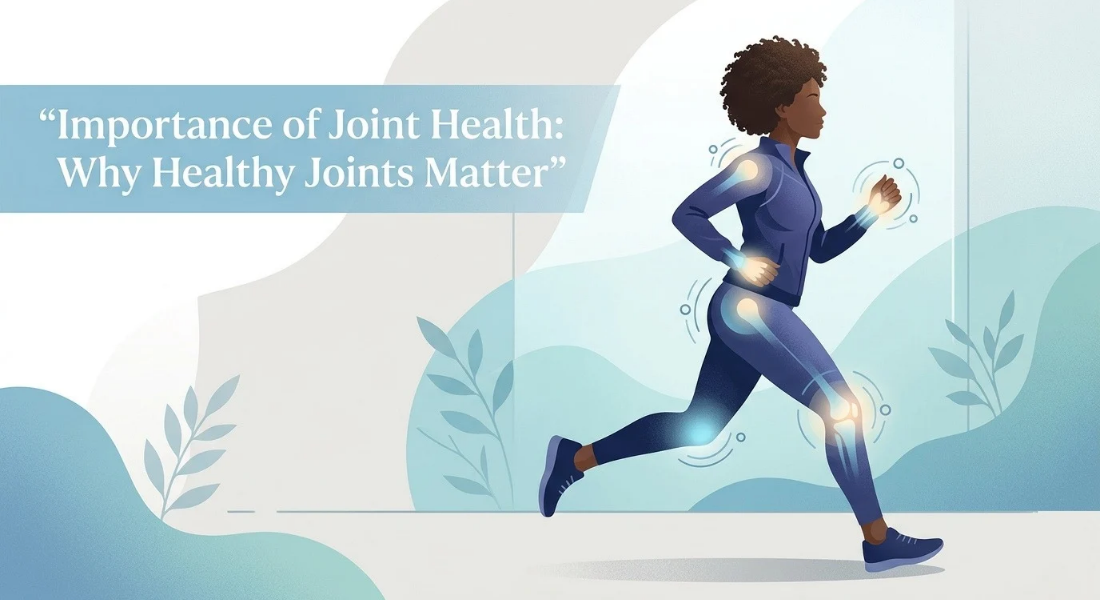
How much freedom depends on joints? The importance of joint health lies in how healthy joints support function, mobility and everyday participation. This article focuses specifically on why joint health matters and the value of maintaining joint function.
For the wider picture covering joint structures, factors, habits and common concerns, see our complete Joint Health guide → see the full guide here.
Joint health matters because useful joint function supports physical participation and everyday independence.
Its significance extends beyond pain to include function, mobility, participation and quality of life.
Functional limitations can gradually narrow social, occupational and recreational participation.
Mobility is particularly relevant to independent living as people age.
Bone health and joint health are connected but represent different aspects of musculoskeletal function.
The wider significance of joint health is what functional movement allows people to continue doing.

The importance of joint health extends beyond whether a person experiences pain. What matters functionally is whether the body can move sufficiently for someone to participate in ordinary life, maintain independence and engage with activities that contribute to their well being.
A joint can matter even when pain is not the defining concern. Its functional role affects the physical capacity needed for movement and participation.
This makes joint health a broader concept than symptom absence. A meaningful view considers whether physical function allows someone to remain involved in the activities, relationships and responsibilities that matter to them.
Function describes what the body can do rather than simply what it feels like. Restrictions in movement can affect physical participation even when pain severity does not fully describe the limitation.
The World Health Organization’s musculoskeletal health overview specifically describes musculoskeletal health in terms of functioning and participation showing why these outcomes belong at the centre of the discussion.
Joint function can influence participation by affecting whether a person can remain involved in social, occupational and recreational parts of life. The significance is therefore not only physical movement itself but what that movement allows someone to continue doing.
Physical ability and participation are related but not identical. Someone may retain enough movement for a particular task yet still find it harder to participate consistently in wider areas of life.
Participation includes involvement in work, social relationships, recreation, travel and community activities. Functional capacity therefore has meaning beyond the movement itself because it can influence how fully a person engages with their surroundings.
When physical function becomes restricted opportunities can gradually become narrower. Activities that once fitted naturally into a person's routine may require more effort, become less accessible or be avoided altogether.
WHO notes that musculoskeletal limitations can reduce people's ability to work and participate in society alongside lower levels of well being. This illustrates why joint function has consequences beyond the joint itself.
Quality of life reflects more than physical symptoms. Functional ability can shape how freely a person engages with responsibilities, relationships, surroundings and preferred activities making healthy joint function relevant to broader physical and social well being.
Physical function provides part of the capacity people use to engage with their environment. When that capacity is restricted, the effect may extend into routines, social involvement and the ability to pursue preferred activities.
This does not mean every functional limitation automatically produces poor quality of life. Its significance depends on the person's circumstances, expectations and the activities that matter most to them.
Reduced function can affect participation before it becomes a complete loss of independence. Someone may begin limiting activities, relying more often on other people or changing how they engage with normal responsibilities.
Over time those changes can influence social connection and personal freedom. The important point is the functional chain: physical limitation can alter participation, and altered participation can affect wider well being.
Pain is one aspect of health but quality of life also reflects functioning and participation. A person's experience cannot always be captured by asking only whether something hurts.
WHO identifies limitations in functioning and participation together with lower well being as important consequences of musculoskeletal conditions. This supports a broader understanding of why joint function matters.

Healthy joint function contributes to the physical capacity that supports independence. Independence is not simply about completing isolated tasks; it also involves having enough functional ability to manage life according to personal needs and preferences.
Functional independence means having sufficient physical capacity to manage necessary and meaningful aspects of life without unnecessary reliance on another person.
When physical function becomes restricted dependence can increase. This does not mean every limitation removes independence but it explains why maintaining useful function has significance beyond physical comfort.
Mobility is an enabling capacity. It helps people interact with their environment, reach places, maintain social connections and continue preferred patterns of living.
The National Institute on Aging explains that mobility is critical for functioning well and living independently as people age. The relationship makes physical function an important part of independence.
Independence exists on a spectrum rather than as a simple yes or no state. A person may remain independent while gradually needing more assistance, adapting routines or limiting certain forms of participation.
That gradual change matters because functional limitations can affect autonomy before a person becomes fully dependent. Joint health is therefore relevant to the capacity to preserve choice and participation.
Joint function matters throughout life because physical participation and independence remain relevant at different ages. The consequences may change with circumstances, responsibilities and ageing but the underlying value of useful movement does not disappear.
Functional movement can support participation during younger adulthood, working years and later life although the activities that matter may differ.
For one person, function may relate strongly to employment or recreation. For another it may relate more closely to maintaining social involvement and autonomy. The importance lies in having sufficient physical capacity for the demands of each stage.
Ageing can bring changes in physical function, making mobility increasingly relevant to independence and continued participation.
The NIA links mobility with independent living and quality of life in older adults. Its relevance is therefore not simply about getting older but about preserving the functional capacity needed to remain engaged with life.
The relevance of joint health can increase with age without meaning that every joint limitation should be dismissed as normal ageing.
WHO describes musculoskeletal conditions as relevant across the life course from childhood through older age. This supports a more precise view: age changes the context but it does not make functional limitations inevitable or interchangeable with normal ageing.
Bone and joint health are connected because both contribute to the wider musculoskeletal system that supports physical function. They are related concepts however and should not be treated as interchangeable measures of the body's overall movement capacity.
Joints connect parts of the skeleton and allow movement between them. Their role therefore exists within a wider system rather than in isolation.
NIAMS explains that joints connect bones and enable movement. Bones also provide the structural framework involved in movement, so joint function and skeletal function are naturally connected.
Bone health concerns the condition and function of bone tissue while joint health concerns the functional state of joints and their contribution to movement.
Both belong to musculoskeletal health but one does not automatically describe the other. This distinction matters because bone and joint health are related parts of physical function rather than one single health measure.

Limited joint function matters because its effects can extend beyond movement itself. Restrictions may influence activity, participation, independence and well being making functional change relevant even when no particular diagnosis is being discussed.
A functional limitation can make participation more difficult or less consistent. When an activity becomes physically harder a person may naturally reduce how often they take part in it.
The consequence is not necessarily immediate or severe. The significance comes from the possibility that repeated limitations can gradually change how someone interacts with work, recreation, relationships or other parts of life.
Reduced participation can have wider effects on independence and well being. A person who becomes less involved in preferred activities may also experience changes in social connection, routine or confidence in managing everyday life.
These outcomes should not be presented as inevitable. They are possible consequences of persistent functional limitation, and their impact varies between individuals and circumstances.
Changes in function can be meaningful before they become a major restriction. A noticeable reduction in physical capacity may signal that something has changed in how a person interacts with daily life.
The National Institute of Arthritis and Musculoskeletal and Skin Diseases explains that joints enable movement while WHO documents how musculoskeletal limitations can affect functioning and participation. cite The broader lesson is that function deserves attention not just pain.
The importance of joint health lies in what healthy joint function makes possible: participation, independence, quality of life and meaningful physical function across the life course. Joint health is therefore broader than the absence of pain.
It is about retaining enough useful function to remain involved in the people, activities and responsibilities that give everyday life its value.
Joint health matters because functional joints contribute to movement, physical participation, independence and quality of life rather than simply determining whether a person has joint pain.
Joints connect bones and allow movement within the skeleton. NIAMS describes them as structures that enable different forms of movement as part of the wider musculoskeletal system.
Functional joint health can influence participation, independence and engagement with preferred activities all of which can contribute to broader physical and social well being.
Mobility becomes particularly relevant to maintaining functional ability and independent living in later life. NIA identifies mobility as critical to functioning and independence as people age.
No Bone health concerns bone tissue while joint health concerns joint function. They are connected because both contribute to the wider musculoskeletal system.
Yes Functional limitations can increase reliance on other people and restrict participation. The degree of impact varies according to the person's abilities circumstances and functional needs.


Reader Discussion
Leave a Reply