- by Daily Talkin Staff
- July 8, 2026
-

-
-
Loading
Loading
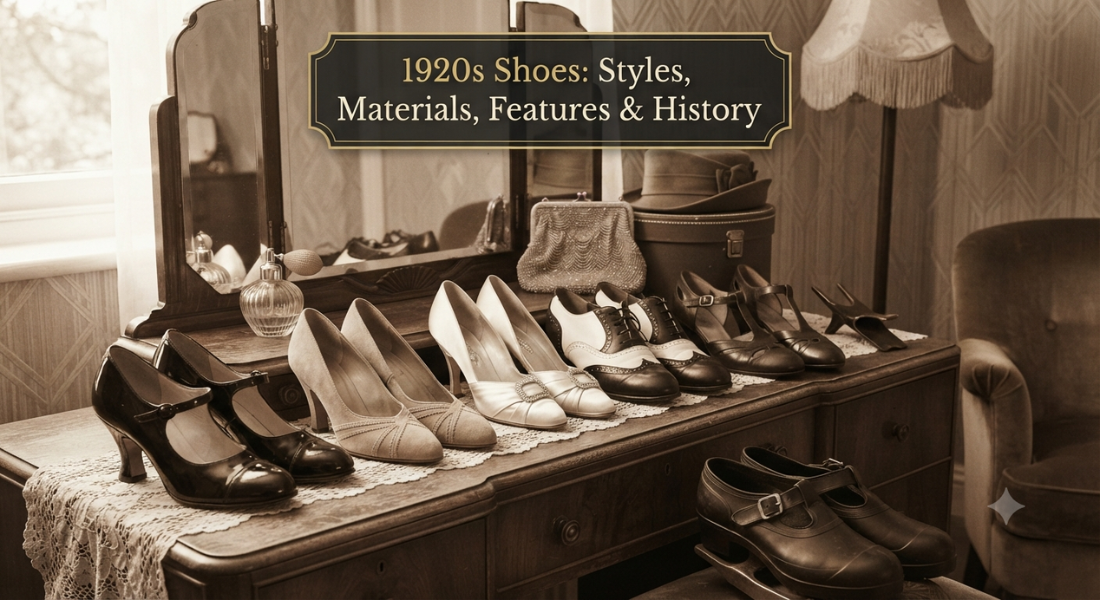
Rising hemlines made footwear much more visible in the 1920s. 1920s shoes varied through changing heel and toe shapes, decorative materials, straps and occasion specific construction.
This guide examines their materials, lesser known styles, seasonal footwear and development across the decade. Footwear was one part of the wider style transformation of the Roaring Twenties.
For broader historical context see our complete guide to 1920s fashion → explore the full guide here.
Shorter skirts made shoes more visually important during the 1920s.
Early footwear could feature extremely elongated pointed toes.
Leather, suede, patent finishes, canvas, silk and satin served different purposes.
Colonial pumps, saddle shoes, canvas flats, boots and galoshes broaden the period's footwear range.
Day shoes favoured durability and moderate heels while evening shoes allowed greater height and decoration.

Shorter skirts made footwear more visible and important during the 1920s. The Metropolitan Museum of Art notes that this encouraged greater experimentation with shoe materials, shapes and construction.
Surviving examples show elongated toes, cut outs, contrasting surfaces and shaped leather uppers. Comfort also mattered with Pierre Yantorny's 1925 30 shoes demonstrating specialised lacing for better fit and protection.
Decoration added further variety through colour contrasts, textured leather, metallic effects and ornamental details helping distinguish footwear for different occasions.
Early 1920s footwear included sturdy curved Louis or tango style heels suited to practical movement. Cuban and military heels provided substantial support for daytime shoes while later evening footwear could become higher and slimmer.
Heel development was not perfectly linear. Museum collections show considerable variation and the V&A's footwear timeline documents broader changes in shoe height and heel shape across historical periods.
Early examples could have strikingly elongated pointed toes. A Charles Strohbeck pump from around 1920 has an extremely narrow, pointed toe and elongated line.
As the decade progressed softer almond shapes and increasingly squared forms appeared alongside other silhouettes giving late 1920s footwear a less dramatically pointed appearance.
Leather remained a key material while suede, patent finishes and textiles added different textures and visual effects. Evening footwear often used silk, satin and metallic finishes.
Day shoes commonly featured practical colours such as black, brown, grey and beige while evening styles allowed stronger contrasts and richer finishes.
Museum examples show leather cut outs, silk and leather construction and contrasting materials. Buckles, panels, textured surfaces and geometric openings added further decoration.
Common materials included calfskin, kid leather, suede and patent leather with canvas appearing in lighter casual footwear. Silk and satin were particularly suited to evening shoes while selected exotic skins served more luxurious purposes.
Museum evidence confirms leather construction in several surviving examples while Pierre Yantorny's shoes also demonstrate combinations of leather, silk and metal.
Decoration included buckles, buttons, sequins, rhinestones, metallic details, cut outs and contrasting panels. Colour blocking and textured surfaces could also make practical shoes visually striking.
Evening examples pushed this further. One Pierre Yantorny pair from 1925 to 30 uses metal and rhinestones illustrating how high shine ornament could become a major part of formal footwear.

Beyond the best known footwear silhouette surviving examples reveal a broader range of shoes suited to different conditions and levels of formality. Colonial inspired pumps, saddle footwear, canvas flats and protective overshoes all belong to this wider picture.
The variety matters because period footwear was not defined solely by one fashionable shape. Construction could change according to weather, activity, material availability and the desired degree of decoration.
The Metropolitan Museum's collections provide particularly useful evidence. A pump dated around 1920 demonstrates the Colonial influence while later examples show sporty contrasting materials and carefully engineered leather construction.
These categories help explain why an authentic reconstruction of 1920s footwear can look different from the single silhouette often associated with the decade.
Colonial shoes drew on eighteenth century inspired design making them recognisable through their decorative character and historical references.
A Charles Strohbeck pump from around 1920 combines this influence with an unusually elongated pointed shape and distinctive crackle patterned leather.
The example is especially useful because it records the extreme end of early decade experimentation rather than suggesting that every shoe had the same construction.
Saddle shoes used contrasting sections across the upper creating a two tone appearance associated with sportier footwear. Canvas flats offered a lighter alternative for warm weather or casual use.
These shoes belonged to the practical side of footwear culture where flexibility, lighter construction and easy movement mattered more than elaborate evening decoration.
Boots remained useful for colder conditions while galoshes provided an additional protective layer over ordinary footwear. Their purpose was primarily practical particularly in wet or snowy weather.
A galosh could nevertheless contribute to winter dress because protective footwear was visible rather than purely hidden equipment. This made seasonal footwear part of the overall appearance.

The clearest distinction came through materials, construction and decoration. Day shoes needed to withstand walking and regular use, so durable leather, moderate heels and restrained colours were practical choices.
Evening footwear allowed designers to prioritise visual effect. Satin, silk, metallic surfaces, rhinestones and other decorative treatments created shoes intended to complement formal occasions and dancing.
A 1924 25 Fenton Footwear evening shoe illustrates this shift particularly well. Its silk and leather construction incorporates a circular cut out design while the geometric treatment reflects the period's interest in Art Deco forms.
The distinction was not absolute. Some daytime shoes were highly decorative while some evening shoes retained substantial construction. Nevertheless surviving examples show a clear difference in the balance between durability and display.
Daytime footwear generally prioritised sturdy construction, moderate heels and durable materials. Leather and suede offered practical surfaces while black, brown, grey and beige provided versatile colour choices.
Fit also mattered. Yantorny's 1925 30 lace up shoes show how construction could be engineered around comfort secure fastening and protection rather than decoration alone.
Evening shoes could use satin, silk, glossy finishes and metallic effects with rhinestones, sequins and painted or geometric decoration adding visual impact.
Heels could also rise and become more slender for formal wear and dancing. Yantorny's surviving evening pumps from 1925 to 30 demonstrate the combination of luxurious materials and rhinestone decoration.
The footwear of the 1920s became more visible more varied and more deliberately designed. Heel and toe shapes shifted, materials expanded, decoration became bolder, and shoes increasingly reflected differences between daily movement, evening occasions and seasonal conditions.
Authentic examples therefore reveal a decade of experimentation rather than one fixed silhouette making construction and surviving details essential to understanding period footwear.
Popular choices included Colonial pumps, saddle shoes, canvas flats, boots, galoshes and leather shoes with decorative details.
Women wore Louis, tango, Cuban and military heels while evening shoes often featured higher, slimmer heels.
They featured pointed, almond or square toes, leather or textile uppers, contrasting colours, cut outs and decorative details.
Common materials included calfskin, kid leather, suede, patent leather, canvas, silk and satin.
Day shoes usually had moderate sturdy heels while evening and dancing shoes could have higher slimmer heels.
Early shoes often had pointed toes and sturdy heels while later styles featured softer toes contrasting materials and more decoration.





Reader Discussion
Leave a Reply