- by Daily Talkin Staff
- July 8, 2026
-

-
-
Loading
Loading
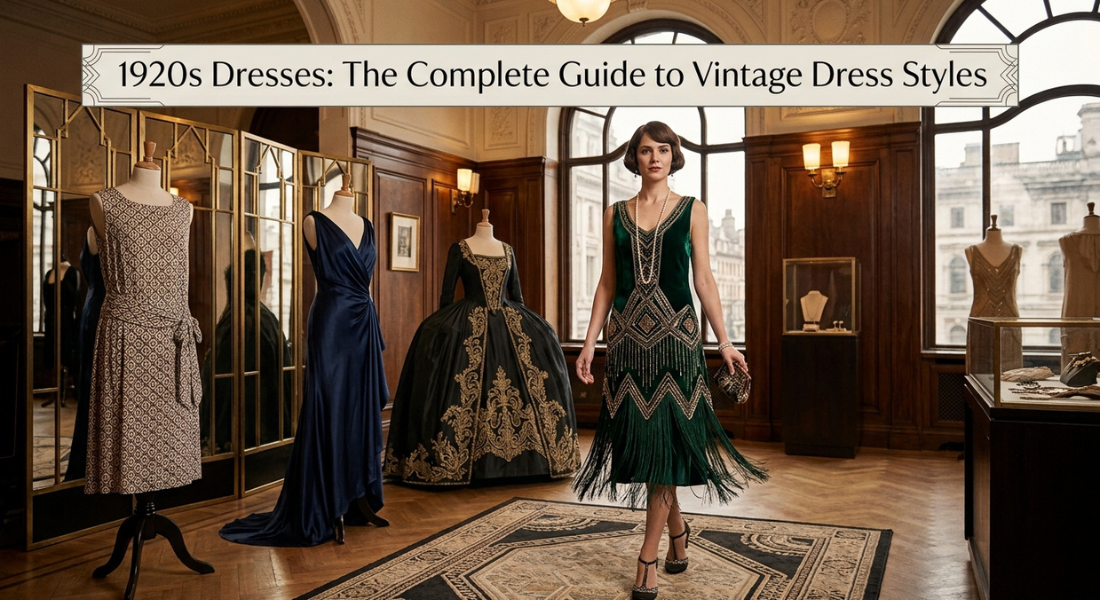
Nearly every iconic image of the Roaring Twenties begins with a distinctive dress. 1920s dresses were defined by relaxed silhouettes, lowered waistlines, elegant fabrics, and decorative embellishments that reflected a new approach to women's clothing.
This guide explores the defining styles, construction, and evolution of these dresses throughout the decade.
This guide focuses exclusively on 1920s dresses. If you're exploring the wider clothing, beauty, and style trends of the decade see our complete guide to 1920s Fashion for the full historical overview.
1920s dresses are defined by straight silhouettes, drop waists, and graceful movement.
Popular styles included day dresses, evening dresses, flapper dresses, and Robe de Style dresses.
Silk, satin, chiffon, velvet, and jersey were the most widely used fabrics.
Beadwork, fringe, embroidery, and sequins gave many dresses their distinctive appearance.
Authentic vintage dresses differ from modern reproductions in materials, construction, and craftsmanship.

A genuine 1920s dress is defined by its silhouette, construction, and decorative details rather than vintage inspired embellishments alone.
Authentic designs featured a straight, relaxed fit, lightweight fabrics, and carefully balanced ornamentation instead of emphasizing the natural waist or an hourglass shape.
As the decade progressed dressmakers refined these designs with looser cuts, improved fabrics, and elegant embellishments. Despite these changes the defining characteristics of 1920s dresses remained consistent throughout the era.
The defining feature of a 1920s dress was its straight tubular silhouette. Instead of emphasizing curves the relaxed fit skimmed the body from the shoulders to the hem creating a youthful look with greater freedom of movement.
Unlike earlier fitted styles these dresses relied on lightweight fabrics and soft draping rather than structured tailoring giving them an elegant yet effortless appearance.
The iconic look of a 1920s dress came from the combination of a drop waist gradually shorter hemlines, and a straight silhouette. The lowered waistline positioned around the hips created a longer leaner appearance.
As hemlines rose from mid calf to just below the knee during the decade, dresses became more comfortable and practical. Together these features gave 1920s dresses their elegant modern look without relying on fitted tailoring.
The 1920s featured several distinct dress styles each designed for different occasions while sharing the decade's signature relaxed silhouette.
From simple day dresses to glamorous evening gowns these styles reflected changing lifestyles without losing their characteristic elegance.
Understanding these dress categories makes it easier to recognize authentic 1920s designs and appreciate the variety that defined women's fashion throughout the decade.
Everyday day dresses combined comfort with simple elegance. Worn for shopping, work, and casual outings they were typically made from cotton, linen, jersey, or lightweight wool and featured clean lines with minimal decoration.
Most designs had modest necklines, practical sleeves, and subtle details like pleats or light embroidery. Neutral colors and soft pastels made them versatile for everyday wear.
Evening dresses were designed for formal occasions such as dinners, dances, and theatre events. They featured luxurious fabrics like silk, satin, chiffon, and velvet, creating graceful movement while maintaining the decade's signature straight silhouette.
Intricate beadwork, sequins, metallic embroidery, and fringe added glamour without changing the dress's simple shape making craftsmanship the highlight of these elegant garments.
Flapper dresses were one of the most recognizable styles of the 1920s known for their loose, straight silhouette and freedom of movement. They often featured fringe, beadwork, sequins, and geometric Art Deco patterns that created striking visual movement on the dance floor.
Although modern versions often emphasize sparkle authentic flapper dresses balanced decorative details with clean simple lines.
The Robe de Style offered a softer alternative to the decade's straight silhouette. Popularized by Jeanne Lanvin it featured a fitted bodice and a gently full skirt creating a more romantic look.
Often made from luxurious fabrics like silk, satin, and velvet these dresses were popular for formal occasions and appealed to women who preferred a more graceful silhouette than the typical tubular style.
What made 1920s dresses stand out was the combination of elegant fabrics, relaxed construction, and refined embellishments.
Instead of relying on structured tailoring these dresses used lightweight materials and decorative details to create movement and sophistication.
Their simple silhouettes were enhanced by carefully chosen fabrics and handcrafted ornamentation making each dress both stylish and distinctive.
Fabric played a key role in the look and feel of 1920s dresses. Silk, satin, and chiffon were popular for evening wear because they draped beautifully while velvet added warmth and richness during cooler months.
Jersey became a favorite for day dresses thanks to its comfort and flexibility. Designers often combined fabrics such as satin with chiffon overlays or velvet trims to add texture without changing the dress's graceful silhouette.
Decorative details gave 1920s dresses their signature elegance. Hand sewn beadwork, sequins, embroidery, metallic thread, and fringe added sparkle and texture while keeping the silhouette clean and balanced.
Fringe was especially popular because it moved gracefully with the wearer while Art Deco inspired patterns created a refined geometric look. These embellishments highlighted the craftsmanship that continues to make authentic 1920s dresses admired today.

Although the 1920s had a recognizable dress style designs evolved throughout the decade. Changes in silhouette, hemlines, fabrics, and decoration reflected shifting tastes while maintaining the relaxed shapes that defined the era.
Early 1920s dresses still carried influences from the previous decade. Hemlines remained lower, silhouettes were modest, and waistlines were not yet fully dropped.
Fabrics such as cotton, wool, silk, and crepe were common while embroidery, lace, and subtle pleating provided decoration without heavy embellishment.
By the middle of the decade the classic 1920s dress silhouette had become established. Drop waist designs, straight shapes, and shorter hemlines created the relaxed look associated with the era.
Designers used lighter fabrics and decorative details such as beadwork, fringe, and geometric embroidery. This period produced the most recognizable examples of authentic 1920s dresses.
By the late 1920s evening dresses became more luxurious and detailed. Satin, velvet, and chiffon were combined with sequins, metallic embroidery, and elaborate beadwork.
Although the straight silhouette remained popular designers introduced softer draping and refined details that prepared fashion for the changing styles of the 1930s.
Although both styles shared the relaxed silhouette of the 1920s everyday and evening dresses differed in purpose, fabric choice, and decoration. These differences help distinguish casual garments from formal designs.
Everyday dresses focused on comfort and practicality. Fabrics such as cotton, linen, jersey, and lightweight wool were commonly used with simple details like pleats, buttons, or small embroidery adding subtle style.
Their designs allowed easy movement and suited daily activities without excessive decoration.
Evening dresses emphasized luxury and visual appeal. Materials like silk, satin, chiffon, and velvet created fluid movement while beadwork, sequins, metallic thread, and fringe added sophistication.
Despite their decoration formal dresses maintained the straight silhouette that defined 1920s dress design.
Feature | Everyday Dress | Evening Dress |
Silhouette | Straight, relaxed, practical | Straight with elegant drape and fluid movement |
Fabrics | Cotton, linen, jersey, lightweight wool | Silk, satin, chiffon, velvet |
Decoration | Minimal embroidery, pleats, buttons | Beadwork, sequins, fringe, metallic embroidery |
Typical Occasion | Daily wear, work, shopping, social visits | Dinners, dances, theatre, formal celebrations |
Authentic 1920s dresses are valued by collectors and vintage enthusiasts because of their craftsmanship and historical details.
While modern reproductions may look similar construction methods and materials help separate originals from newer designs.
Original dresses often feature hand finished stitching, carefully made seams, and individually applied embellishments. Natural fabrics such as silk, cotton, linen, and wool were commonly used during the decade.
Labels from historic makers can provide clues but many authentic dresses were custom made and may not include any label.
Modern reproductions recreate classic 1920s features using newer materials and manufacturing methods. They often include drop waists, straight silhouettes, and vintage inspired decoration while offering greater durability and comfort.
Unlike originals reproductions are designed for modern use rather than complete historical accuracy.

Nearly a century later 1920s dresses still influence designers, collectors, and vintage enthusiasts. Their appeal comes from distinctive silhouettes, detailed craftsmanship, and elegant designs that remain recognizable today.
Modern eveningwear often borrows elements from 1920s dresses including flowing shapes, beadwork, fringe, and luxurious fabrics. Designers continue adapting these features for gowns, bridal wear, and formal collections.
Vintage collectors value these dresses for their craftsmanship and historical importance. Hand sewn details, embroidery, and carefully selected fabrics showcase the skill behind original garments. For enthusiasts 1920s dresses represent both fashion and a lasting piece of design history.
1920s dresses remain among the most recognizable garments in fashion history because of their distinctive silhouettes, carefully chosen fabrics, and remarkable decorative craftsmanship.
From practical day dresses to glamorous evening gowns each style reflected a thoughtful balance of comfort and elegance.
Whether you admire original vintage pieces or well crafted modern recreations understanding these defining features helps you appreciate why these iconic dresses continue to inspire fashion more than a century later.
The flapper dress is the most recognizable 1920s style known for its straight silhouette, drop waist, beadwork, and fringe details.
No Flapper dresses were only one style. Day dresses, evening gowns, and Robe de Style dresses were also popular during the decade.
Common fabrics included silk, satin, chiffon, velvet, jersey, cotton, linen, and lightweight wool, depending on the dress type.
Early 1920s dresses reached mid calf while later styles usually ended just below the knee.
A Robe de Style had a fitted bodice and fuller skirt while a flapper dress featured a straight drop waist silhouette.
Many modern versions capture the classic look but often use updated fabrics and construction methods for better comfort and durability.




Reader Discussion
Leave a Reply