- by Daily Talkin Staff
- July 8, 2026
-

-
-
Loading
Loading
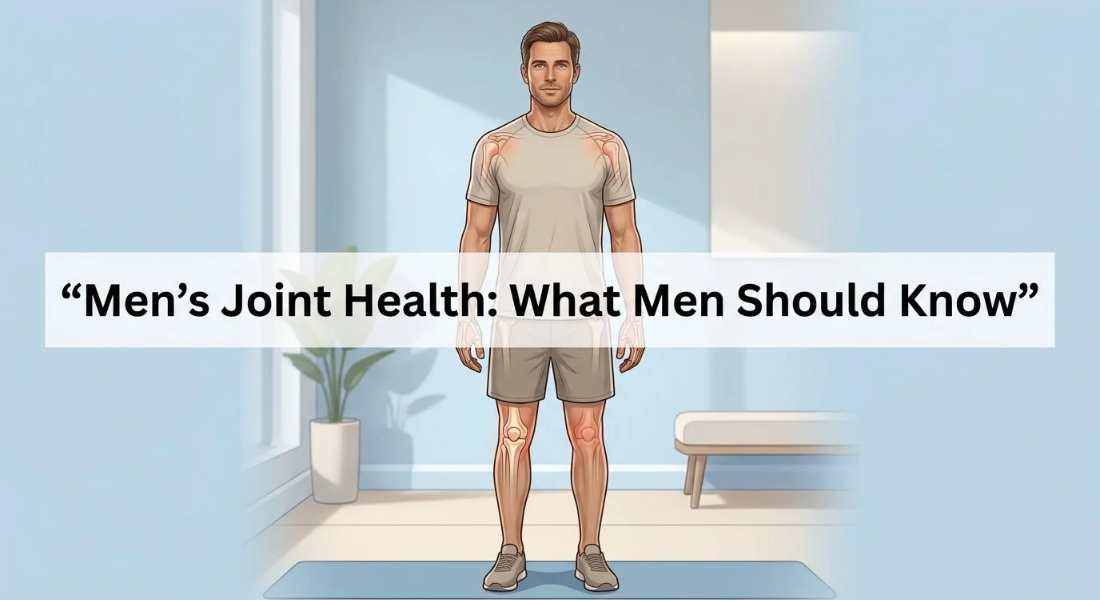
Men's Joint Health is not simply about avoiding aches or staying active. The way joint-health risks appear can differ between men and women making the male specific context worth understanding.
Men share the same fundamental joint health needs but research shows differences in some conditions and risk factors. This guide explains where those differences matter and where they should not be overgeneralised.
Men's joint health shares the same fundamental principles as joint health generally but some disease patterns differ by sex.
Osteoarthritis is generally more common in women particularly after age 50.
Gout is more common in men and commonly develops during middle age.
Some knee osteoarthritis risk associations, including those involving physical activity, may differ between men and women.
Sex-specific research should inform context, not be treated as an individual diagnosis or a reason to follow male-targeted marketing.

Men do not have a completely separate form of joint health. The useful distinction is that sex can influence the likelihood or pattern of some joint problems while many fundamental aspects of healthy joint function remain shared.
Men's Joint Health is one focused part of our broader Joint Health resource. The pillar covers general joint structure, movement, exercise, nutrition and long term care. This article focuses only on the male specific context → see the full guide here.
No Joints perform the same basic functions in men and women so being male does not create a separate set of requirements.
The meaningful differences appear in population level patterns involving conditions, risk factors and some physical function outcomes.
A statistical difference between men and women does not mean every man has that risk. Research findings can change according to the joint studied, age group, outcome definition, population and study design. A sex difference is therefore useful context not an individual prediction.
Research does identify measurable sex differences, particularly in osteoarthritis and other forms of arthritis. The evidence does not support the idea that men simply have either “better” or “worse” joints overall. Different conditions and joints produce different patterns.
Generally yes NIAMS reports that osteoarthritis is more common in women than men particularly after age 50. A 2024 review likewise found a higher overall prevalence among women while noting that the reasons for the difference remain incompletely understood.
Yes. Research does not show one uniform sex difference across every joint. Knee and hip findings can differ depending on whether researchers measure radiographic changes, symptoms or clinically diagnosed disease.
That makes broad statements about men's joints unreliable without specifying the condition and outcome.
Researchers have considered several possible influences, including anatomy, alignment, muscle strength, hormonal factors, body composition and genetics.
The 2024 review emphasises that the mechanisms behind sex differences in osteoarthritis are still not fully established.

Some risk associations appear to differ between men and women but the evidence is not strong enough to turn these findings into a universal male risk profile. Sex specific research is most useful when it identifies where general assumptions may be incomplete.
Possibly. A systematic review found indications that high physical activity was associated with higher knee osteoarthritis risk in men in some studies. However the authors also stressed that more high quality research is needed, particularly for symptomatic or clinical osteoarthritis.
Not necessarily. Research suggests that the strength of some knee osteoarthritis risk associations can differ by sex.
This does not mean BMI has a simple male specific threshold it means researchers should avoid assuming that every risk factor behaves identically across sexes.
Yes Gout is an important example. NIAMS states that gout is more common in men and usually develops in middle age. This illustrates why overall arthritis statistics cannot be used to describe every joint condition equally.
Sport demanding physical activity and physically repetitive work can form an important part of an individual man's joint health context. The useful question is not whether activity is “good” or “bad” but whether the demands match the person's circumstances and capacity.
High physical demands can be relevant to joint health risk but physical activity should not be portrayed as inherently harmful. Research on knee osteoarthritis shows that activity related associations can be complex and may differ by sex, exposure level and outcome.
Consider the actual demands placed on your joints rather than treating sport or physical work as inherently risky.
Repetitive loading, previous injury and unusually high demands can provide useful context when interpreting individual risk without making them universal male characteristics.
Life stage changes the context in which male specific evidence should be interpreted. Younger men may encounter different exposure patterns from older men while certain conditions become more relevant during midlife and later adulthood.
Being young does not make joints immune to injury or excessive loading. At the same time younger men do not automatically need specialised “male joint” interventions. Individual activity, injury history and physical demands are more informative than age alone.
Midlife matters because some male associated conditions become more relevant during this period. Gout for example commonly develops in middle age and occurs more often in men. This is one reason age and sex should be considered together rather than separately.
Age increases the relevance of joint health monitoring for everyone but it should not be treated as proof that joint problems are inevitable. The useful focus is maintaining physical function while interpreting individual circumstances rather than relying on age or sex alone.
The strongest male specific guidance separates documented population differences from marketing claims. Being male can change the statistical pattern of some conditions but it does not automatically determine an individual's joint health or the products they need.
No Population level differences in osteoarthritis or arthritis prevalence do not establish that an individual man's joints are inherently healthier. CDC data show that arthritis patterns differ by sex while also making clear that anyone can develop arthritis.
No A product labelled “for men” does not establish male specific effectiveness. The evidence would need to show that the product produces a meaningful benefit specifically in men. Reviewing individual supplements belongs to a separate supplement focused topic.
No. Age is one contextual factor, not an explanation for every joint concern. Persistent, worsening or unusual concerns should not simply be dismissed as normal ageing particularly when the individual context suggests another explanation.

The practical value of male specific research is better interpretation not a separate male checklist. Start with your own context, identify whether a claim is genuinely sex specific, and avoid treating population level research as a personal diagnosis.
Consider whether your main context involves recreational sport, physically demanding work, previous injury, ageing or a known medical issue. The purpose is to identify which evidence is relevant to you rather than assuming that every male specific finding applies equally.
Ask whether a recommendation applies broadly to joint health or whether credible research actually demonstrates a difference between men and women. This distinction prevents ordinary health advice from being repackaged as a supposedly male specific intervention.
General information has limits. If a joint concern is persistent, worsening or unusual, professional assessment can help establish what is actually happening instead of relying on assumptions based on age, sex or online health claims.
Men's joint health is not a completely separate version of joint health. The meaningful distinction is that research identifies sex related differences in the prevalence and risk patterns of some joint conditions while findings are not uniform across joints or individuals.
The most useful approach is to interpret male specific evidence carefully rather than relying on marketing claims, supplements or one size fits all recommendations.
The basics are similar but some joint conditions show different risk patterns between men and women.
Osteoarthritis is generally more common in women especially after age 50 but individual risk varies.
Yes Physical activity supports physical function although its relationship with osteoarthritis can vary by sex and activity level.
Yes Gout is more common in men and often develops during middle age.
Not necessarily. “For men” marketing does not prove that a supplement works differently or better for men.
No. Men can develop osteoarthritis gout and other joint conditions despite population level differences.


Reader Discussion
Leave a Reply