- by Daily Talkin Staff
- July 8, 2026
-

-
-
Loading
Loading
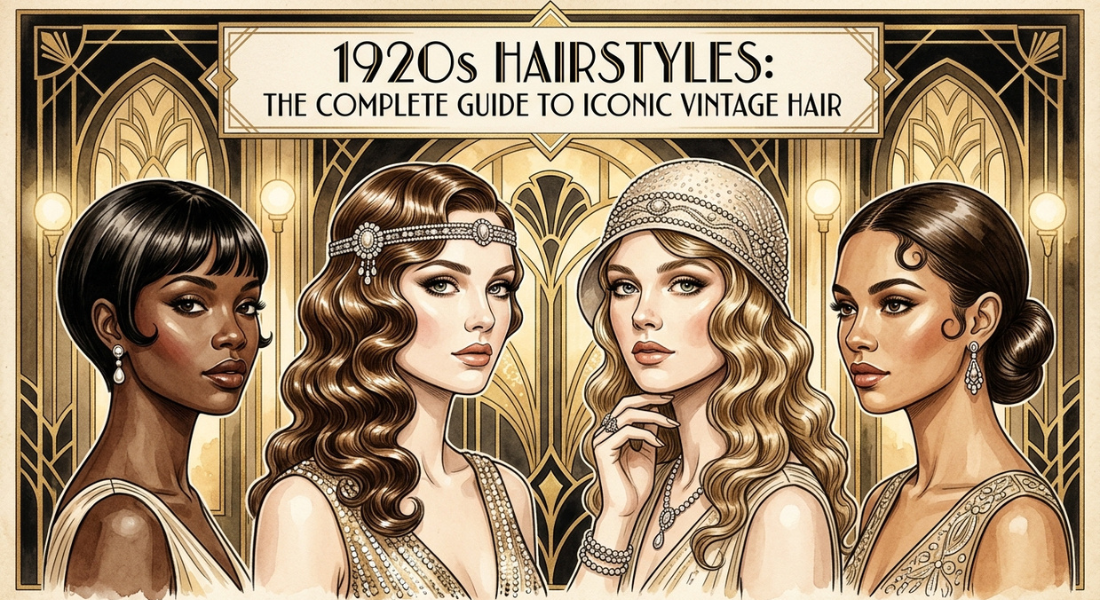
Many vintage hair trends look glamorous but only a few truly capture authentic Jazz Age elegance. 1920s hairstyles were defined by sleek bobs, sculpted waves, polished updos, and elegant hair accessories that reflected modern beauty ideals.
This guide explores the era's most iconic styles, how to recreate them, and how to choose the best look for your hair. This hairstyle guide forms part of our complete 1920s Fashion resource, which explores clothing, accessories and the wider style movement. See the full guide here →
1920s hairstyles centred on sleek bobs, sculpted waves, polished updos, and elegant accessories.
The best hairstyle depends on your hair length, face shape, texture, and styling experience.
Finger waves and Marcel waves create different finishes using different techniques.
Authentic styles require more time and maintenance than modern adaptations.
Vintage accessories complete the hairstyle without overpowering it.
Choosing realistic styles for your hair type produces the best results.

Authentic 1920s hairstyles shared a polished sculpted appearance rather than loose or natural looking hair. Whether worn short or pinned into an elegant updo every style emphasised precision, smoothness, and careful shaping.
Unlike modern textured hairstyles hair was typically kept close to the head using setting lotions, pomades, or brilliantine. Sharp side partings, glossy finishes, and carefully formed waves created a refined silhouette that photographed beautifully under the lighting of early cinema.
Although individual styles varied the decade established a recognisable look that still defines vintage glamour today. Many contemporary bridal, red carpet, and Gatsby inspired hairstyles borrow these same design principles while adapting them for modern products and longer hair.
Several details instantly distinguish an authentic 1920s hairstyle:
Sleek glossy finish
Strong side parting
Sculpted finger or Marcel waves
Hair styled close to the scalp
Short silhouettes or neatly pinned updos
Minimal flyaways with precise shaping
Together these elements created an elegant look that appeared structured rather than effortless making every hairstyle feel intentional and sophisticated.
The bob haircut transformed women's hairstyling during the decade because it was easier to maintain than long Victorian hairstyles while offering remarkable styling versatility. Short hair also showcased finger waves, Marcel waves, and decorative accessories more effectively than long hair.
Even women who preferred longer locks often pinned their hair into faux bobs or compact chignons to achieve the fashionable silhouette without permanently cutting their hair.
Several hairstyles became enduring symbols of the decade each offering a distinct balance of elegance and practicality. Whether you're recreating a historically accurate look or simply drawing inspiration from vintage beauty these styles remain the best place to start.
Hairstyle | Distinctive Appearance | Best Hair Length | Authenticity |
Classic Bob | Chin length blunt cut with smooth finish | Short | ★★★★★ |
Finger Waves | S shaped sculpted waves formed by hand | Short to medium | ★★★★★ |
Marcel Waves | Heated iron creates soft uniform waves | Short to medium | ★★★★★ |
Shingle Cut | Very short tapered back with sleek sides | Short | ★★★★★ |
Eton Crop | Close cropped almost boyish haircut | Very short | ★★★★★ |
Dutch Boy Bob | Rounded bob with straight fringe | Short | ★★★★☆ |
Chignon | Low neatly pinned bun | Medium to long | ★★★★☆ |
Kiss Curls | Small curls shaped against the forehead | Any length | ★★★★☆ |
The classic bob became the defining haircut of the decade while finger waves added sculpted texture that remains instantly recognisable today.
Marcel waves produced a softer finish using heated irons whereas the shingle cut and Eton crop appealed to women seeking an even shorter fashion forward appearance.
For longer hair the chignon offered timeless elegance without sacrificing historical authenticity. Kiss curls completed many evening looks by framing the face with carefully shaped curls adding softness without distracting from the hairstyle itself.
Not every authentic style suits every person equally. Hair length, face shape, natural texture, and the amount of styling time you're willing to invest all influence which vintage hairstyle will produce the best results.
If you're attending a Gatsby party or creating a historically inspired bridal look authenticity may matter most. For everyday wear however a modern interpretation often offers the same visual appeal with less maintenance.
Choosing a style that works with your natural hair rather than against it usually delivers the most convincing finish. A finger wave on naturally straight hair for example requires different preparation than one created on thick curls.
Short hair works beautifully with classic bobs, finger waves, shingle cuts, and Eton crops because these styles naturally match the era's signature silhouette.
Medium hair offers excellent flexibility, allowing you to wear finger waves, Marcel waves, or a faux bob without losing versatility.
Long hair is best styled into low chignons, rolled updos, or faux bobs that recreate the appearance of shorter hair while preserving length.
An oval face suits almost every authentic hairstyle. Those with round faces often benefit from side parted finger waves that visually add length.A square face pairs well with softer Marcel waves that reduce angular features.
Heart shaped faces balance beautifully with rounded bobs or gentle curls around the jawline. For long faces fuller Dutch Boy bobs and wider wave patterns help create better facial proportion.
Naturally straight hair holds sleek bobs and finger waves exceptionally well. Wavy hair requires less effort to create authentic wave patterns making Marcel styles easier to achieve.
Those with curly hair can embrace vintage curls or smooth the hair before creating structured waves. Thick hair provides volume for sculpted styles but often needs stronger hold products.
Fine hair benefits from setting lotions and lightweight volumising products that help maintain shape without weighing the hair down.

The right accessory transforms a simple vintage hairstyle into a recognisable 1920s look. Rather than overwhelming the hair accessories highlighted the sleek lines of bobs, finger waves, and elegant updos.
They also helped secure styles that relied on careful shaping and setting. Choose accessories that suit both the hairstyle and the occasion. A pearl pin may be perfect for a wedding inspired look while a rhinestone headband works well for themed parties or evening events.
Embellished headbands became one of the decade's signature hair accessories. Worn low across the forehead or slightly above the hairline they pair beautifully with finger waves, Marcel waves, and sleek bobs.
Decorative combs add elegance to chignons and tucked hairstyles. Vintage inspired combs with pearls, enamel, or crystal details create a refined finish without distracting from the hairstyle itself.
Feather clips work best for glamorous evening styles. Positioning a feather clip above one ear creates an authentic vintage silhouette while adding movement and texture. Pearl pins provide a subtle timeless accent.
They suit both formal updos and soft waved hairstyles making them one of the easiest accessories to wear today. Hair scarves offer a relaxed interpretation of 1920s styling.
Silk scarves tied neatly around the head complement shorter cuts while helping control loose strands. Rhinestone accessories reflect the decorative style associated with evening hairstyles. They catch the light beautifully and work especially well with polished waves and sleek buns.
For the most authentic appearance use only one statement accessory at a time. Combining multiple decorative pieces can make the hairstyle feel theatrical rather than historically inspired.
Many hairstyles inspired by the 1920s look similar at first glance but authentic historical styling often differs from modern salon interpretations. Understanding those differences helps you decide whether you want historical accuracy or a more wearable everyday version.
Authentic hairstyles relied on traditional setting methods, careful wave formation, and structured finishes. They often required considerable preparation, including setting lotion, wave clips, and drying time before the hair could be brushed into shape.
Modern recreations usually simplify the process. Stylists frequently use curling irons heated wavers, and flexible styling products to achieve a similar appearance in much less time. The result captures the vintage aesthetic while fitting contemporary routines.
Social media has also influenced modern interpretations. Many online tutorials exaggerate volume, add extra curls, or combine elements from different decades creating attractive hairstyles that are inspired by the 1920s rather than historically accurate.
If you're attending a historical event, theatrical production, or museum presentation authenticity matters more than convenience. For weddings, formal occasions, or Gatsby inspired parties modern adaptations generally provide the same visual elegance with greater comfort and durability.
Regular maintenance also differs. Authentic styles often require overnight setting and careful brushing, while modern versions can usually be refreshed with a curling iron and lightweight styling spray.
Feature | Authentic 1920s Hairstyles | Modern Adaptations |
Styling technique | Finger setting, Marcel irons, and setting lotion | Curling irons, heated wavers, and styling tools |
Styling time | Often 60 to 120 minutes | Usually 20 to 45 minutes |
Maintenance | High | Moderate |
Difficulty | Advanced | Beginner to intermediate |
Hair length suitability | Mainly short to medium | All lengths |
Everyday wearability | Limited | Highly practical |

Creating beautiful vintage hairstyles is only part of the process. Proper maintenance helps preserve sculpted waves, reduce frizz, and keep accessories securely in place throughout the day.
Allow your hairstyle to set completely before brushing or touching it. Handling the hair too early can soften wave patterns and reduce definition. A lightweight finishing spray helps maintain hold without making the hair feel stiff.
To protect the style overnight wrap your hair in a silk scarf or sleep on a silk pillowcase. Both options reduce friction and help preserve curls and waves until the next day.
If your hairstyle begins to lose shape lightly mist the hair with water or setting spray before reshaping individual sections rather than brushing everything out and starting again.
One of the most common beginner mistakes is choosing a hairstyle that doesn't suit your natural hair length or texture. A sleek finger wave may be achievable on short straight hair but require much more effort on thick tightly curled hair.
Another frequent mistake is overloading the hair with products. Excess gel or hairspray can make vintage styles appear heavy instead of polished. Start with small amounts and build gradually until the desired hold is achieved.
The enduring appeal of 1920s hairstyles lies in their balance of elegance, structure, and versatility. Whether you prefer a sleek bob, sculpted finger waves, or a sophisticated chignon, choosing a style that suits your hair type, face shape, and skill level will always produce the most authentic and flattering results.
Experiment with different techniques, practise patiently, and enjoy bringing timeless vintage hairstyles into the present.
The classic bob was the decade's most iconic hairstyle often styled with finger waves or a deep side part.
Yes Faux bobs, chignons, and pinned updos gave long hair the appearance of a shorter style.
Finger waves are shaped by hand while Marcel waves are created with a heated Marcel iron.
A faux bob or soft finger waves are the easiest styles to recreate with basic styling tools.
Headbands, decorative combs, pearl pins, feather clips, and rhinestone accessories were the most popular.
Modern versions capture the vintage look but often use easier techniques and modern styling products.



Reader Discussion
Leave a Reply