- by Daily Talkin Staff
- July 8, 2026
-

-
-
Loading
Loading
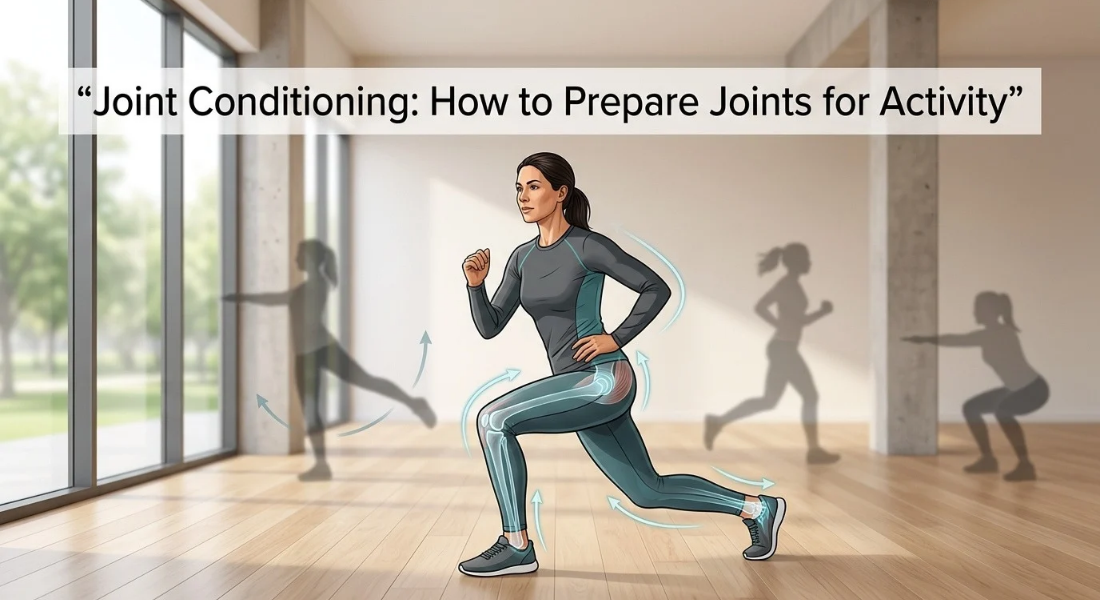
Returning to exercise after time away can make familiar movements feel demanding. Joint conditioning is the gradual preparation of joints and supporting tissues for movement and physical load.
This guide explains controlled preparation, progression, practical application and when to modify or stop. Joint conditioning is one focused part of the wider Joint Health topic which covers broader factors supporting normal joint function.
This article focuses specifically on conditioning. See our complete Joint Health guide → see the full guide here.
Joint conditioning is a gradual process rather than one specific exercise.
Start with manageable movement and introduce an appropriate physical demand.
Progress resistance, duration, range, repetitions or complexity gradually.
Recovery should occur before increasing workload.
Conditioning should reflect the physical demands of the activity you intend to perform.
Significant or worsening symptoms should not be treated as a normal progression challenge.

Joint conditioning is a process rather than a single exercise. It uses controlled movement and manageable physical demands to prepare the body for activity then increases those demands gradually as they become well tolerated.
The key idea is exposure. Instead of asking the body to handle a demanding movement immediately, conditioning provides an appropriate starting level and builds from there.
This can involve movement preparation, resistance, range of movement, duration or increasingly complex activity. The exact combination depends on what you are preparing to do and your current ability.
The process is therefore more useful than any individual exercise. A movement may be suitable for conditioning when it fits the intended activity can be performed with control and provides an appropriate level of demand.
A single exercise is an activity; conditioning is the process surrounding it. Conditioning repeatedly exposes the body to suitable movement and load, with progression and recovery built into the approach.
The aim is not simply to complete exercises but to gradually improve tolerance for the physical demands you intend to perform.
Mobility, strength and stability can support conditioning but they are not the whole process. Useful movement allows an activity to be performed, muscular capacity helps manage force, and stability contributes to controlled movement.
Their role here is practical: helping you handle the demands being introduced.
The central mechanism is gradual exposure to manageable movement and load. A conditioning routine starts below the highest demand you expect to face allowing you to practise the relevant movement before increasing its challenge.
Controlled exposure can make a demanding activity less abrupt. For example someone preparing to return to running might first use easier movement patterns before introducing greater duration, speed or impact.
The progression should reflect the actual task. Preparing for a long walk requires different demands from preparing for repeated lifting or recreational sport.
This does not mean that every increase produces a predictable physiological response or that conditioning prevents injury. It means the workload is introduced in a structured way rather than changed suddenly.
The CDC recommends that adults accumulate at least 150 minutes of moderate intensity physical activity each week and perform muscle strengthening activity on at least 2 days per week. These are broad activity guidelines not a universal joint conditioning programme.
Controlled movement gives you a practical way to introduce a physical demand without immediately making the task highly challenging.
It allows you to pay attention to movement quality coordination and tolerance while keeping the workload appropriate. Control matters particularly when an activity becomes more complex or demanding.
Gradual loading means increasing an appropriate physical demand rather than making a large jump in workload.
The CDC's Physical Activity Guidelines note that muscle strengthening activity should be increased gradually over time supporting the principle of building workload rather than starting at a high level immediately.
A practical routine can follow a simple sequence: start with manageable movement, introduce an appropriate demand, perform it consistently, allow recovery, assess tolerance and then progress.
You do not need a long catalogue of exercises. The useful question is whether the movement and workload match what you are preparing to do. For example someone returning to a physically demanding activity could begin with easier versions of relevant movements.
Once those are consistently controlled and tolerated the person can introduce a modest increase in duration, resistance, range or complexity.
This approach also avoids treating conditioning as a test of how much discomfort you can tolerate. NIAMS advises people who have been inactive to “start low and go slow” gradually increasing how often and how long they are active.
Choose movement that fits your current ability and resembles the demands you expect to perform. The starting point should feel controllable rather than maximal. You might use a simpler movement, lower resistance, shorter duration or reduced complexity before progressing.
There is no universal starting exercise because the appropriate level depends on the person and activity.
Once movement is controlled introduce a relevant demand. This could mean more resistance, a longer duration, a greater range of movement or a more demanding version of the activity.
Change the variable that matters most to the intended task. Avoid increasing several demands simultaneously simply because the easier version feels comfortable.
Recovery is part of the conditioning process not time wasted between sessions. Allowing sufficient recovery gives you an opportunity to assess how the current workload was tolerated before adding more.
If the same demand repeatedly produces significant or worsening symptoms, increasing the workload is not an appropriate next step.
Progression should follow tolerance rather than a fixed timetable. When a current workload can be performed consistently with control one appropriate variable can be increased gradually.
Possible changes include resistance, repetitions, duration, range of movement, movement complexity or the overall demand of the activity.
The key is to avoid changing everything at once. If resistance increases while duration and complexity also rise sharply it becomes harder to judge which change created the additional demand.
Progression should also remain relevant. Someone preparing for a particular activity does not need to increase every possible training variable. The useful progression is the one that moves the person closer to the demands they actually need to handle.
You can progress resistance, repetitions, duration, range of movement, movement complexity or activity demand. Only one variable may need to change at a time.
For example a person might first increase duration before introducing more resistance, allowing the workload to rise in a controlled way.
Look for consistent tolerance and controlled performance at the current level. A person should be able to complete the existing demand without significant or worsening symptoms before considering a higher workload.
Progression is not a diagnostic test and should not be used to judge an injury.

Conditioning works best when its demands resemble the activity you are preparing for. Everyday movement, running, resistance exercise and recreational sport place different demands on the body.
That does not mean copying the full activity at high intensity. Instead, introduce relevant movement patterns and workloads progressively starting with a manageable version.
For someone preparing for a demanding activity the conditioning process can move from simpler movement towards greater duration, resistance, range or complexity. The appropriate progression depends on starting ability and the demands of the activity.
This activity specific approach is also consistent with CDC guidance to choose physical activities that match individual abilities and to build activity gradually.
Conditioning can prepare you for repeated movements that form part of everyday activity by gradually exposing you to similar movement and load.
For example if your routine involves repeated lifting, carrying or climbing, conditioning can introduce manageable versions of those demands before increasing the workload. The focus remains on preparation not creating a broad lifestyle programme.
Selected controlled movements and manageable loading can form part of preparation before exercise or another demanding activity.
The preparation should relate to the activity that follows. It should not become a long, generic warm up routine or replace the broader conditioning process that develops over time.

Conditioning should be modified when the current demand is not being tolerated appropriately. Normal effort during exercise is different from persistent, significant or worsening symptoms.
A useful rule is to avoid treating discomfort as a challenge that must always be overcome. If symptoms become substantial, worsen with activity or follow an acute injury, stop self directed progression and seek appropriate assessment.
NIAMS specifically advises against trying to “play through the pain” and recommends stopping an activity when something starts to hurt.
Significant or worsening pain, swelling, warmth, major restriction, inability to bear weight or symptoms after an acute injury should not be treated as a normal conditioning challenge.
Stop self directed progression and seek appropriate professional assessment when these symptoms occur.
Professional guidance is more appropriate after a recent injury, with a diagnosed condition, substantial symptoms or uncertainty about safe loading.
A physical therapist, sports medicine physician or other appropriately qualified rehabilitation professional can assess the situation and determine whether a generic conditioning approach is suitable.
Joint conditioning is a gradual process, not a single exercise or fixed routine. Start with manageable movement, introduce an appropriate demand, perform it with control, allow recovery and progress gradually when the current workload is well tolerated.
The right approach should always reflect your present ability and the physical demands you intend to handle.
Joint conditioning gradually prepares joints and supporting tissues for movement and physical load through controlled activity and progressive loading.
No Strengthening is one part of conditioning which can also involve movement, resistance, range and gradual progression.
It progresses by gradually increasing an appropriate demand, such as resistance, duration, repetitions, range or movement complexity.
Yes Selected conditioning movements can prepare you for activity but conditioning is a broader process than a single warm up session.
There is no universal schedule. Frequency depends on your activity, workload, starting level and recovery needs.
Do not push through significant or worsening pain. Stop the activity and seek appropriate professional assessment when needed.


Reader Discussion
Leave a Reply