- by Daily Talkin Staff
- July 8, 2026
-

-
-
Loading
Loading
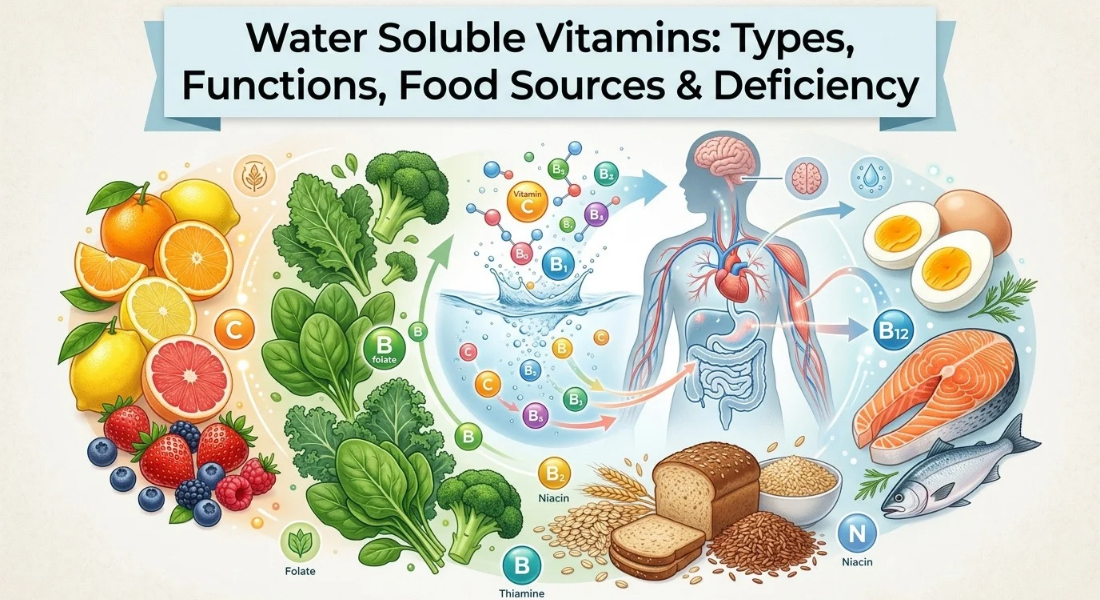
Many people know vitamins are essential but fewer understand why some require regular intake while others can be stored. Water soluble vitamins dissolve in water and include eight B vitamins plus vitamin C which the body keeps only in limited amounts.
This guide explains their types, functions, food sources, absorption, and deficiency risks to help you understand how these nutrients support normal body processes.
Water soluble vitamins dissolve in water and include eight B vitamins plus vitamin C.
These nutrients generally require regular intake because the body stores limited amounts.
B vitamins support metabolism, nervous system activity, and cell processes.
Vitamin C supports collagen formation, antioxidant protection, and iron absorption.
A varied diet provides the main sources of water soluble vitamins.
Water soluble vitamins are nutrients that dissolve in water before the body absorbs them. They enter the bloodstream and help cells perform essential processes such as metabolism, growth, and normal function.
Unlike fat soluble nutrients these vitamins are usually stored only in limited amounts. Because the body does not maintain large reserves regular intake from food helps maintain adequate levels.
The National Institutes of Health (NIH) Office of Dietary Supplements explains that water soluble vitamins include vitamin C and the B vitamin group each supporting different biological functions.
Water soluble vitamins are one category within the wider world of essential nutrients. For a complete overview of vitamin types, benefits, sources, and supplements see our complete guide on Vitamins →.
The body needs a consistent supply because many water soluble vitamins participate in daily processes such as energy metabolism, nervous system activity, and cell production.
Since storage capacity is limited long periods without sufficient dietary sources may increase the risk of deficiency for certain nutrients.
Excess amounts of some water soluble vitamins are commonly removed through urine although this does not mean high intake is always harmless.
There are nine recognised water soluble vitamins: eight B vitamins and vitamin C. Together these nutrients form the main vitamin group that dissolves in water and requires regular dietary intake.
The B complex vitamins include:
Vitamin B1 (Thiamine)
Vitamin B2 (Riboflavin)
Vitamin B3 (Niacin)
Vitamin B5 (Pantothenic Acid)
Vitamin B6
Vitamin B7 (Biotin)
Vitamin B9 (Folate)
Vitamin B12
Vitamin C is the ninth water soluble vitamin and has different roles from the B vitamin family.
B vitamins mainly support processes related to metabolism, nervous system function, and cell activity. Vitamin C contributes to collagen formation, antioxidant protection, and other important body functions.
B vitamins and vitamin C belong to the same water soluble category but support different areas of health. B vitamins are involved in converting nutrients into usable energy, supporting nerve function, and helping maintain normal cell processes.
Vitamin C works differently by supporting collagen production, antioxidant activity, wound healing, and iron absorption. Both groups need regular dietary sources because the body has limited storage ability for these nutrients.
Each water soluble vitamin has a specific role although many work together to support metabolism, cell activity, and normal body processes.
According to the NIH Office of Dietary Supplements B vitamins contribute to functions including energy metabolism, nervous system support, and red blood cell formation.
Vitamin C supports collagen production and helps protect cells from oxidative stress through its antioxidant activity.
The eight B vitamins have individual roles within the body.
Vitamin B1 (thiamine) helps process carbohydrates and supports normal nerve function.
Vitamin B2 (riboflavin) contributes to energy production and helps maintain healthy cells.
Vitamin B3 (niacin) supports metabolism and nervous system processes.
Vitamin B5 (pantothenic acid) participates in energy related reactions.
Vitamin B6 helps with protein metabolism and neurotransmitter production.
Vitamin B7 (biotin) supports nutrient metabolism.
Vitamin B9 (folate) is involved in DNA formation and normal cell division.
Vitamin B12 supports nerve function and red blood cell formation.
Vitamin C plays an important role in collagen production which helps maintain connective tissues and supports wound healing.
It also acts as an antioxidant helping protect cells from oxidative damage. Vitamin C assists with iron absorption from plant based foods making it an important nutrient within a balanced diet.
Water soluble vitamins are found across many food groups which is why eating a varied diet helps provide different nutrients.
B vitamins are commonly found in:
Whole grains
Legumes
Eggs
Meat
Dairy products
Fish
Fortified foods
Vitamin C is mainly found in:
Citrus fruits
Berries
Peppers
Broccoli
Tomatoes
Different foods provide different combinations of water soluble vitamins. Choosing a variety of sources improves the chance of meeting nutritional needs. Food preparation can also influence vitamin levels because some water soluble nutrients may be affected by cooking methods.
Because these nutrients dissolve in water some amounts can be lost when foods are cooked in large quantities of water. Methods such as steaming or using cooking liquids in meals may help retain more nutrients compared with excessive boiling.
Storage time, heat exposure, and preparation methods can influence the final vitamin content of foods.
Water soluble vitamins are broken down during digestion and absorbed through the digestive system into the bloodstream. After absorption they travel to tissues where they support different biological processes.
The body uses these nutrients as needed rather than storing large amounts for long periods. This limited storage ability is one reason regular dietary intake is important.
Vitamin B12 is an exception because the body can store larger amounts compared with many other water soluble vitamins. Understanding absorption and storage helps explain why consistent food sources are important for maintaining nutrient levels.
The body removes many excess amounts of water soluble vitamins through urine. However this does not mean unlimited intake is safe. High dose supplements can still create concerns especially when taken without a clear nutritional need.
The NIH Office of Dietary Supplements provides guidance on safe intake levels and supplement considerations for individual nutrients.
A shortage of water soluble vitamins can occur when dietary intake is insufficient or when the body cannot properly absorb certain nutrients.
The effects depend on which vitamin is lacking and how severe the deficiency becomes.
Examples include:
Low vitamin C levels may affect collagen formation and can lead to scurvy in severe cases.
Low vitamin B12 levels may contribute to nerve related problems and blood cell issues.
Low folate levels may affect normal cell division.
These risks are specific to individual nutrient shortages rather than a general lack of all vitamins.
People with restricted diets, nutrient absorption problems, or increased nutritional needs may have a higher risk of specific water soluble vitamin deficiencies.
Certain health conditions can affect how nutrients are absorbed or used by the body. A healthcare professional can help identify whether symptoms are linked to a possible deficiency and whether dietary changes are needed.
Water soluble vitamins include vitamin C and eight B vitamins that support important processes such as metabolism, cell function, and nervous system activity.
A varied diet remains the primary way to obtain these nutrients. Understanding how this vitamin category works helps you make informed nutrition choices.
Water soluble vitamins dissolve in water and include vitamin C plus eight B vitamins. The body stores limited amounts of them.
There are nine water soluble vitamins: eight B vitamins and vitamin C.
Most are not stored in large amounts so regular intake is important.
B vitamins come from grains, legumes, eggs, meat, dairy, and fish. Vitamin C is found in fruits and vegetables.
Yes. High doses especially from supplements may cause health concerns.
Signs vary by nutrient but may include vitamin C related collagen issues, B12 related nerve problems, and folate related cell issues.






Reader Discussion
Leave a Reply