- by Daily Talkin Staff
- July 8, 2026
-

-
-
Loading
Loading
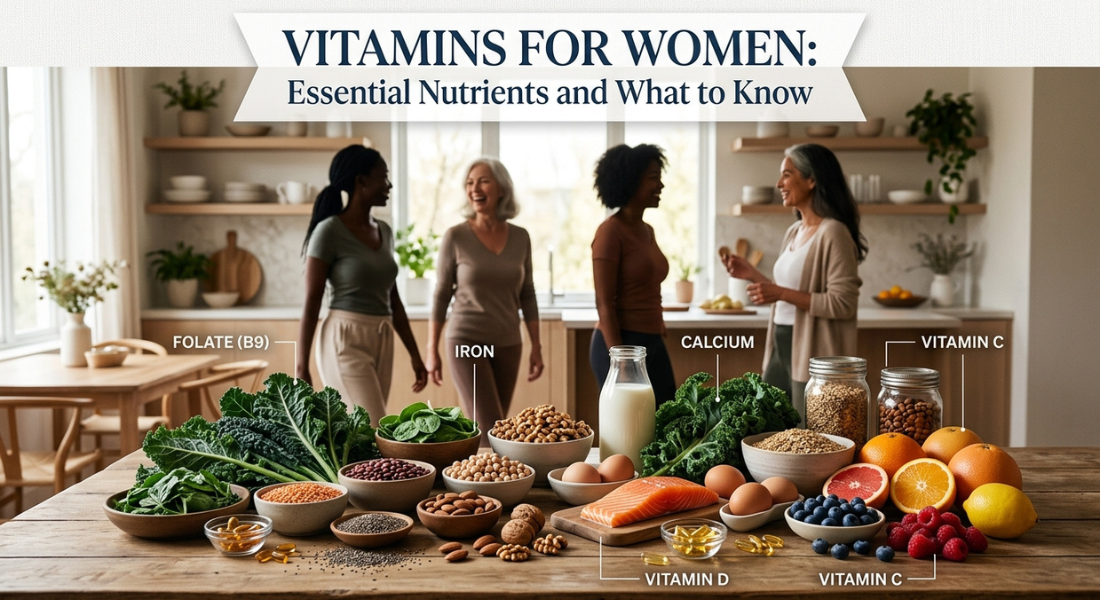
Wondering whether vitamins for women are different from those needed by men? Women need the same essential vitamins but some nutrients may deserve extra attention because needs can vary with menstruation, pregnancy, age and diet.
This guide covers key nutrients for women, their food sources, changing needs across life stages, and when supplements may be worth considering.
Women do not all need the same vitamins or daily supplements.
Folate and iron can deserve particular attention during reproductive years.
Vitamin B12, vitamin D, calcium, magnesium, vitamin C and zinc also contribute to nutritional adequacy.
A varied diet is the preferred foundation for meeting nutrient needs.
Life stage and dietary patterns can change which nutrients deserve extra attention.
Supplements are best matched to an actual nutritional need.

There is no single “women’s vitamin” that everyone needs. Folate, iron, vitamin B12, vitamin D, calcium, magnesium, vitamin C and zinc can deserve particular attention depending on life stage, diet and nutritional circumstances.
The right priorities are individual rather than determined by gender alone.
Folate supports normal cell production and becomes especially relevant before and during pregnancy. Iron also deserves attention during menstruating years because regular blood loss increases dietary requirements.
The NIH lists 18 mg of iron daily for women aged 19 to 50 compared with 8 mg after age 51.
Vitamin B12 is particularly relevant when dietary intake is limited while vitamin D and calcium work together in maintaining bone health.
These nutrients should not be treated as interchangeable: their food sources, nutritional roles and circumstances requiring extra attention differ.
Magnesium, vitamin C and zinc can contribute to overall nutritional adequacy through a varied diet. Nuts, seeds, beans, vegetables, fruits, seafood and other nutrient rich foods can provide them.
Their importance is best considered alongside the overall eating pattern rather than as isolated “must have” supplements.
A food first approach can help women obtain several priority nutrients from the same meals. Leafy greens, beans, lentils, fruits, vegetables, nuts, seeds, seafood, dairy or fortified alternatives and other protein foods can collectively support nutritional adequacy.
USDA MyPlate recommends variety across major food groups.
Leafy greens beans and lentils are useful sources of folate while citrus fruits, berries and peppers can contribute vitamin C. Nuts and seeds provide magnesium, and a varied selection of vegetables adds several nutrients at once.
Combining these foods makes it easier to build meals around nutritional variety.
Fish, eggs, dairy foods and lean meats can contribute nutrients such as vitamin B12, iron, calcium and vitamin D. Fortified cereals, milk alternatives and other fortified foods can also help, particularly when natural dietary sources are limited.
Check food labels because nutrient amounts vary between products.
Nutrient | Why It Matters for Women | Food Sources | Who May Need Extra Attention |
Folate | Cell production and reproductive health | Leafy greens, beans, fortified grains | Women who can become pregnant |
Iron | Supports oxygen carrying red blood cells | Meat, seafood, beans, fortified grains | Menstruating women |
Vitamin B12 | Supports normal blood and nerve function | Meat, fish, eggs, dairy, fortified foods | People with limited animal food intake |
Vitamin D | Works with calcium for bone health | Fatty fish, fortified foods | People with limited dietary or other sources |
Calcium | Supports bone health | Dairy, fortified alternatives, tofu | Later adulthood and low intake diets |
Magnesium | Supports normal body processes | Nuts, seeds, beans, whole grains | Limited or highly restricted diets |
Vitamin C | Supports collagen formation and iron absorption | Citrus, berries, peppers, broccoli | Limited fruit and vegetable intake |
Zinc | Supports normal immune and cellular functions | Seafood, meat, beans, nuts | Restricted or limited diets |
Yes Nutritional priorities can shift across adulthood rather than following one universal list. Menstruation can increase attention to iron pregnancy planning makes folic acid particularly important and later adulthood can increase the importance of maintaining adequate calcium and vitamin D intake.
Regular menstrual blood loss increases the amount of iron that some women need from their diet. Iron rich foods include lean meat, seafood, beans, lentils, spinach and fortified grains.
The goal is adequate intake not automatically taking an iron supplement without establishing a nutritional reason.
Folic acid is particularly important for women who could become pregnant. The CDC recommends 400 micrograms of folic acid each day for women of reproductive age alongside folate containing foods.
Higher amounts may apply in specific circumstances so individual guidance is appropriate.
As women age maintaining adequate calcium and vitamin D becomes an important nutritional consideration for bone health. U.S. women’s health guidance notes that calcium needs rise after menopause while vitamin D helps the body use calcium effectively.
Certain circumstances can make nutritional adequacy harder to achieve. These include restricted food choices, limited dietary variety, pregnancy, menstruation and later adulthood. Having one of these circumstances does not automatically mean you have a deficiency.
It simply gives you a reason to pay closer attention to food intake and when appropriate professional advice.
Vegetarian and vegan diets can be nutritionally adequate when well planned but nutrients such as vitamin B12 and iron may require deliberate attention.
Highly restrictive diets or very limited food variety can also reduce exposure to important nutrient sources. Fortified foods can sometimes help fill predictable dietary gaps.
Food intake is only part of the picture. Some medical or digestive circumstances can affect nutrient absorption while poor appetite or significant dietary restriction can reduce intake.
In these situations a healthcare professional can help determine whether dietary changes, testing or supplementation is appropriate.
Not necessarily. Women need adequate nutrients but that does not mean every woman needs a daily supplement.
A varied diet is the foundation while supplements can have a role when nutritional needs are difficult to meet through food or when a professional recommends them for a specific circumstance.
Supplementation may be considered for a diagnosed deficiency, pregnancy or pregnancy planning, restricted dietary intake, or another circumstance affecting nutritional needs.
For example folic acid has a specific role for women who could become pregnant. The appropriate product and amount depend on individual circumstances.
Taking higher amounts does not automatically improve nutrition. Unnecessary high dose products can increase the risk of excessive intake, and supplements can interact with medicines.
Women should therefore assess whether a genuine nutritional need exists rather than choosing products solely because they are marketed specifically for women.
Women’s nutritional needs sit within the wider science of vitamins, including their functions, sources, deficiencies and supplement safety.
This is part of our complete guide on Vitamins: Complete Guide to Types, Benefits, Sources & Supplements → see the full guide here.

A practical approach starts with dietary variety then considers life stage and personal circumstances. Prioritise nutrient rich foods, identify situations that may affect intake, and consider supplementation only when there is a clear nutritional reason.
This keeps decisions based on nutritional needs rather than gender focused marketing.
Build meals around a mixture of vegetables, fruits, whole grains, protein foods and dairy or fortified alternatives. Variety matters because different foods supply different nutrients.
A diverse eating pattern can therefore support several nutritional needs at once instead of relying on one supplement to cover everything.
Before choosing a multivitamin or individual nutrient, consider your diet, life stage and any circumstances that may affect intake.
If you are unsure whether supplementation is necessary a registered dietitian or healthcare professional can help match the decision to your actual nutritional needs.
Women do not need a universal list of daily supplements. Folate, iron, B12, vitamin D, calcium and other nutrients can deserve particular attention depending on menstruation, life stage and dietary circumstances.
A varied food first eating pattern provides the foundation while supplements are best considered when there is a clear nutritional reason.
Folate, iron, vitamin B12, vitamin D, calcium, magnesium, vitamin C and zinc are key nutrients, but needs vary by diet and life stage.
No A varied diet can provide essential nutrients while supplements may be useful when a specific need exists.
Iron deserves particular attention because menstruation can increase iron needs. Iron rich foods can help support adequate intake.
Calcium and vitamin D are particularly important for supporting bone health while other nutrients depend on individual dietary needs.
Not necessarily. A multivitamin may help in some situations but should not replace a varied nutrient rich diet.
Yes Most women can meet their needs through a varied diet although some circumstances may make supplementation appropriate.





Reader Discussion
Leave a Reply