- by Daily Talkin Staff
- July 8, 2026
-

-
-
Loading
Loading
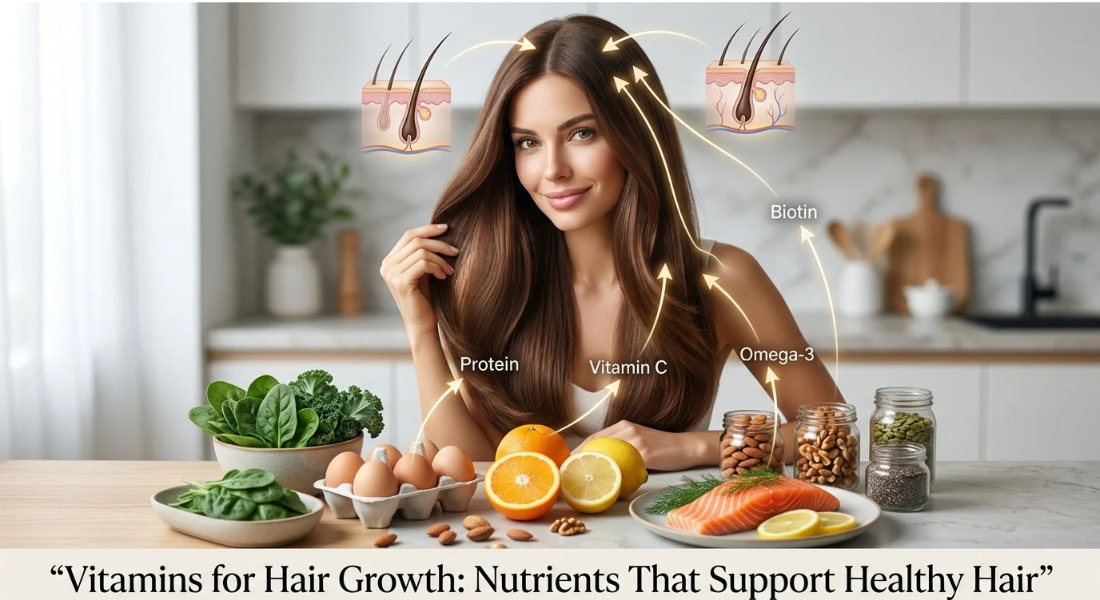
Hair thinning or weak strands may sometimes be linked to missing nutrients rather than hair care habits alone. Vitamins for hair growth are nutrients that help support normal hair follicle function especially when deficiencies exist.
This guide explains key hair related vitamins, evidence, food sources, and supplement considerations.
Vitamins can support healthy hair mainly by helping maintain normal hair follicle function and correcting nutrient deficiencies.
Biotin, vitamin D, vitamin C, and vitamin E are among the nutrients commonly linked with hair health.
Hair vitamins are most useful when they address a genuine nutritional gap rather than being used as guaranteed growth solutions.
Foods such as eggs, fatty fish, leafy greens, citrus fruits, nuts, and seeds provide nutrients associated with healthy hair.
High dose supplementation does not always improve hair growth and should be approached carefully.
Testing and professional guidance can help identify whether specific nutrients are needed.

Vitamins linked with healthy hair include biotin, vitamin D, vitamin C, vitamin E, and several B vitamins. These nutrients help maintain normal hair follicle activity, strand structure, and growth cycles when the body has adequate levels.
However vitamins do not automatically make hair grow faster for everyone. Their biggest role is often correcting nutritional gaps that may affect hair health.
Vitamin | Hair Health Role | Food Sources | Deficiency Link |
Biotin (B7) | Supports keratin production | Eggs, nuts, seeds | May affect hair structure when deficient |
Vitamin D | Supports hair follicle function | Fatty fish, fortified foods | Low levels are associated with some hair concerns |
Vitamin C | Supports collagen formation and iron absorption | Citrus fruits, berries | Can affect tissue health when levels are low |
Vitamin E | Helps protect cells from oxidative stress | Nuts, seeds, oils | Deficiency may affect overall tissue function |
Biotin plays a role in producing keratin a protein that forms much of the hair structure. Because of this connection it is commonly included in hair focused supplements.
True biotin deficiency is uncommon and supplementation usually provides the most benefit for people who have inadequate levels rather than those already meeting their needs.
Vitamin D is involved in processes that support normal hair follicle development. Research has explored links between low vitamin D levels and certain hair concerns.
Correcting vitamin D deficiency may support healthier hair cycles but results depend on individual nutritional status rather than supplementation alone.
Vitamin C contributes to collagen formation and helps the body absorb iron a nutrient involved in healthy hair function.
Vitamin E provides antioxidant support that helps protect cells from oxidative stress. Both nutrients are relevant to hair health but should be considered as part of overall nutrition.
Nutrient deficiencies can influence hair health by affecting follicle activity, strand strength, and normal growth cycles. When the body lacks specific nutrients hair changes may appear because follicles require adequate nutritional support.
Vitamins are most helpful when they correct a genuine deficiency. Taking extra nutrients beyond what the body needs does not guarantee thicker or faster growing hair.
Certain nutrients are commonly investigated when people experience hair concerns, including vitamin D, iron related nutrients, zinc, and some B vitamins.
For example low iron levels may affect oxygen delivery to tissues while insufficient vitamin D has been studied in relation to follicle function. These concerns require individual assessment rather than self diagnosis.
Higher vitamin intake does not always lead to better hair results. Hair growth depends on multiple factors, including genetics, hormones, overall health, and nutritional status.
Excessive amounts of some nutrients may also create problems. High dose supplements should not be used as a shortcut for achieving faster hair growth.

A food first approach can provide many nutrients linked with healthy hair. Foods containing vitamins, minerals, protein, and other compounds may support normal follicle function more effectively than relying only on supplements.
This article focuses specifically on hair related vitamins. For a broader overview of essential nutrients, categories, and general guidance explore our complete guide on vitamins → see the full guide here.
Several foods naturally provide nutrients commonly associated with hair health:
Eggs provide biotin and other B vitamins that support hair structure.
Fatty fish such as salmon provide vitamin D and other nutrients.
Leafy greens contain vitamin C, folate, and minerals.
Citrus fruits provide vitamin C needed for collagen formation.
Nuts and seeds offer vitamin E and minerals linked with normal hair function.
Fortified foods may provide additional vitamin D and B vitamins.
A varied diet can help maintain nutrient availability especially when combined with adequate protein intake.
Hair focused vitamins may help when a person has a nutritional deficiency affecting hair health. However evidence is limited for guaranteed hair growth improvements in people who already consume enough nutrients.
Many commercial products promote dramatic results but healthy hair depends on more than supplements. Nutritional needs, underlying causes, and individual health factors all influence outcomes.
Vitamins are specific nutrients that support normal body processes while hair supplements often combine multiple ingredients such as vitamins, minerals, herbs, or other compounds.
A supplement may contain popular ingredients like biotin or vitamin D but its effectiveness depends on whether those nutrients address an actual nutritional need.
Testing may be useful when symptoms, dietary patterns, or risk factors suggest a possible deficiency. For example people with restricted diets or signs of nutrient imbalance may benefit from professional evaluation.
The goal of testing is to identify whether a nutritional gap exists rather than taking supplements without clear evidence of need.

Choosing hair related vitamins safely starts with understanding your nutritional needs rather than following trends. Supplements should support a balanced approach, not replace healthy dietary habits.
Avoid products with unnecessary high doses or unrealistic promises. A suitable option depends on individual circumstances, existing nutrient levels, and professional advice when required.
Before using hair vitamins consider:
Reviewing the ingredient list and nutrient amounts.
Avoiding excessive doses that exceed recommended levels.
Checking whether the product addresses a real nutritional need.
Discussing supplements with a healthcare professional when necessary.
The right choice is usually based on evidence and personal needs rather than marketing claims.
Vitamins can support healthy hair growth mainly by maintaining normal follicle function and correcting nutrient deficiencies. Nutrients such as biotin, vitamin D, vitamin C, and other minerals may contribute to hair health but supplements are not guaranteed solutions.
A balanced diet and evidence based decisions remain the most reliable approach for supporting stronger healthier hair over time.
Biotin, vitamin D, vitamin C, and vitamin E are commonly linked with hair health. Their benefits depend on nutritional status and whether a deficiency exists.
Certain nutrient deficiencies may contribute to hair problems but hair loss can also result from genetics, hormones, stress, or other health factors.
Biotin supports normal hair structure through its role in keratin production. Supplements are most useful when someone has inadequate biotin levels.
Hair changes usually take time because growth follows natural hair cycles. Improvements are not immediate and depend on the underlying cause.
Yes Excessive intake of some nutrients may create risks, and higher doses do not always improve hair growth results.
Supplements may not be necessary without a nutritional need. Testing or professional guidance can help determine whether supplementation is appropriate.





Reader Discussion
Leave a Reply