- by Daily Talkin Staff
- July 8, 2026
-

-
-
Loading
Loading
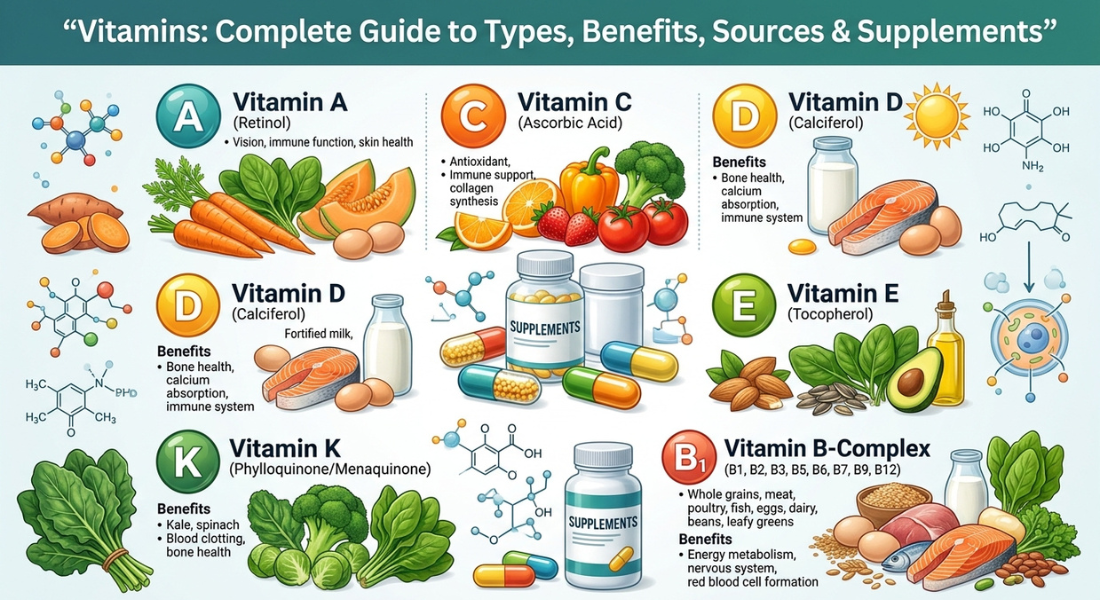
Vitamins are essential nutrients that help the body grow, function properly, and maintain overall health. The body needs 13 essential vitamins that support processes such as immunity, energy metabolism, vision, bone health, and cell function.
These nutrients are mainly obtained through a balanced diet containing a variety of foods. In some situations vitamin supplements may help fill nutritional gaps but they should be used carefully and not replace healthy eating habits.
This guide explains vitamin types their functions, food sources, deficiency signs, supplement safety, and related vitamin topics.
Vitamins are essential micronutrients that help maintain normal body functions and overall health.
The 13 essential vitamins are divided into fat soluble and water soluble categories.
A balanced diet with varied foods is the primary way to obtain vitamins.
Vitamin deficiencies can affect health and may require dietary changes or professional guidance.
Supplements can help in specific situations but should be used responsibly.

Vitamins are organic micronutrients required in small amounts to support normal body processes. Unlike macronutrients such as carbohydrates, proteins, and fats vitamins do not provide energy directly but help the body use nutrients effectively.
The human body depends on vitamins for important functions including immune defence, cell production, metabolism, nervous system support, and maintaining healthy tissues. A lack of specific vitamins can contribute to deficiency related health problems.
Different vitamins have different roles throughout the body.
Key functions include:
Supporting immune system activity
Helping convert food into usable energy
Maintaining healthy skin and tissues
Supporting vision and eye health
Contributing to bone development
Helping normal blood formation
For example vitamin C supports collagen formation, vitamin D helps calcium absorption, and vitamin K contributes to normal blood clotting.
Vitamins and minerals are both micronutrients but they are different types of substances.
Vitamins are organic compounds produced by plants and animals while minerals are inorganic elements obtained from soil, water, and foods.
Examples of minerals include:
Calcium for bones and teeth
Iron for oxygen transport
Zinc for immune function
Magnesium for muscle and nerve function
Together vitamins and minerals support many of the body's essential biological processes.
Vitamins are mainly divided into two categories: fat soluble vitamins and water soluble vitamins. This classification explains how the body absorbs, stores, and uses different vitamins.
Fat soluble vitamins can be stored in body tissues while water soluble vitamins generally require regular intake because they are not stored in large amounts.
Fat soluble vitamins are absorbed with dietary fats and stored mainly in the liver and fatty tissues.
The four fat soluble vitamins are:
Vitamin A
Vitamin D
Vitamin E
Vitamin K
Because these vitamins can accumulate in the body, excessive intake from supplements may create health risks.
Water soluble vitamins dissolve in water and are generally not stored extensively.
The main water soluble vitamins include:
Vitamin C
B vitamins
The B vitamin family includes thiamine (B1), riboflavin (B2), niacin (B3), pantothenic acid (B5), vitamin B6, biotin (B7), folate (B9), and vitamin B12. Regular consumption of vitamin rich foods helps maintain adequate levels.
The human body requires 13 essential vitamins each with specific roles in maintaining health. These include vitamins A, C, D, E, K, and eight B vitamins. Understanding what each vitamin does helps explain why a varied diet is important.
Vitamin A supports:
Normal vision
Immune system function
Cell growth
Healthy skin maintenance
Food sources include:
Carrots
Sweet potatoes
Leafy green vegetables
Eggs
Dairy products
Vitamin A exists in different forms, including retinol from animal foods and carotenoids from plant sources.
B vitamins help the body process nutrients and support energy metabolism.
The B vitamin group includes:
Vitamin B1 (thiamine)
Vitamin B2 (riboflavin)
Vitamin B3 (niacin)
Vitamin B5 (pantothenic acid)
Vitamin B6
Vitamin B7 (biotin)
Vitamin B9 (folate)
Vitamin B12
They are involved in:
Energy production
Nervous system function
Red blood cell formation
Cell metabolism
For a complete breakdown of B vitamins see our future guide on B Vitamins.
Vitamin C is an antioxidant vitamin involved in:
Collagen production
Wound healing
Immune system support
Iron absorption
Common food sources include citrus fruits, strawberries, peppers, broccoli, and tomatoes.
Vitamin D plays an important role in:
Calcium absorption
Bone health
Muscle function
Immune regulation
The body can produce vitamin D through sunlight exposure, while dietary sources include fatty fish, fortified foods, and some supplements.
Vitamin E acts as an antioxidant that helps protect cells from oxidative damage.
Sources include:
Nuts
Seeds
Vegetable oils
Green vegetables
Vitamin K supports:
Normal blood clotting
Bone metabolism
Major sources include leafy green vegetables such as spinach and kale.

A balanced diet is the primary way most people obtain the vitamins their bodies need. Whole foods provide vitamins alongside other beneficial nutrients such as fibre, minerals, antioxidants, and plant compounds.
Foods contain different vitamin profiles which is why eating a variety of food groups is important. A diet based only on a limited selection of foods may increase the risk of missing specific nutrients.
Fruits and vegetables are important sources of many essential vitamins, especially vitamin C, vitamin A compounds, vitamin K, and folate.
Examples include:
Citrus fruits for vitamin C
Carrots and sweet potatoes for vitamin A compounds
Leafy greens for vitamin K and folate
Berries for antioxidant compounds
Colourful plant foods often contain different combinations of vitamins and protective nutrients.
Animal foods provide important vitamins that may be limited in some plant based diets.
Common sources include:
Eggs for vitamin A and B vitamins
Fish for vitamin D and vitamin B12
Dairy products for vitamin D and vitamin A when fortified
Meat for vitamin B12 and other B vitamins
Vitamin B12 is naturally found mainly in animal based foods, although some fortified plant foods can provide it.
Some foods have vitamins added during manufacturing to improve nutritional value.
Examples include:
Fortified cereals
Fortified milk
Enriched grains
Vitamin added beverages
Fortified foods can be useful for people who have difficulty meeting nutritional needs through diet alone. However they should complement a balanced eating pattern rather than replace nutrient rich whole foods.
Vitamin deficiency occurs when the body does not receive or absorb enough of a specific vitamin required for normal function.
The effects depend on the vitamin involved, the severity of the deficiency, and how long nutrient levels remain low. Some deficiencies may cause noticeable symptoms while others may develop gradually.
Possible signs can include:
Persistent tiredness
Weak immune function
Changes in skin or hair health
Poor wound healing
Vision related issues
Muscle weakness
For example insufficient vitamin C can affect collagen production while low vitamin D levels may influence bone health because of its role in calcium absorption.
Vitamin deficiencies may happen because of:
Limited dietary variety
Restricted diets
Poor nutrient absorption
Certain medical conditions
Increased nutritional requirements
Some groups may have higher nutritional needs, including pregnant women, older adults, and people following specific dietary patterns.
Healthcare professionals may recommend vitamin testing when symptoms, medical conditions, or risk factors suggest a possible deficiency.
Commonly tested nutrients include:
Vitamin D
Vitamin B12
Iron related nutrients
Testing helps identify whether supplementation or dietary changes may be appropriate.

Vitamin supplements can help some people meet nutritional needs when food intake alone is insufficient. However supplements are not designed to replace a healthy diet.
Most people can obtain adequate vitamins through varied food choices that include fruits, vegetables, whole grains, proteins, and fortified foods.
Some people may require supplements because of:
Diagnosed vitamin deficiencies
Certain medical conditions
Nutritional restrictions
Specific life stages
Examples include:
Vitamin B12 supplements for some people with limited dietary sources
Vitamin D supplements when levels are low
Prenatal vitamins during pregnancy under professional guidance
Supplement decisions should be based on individual needs rather than general trends.
More vitamins are not always better. Excessive intake can cause problems, especially with fat soluble vitamins that are stored in body tissues.
Potential concerns include:
Vitamin toxicity
Interactions with medicines
Excess nutrient intake
For example high amounts of vitamin A can be harmful particularly during pregnancy.
Before choosing a supplement:
Identify whether there is a nutritional need
Check the ingredient label and dosage
Avoid unnecessary high dose products
Discuss usage with a healthcare professional when needed
Reliable information about vitamin supplements is available through resources such as the NIH Office of Dietary Supplements.
B vitamins are a group of water soluble vitamins that support energy metabolism, nervous system function, and normal cell processes.
The group includes vitamins such as B1, B2, B3, B6, B7, B9, and B12. Different B vitamins have specific roles from helping convert food into energy to supporting blood and nerve health. For a complete breakdown of B vitamins see our full guide on B Vitamins →
Fat soluble vitamins are vitamins that dissolve in fat and can be stored in the body. This group includes vitamins A, D, E, and K, which support functions such as vision, immunity, antioxidant protection, and blood clotting. Because the body stores them excessive intake may create risks.
For a complete breakdown of fat soluble vitamins see our full guide on Fat Soluble Vitamins →
Water soluble vitamins include vitamin C and the B vitamin family. These nutrients dissolve in water and are generally not stored in large amounts meaning regular dietary intake is important.
They contribute to energy production, immune support, and normal body functions. For a complete breakdown of water soluble vitamins see our full guide on Water Soluble Vitamins →
Vitamins can support healthy hair by helping maintain normal cell function and nutrient availability. Nutrients such as biotin, vitamin D, and vitamin C are commonly discussed in relation to hair health although results depend on individual nutritional status.
For a complete breakdown of vitamins for hair growth see our full guide on Vitamins for Hair Growth →
Certain vitamins contribute to the body's energy processes especially B vitamins involved in converting food into usable energy. Low levels of some nutrients may contribute to tiredness but vitamins do not work as a direct energy source like calories from food.
For a complete breakdown of vitamins for energy see our full guide on Vitamins for Energy →
Vitamin needs can change throughout different life stages, including adolescence, pregnancy, breastfeeding, and adulthood. Nutrients such as folate, iron, vitamin D, and calcium may be particularly important depending on individual circumstances.
For a complete breakdown of vitamins for women see our full guide on Vitamins for Women →
Men require essential vitamins to support overall health, including immune function, metabolism, and normal body processes. The most suitable vitamins depend on diet, lifestyle, age, and specific nutritional needs rather than gender alone.
For a complete breakdown of the best vitamins for men see our full guide on Best Vitamins for Men →
Children need vitamins to support growth, development, immunity, and healthy body functions. A balanced diet is usually the best source while supplements may be recommended when children have specific nutritional needs.
For a complete breakdown of kids vitamins see our full guide on Kids Vitamins →
Bariatric vitamins are specialised supplements designed for people who have undergone weight loss surgery and may have increased risks of nutrient deficiencies. Medical guidance is important because nutritional needs can vary after procedures.
For a complete breakdown of bariatric vitamins see our full guide on Bariatric Vitamins →
Postnatal vitamins focus on nutritional needs after childbirth including nutrients that support recovery and breastfeeding when applicable. Individual requirements vary so healthcare advice can help determine suitable supplementation.
For a complete breakdown of postnatal vitamins see our full guide on Postnatal Vitamins →
Eye vitamins refer to nutrients associated with maintaining normal eye health and vision function. Vitamins such as vitamin A and antioxidant nutrients are often discussed because of their roles in protecting and supporting eye tissues.
For a complete breakdown of eye vitamins see our full guide on Eye Vitamins →
Liquid vitamins are supplement products available in liquid form rather than tablets or capsules. They may be preferred by some people due to convenience but quality, dosage, and nutritional need should still be considered.
For a complete breakdown of liquid vitamins see our full guide on Liquid Vitamins →
Vitamins are essential nutrients that support many important body functions, from immunity and energy metabolism to vision, bone health, and cell maintenance.
Understanding the difference between vitamin types, food sources, deficiencies, and supplements helps people make better nutrition decisions.
A balanced diet remains the best foundation for getting essential vitamins while supplements can be useful when specific nutritional needs exist. Using reliable health information and professional guidance helps ensure vitamins are used safely and effectively.
Vitamins support essential processes including immunity, metabolism, cell growth, nervous system function, and maintaining healthy tissues.
Yes Most people can meet vitamin needs through a varied diet containing fruits, vegetables, proteins, whole grains, and fortified foods.
No Supplements may not be suitable for everyone, and high doses of certain vitamins can cause health risks.
Fat soluble vitamins such as vitamins A, D, E, and K can be stored in body tissues.
Yes Nutritional requirements may change during childhood, pregnancy, adulthood, and older age due to different health needs.






Reader Discussion
Leave a Reply