- by Daily Talkin Staff
- July 8, 2026
-

-
-
Loading
Loading
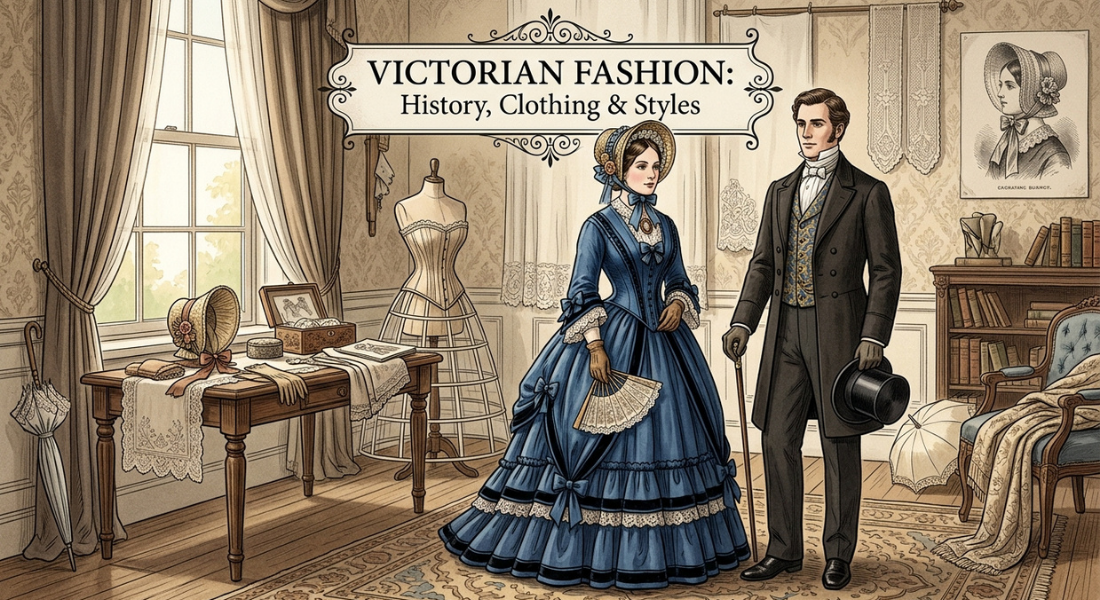
Victorian fashion describes the clothing, silhouettes and styling that developed during Queen Victoria's reign from 1837 to 1901. It was not one fixed look: dresses, tailoring, corsetry, skirts, accessories and fabrics changed substantially across the period.
This guide explains Victorian fashion through its major decades, garments, social influences, textiles, industrial developments and continuing influence on modern style. Victorian fashion was the changing style of dress associated with the period from 1837 to 1901.
It included structured women's dresses, corsets, crinolines and bustles alongside men's tailoring, hats and formalwear with fashion shaped by social class, technology, industrialisation and changing cultural expectations.
Victorian fashion lasted from 1837 to 1901 and changed substantially throughout Queen Victoria's reign.
Women's silhouettes evolved through full skirts, crinolines, crinolette structures, bustles and the sleeve focused styles of the 1890s.
Victorian clothing was influenced by social class, gender, occupation, respectability and occasion.
Industrialisation transformed fashion through textile manufacturing, sewing technology, synthetic dyes and ready made clothing.
Victorian fashion is not identical to 1800s fashion because the broader century also includes the pre Victorian period from 1800 to 1836.
Victorian details continue to influence modern fashion, particularly lace, structured bodices, high necklines, sleeves and corset inspired designs.

Victorian fashion was the evolving clothing culture associated with Britain and the wider Western world during Queen Victoria's reign. Rather than having one universal appearance it moved through distinct silhouettes and clothing practices between 1837 and 1901.
Fashion reflected more than personal taste. Social class, gender expectations, occupation, wealth, technology, consumer culture and the occasion all influenced what people wore. Historical collections show how quickly structural garments and silhouettes changed throughout the era.
The Victorian era began in 1837, when Victoria became Queen, and ended in 1901 when she died. This makes Victorian fashion a defined period within the broader history of 19th century clothing.
The period should not be treated as a single style. Fashion at the beginning of Victoria's reign looked substantially different from the clothing of the 1880s or 1890s.
Victorian clothing was often characterised by structured silhouettes, layered garments and careful attention to occasion and appearance.
For women, corsets, petticoats, crinolines and later bustles helped create changing body shapes. Men's clothing increasingly relied on tailored coats, waistcoats, trousers and formal shirts.
The early Victorian period developed from earlier Regency and 19th century styles rather than appearing suddenly in 1837.
Waistlines, sleeves, skirts and proportions changed progressively producing the more recognisable Victorian silhouettes of the mid and late century.
Victorian fashion developed through recognisable stages from the 1830s to the 1890s. Changes in sleeves, waistlines, skirts, corsetry, crinolines, bustles and tailoring repeatedly altered the fashionable silhouette.
A chronological approach is therefore essential. “Early Victorian” and “late Victorian” are useful descriptions because they represent different phases of a long period not simply alternative names for the same style. The V&A's historical collections demonstrate these changes particularly clearly.
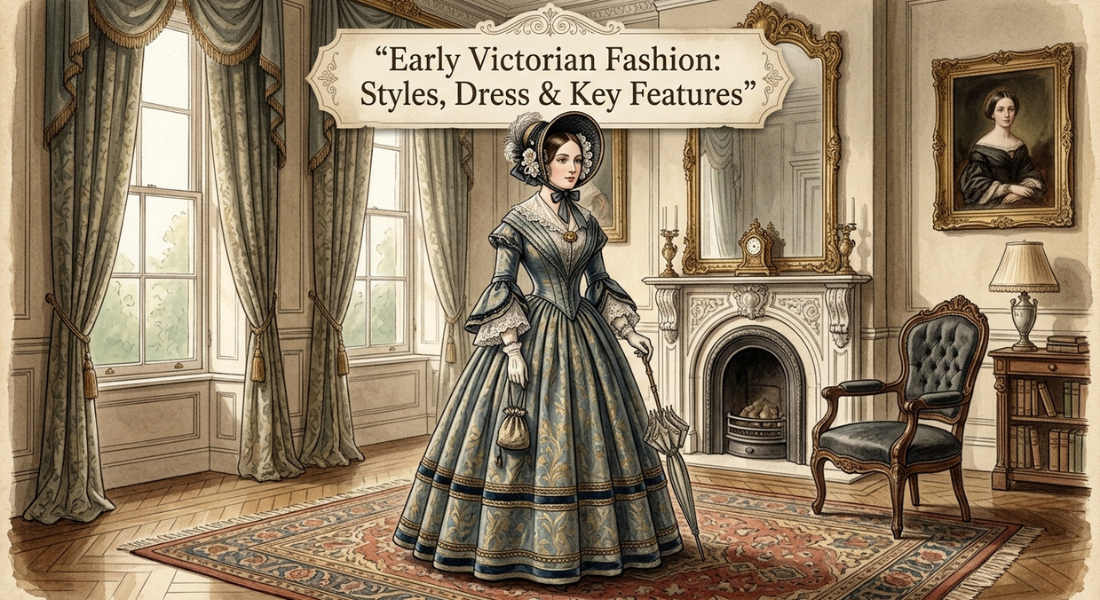
The 1830s marked the transition into the Victorian period. Early Victorian clothing retained some earlier 19th century characteristics but developed stronger emphasis around the waist and increasingly dramatic sleeves.
Women's skirts were full while bodices created a defined upper body shape. This transitional decade is important because it connects pre Victorian fashion with the styles that became established during Victoria's reign.
During the 1840s the exaggerated sleeve shapes of the preceding decade became more restrained. Shoulders appeared lower and skirts continued to expand.
Structured bodices and defined waistlines remained important while women's clothing increasingly relied on layers and carefully constructed proportions.
The 1850s brought one of the most recognisable developments in Victorian women's dress: the cage crinoline. Introduced in the mid 1850s it supported wide skirts without requiring numerous heavy petticoats.
The V&A records the emergence of the cage crinoline in 1856 and notes that sewing machines helped make these structures affordable to a wider audience.
Crinoline silhouettes continued into the 1860s but gradually changed shape. Skirts became flatter at the front with increasing emphasis toward the rear.
The crinolette helped bridge the transition between the wide cage crinoline and the bustle. This demonstrates why Victorian fashion should be understood as continuous development rather than a series of abrupt decade changes.
The 1870s introduced the bustle as a major structural feature. Instead of creating volume evenly around the skirt clothing increasingly concentrated fullness at the back.
Skirts became narrower at the front, while pleats, ruffles and drapery created elaborate rear effects. The bustle sometimes called a tournure or dress improver became central to fashionable silhouettes.
The bustle returned in an especially pronounced form during the 1880s. Some structures projected dramatically from the back while tailoring and corsetry created a more defined hourglass appearance.
However popular images can exaggerate the scale of Victorian clothing. Museum collections show that actual garments and understructures existed in varied sizes and forms.
By the 1890s the angular bustle silhouette had declined. Skirts became simpler and more practical while volume shifted toward the sleeves.
Large sleeves, stronger tailoring and more active looking silhouettes became characteristic of late Victorian fashion. These developments gradually led toward the styles associated with the Edwardian period.
Victorian women's fashion changed considerably between 1837 and 1901. Dresses, bodices, skirts, corsets, petticoats, outerwear and accessories worked together to create different silhouettes.
The appropriate clothing depended on occasion, social position, age and period. Daywear, eveningwear, walking clothing and formal dress could all have different requirements.
For a complete breakdown of Victorian women's clothing, silhouettes, garments and social influences see our full guide on Victorian Women's Fashion →
A Victorian dress was part of a coordinated clothing system rather than simply one garment. Bodices, skirts, undergarments and outer layers worked together to produce the desired silhouette.
The supporting structures beneath clothing were particularly important. Corsets shaped the waist, while petticoats, crinolines and bustles altered the volume and proportions of skirts.
Common garments included bodices, skirts, dresses, gowns, jackets, coats and capes. Petticoats and other undergarments were also important to the construction of fashionable silhouettes.
Men commonly wore shirts, waistcoats, trousers and coats with tailoring becoming increasingly central to respectable dress.
Corsets, also known as stays, helped mould the waist and support the silhouette. Their construction and shape changed throughout the period rather than remaining identical.
The V&A notes that corsets varied in construction and became associated with different silhouettes as skirt shapes changed.
A crinoline was a supporting structure used to create large skirt volumes particularly during the mid 19th century. Cage crinolines used hoops to support the skirt while reducing the need for heavy layers of petticoats.
A bustle shifted the emphasis toward the back of the skirt. It became particularly important during the 1870s and 1880s.
Victorian women could wear different dresses according to activity and occasion including:
Morning dresses
Day dresses
Walking dresses
Visiting dresses
Evening dresses
Ball gowns
Riding attire
This variety is important because “Victorian dress” does not describe one universal garment.
Men's clothing commonly included shirts, waistcoats, trousers, coats and formal tailoring. Hats and other accessories completed many outfits.
The National Archives' collection includes Victorian fashion plates showing men's clothing and records how dress was connected with social respectability.
A Victorian outfit depended on gender, occasion, social position and decade. A woman's ensemble could combine a dress, corset, petticoats, outerwear, bonnet or hat, gloves and shoes while men's outfits commonly centred on coordinated tailoring.
Historical outfits should also be distinguished from modern “Victorian inspired” clothing, which borrows selected period details rather than reproducing historical dress accurately.
For complete Victorian outfit examples by period, occasion and clothing type see our full guide on Victorian Era Outfits →

Victorian clothing communicated social position and was shaped by differences in wealth, occupation, respectability, age and lifestyle.
Not everyone dressed like the wealthy figures shown in fashion plates. Working people often needed durable and practical clothing while affluent consumers had greater access to expensive fabrics, skilled dressmaking and changing fashions.
Wealth affected fabric quality, garment complexity, tailoring and the number of clothes someone could own. Fashionable clothing could therefore signal social position.
The National Archives describes clothing as a marker of social respectability and notes that ready made garments helped make some aspects of fashion more affordable while preserving distinctions in appearance.
Working class clothing generally had to balance appearance with practicality, durability and cost. Occupational needs could also affect fabric and garment choices.
Clothing might be reused, repaired or adapted rather than replaced whenever a new fashion appeared.
Respectability was closely connected with appearance. Gender, age and social position influenced what was considered appropriate in public. A garment suitable for formal visiting would not necessarily be suitable for physical work or everyday domestic activity.
Walking, riding, working, visiting and attending formal events required different clothing. Practicality therefore existed alongside fashion. This helps explain why Victorian wardrobes contained more variety than the single “Victorian dress” image often associated with historical costume.
Victorian fashion was strongly connected to developments in textile manufacturing, dyes and fabric availability. Industrial production expanded the range of materials and colours available to consumers.
Colour was particularly significant. In 1856 William Henry Perkin discovered mauveine the first synthetic dye helping introduce a new era of commercially produced colours into Victorian fashion.
Victorian garments could be made from silk, wool, cotton, linen, velvet and lace depending on the garment, season, occasion and wearer's means.
The same broad material could appear in very different forms from practical everyday clothing to elaborate formal dress.
Synthetic dyes expanded the range of vivid colours available to textile producers and consumers. Perkin's discovery of mauveine in 1856 was followed by the development of numerous other synthetic colours.
The Ashmolean explains that aniline dyes could be produced cheaply on an industrial scale helping make stronger colours accessible to a broader section of Victorian society.
Mechanised production increased manufacturing capacity and helped lower the cost of some fabrics and garments. Sewing technology also influenced clothing production. The V&A notes that sewing machines helped make cage crinolines more affordable to a wider audience.
Colour could reflect fashion trends, social conventions, occasion and material availability. Mourning clothing also gave black a particularly important cultural role.
However Victorian colour symbolism should not be reduced to a fixed code. Meanings varied according to context, garment and social circumstances.
Early Victorian Fashion describes the earlier portion of Queen Victoria's reign when clothing developed from earlier 19th century styles toward distinctly Victorian silhouettes.
The period saw defined waists, increasingly full skirts, changing sleeves and the eventual emergence of crinolines. It is best understood as a period of transition rather than one rigid style.
For a complete examination of silhouettes, garments and trends from the early Victorian period see our full guide on Early Victorian Fashion →
Late Victorian fashion refers broadly to the later decades of Victoria's reign when bustle silhouettes, changing skirt proportions, stronger tailoring and distinctive 1890s sleeves shaped fashionable dress.
The period also saw greater interest in practical clothing and changing ideas about women's mobility helping establish the transition toward early 20th century styles.
For a complete breakdown of late Victorian silhouettes, clothing and decade specific styles see our full guide on Late Victorian Fashion →
Victorian fashion extended beyond the main dress or suit. Hats, bonnets, gloves, parasols, jewellery, hairstyles and footwear completed outfits and could communicate occasion, status and fashionability.
These details changed alongside the main silhouette. A bonnet or hairstyle associated with one decade should not automatically be treated as representative of the entire Victorian era.
Common accessories included bonnets, hats, gloves, parasols, jewellery, brooches and fans. Handbags and other carried accessories also appeared in different forms.
Their use depended on the activity and occasion, with formal and outdoor clothing often requiring different accessories.
Victorian hairstyles changed throughout the period. Early styles differed from the elaborate arrangements of the later decades, when hair could be shaped and dressed to complement hats and the fashionable silhouette.
Hairstyles therefore belong within the wider chronology of Victorian fashion rather than being treated as one fixed “Victorian hairstyle.”
Victorian footwear included boots and shoes in different constructions, heel heights and materials. Choice depended partly on gender, activity, fashion and occasion.
Footwear was both practical and aesthetic completing the proportions of an outfit while providing protection during walking and outdoor activity.
Accessories added coordination, formality and visual detail. Gloves could reinforce formal appearance while hats and bonnets framed the face and interacted with hairstyles. Parasols, jewellery and other items could be decorative while also serving practical purposes.
Industrialisation transformed Victorian fashion through mechanised textile production, sewing technology, synthetic dyes, expanding manufacturing and increasingly accessible ready made garments.
These developments mattered because technology changed what people could buy how quickly garments could be produced and how widely new fashions could spread.
The National Archives specifically connects the rise of ready made clothing with changing affordability and fashion consumption.
Sewing machines increased the speed and capacity of garment production. They could be used in manufacturing as well as dressmaking.
Their importance extended beyond convenience because faster production helped support the growing market for manufactured clothing.
Ready made clothing allowed consumers to purchase manufactured garments rather than relying entirely on individually made pieces.
This widened access to some fashionable products and contributed to changing consumer behaviour, although quality, affordability and social distinction still varied.
Industrial textile production increased the availability of fabrics, colours and printed materials. Synthetic dyes added another dimension by making new colours commercially viable.
The result was a fashion environment in which technological innovation could directly influence what consumers saw and purchased.
Fashion plates provided visual representations of current clothing and helped communicate styles to readers and consumers.
The National Archives holds Victorian fashion plates while the V&A notes that fashion plates became prominent in 19th century women's magazines and showcased contemporary trends.
Victorian fashion reflected and reinforced wider cultural values, including respectability, gender expectations, mourning customs, consumerism and changing ideas about public appearance.
Understanding these influences prevents Victorian fashion from becoming a simple catalogue of dresses. Clothing can reveal how people negotiated class, identity, social expectations and changing lifestyles.
Men's and women's clothing followed different conventions although both changed throughout the period. Women's clothing was often more structurally elaborate while men's fashion increasingly emphasised tailored coats, waistcoats and trousers.
These differences reflected contemporary expectations around masculinity, femininity, public behaviour and social roles.
Mourning created specific expectations around clothing with black becoming strongly associated with bereavement.
Queen Victoria's prolonged mourning after Prince Albert's death in 1861 has also influenced modern perceptions of Victorian Britain. The Ashmolean notes that her decades of mourning can skew the popular image of the period toward black clothing.
By the later Victorian period, debates about women's health, mobility and activity influenced some approaches to dress.
The 1890s saw growing interest in practical clothing and dress reform alongside the “New Woman” movement. These developments did not replace conventional fashion but introduced competing ideas about how clothing should function.
Growing retail markets, manufactured garments, fashion publications and advertising helped connect consumers with changing styles.
Middle class consumers in particular became increasingly important to the fashion economy, while fashion continued to distinguish social groups through quality, fit, material and access.
Clothing could communicate respectability, wealth, occupation, gender and fashionable awareness. This made dress a visible part of social identity. The National Archives specifically describes Victorian clothing as a marker of social respectability and class.
Victorian fashion is a subset of 19th century or “1800s” fashion. The Victorian era began in 1837, so clothing from 1800 to 1836 belongs to the broader early 19th century period rather than the Victorian era.
This distinction allows related 1800s fashion searches to be addressed without incorrectly describing every style of the century as Victorian.
Early 19th century fashion was influenced by Regency styles, including relatively high waistlines and Empire influenced silhouettes.
By the 1830s proportions were changing, creating the transition toward the structured waists, fuller skirts and sleeves associated with early Victorian dress.
The clearest historical boundary is 1837 when Victoria became Queen. Fashion did not transform overnight however Styles developed gradually so early Victorian clothing naturally retained influences from preceding decades.
Both terms refer to related historical clothing from the same century so searchers may use them interchangeably even though they are not historically identical. “1800s fashion” covers the entire century while “Victorian fashion” specifically refers to 1837–1901.
The broader 1800s should provide historical context while the main depth should remain on Victorian fashion. This keeps the pillar historically accurate and prevents a separate broad 19th century fashion topic from competing with its central intent.

Victorian fashion continues to influence modern clothing through high necklines, lace, puffed sleeves, structured bodices, long skirts, corset inspired construction and romantic detailing.
Modern interpretations should be distinguished from historical dress. Contemporary designers, costume creators and alternative fashion communities may borrow Victorian elements without reproducing the original clothing system.
Common influences include high collars, lace, full sleeves, long skirts, fitted bodices and corset inspired details. These elements may appear individually rather than as a complete historical outfit.
Victorian inspired fashion is modern clothing that borrows visual characteristics from Victorian dress. It can range from subtle details, such as lace or sleeve shapes to highly stylised gothic or period inspired outfits.
It should not automatically be presented as historically accurate Victorian clothing.
Victorian references continue to appear in costume design, period dramas, gothic fashion, alternative clothing and editorial or runway styling.
The period provides a particularly rich visual vocabulary because its silhouettes, textiles, accessories and social symbolism changed so extensively over six decades.
Victorian fashion was not one fixed style but a constantly changing clothing system spanning 1837 to 1901. Its silhouettes developed from full early Victorian skirts to crinolines, bustles and the changing proportions of the 1890s.
Dresses, corsets, tailoring, accessories, fabrics and hairstyles were shaped by social class, gender, technology and industrialisation. Understanding those connections provides a more accurate picture than treating every 19th century outfit as simply “Victorian.”
The key historical distinction is equally important: Victorian fashion forms part of 1800s fashion, but the two terms are not interchangeable.
Victorian fashion was the clothing and style culture of Britain during Queen Victoria’s reign from 1837 to 1901.
The Victorian fashion era lasted from 1837 to 1901 during Queen Victoria’s reign.
Victorian women wore dresses, corsets, petticoats, bodices, hats, gloves and other accessories.
Victorian dresses included day dresses, walking dresses, visiting dresses, evening dresses and ball gowns.
Victorian men commonly wore shirts, waistcoats, trousers, coats and hats depending on the occasion and social class.
Victorian fashion covers 1837 to 1901 while 1800s fashion covers the entire 19th century.
Victorian fashion featured structured silhouettes, layered clothing and strict dress codes unlike most modern clothing.



Reader Discussion
Leave a Reply