- by Daily Talkin Staff
- July 8, 2026
-

-
-
Loading
Loading
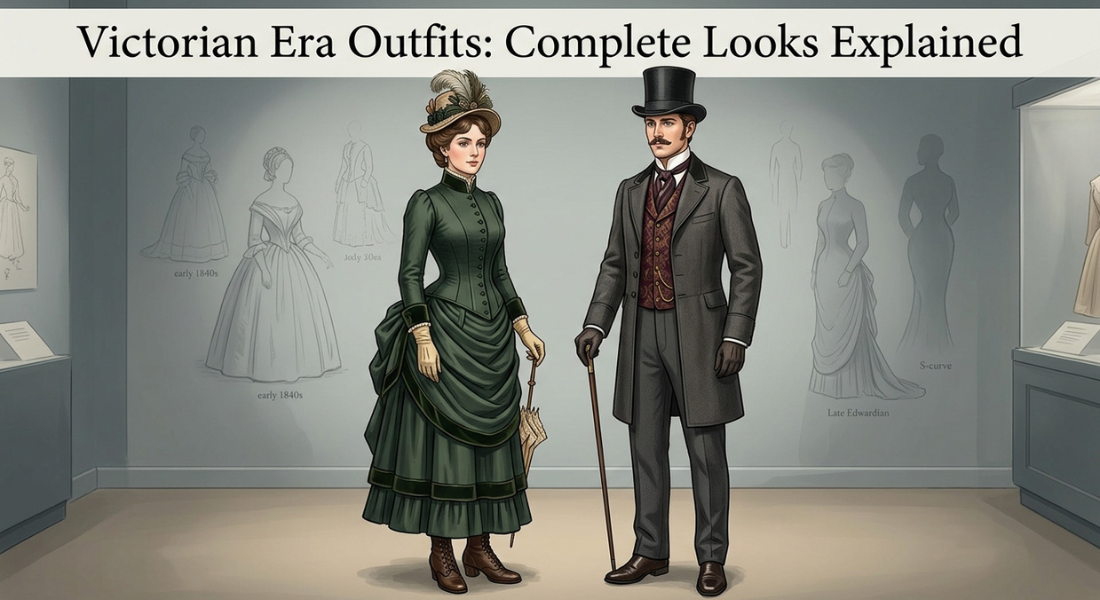
What did a complete Victorian outfit actually look like beyond the famous bustle and elaborate dress? Victorian Era Outfits were carefully built from coordinated layers and finishing pieces creating a polished appearance that reflected gender, occasion, occupation and period.
From structured dresses and waistcoats to bonnets, boots and other accessories every element helped shape the finished ensemble. Here are recognisable complete Victorian outfits rather than another general history of Victorian fashion.
Victorian outfits were complete coordinated ensembles, not single garments viewed in isolation.
Women's day, working and evening outfits could look substantially different.
Men's outfits centred on coordinated tailoring, with more formal versions for evening occasions.
Early, crinoline, bustle and 1890s ensembles can be distinguished by their overall silhouettes.
Children's clothing followed Victorian conventions but adapted them to age and activity.
No single historical outfit represents the entire period from 1837 to 1901.

A complete women's ensemble combined foundation layers, the main dress and finishing pieces into one coordinated appearance. The exact combination varied by activity and date but the overall effect was structured and deliberately composed.
A daytime look might pair a chemise, corset, petticoat and period appropriate skirt or dress with stockings, boots, a bonnet and gloves. Later in the century the supporting shape could shift toward a bustle rather than the wide crinoline silhouette associated with the mid century.
The important point is that these pieces worked together. The underlayers affected the shape of the outer clothing while footwear and headwear completed the public appearance.
A typical daytime ensemble could combine a chemise, corset, petticoat, dress or skirt and bodice combination, stockings and boots. A bonnet or hat and gloves could finish the look.
The result was a covered structured appearance suited to ordinary public activities. The exact silhouette depended on the date so an 1860s outfit could look dramatically wider than one from the 1880s.
A working woman's ensemble was generally more practical than an elaborate fashionable dress. A simpler bodice and skirt could be paired with sturdy boots, modest headwear and fewer decorative details.
For a working class woman in the 1880s the complete appearance mattered more than reproducing every fashionable embellishment. Durable materials, manageable skirts and practical construction made the outfit better suited to work and repeated wear.
An evening or ball ensemble created a more formal appearance through an elaborate gown, coordinated supporting layers and carefully chosen finishing details. The silhouette still reflected the period but the presentation was more decorative.
A surviving House of Worth evening ensemble dated to about 1888 shows how substantial late century formal dress could be while retaining the pronounced bustle era shape.
Victorian Fashion covers the wider history, silhouettes, garments and cultural development of dress from 1837 to 1901. This outfit guide focuses only on complete ensembles. See the full guide here.
A Victorian man's outfit was usually built around coordinated tailoring rather than the dramatic skirt structures associated with women's dress. Shirt, trousers, waistcoat, coat, neckwear, footwear and headwear worked together to create a finished appearance.
The combination changed with formality. A respectable daytime gentleman might wear a shirt with trousers, waistcoat and coat completed with a cravat or other neckwear, boots and a hat.
The distinction between an ordinary historical outfit and a modern costume is useful here. A believable ensemble depends on how the pieces work together, rather than simply adding as many recognisable “Victorian” items as possible.
A daytime gentleman's ensemble could consist of a shirt, high waisted trousers, waistcoat and coat with a cravat or tie providing the neck detail. Boots and a suitable hat completed the appearance.
The waistcoat helped connect the shirt and outer coat visually making the outfit read as one tailored ensemble. The result was restrained compared with many modern costume interpretations.
A formal male ensemble placed greater emphasis on polished tailoring and coordinated accessories. A darker coat, tailored trousers, waistcoat, formal shirt and appropriate neckwear created a more deliberate evening appearance.
Footwear and headwear also mattered but the overall impression came from the relationship between the tailored pieces. Historical examples show that Victorian menswear was not simply an everyday suit with a top hat added afterward.

The easiest way to recognise different periods is to look at the complete silhouette rather than one garment.
Early outfits generally appear fuller through the skirt, mid century ensembles become strongly associated with the broad crinoline shape, later outfits move volume toward the back, and 1890s looks develop a different balance.
This means two outfits can both be authentically Victorian while looking completely different. The V&A's surviving garments and understructures show how rapidly these supporting shapes changed.
An early Victorian women's ensemble typically presented a defined waist with a full skirt and fitted bodice. The complete look could include layered petticoats, stockings, boots and a bonnet or other headwear.
The proportions still connected with earlier nineteenth century dress so the outfit does not have the instantly recognisable bustle shape of later decades. The key visual clue is balanced fullness around the skirt rather than strong volume concentrated behind it.
A crinoline era ensemble had a noticeably broad bell shaped skirt that expanded around the wearer. The outer dress, fitted bodice and finishing accessories all appeared in relation to this unusually wide silhouette.
The V&A records the emergence of the cage crinoline in 1856 when steel hoops provided skirt support without relying entirely on numerous heavy petticoats.
That structural change made the entire outfit look wider and more dramatic.
A 1870s–1880s ensemble is easiest to recognise from its rear heavy shape. The front of the skirt could appear relatively narrow while the bustle pushed or supported fabric outward behind the waist.
The V&A records distinct bustle forms from the 1870s and a revived more exaggerated bustle fashion around 1883. The Met's surviving ca. 1885 afternoon dress provides another useful reference for the finished late century appearance.
A 1890s ensemble looked less dependent on the pronounced bustle silhouette. Women's clothing developed a different balance with stronger upper body proportions and a more active looking appearance.
The Fashion History Timeline at FIT describes the decade as transitional and notes that women's clothing increasingly accommodated work, cycling and sport.
This makes a 1890s outfit visually easier to distinguish from the strongly rear projecting ensembles of the earlier bustle decades.
Children's ensembles followed period conventions but were adapted to age, movement and childhood. They should not be mistaken for miniature copies of adult formal clothing.
Young children often wore simpler silhouettes while older boys and girls increasingly adopted clothing that reflected adult dress. Surviving period evidence shows that children's appearance could change substantially as they moved from infancy into later childhood.
A young girl's outfit might include a dress with stockings, practical shoes or boots and a simple bonnet or other head covering. As girls grew older their dresses increasingly echoed contemporary women's silhouettes.
FIT's research on the 1870s notes that infants and toddlers could be dressed similarly regardless of sex while young girls later adopted shorter versions of women's fashionable shapes.
The result was recognisably Victorian without requiring the elaborate construction of an adult formal ensemble.
A boy's ensemble could include a shirt, jacket or suit, trousers or knickerbockers, stockings and appropriate footwear. Younger boys often wore styles specifically adapted to childhood rather than adult tailoring.
The Little Lord Fauntleroy style became a notable late century example with a long jacket or tunic, knickerbockers and a wide lace collar. FIT notes, however, that relatively few boys actually wore this fashionable style so it should not represent every Victorian boy's outfit.
The same person could appear quite different depending on where they were going and what they needed to do. Daywear, formal clothing, walking dress and sporting outfits were complete ensembles designed around different practical and social requirements.
That distinction is useful when identifying historical images. A lighter walking or sporting appearance should not automatically be treated as casual everyday clothing just as an elaborate evening gown should not represent ordinary daytime dress.

Walking and outdoor ensembles needed to accommodate movement while remaining presentable. Women's walking clothing could use a more practical silhouette and suitable footwear while late century cycling and sporting outfits adapted clothing more directly to activity.
The Met's collection includes surviving walking dresses and suits from the period while FIT's 1890s research connects women's clothing with increasing participation in cycling and sport. The complete outfit therefore tells you more than any single garment.
Victorian Era Outfits are best understood as complete ensembles rather than isolated dresses, coats or accessories. Women's, men's and children's clothing varied by purpose with daywear, formal dress and working clothing creating distinct looks.
Silhouettes also changed throughout the Victorian period, from fuller skirts and crinolines to bustle styles and the evolving proportions of the 1890s. As a result, no single outfit can represent the entire era.
A typical outfit included a chemise, corset, petticoat, dress, stockings, boots and accessories such as a bonnet or gloves.
Men commonly wore a shirt, trousers, waistcoat, coat, neckwear, boots and suitable headwear.
They generally wore simpler, durable dresses or bodice and skirt outfits with sturdy footwear and minimal decoration.
No Bustles were mainly associated with later Victorian styles while earlier and 1890s fashions had different silhouettes.
Girls commonly wore dresses, stockings and footwear while boys wore shirts, jackets, trousers or knickerbockers.
Silhouettes shifted from fuller skirts to crinolines then bustle backed styles before changing again during the 1890s.





Reader Discussion
Leave a Reply