- by Daily Talkin Staff
- July 8, 2026
-

-
-
Loading
Loading
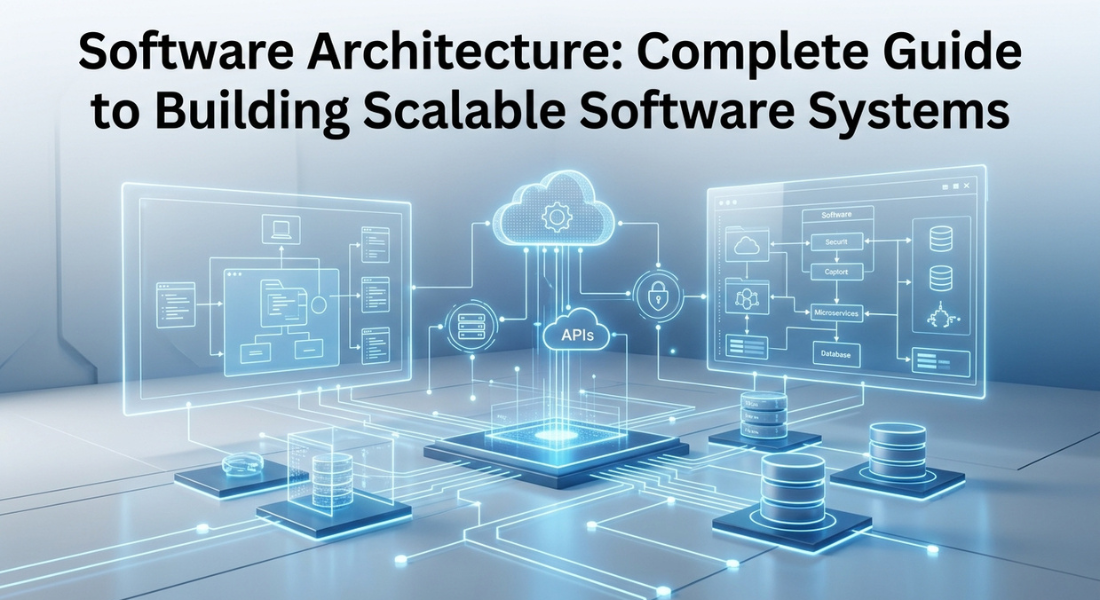
Software architecture is the high level structure of a software system that defines its components, interactions, technologies, and design decisions to achieve qualities such as scalability, security, performance, and maintainability.
Unlike programming code that focuses on individual features and functions software architecture defines how the entire system is organised, how different parts communicate, and how the system can evolve over time.
A strong architecture helps teams build reliable software, reduce technical debt, manage complexity, and support future growth. Poor architectural decisions can create performance problems, security risks, and expensive maintenance challenges.
This guide explains the foundations of software architecture, including its components, design process, principles, architectural styles, quality attributes, modern approaches, and practical examples.
Software architecture defines the structure and behaviour of software systems.
Good architecture improves scalability, security, reliability, and maintainability.
Architecture decisions should balance business needs with technical requirements.
Modern systems use approaches such as microservices, cloud native architecture, and event driven design.
Documentation and continuous evaluation help architectures evolve successfully.

Software architecture acts as the blueprint of a software system. It defines the major components, their relationships, technologies, communication methods, and structural decisions that shape how an application operates.
Every software system from a small mobile application to a large enterprise platform has an architecture. The difference is whether that architecture is intentionally designed, documented, and evaluated or develops without clear direction.
Architecture decisions directly influence scalability, reliability, security, maintainability, development costs, and long term system evolution. According to the IEEE Computer Society software architecture describes the fundamental organisation of a system through its elements, relationships, and guiding principles.
Software architecture is the organisation of a software system’s structures, including its components, connectors, interfaces, and constraints.
In simple terms architecture explains:
What parts make up the software system
How those parts communicate
Which technologies support the system
How the system handles future changes
From an engineering perspective architecture is not only about diagrams or technology selection. It represents a collection of important decisions that determine how software behaves throughout its lifecycle.
The IEEE perspective views architecture as a foundation for understanding, analysing, and communicating software systems between developers, architects, and stakeholders.
A well defined architecture creates a shared technical vision helping teams make consistent decisions during development and maintenance.
Modern software systems often involve millions of users, complex integrations, large datasets, and constantly changing requirements. Software architecture helps manage this complexity by creating organised structures and clear responsibilities.
Strong architecture supports:
Better system scalability
Improved software quality
Easier maintenance
Faster development decisions
Reduced technical debt
Architecture also connects technical decisions with business goals. For example an ecommerce platform requiring rapid growth may prioritise scalability while a banking system may prioritise security, reliability, and compliance.
Without effective architecture systems often become difficult to modify because components become tightly connected and dependent on each other.
Software architecture and software design are closely related but operate at different levels. Architecture focuses on the overall system structure while design focuses on the detailed implementation of individual components.
Software Architecture | Software Design |
Defines overall system structure | Defines internal component details |
Focuses on system level decisions | Focuses on module level decisions |
Determines communication between components | Determines how components are implemented |
Handles scalability, security, and reliability | Handles algorithms, classes, and interfaces |
Usually managed by software architects | Usually managed by developers and designers |
For example choosing a microservices architecture is an architectural decision. Designing how a single payment service processes transactions is a software design decision.
Every software architecture consists of structural elements, their interactions, and rules that govern system behaviour. These components define how software is organised and how different parts work together.
The main building blocks include software components, connectors, interfaces, architecture views, and architectural decisions. Together these elements create the foundation of an application’s structure.
Understanding these components helps architects evaluate systems, identify risks, and design solutions that meet technical and business requirements.
Software components are the independent building blocks that perform specific responsibilities within a system.
Common examples include:
Services
Application modules
Databases
User interfaces
External systems
A component should have a clear purpose and defined boundaries. For example an online shopping platform may separate product management, payment processing, customer accounts, and order handling into different components.
Well designed components improve maintainability because teams can update or replace individual parts without affecting the entire system.
Modern architectures often use independent services especially in cloud and microservices environments where each component can be developed and deployed separately.
Connectors define how software components communicate and exchange information.
Common connectors include:
APIs
Messaging systems
Event streams
Database connections
For example an application programming interface (API) allows different software services to exchange data through predefined rules.
Event driven systems use messaging and events to allow components to communicate asynchronously. This approach can improve scalability by reducing direct dependencies between services.
Choosing the right communication method affects performance, reliability, and system flexibility.
Interfaces define how components interact with each other. They establish communication rules and help maintain clear boundaries between different parts of a system. Effective dependency management reduces unnecessary connections between components.
Important architectural considerations include:
Defining clear contracts
Limiting dependency complexity
Managing integration boundaries
Poor dependency management can create tightly coupled systems where changing one component affects many others. A loosely coupled architecture allows teams to update, test, and scale individual components more efficiently.
Architecture views provide different perspectives of a software system, helping stakeholders understand its structure and behaviour.
Common architecture views include:
Logical View
Shows the main functional elements of the system and how they support business requirements.
Development View
Explains how software is organised from a developer perspective, including modules, packages, and code structures.
Process View
Focuses on runtime behaviour, communication, concurrency, and system processes.
Physical or Deployment View
Shows how software components are deployed across servers, cloud environments, or infrastructure. Architects often use UML (Unified Modeling Language) and architecture diagrams to document these views.
Clear visual models improve communication between technical teams, business stakeholders, and decision makers.

Software architecture is created through a structured decision making process rather than selecting technologies immediately. Architects first understand business objectives system requirements, risks, and quality expectations before defining the architecture.
A successful architecture process evaluates functional needs non functional requirements, technical constraints, and future growth possibilities.
The goal is to create a system structure that balances performance, security, scalability, maintainability, and business value.
The first stage of architecture development is understanding what the software must achieve.
Architects analyse:
Functional requirements
Non functional requirements
Business goals
User expectations
Functional requirements describe what the system should do such as processing payments or managing user accounts. Non functional requirements define how the system should perform, including speed, availability, security, and scalability.
Understanding business goals ensures architecture decisions support real world outcomes rather than only technical preferences. For example a global streaming platform requires different architecture decisions compared with a small internal business application.
Quality attributes define the characteristics that determine software effectiveness beyond basic functionality.
Architects evaluate factors such as:
Performance requirements
Security needs
Scalability expectations
Budget limitations
Technology restrictions
A system requiring millions of daily users may need distributed architecture and cloud infrastructure while a smaller system may benefit from a simpler approach.
Technical constraints also influence architecture choices, including existing systems, compliance requirements, available skills, and operational limitations.
The software architecture design process is a structured approach used to define how a software system will be organised, developed, and maintained.
It begins with understanding requirements and continues through architecture selection, documentation, implementation, deployment, and continuous improvement.
This process helps architects make informed decisions about system structure, technologies, communication methods, and quality attributes.
By following a clear lifecycle teams can build software that is scalable, secure, reliable, and easier to evolve over time.
After understanding requirements and constraints architects evaluate suitable architecture approaches and technology choices. This stage involves selecting solutions that align with system goals rather than choosing technologies based only on popularity.
Architects consider:
Architecture patterns
Infrastructure requirements
Development complexity
Long term maintenance needs
For example a high traffic application may benefit from microservices architecture while a smaller application may be better served by a well structured monolithic approach.
Architecture decisions require evaluating trade offs between flexibility, performance, cost, and operational complexity. A more complex architecture is not always better. The right choice depends on the specific needs of the software system.
Architecture documentation captures important decisions, reasoning, and constraints behind a system structure.
One common approach is using Architecture Decision Records (ADRs), which document:
The decision being made
Available alternatives
Reasons behind the chosen solution
Expected consequences
ADRs help teams understand why specific technologies, patterns, or structures were selected. They also preserve architectural knowledge when team members change or when systems evolve over time.
Clear documentation improves collaboration between software architects, developers, operations teams, and business stakeholders.
Software architecture does not end after initial design. Modern systems continuously evolve based on changing requirements, user behaviour, and technology improvements.
The architecture lifecycle includes:
Development
Deployment
Monitoring
Continuous improvement
During implementation teams validate whether architectural decisions work effectively in real conditions. Testing helps identify issues related to performance, security, reliability, and scalability.
After deployment monitoring data provides insights that help architects improve the system and adapt to future needs. Software architecture should support change rather than prevent it.
Software architecture principles are guidelines that help architects create structured, scalable, and maintainable software systems. Key principles include separation of concerns, low coupling, high cohesion, scalability, maintainability, and security by design.
These practices help teams build flexible architectures that can adapt to changing requirements.
For a complete breakdown of software architecture principles see our full guide on Software Architecture Principles →
Software architecture styles define how system components are structured, connected, and communicate within an application. Common styles include layered architecture client server architecture, microservices, event driven architecture, and serverless architecture.
Each approach offers different benefits depending on scalability, performance, complexity, and maintenance requirements.
For a complete breakdown of software architecture styles see our full guide on Software Architecture Styles →
Software architecture patterns are reusable solutions that help architects solve common structural challenges in software systems.
They provide proven approaches for organising components and interactions, including MVC repository patterns, microservices patterns, and event driven patterns.
For a complete breakdown of software architecture patterns see our full guide on Software Architecture Patterns →
Software architecture diagrams visually explain system structures, components, relationships, and communication flows.
They help teams understand complex software designs before implementation through diagrams such as system context diagrams, component diagrams, and deployment diagrams.
For a complete breakdown of software architecture diagrams see our full guide on Software Architecture Diagram →
Software architecture design focuses on creating a system’s structural foundation through planning and technical decisions.
Architects evaluate requirements, technologies, constraints, and trade offs to build architectures that balance flexibility, performance, security, scalability, and long term maintenance.
For a complete breakdown of software architecture design, see our full guide on Software Architecture Design →
Quality attributes define how effectively a software system performs beyond basic functionality. They describe characteristics that determine user experience, operational stability, and long term system success.
Unlike functional requirements that describe what software does quality attributes explain how well the system performs under different conditions.
Architects use these attributes to evaluate design decisions and balance competing requirements. Improving one attribute may affect another making architectural decisions a process of managing trade offs.
For example increasing security controls may affect performance while improving scalability may increase infrastructure complexity.
Performance measures how quickly and efficiently a software system responds to user actions and processes workloads.
Important performance considerations include:
Response time
Resource usage
System optimisation
Architects improve performance through techniques such as caching, efficient database design, load balancing, and optimised communication between services. A high performing architecture ensures applications remain responsive even as user demand increases.
Scalability refers to a system’s ability to handle increasing workloads without reducing performance.
Common scaling approaches include:
Horizontal scaling
Vertical scaling
Cloud scalability
Horizontal scaling adds more system instances to distribute workload while vertical scaling increases the resources of existing infrastructure.
Cloud platforms make elasticity easier by allowing systems to automatically adjust resources based on demand. Scalable architecture is essential for applications expecting future growth.
Security ensures that software systems protect data, users, and operations from unauthorised access or attacks.
Key security considerations include:
Authentication
Authorisation
Data protection
Secure architecture practices
Security by design integrates protection measures from the beginning rather than adding them after development. Architects consider identity management, encryption, access control, and secure communication when designing systems.
Reliability describes the ability of a system to operate correctly over time while availability focuses on keeping services accessible when users need them.
Important reliability strategies include:
Fault tolerance
Recovery strategies
High availability systems
Architects use redundancy, monitoring, backup systems, and failure recovery mechanisms to reduce downtime. Critical systems such as banking and healthcare platforms require strong reliability because failures can have significant consequences.
Maintainability determines how easily software can be updated, improved, and repaired. Modifiable architectures allow teams to introduce new features without creating unnecessary risks.
Important considerations include:
Code evolution
System changes
Reducing technical debt
Well structured components, clear documentation, and loose coupling make software easier to maintain throughout its lifecycle.
Modern software systems have evolved from traditional monolithic applications toward distributed and cloud native approaches. This evolution has been driven by increasing user demands, global availability requirements, and complex digital services.
Architects now design systems using approaches that support scalability, automation, rapid deployment, and continuous evolution.
Cloud computing, containers, DevOps practices, and AI driven systems have changed how modern architectures are planned and operated.
These technologies allow organisations to create flexible systems capable of adapting to changing business needs.
Monolithic architecture is a traditional approach where all application components are built and deployed as a single unit.
Common characteristics include:
One application codebase
Shared resources
Centralised deployment
Monolithic systems can be effective for smaller applications because they are simpler to develop and manage. However large monolithic applications may become difficult to scale, modify, and deploy as complexity increases.
Microservices architecture divides an application into independent services that communicate through APIs or messaging systems.
Benefits include:
Independent service deployment
Better scalability
Team autonomy
Each service focuses on a specific business capability, such as payments, user management, or inventory.
However, microservices introduce challenges, including distributed system complexity, network communication issues, and operational management requirements.
Modern software architecture approaches explain how applications are designed and structured to support scalability, flexibility, automation, and continuous evolution.
Software systems have moved beyond traditional monolithic models toward cloud based, distributed, and intelligent architectures that meet modern business and technical demands.
These approaches use technologies such as cloud computing, containers, DevOps practices, and artificial intelligence to improve performance, reliability, and adaptability.
The right approach depends on system requirements, business objectives, scalability needs, and long term maintenance goals.
Cloud native architecture focuses on building applications specifically for modern cloud environments. It uses flexible infrastructure, automation, and distributed technologies to improve scalability and reliability.
Key elements include:
Containers
Kubernetes
Cloud platforms
Containers allow applications to run consistently across different environments, while Kubernetes helps manage container deployment, scaling, and availability.
Cloud native systems often combine DevOps practices, automated deployment pipelines, monitoring tools, and infrastructure automation to support continuous delivery.
This approach enables organisations to build software that can respond quickly to changing workloads and business requirements.
Event driven architecture structures software systems around events allowing components to communicate when specific actions occur.
Examples of events include:
Customer registration
Payment completion
Inventory updates
User activity
Instead of directly requesting actions between services, systems publish and respond to events through messaging platforms.
This approach supports real time systems, improves scalability, and reduces direct dependencies between components.
Common technologies include message brokers, event streams, and distributed communication platforms.
AI and machine learning systems require specialised architecture because they involve large datasets, model processing, and continuous improvement.
Important architecture elements include:
AI pipelines
Data architecture
Model deployment
A typical AI architecture may include data collection, data processing, model training, model evaluation, and production deployment.
Architects must consider computing resources, data quality, security, and monitoring when designing AI driven applications.
Modern software architecture increasingly combines traditional software engineering practices with artificial intelligence capabilities.
Software architecture choices vary depending on industry requirements, user expectations, data volume, security needs, and system complexity. Different organisations require different architectural approaches based on their goals.
A small application may prioritise simplicity and fast development while global platforms require distributed architectures designed for millions of users.
Real world examples demonstrate how architects apply structural decisions to solve practical business and technical challenges.
Ecommerce platforms require architecture that supports high traffic, secure transactions, and reliable order processing.
Common components include:
User services
Product catalogue systems
Payment systems
Order processing services
A modern ecommerce architecture may separate customer management, inventory, payments, and recommendations into independent services.
Scalable infrastructure allows platforms to handle demand spikes during events such as seasonal sales. Security is also critical because systems process sensitive customer information and financial transactions.
Banking systems require highly reliable and secure software architecture because they manage financial transactions and sensitive customer data.
Important architecture considerations include:
Security
Reliability
Compliance
Architects focus on authentication, encryption, audit trails, fault tolerance, and regulatory requirements. Many banking platforms use layered architectures or service based approaches to maintain strong security while supporting new digital services.
Healthcare software requires architecture that protects patient information while ensuring reliable access to critical data.
Key considerations include:
Data privacy
Availability
Interoperability
Healthcare systems often need to integrate with multiple platforms, medical devices, and external services. Architects must consider standards, secure data exchange, and system availability because downtime can affect healthcare operations.
Social media platforms require highly scalable architectures capable of handling massive user activity and real time communication.
Important architecture requirements include:
Scalability
Distributed systems
Real time communication
These platforms often use distributed databases, caching systems, content delivery networks, and event driven architectures.
A flexible architecture allows platforms to support features such as messaging, recommendations, media sharing, and user interactions.
Architects select software architectures by analysing requirements, risks, users, data, and future growth expectations. The process requires understanding both technical challenges and business objectives.
There is no universally best architecture because every system has different goals, constraints, and operational requirements. The right choice depends on factors such as scalability needs, security expectations, development resources, budget, and long term maintenance plans.
The first step is understanding what the system needs to achieve.
Architects evaluate:
Business objectives
User expectations
Functional requirements
Technical limitations
A system designed for millions of users requires different decisions from an internal business application.
Clear requirements help architects avoid unnecessary complexity and choose suitable architectural approaches.
Scalability and performance requirements strongly influence architecture decisions.
Architects consider:
Expected user growth
Data volume
Processing requirements
Response time expectations
Applications with unpredictable traffic may require cloud based solutions with automatic scaling capabilities. Understanding future growth prevents architectures from becoming limitations later.
Every architecture decision involves advantages and disadvantages.
For example:
Microservices improve independent scaling but increase operational complexity.
Monolithic systems simplify development but may become difficult to scale.
Architects evaluate these trade offs before selecting an approach. A successful architecture balances technical requirements with business priorities.
Software systems continue changing after deployment.
Architects consider:
Future features
Technology changes
Team growth
Long term maintenance
An architecture designed for evolution reduces technical debt and allows organisations to adapt without rebuilding entire systems.

Good software architecture requires balancing simplicity, flexibility, and future requirements. Effective architects avoid unnecessary complexity while creating systems capable of supporting growth.
Poor architectural decisions often create technical debt, performance problems, and system limitations. These issues usually appear when architecture ignores scalability, security, documentation, or long term maintenance.
Strong architecture practices help teams create reliable and adaptable software systems.
Important practices include:
Keep designs simple
Document decisions
Design for change
Prioritise quality attributes
Simple architectures are easier to understand and maintain. Overly complex solutions often increase development costs without providing meaningful benefits.
Documentation including Architecture Decision Records helps teams understand why important choices were made. Designing for change ensures systems can evolve as business requirements develop.
Many architecture problems result from decisions made without considering long term consequences.
Common mistakes include:
Overengineering
Ignoring scalability
Poor documentation
Tight coupling
Overengineering creates unnecessary complexity while ignoring scalability can limit future growth. Poor documentation makes systems harder to maintain because teams lose understanding of important architectural decisions. Tight coupling creates dependencies that make updates slower and riskier.
Before finalising an architecture teams should review key areas:
Requirements reviewed
Security considered
Performance tested
Documentation completed
A complete architecture checklist helps ensure important technical and business considerations are not overlooked. Regular evaluation also helps identify risks before they become expensive problems.
Software architecture provides the foundation for building reliable, scalable, and maintainable software systems. It defines how components interact, how technologies are selected, and how systems evolve over time.
A strong architecture combines clear components, appropriate styles, effective principles, and thoughtful design decisions. Modern approaches such as microservices cloud native architecture, event driven systems, and AI driven solutions show how software architecture continues to evolve.
By understanding architecture concepts, quality attributes, patterns, and decision making processes teams can create software that meets current needs while remaining adaptable for the future.
Software architecture is the high level structure of a software system, including its components, relationships, technologies, and key design decisions.
Software architecture improves scalability, security, reliability, maintainability, and helps systems adapt to future changes.
Architecture focuses on system level structure and decisions while software design focuses on detailed component implementation.
The main components include software components, connectors, interfaces, databases, services, and architecture views.
Software architecture patterns are reusable approaches that help solve common structural problems and organise software systems effectively.
No single architecture is best for every system. The right choice depends on requirements, scalability needs, constraints, and business goals.






Reader Discussion
Leave a Reply