- by Daily Talkin Staff
- July 8, 2026
-

-
-
Loading
Loading
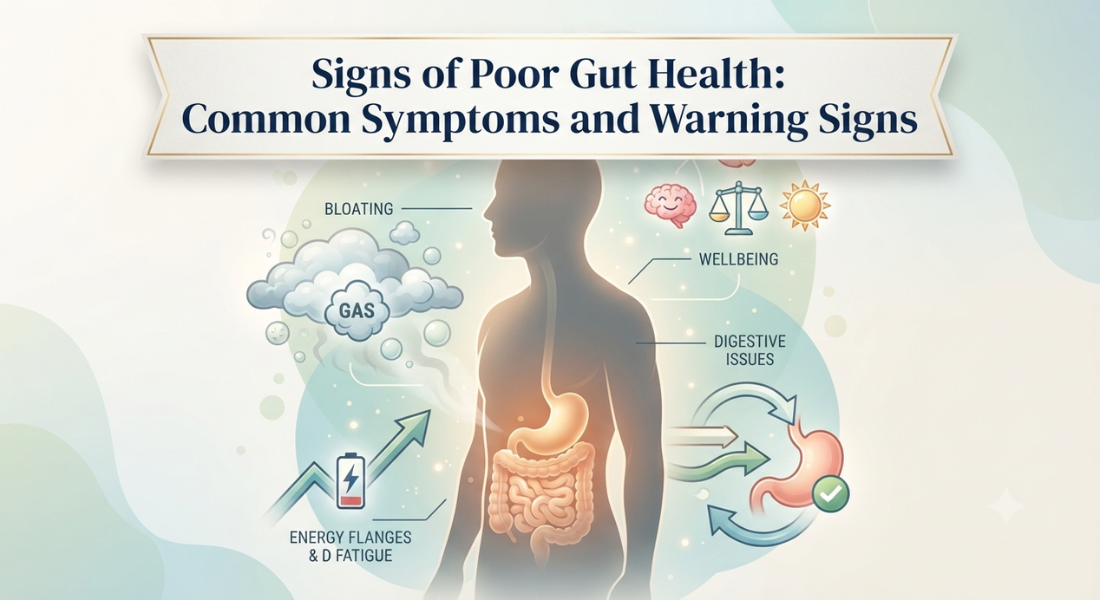
Frequent bloating, changing bowel habits, or unexplained fatigue may leave you wondering if your gut health is affected. Signs of poor gut health can include digestive discomfort, bowel changes, food sensitivities, low energy, and other body wide symptoms.
This guide explains key signs, what they may mean, and when symptoms need attention.
Signs of poor gut health can involve digestion, energy, mood, skin, and general wellbeing.
Common digestive signs include bloating, gas, constipation, diarrhoea, and abdominal discomfort.
Non digestive symptoms may occur alongside gut concerns but can have many other causes.
Individual symptoms do not confirm a specific gut problem.
Persistent or concerning symptoms should be evaluated by a healthcare professional.

Signs of poor gut health are symptoms that may suggest changes in digestive function. Common examples include bloating, gas, constipation, diarrhoea, abdominal discomfort, and bowel changes.
No single symptom confirms a gut problem, as symptoms vary between individuals. Changes in energy, sleep, or skin may also occur but they can have many other causes.
The pattern, frequency, and duration of symptoms are more useful than one isolated sign. Gut health refers to the balance and function of the digestive system including digestion and the gut environment.
This article focuses on recognising warning signs. This is part of our complete guide on Gut Health → see the full guide here.
Digestive symptoms are some of the most recognised signs linked with possible gut health changes. They may involve bloating, bowel changes, abdominal discomfort, or changes in digestion.
Occasional digestive issues are common and do not always indicate a problem. However repeated or persistent symptoms may need professional evaluation.
Common digestive signs include:
Bloating or excessive gas
Constipation or diarrhoea
Abdominal discomfort
Changes in bowel habits
Feeling unusually full after eating
Bloating may feel like abdominal swelling, pressure, fullness, or discomfort after meals. Occasional bloating is common and does not always indicate poor gut health.
Frequent bloating with other digestive changes may suggest that your digestion needs attention. Tracking patterns, triggers, and duration can help identify concerns.
Changes in bowel movements are common digestive signs. Constipation may involve difficulty passing stools while diarrhoea involves loose or frequent stools.
According to the National Institute of Diabetes and Digestive and Kidney Diseases (NIDDK) persistent or severe constipation and diarrhoea may require medical evaluation.
Abdominal discomfort may include cramps, pressure, stomach aches, or feeling unusually full after eating. These symptoms can occur for many reasons, including food reactions, stress, or digestive conditions.
Persistent or worsening discomfort should be discussed with a healthcare professional to understand possible causes.

Gut related concerns are often discussed through digestive symptoms but some people also notice changes beyond the digestive system.
Research continues to explore connections between the gut microbiome, immune responses, and communication between the gut and other parts of the body. These relationships are complex and do not mean every non digestive symptom is caused by gut health.
Possible non digestive signs may include changes in energy, concentration, sleep, mood, and general wellbeing. These symptoms should be considered alongside other health factors rather than viewed as proof of a specific gut problem.
Feeling tired or lacking energy is sometimes reported alongside digestive concerns. The relationship may involve digestion, nutrient processing, sleep quality, stress, and many other factors.
When digestive symptoms affect eating patterns or nutrient absorption, some people may notice changes in energy levels. However fatigue is a broad symptom with many possible explanations.
Poor sleep, stress, infections, medical conditions, and lifestyle factors can all contribute. If low energy continues without a clear reason it is better to consider the full health picture rather than linking it only to gut function.
Brain fog describes experiences such as difficulty focusing, reduced mental clarity, or trouble concentrating. Some researchers study whether communication between the gut and brain may influence these experiences.
The gut brain axis is an area of ongoing research exploring how digestive activity, microorganisms, immune signals, and the nervous system interact.
Current evidence does not show that digestive issues directly cause every concentration problem. Brain fog can have many causes, including stress, sleep problems, nutrition, and other health conditions.
Digestive symptoms combined with repeated cognitive changes may be worth discussing with a healthcare professional.
Changes in sleep patterns or mood are sometimes discussed alongside gut health because the digestive system communicates with the brain through several biological pathways.
Stress responses, digestive discomfort, and general wellbeing can influence each other. For example ongoing digestive symptoms may affect sleep quality or daily comfort.
However mood and sleep concerns have many possible causes and should not automatically be attributed to gut health. Looking at symptoms together rather than focusing on one sign alone provides a more accurate understanding of what may be happening.
Skin concerns are often discussed in relation to gut health particularly because researchers are exploring connections between gut microorganisms, immune responses, and skin conditions.
The relationship between the gut and skin is sometimes referred to as the gut skin connection. Studies are investigating how changes in the gut environment may influence immune activity that affects the skin.
However skin symptoms can develop for many reasons, including genetics, hormones, environmental factors, skincare routines, and other health conditions. A skin issue alone does not confirm poor gut health.
Conditions such as acne, eczema, or irritation require individual evaluation because their causes vary widely.
If skin changes appear alongside digestive symptoms or other body wide changes discussing the pattern with a healthcare professional may provide better understanding.
Research from the National Institutes of Health (NIH) Human Microbiome Project has supported ongoing investigation into how microorganisms living in the human body may relate to health and disease processes.
Changes in how your body responds to certain foods may be noticed alongside digestive symptoms but they do not always indicate poor gut health. Food reactions can involve digestion, intolerance, allergies, or other individual factors.
Some people notice discomfort, bloating, or bowel changes after eating specific foods. These reactions may reflect food sensitivities or other digestive responses but identifying the exact reason often requires looking at the full pattern of symptoms.
Food cravings are not considered a reliable indicator of gut problems. Cravings can be influenced by habits, emotions, energy needs, sleep patterns, and many other factors.
If you repeatedly experience reactions after eating certain foods keeping track of symptoms and discussing them with a healthcare professional may help clarify possible causes. Avoiding foods without understanding the reason behind symptoms may sometimes lead to unnecessary dietary restrictions.
Identifying whether symptoms relate to gut health requires looking beyond one isolated experience. Digestive and non digestive symptoms can overlap with many other conditions so context matters.
The frequency, duration, and severity of symptoms provide more useful information than a single episode. Patterns that continue over time or involve several symptoms together may offer clearer insight.
A single episode of bloating, constipation, or stomach discomfort does not necessarily indicate a gut health concern. Occasional digestive changes are common and can happen for many reasons.
Pay attention to how often symptoms occur, how long they last, and whether they affect daily activities. Multiple changes appearing together may provide a more complete picture than one symptom alone.
Tracking symptoms can help you notice patterns but it should not be used as a way to diagnose yourself. A healthcare professional can help interpret ongoing concerns.
Digestive symptoms may be linked with many factors beyond gut health. Diet changes, stress, infections, medications, and existing medical conditions can all influence digestion and overall wellbeing.
For example changes in bowel habits or abdominal discomfort may have different explanations depending on your personal health situation. Online symptom lists can provide general information but cannot replace professional assessment.
Considering other possible causes helps prevent unnecessary worry and supports a more accurate understanding of symptoms.

Some digestive symptoms need professional evaluation especially when they are severe, persistent, or accompanied by warning signs. Recognising these situations can help you seek appropriate care at the right time.
You should consider speaking with a healthcare professional if you experience symptoms such as:
Blood in stools
Unexplained weight loss
Severe or ongoing abdominal pain
Long lasting changes in bowel habits
Symptoms that interfere with normal daily activities
The importance of evaluation depends on your individual circumstances including symptom severity, duration, and overall health history.
A gastroenterologist or other qualified healthcare professional can assess symptoms, consider possible causes, and recommend appropriate next steps. Persistent changes should not be ignored or explained only through general information about gut health.
Poor gut health can involve different signs that affect digestion, energy, and overall wellbeing. Symptoms such as bowel changes, bloating, fatigue, or other body wide changes should be viewed as possible indicators rather than a diagnosis.
Understanding patterns, duration, and severity can help you recognise when symptoms may need attention. Persistent or concerning changes deserve guidance from a qualified healthcare professional.
Common early signs include bloating, gas, constipation, diarrhoea, and changes in digestion. Persistent symptoms may need further evaluation.
Fatigue can occur alongside digestive issues but it may also result from sleep, stress, nutrition, or other health factors.
No Occasional bloating is common but frequent or severe bloating may require attention.
Research explores links between gut function and skin health but skin issues can have many different causes.
Persistent, worsening, or concerning symptoms should be discussed with a healthcare professional.
No Symptoms vary depending on individual health, digestion, lifestyle, and other factors.






Reader Discussion
Leave a Reply