- by Daily Talkin Staff
- July 8, 2026
-

-
-
Loading
Loading
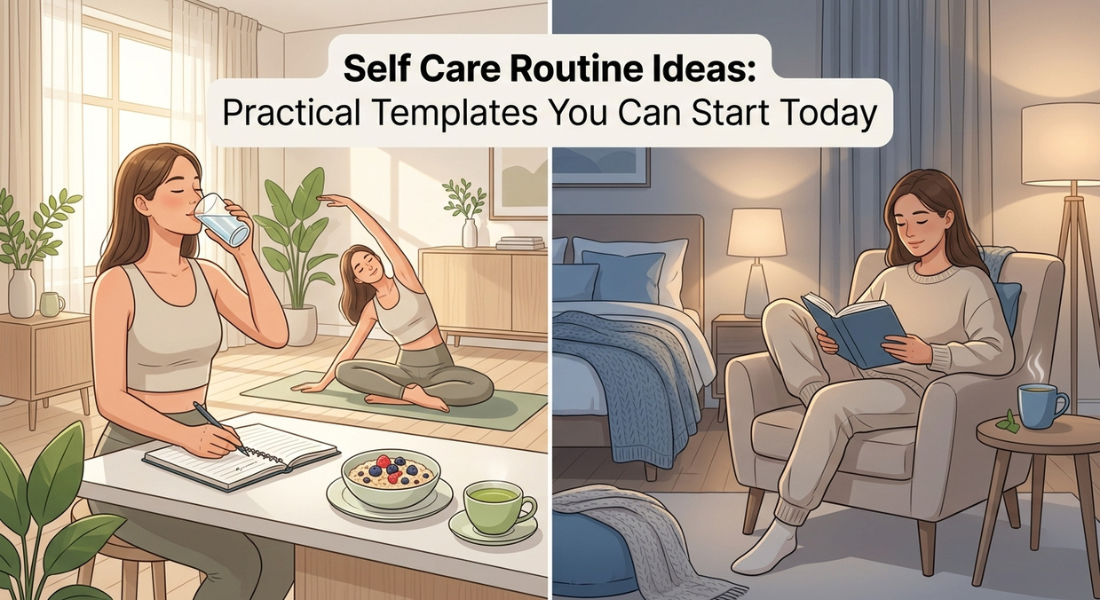
Self care routine ideas help you organise supportive habits into a simple schedule that fits your lifestyle. Instead of choosing random activities, a structured routine makes it easier to stay consistent and build habits that become part of your everyday life.
This guide focuses on practical routine templates you can start using straight away, including morning, evening, daily, and weekly examples designed for different schedules and time limits.
Looking for a broader collection of wellbeing practices beyond routines? Explore our complete Self Care Ideas guide covering activities, checklists, gifts, challenges, and practical wellbeing strategies.
After exploring these self care routine ideas, see the complete guide here →
Self care routine ideas are practical templates that help you build consistent daily and weekly habits.
Choose routines based on your available time instead of trying to follow a perfect schedule.
Habit stacking makes new behaviours easier by attaching them to existing daily habits.
Personalise your routine to match your energy level, work pattern, and lifestyle.
Review your routine weekly and adjust it gradually rather than starting over after missed days.

Self care routine ideas are simple daily or weekly schedules that organise healthy habits into an easy to follow routine. They help you stay consistent by fitting your time, energy, and lifestyle.
Occasional self care activities can feel good, but routines build lasting habits. For example, reading once is an activity, while reading for 10 minutes every evening becomes a routine that's easier to maintain.
A morning routine helps you start the day with more focus and less stress. Choose one that fits your schedule consistency is more important than length.
Drink a glass of water.
Take one minute of deep breathing.
Stretch for two minutes.
Write one priority for the day.
Avoid your phone for the first minute.
This quick routine helps you wake up feeling calm and prepared.
Hydrate and get fresh air.
Stretch or walk for five minutes.
Practise mindful breathing.
Review your schedule.
Eat a balanced breakfast.
According to the American Psychological Association, healthy daily routines and stress management habits support psychological wellbeing.
Spend 10 minutes exercising or doing yoga, five minutes journaling or planning, then enjoy a distraction free breakfast before reviewing your priorities. This routine combines movement, mindfulness, and preparation for the day ahead.
An evening routine helps you relax, switch off from the day, and prepare for better sleep. A consistent routine is easier to maintain than relying on bedtime habits only when you're tired.
Spend 10–15 minutes putting work away, dimming the lights, drinking water, and reading or reflecting before bed. Simple habits repeated nightly help you unwind more easily.
Avoid screens for at least 30 minutes before bed. Replace scrolling with reading, light stretching, or planning the next day. According to the Sleep Foundation, consistent bedtime routines support better sleep quality and overall wellbeing.
Use Sunday evening to review your calendar, prepare for Monday, and plan one enjoyable activity for the week. A short reset helps you begin the new week feeling organised and less stressed.
A daily routine makes healthy habits easier to follow. Choose a template that suits your lifestyle and adjust it as your schedule changes.
Keep your first routine simple.
Morning: Drink water, stretch, and set one priority.
Afternoon: Take a short walk and enjoy a distraction free lunch.
Evening: Prepare for tomorrow, read for 10 minutes, and keep a regular bedtime.
Small routines repeated daily are more effective than ambitious plans that are hard to maintain.
Build habits around your workday instead of adding extra tasks.
Before work: Hydrate and review your priorities.
During work: Stretch regularly, take a proper lunch break, and practise short breathing exercises.
After work: Finish on time, avoid work emails, and unwind with a relaxing activity.
A consistent routine helps you balance study and wellbeing.
Morning: Wake up, eat breakfast, and review your timetable.
During the day: Study in focused sessions, move regularly, and stay hydrated.
Evening: Prepare for tomorrow and follow a consistent bedtime.
Working from home benefits from clear boundaries.
Start of the day: Get dressed, plan your workload, and avoid checking emails immediately. During work: Leave your desk for breaks, take a short walk, and stretch between meetings. End of the day: Shut down your computer, tidy your workspace, and begin your evening routine.
Weekly routines help you reset, stay organised, and prepare for the days ahead without adding pressure.
Spend 10–15 minutes reviewing your calendar, setting priorities, and planning time for personal wellbeing. Starting the week with a plan makes daily decisions easier.
Take a short break to review progress, organise unfinished tasks, tidy your workspace, and do one relaxing activity. A mid week reset helps prevent stress from building.
Use part of the weekend to prepare for the week ahead, organise your home, and enjoy a hobby or time outdoors. Balancing preparation with rest helps you start Monday feeling refreshed.

Not every day gives you the same amount of free time. Choosing a routine based on the time available makes it easier to stay consistent.
Focus on the essentials:
Drink water.
Stretch.
Take a few deep breaths.
Set one priority.
Even five minutes can help you start with purpose.
Add a little more movement and planning.
Spend five minutes stretching or walking, then use five minutes to review your schedule or write a quick journal note.
Combine a few healthy habits into one session.
Drink water, exercise for ten minutes, spend five minutes planning your day, and finish with a short breathing exercise.
If you have more time, include light exercise, breakfast, daily planning, and a few minutes of mindful reflection before starting work or study. This creates a balanced and repeatable morning routine.
Habit stacking links a new habit to one you already do every day, making routines easier to remember and maintain. Popularised by James Clear in Atomic Habits, it helps build consistency with minimal effort.
Create a simple morning sequence, such as brushing your teeth, drinking water, then stretching for five minutes. Repeating the same order each day helps the routine become automatic.
Use regular work habits as reminders. Stretch after meetings or take a short walk after lunch instead of relying on memory.
According to James Clear, attaching new behaviours to existing routines makes habits easier to repeat consistently:
Link evening habits together, such as preparing tomorrow's clothes after washing the dishes, then reading for ten minutes before bed. A consistent sequence creates a smoother transition into rest.
A weekly routine helps you stay consistent without repeating the same habits every day. Assign simple wellbeing practices to different days so they fit naturally into your schedule.
Start the week by reviewing your calendar, setting one personal goal, scheduling a wellbeing break, and preparing for busy days. A short planning session makes healthy habits easier to maintain.
A mid week reset helps you regain focus before stress builds up. Take a short walk, practise mindful breathing, review unfinished tasks, and aim for an earlier bedtime.
According to the American Psychological Association (APA), healthy stress management habits support psychological wellbeing and resilience.
Use the weekend to recharge and prepare for the week ahead. Keep a regular sleep schedule, stay active, enjoy a hobby, and spend a few minutes planning for Monday so you start the new week feeling refreshed.
Not every day gives you the same amount of free time. Choosing a routine that fits your schedule makes it easier to stay consistent.
When time is limited, keep it simple. Drink a glass of water, stretch for two minutes, take a few slow breaths, and set one intention for the day.
Spend a few minutes stretching, followed by mindful breathing and a short journal entry or daily plan. This routine works well before work, during lunch, or before bed.
Combine a 10 minute walk with five minutes of gratitude journaling and five minutes of planning. Simple routines are easier to repeat throughout the week.
Use the time for breathing exercises, light exercise or yoga, reflection, and preparing for the next part of your day. Keep the routine flexible so missing one session does not disrupt your progress.
Habit stacking links a new habit to one you already do each day, making routines easier to remember and maintain. Instead of relying on motivation, existing habits become reminders for new ones.
Pair simple habits together, such as drinking water after brushing your teeth, writing one journal note after making coffee, or stretching after getting dressed. Repeating the same sequence builds consistency.
Connect wellbeing habits to your workday. Stretch after meetings, take a short walk after lunch, or practise deep breathing after checking emails to break up long periods of sitting.
Create a consistent bedtime sequence by reading after washing your face, preparing tomorrow's clothes after turning off the television, or noting one positive moment before setting your alarm. Small habits become automatic over time.
The best routine is one you can maintain consistently. Adapt it to your energy, schedule, and daily responsibilities instead of copying someone else's.
Plan demanding habits, such as exercise or planning, when your energy is highest. On low energy days, shorten your routine instead of skipping it to keep the habit consistent.
Build your routine around your existing timetable. Whether you work shifts, study, or work from home, small time blocked sessions are easier to maintain than major schedule changes.
Missing one day does not undo your progress. Adjust your routine during busy periods and review it regularly so it continues to support your lifestyle rather than becoming another source of stress.
A simple planner makes routines easier to remember and helps you see whether your habits remain balanced throughout the week.
Day | Example Routine |
Monday | Weekly planning, hydration goal, evening reading |
Tuesday | Morning stretch, lunchtime walk, early bedtime |
Wednesday | Mid week reset, mindfulness session, digital break |
Thursday | Journal for 10 minutes, strength workout, prepare tomorrow |
Friday | Reflect on weekly progress, relaxing evening routine |
Saturday | Longer walk, favourite hobby, meal preparation |
Sunday | Weekly review, organise calendar, bedtime reset |
This example provides structure while leaving enough flexibility to adjust activities as your schedule changes.
Use this simple framework to create your own weekly plan.
Day | Morning | During the Day | Evening |
Monday | |||
Tuesday | |||
Wednesday | |||
Thursday | |||
Friday | |||
Saturday | |||
Sunday |
Start by adding just one habit to each part of the day. Once those habits feel automatic, introduce another only if it remains manageable.

Most routines fail because they become too complicated. Avoiding a few common mistakes makes it easier to build habits that last.
Start with one simple habit instead of changing everything at once. Small, consistent actions are easier to maintain than ambitious routines.
Use other routines for inspiration, but adapt them to your schedule, energy levels, and responsibilities.
Recovery is part of a sustainable routine. Include lighter days when needed to avoid burnout and maintain consistency.
Missing one habit does not mean you've failed. Return to your routine at the next opportunity and focus on steady progress rather than perfection.
The best self care routine is the one you can follow consistently, not the most ambitious one. Start with a routine that matches your lifestyle, available time, and energy, then improve it gradually as the habit becomes automatic.
Choose one template from this guide, repeat it daily or weekly, and adjust it when your schedule changes. Small, sustainable routines are far more effective than trying to follow every idea at once.
A good routine includes simple habits like drinking water, moving your body, taking a mindful break, and keeping a regular bedtime.
A routine can take anywhere from 5 to 30 minutes. Choose a length you can maintain consistently.
Yes. Morning routines prepare you for the day, while evening routines help you relax and sleep better.
Start with one small habit, repeat it daily, and adjust your routine as your schedule changes.
A short 5–10 minute routine with stretching, breathing, or planning works well for busy schedules.
Yes. Ten minutes is enough for stretching, mindful breathing, and a quick journal or daily plan.





Reader Discussion
Leave a Reply