- by Daily Talkin Staff
- July 8, 2026
-

-
-
Loading
Loading
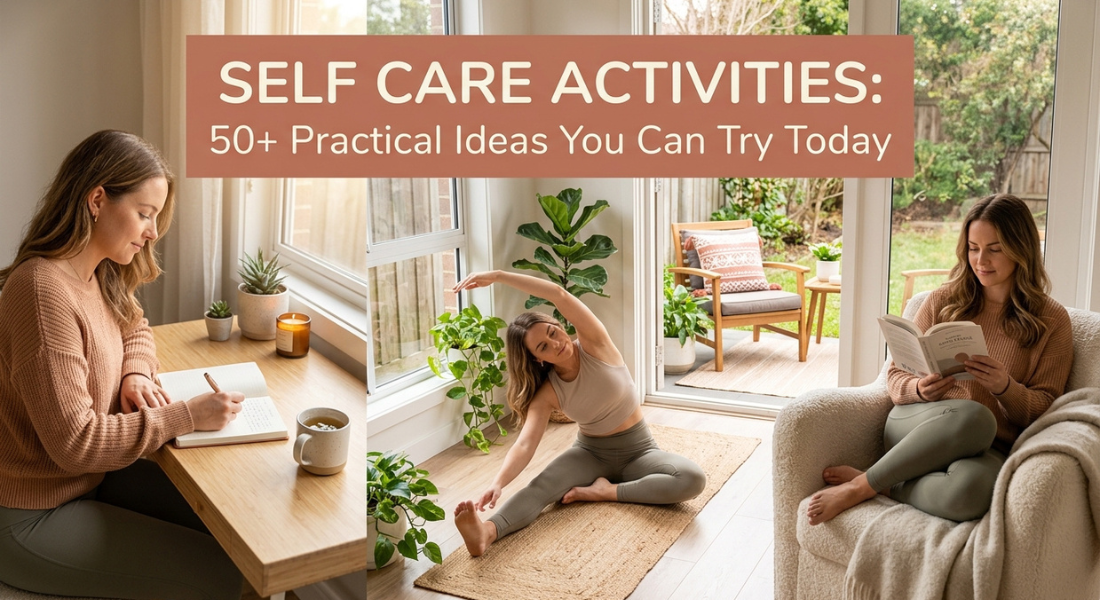
Self care activities are practical actions people can take to support their wellbeing, such as relaxing, moving their body, expressing emotions, creating, or connecting with others.
Whether you have five minutes or a full afternoon, the right activity depends on what you need most relaxation, energy, emotional support, creativity, or connection.
The most useful activities are those that match your current needs, available time, and personal preferences rather than following a fixed list. Self care ideas cover the wider approach to building healthier wellbeing habits, including routines and different self care areas.
This article focuses specifically on practical activities you can try. This is part of our complete guide on Self Care Ideas → see the full guide here.
Self care activities are practical actions that support wellbeing through relaxation, movement, creativity, reflection, and connection.
Quick activities such as breathing exercises, stretching, and gratitude notes can fit into busy schedules.
Creative, outdoor, physical, and social activities provide different ways to support personal wellbeing.
The best activity depends on your current needs, available time, and personal preferences.
Consistency matters more than completing a large number of activities.

Short self care activities are useful when you have limited time but still want a small moment of recovery or focus. These options require little preparation and can fit into busy schedules.
A five minute activity does not need to create a major change. The purpose is to create a brief pause that helps you reconnect with yourself during the day.
Mindfulness activities help you bring attention back to the present moment through simple actions. They can be completed almost anywhere and require no special equipment.
Try these quick options:
Deep breathing: Take slow breaths while focusing on the movement of your body and releasing tension.
Short meditation: Spend a few minutes sitting quietly and noticing your thoughts without judging them.
Mindful observation: Focus on details around you, such as sounds, colours, textures, or your surroundings.
Body awareness exercise: Notice areas of tension and consciously relax different parts of your body.
These small practices can create a mental reset during a busy morning, work break, or stressful moment.
When your schedule feels crowded, simple actions can provide a short break without requiring major changes.
Helpful quick reset activities include:
Step outside briefly: Fresh air and a change of environment can create a useful pause.
Drink water mindfully: Slow down and focus on the simple act of taking care of your body.
Stretch your body: Gentle movements can help release physical stiffness from sitting.
Listen to calming music: A favourite song or relaxing playlist can create a more peaceful moment.
Write a short gratitude note: Record one thing you appreciate to shift your attention towards positive experiences.
Relaxing activities provide moments of calm by allowing your mind and body to slow down. They are especially useful when you want a peaceful activity after a demanding day.
The best relaxation activities are personal. Some people recharge through quiet hobbies, while others prefer comforting experiences that create a sense of calm.
Home based activities are convenient because they can be adapted to your available space, schedule, and preferences.
Examples include:
Taking a warm bath: A quiet bath can create a calming break from daily responsibilities.
Reading a book: Reading something enjoyable allows you to step away from constant digital stimulation.
Watching a favourite film: A familiar movie can provide comfort and relaxation.
Creating a relaxing environment: Tidying a small space, adjusting lighting, or making your surroundings comfortable can improve your experience.
Using calming scents: Essential oils, candles, or natural fragrances can help create a relaxing atmosphere.
These activities work best when they are chosen intentionally rather than treated as another task to complete.
Screen free activities can provide a break from constant notifications and digital distractions.
Consider trying:
Journaling: Writing thoughts, ideas, or daily reflections can create personal quiet time.
Listening to music: Music can support relaxation and provide an enjoyable sensory experience.
Sitting quietly outdoors: Spending a few minutes outside can create space for reflection.
Doing puzzles: Puzzles provide gentle mental engagement without digital overload.
Colouring activities: Creative colouring can be a simple way to relax and focus.
According to the American Psychological Association, healthy coping strategies and stress management approaches can support psychological wellbeing, making intentional recovery activities a useful part of everyday self care.
Mental and emotional self care activities focus on reflection, expression, and creating healthy ways to process everyday experiences.
These activities are not about avoiding difficult emotions. They provide simple ways to understand your thoughts and express yourself through supportive actions.
Reflection based activities can help you organise thoughts and notice patterns in your feelings, experiences, and daily reactions.
Useful examples include:
Journaling prompts: Write answers to questions such as “What gave me energy today?” or “What do I need more of this week?”
Writing personal reflections: Record important experiences, lessons, or moments you want to remember.
Gratitude lists: Note a few positive moments, people, or experiences you appreciate.
Positive self talk exercises: Replace harsh internal criticism with more balanced and supportive thoughts.
Regular reflection can help you become more aware of what activities, environments, and experiences make you feel supported.
Expressing emotions through healthy outlets can create space for understanding and self awareness.
Some activities to try include:
Writing letters: Write a letter expressing thoughts or feelings, even if you choose not to send it.
Creative writing: Use stories, poetry, or personal writing as a way to communicate ideas and emotions.
Talking with someone trusted: A supportive conversation can provide connection and perspective.
Creating art: Drawing, painting, or other creative activities can help express feelings visually.
These activities focus on personal expression and reflection rather than replacing professional support when it is needed.
Physical self care activities involve practical actions that help you look after your body through movement, nourishment, rest, and everyday care. Simple activities are often easier to maintain because they fit naturally into normal routines.
Movement based activities can support physical wellbeing while also providing an enjoyable way to stay active.
Examples include:
Walking: A short walk can be done almost anywhere and adapted to different energy levels.
Stretching: Gentle stretches can help your body feel more comfortable after long periods of sitting.
Yoga: Yoga combines movement, flexibility, and mindful attention.
Dancing: Dancing to your favourite music adds movement while keeping the activity enjoyable.
Cycling: Cycling can be a relaxing outdoor activity or a form of exercise.
The National Institutes of Health highlights that regular physical activity and healthy lifestyle behaviours contribute to overall health and wellbeing.
Small body focused actions can support daily comfort and help you stay connected with your physical needs.
Examples include:
Preparing a healthy meal: Cooking a balanced meal can be both practical and rewarding.
Improving hydration habits: Keeping water available can make drinking enough fluids easier.
Taking care of personal hygiene: Simple routines such as showering and grooming support everyday wellbeing.
Resting properly: Giving your body enough recovery time is a valuable self care activity.
Physical activities do not need to be complicated or time consuming. Choosing realistic actions makes them easier to include consistently.

Creative self care activities provide an opportunity to express yourself, explore interests, and enjoy experiences without focusing on achieving a perfect result.
Creative activities can be especially useful when you want a break from repetitive routines or want to spend time doing something personally meaningful.
Art based activities allow you to explore ideas, emotions, and imagination through different forms of expression.
Examples include:
Drawing: Sketching simple ideas, patterns, or scenes can be a relaxing creative outlet.
Painting: Experimenting with colours and techniques can create an enjoyable way to focus your attention.
Photography: Capturing interesting moments, places, or details can encourage creativity and awareness.
Craft projects: Activities such as knitting, handmade decorations, or DIY projects provide hands on engagement.
Scrapbooking: Organising photos, memories, and personal notes can create a meaningful creative project.
Creative activities do not require advanced skills. The value comes from the process of creating and enjoying the experience.
Learning focused activities combine curiosity with personal enjoyment. They can help you explore interests while creating a positive use of your free time.
Try activities such as:
Learning an instrument: Playing music can provide creativity, focus, and enjoyment.
Trying a new recipe: Cooking something unfamiliar can be a practical and rewarding experience.
Reading something interesting: Exploring books, articles, or topics you enjoy can stimulate curiosity.
Learning a new skill: Trying photography, gardening, language learning, or another hobby can create a sense of progress.
Choosing hobbies that genuinely interest you makes creative self care easier to maintain.
Outdoor self care activities combine fresh air, movement, and changes in environment to create opportunities for relaxation and enjoyment.
Spending time outside does not require expensive trips or complicated plans. Simple outdoor experiences can become meaningful activities in everyday life.
Nature based activities encourage you to slow down and interact with your surroundings.
Examples include:
Walking in nature: Parks, trails, and green spaces can provide a peaceful environment for movement and reflection.
Gardening: Caring for plants can create a calming activity that connects you with nature.
Watching sunrise or sunset: Taking a few quiet moments to observe natural changes can create a relaxing experience.
Bird watching: Observing wildlife encourages patience and attention to your surroundings.
Spending time in green spaces: Sitting or walking in natural areas can provide a simple outdoor escape.
Nature activities can be adapted to different lifestyles, whether you have access to a garden, local park, or small outdoor area.
Outdoor activities can add variety to physical movement while making the experience more enjoyable.
Consider:
Hiking: Exploring walking routes or trails provides movement and outdoor discovery.
Cycling: Cycling allows you to combine exercise with exploring your surroundings.
Visiting local places: Exploring museums, markets, parks, or nearby attractions can create enjoyable experiences.
Outdoor hobbies: Activities such as photography, gardening, or recreational games can make time outside more engaging.
According to the Centers for Disease Control and Prevention (CDC), physical activity and social connection are important behaviours linked with improved wellbeing.
Social self care activities focus on maintaining meaningful connections and creating positive interactions with other people.
Connection does not always require large gatherings. Small moments with supportive people can also create a valuable sense of belonging.
Spending intentional time with people you care about can create opportunities for connection and enjoyment.
Examples include:
Calling someone you care about: A short conversation can strengthen relationships when meeting in person is difficult.
Sharing a meal: Eating together creates time for conversation and connection.
Planning an activity together: A walk, game night, or shared hobby can create meaningful experiences.
Playing games: Board games, card games, or group activities can encourage fun interaction.
The most effective social activities are those that feel natural and enjoyable for everyone involved.
Community activities can help you build connections beyond your immediate social circle.
Options include:
Joining a group: Interest based clubs, fitness groups, or hobby communities can introduce you to people with similar interests.
Volunteering: Helping others can create a sense of contribution and connection.
Attending community events: Local activities and gatherings can provide opportunities for social interaction.
Social connection looks different for everyone. The goal is to choose activities that support positive relationships and personal comfort.
The best activity often depends on what you need at that moment. Instead of choosing randomly, consider your current energy, emotions, and available time.
This activity finder helps match common situations with practical options.
When you want calm and quiet, choose activities that reduce stimulation and help you slow down.
Try:
Meditation
Reading
Taking a warm bath
Listening to calm music
These activities work well during evenings, breaks, or after demanding days when you need a peaceful reset.
When your energy feels low, gentle movement and engaging activities can help create momentum.
Try:
Walking
Dancing
Exercise
Outdoor activities
Choose something enjoyable rather than forcing an activity that feels like another obligation.
During overwhelming moments, simple activities can help create space before deciding what to do next.
Try:
Deep breathing exercises
Journaling
Taking a short break
Speaking with someone supportive
Small actions can provide a temporary pause and help you reconnect with your immediate needs.
When motivation is low, start with simple actions that require little effort.
Try:
Completing a small cleaning task
Taking a shower
Going for a short walk
Doing a simple creative activity
Small achievements can make it easier to continue with other supportive activities later.
Choosing the right activity depends on what you need at a specific moment rather than following the same option every day.
Start by considering your current mood, energy level, and available time. A five minute breathing exercise may be more suitable during a busy day, while a longer creative activity may work better when you have more free time.
Consider these factors when choosing an activity:
Your current needs: Choose activities that match whether you need relaxation, energy, emotional expression, creativity, or connection.
Available time: Select options that realistically fit your schedule instead of creating extra pressure.
Personal enjoyment: Activities you genuinely enjoy are easier to repeat and maintain.
Consistency over perfection: A simple activity you regularly practise is often more useful than an ideal activity you rarely complete.
The goal is not to complete every possible activity. It is to discover which actions help you feel more supported and balanced.

Making self care activities part of your day becomes easier when they fit naturally into your existing habits and lifestyle.
Instead of creating complicated plans, focus on small actions that feel realistic and easy to repeat.
Helpful approaches include:
Attach activities to existing habits: Add a short mindfulness practice after your morning coffee or stretch after finishing work.
Keep activities realistic: Choose options that match your actual schedule and energy levels.
Prepare simple options beforehand: Keep a list of activities you can choose from when you need support.
Rotate activities based on needs: Different situations may require different activities, so allow flexibility.
Self care activities should support your day rather than become another responsibility to manage.
Self care activities work best when they match your personal needs, available time, and current situation. There is no single perfect activity that works for everyone.
A short walk, a creative hobby, a quiet moment of reflection, or time with someone you value can all become meaningful forms of self care.
Start with a few activities that feel achievable, then explore what genuinely helps you feel refreshed and supported.
Simple activities include walking, journaling, deep breathing, stretching, and short meditation practices.
Try reading, cooking, creative hobbies, journaling, meditation, or relaxing activities at home.
Deep breathing, mindfulness, outdoor walks, journaling, and calming music can help during stressful moments.
Quick options include stretching, gratitude notes, mindful breathing, drinking water, and short walks.
No many activities like walking, journaling, reading, and mindfulness are free or low cost.
Choose activities regularly based on your needs, schedule, and what fits your lifestyle.




Reader Discussion
Leave a Reply