- by Daily Talkin Staff
- July 8, 2026
-

-
-
Loading
Loading
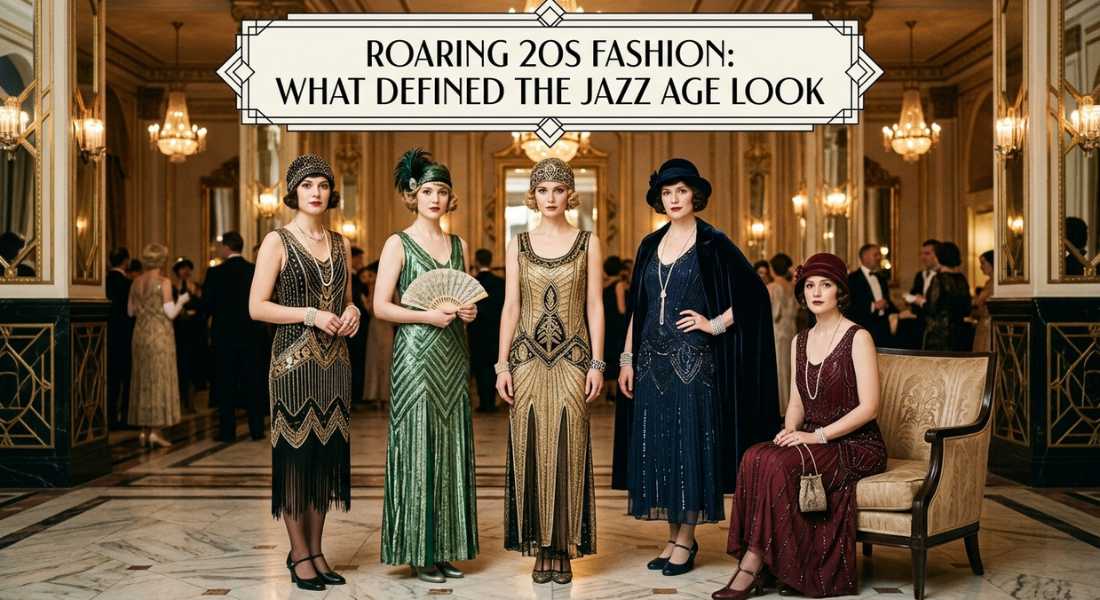
A Roaring 20s look is recognisable before you notice any single garment. Roaring 20s Fashion was a distinctive Jazz Age aesthetic built around relaxed proportions, lowered waistlines, movement, decorative eveningwear, and modern geometric design.
This guide explains how those elements worked together and why they became the visual language of the era.
Roaring 20s fashion was a recognisable Jazz Age aesthetic not simply a collection of flapper dresses.
Relaxed proportions and lowered waistlines created its characteristic streamlined silhouette.
Movement became an important part of both construction and visual effect.
Daytime clothing tended towards simplicity while eveningwear used beads, fringe, sequins and reflective decoration.
Art Deco contributed geometric, symmetrical and streamlined visual influences.
Historical museum garments show considerably more variation than modern costume stereotypes suggest.

Roaring 20s fashion combined relaxed construction, youthful proportions, lower waistlines, freer movement, and a contrast between simple daywear and decorative eveningwear.
Its straighter silhouettes moved away from the hourglass shape while embellishment added glamour. Museum collections show that the style varied beyond the stereotypical flapper dress.
The easiest way to recognise the aesthetic is to look for several characteristics working together:
A relaxed rather than restrictive shape
A waist positioned lower on the body
A straighter or tubular visual line
Clothing designed to permit movement
Relatively restrained daytime styling
Highly embellished evening surfaces
Geometric or streamlined decoration
A youthful and modern visual impression
The combination matters more than any individual feature. A lowered waist alone does not make an outfit distinctly Jazz Age but lowered proportions combined with movement and period decoration create a much stronger visual connection.
The flapper was a key symbol of the era but Roaring Twenties fashion was much broader. It also included practical daytime clothing, simpler silhouettes, and varied levels of decoration.
Museum collections show that 1920s style ranged from streamlined everyday garments to elaborate eveningwear making the flapper dress only one part of the decade’s fashion.
For the full history of 1920s clothing, designers, culture, and style see our complete guide to 1920s Fashion → explore the full guide here.
The Roaring 20s silhouette created a modern look through lowered waistlines, relaxed proportions, and freer movement. Instead of emphasising the natural waist clothing formed a longer straighter outline.
Lowered waistlines shifted attention from the narrowest part of the torso towards the hips creating a youthful streamlined shape. Loose construction reinforced this tubular silhouette.
Movement became part of the style. Loose fabrics moved naturally while dancing while evening embellishments caught light and enhanced the effect. A circa 1926 dress at the Museum at FIT shows how decoration and movement worked together.

One of the strongest characteristics of the aesthetic was its contrast. The basic silhouette could appear remarkably simple while the surface treatment could be elaborate, reflective and luxurious.
That tension prevented the clothing from looking plain. A relatively uncomplicated shape created space for beadwork, sequins, fringe, metallic elements and other decorative treatments to become the visual focus.
Daytime clothing generally presented the quieter side of the aesthetic. The emphasis was on comfortable movement, relatively uncomplicated construction and decoration appropriate to ordinary activities.
Rather than identifying the style through a long list of individual garments it is more useful to recognise the overall visual effect relaxed proportions, practical materials and a clean silhouette.
This restraint created an important foundation for the dramatic evening look. The contrast between everyday simplicity and nighttime decoration helped give the era its distinctive rhythm without requiring every outfit to look theatrical.
Eveningwear pushed the same simplified silhouette towards glamour. Beads, sequins, metallic components and other reflective details transformed relatively minimal forms into highly animated surfaces.
The Metropolitan Museum documents a 1925 to 28 dress with a loose sleek chemise like shape whose glass and metallic embellishment captured and refracted light during movement.
A separate 1924 Met example combines a loose fit and dropped waist with heavy beadwork providing another surviving example of how simplified construction could coexist with elaborate decoration.
The effect was especially suited to evening environments where movement and artificial light could make decoration appear more dynamic.
The modern appearance came from several visual influences converging at once. Simplified proportions reduced the formal rigidity of earlier dress while geometric decoration and streamlined surfaces reflected contemporary ideas about modern design.
Jazz and dance culture reinforced the importance of movement. Together these influences produced clothing that looked energetic, youthful and distinctly different from older silhouettes.
Art Deco supplied a visual vocabulary of geometry, symmetry, contrast and streamlined decoration. Its influence could appear through angular forms, geometric arrangements and surfaces designed to interact with light.
The Victoria and Albert Museum's Art Deco fashion collection documents the relationship between Art Deco design and fashion, including geometric forms, fluid shapes and reflective surfaces.
The influence was not limited to printed patterns. It could affect the cut, arrangement and decoration of clothing helping simple silhouettes acquire a distinctly modern character.
Jazz and dance culture strengthened the connection between fashion and movement. Clothing that shifted, swung or caught the light became visually appropriate to an environment centred on music and dancing.
The Museum at FIT connects the simplified silhouette, shortened hemlines, dropped waist and dance crazes as related developments in 1920s fashion.
This helps explain why movement became such a useful design principle. The clothes were not merely made differently their visual impact changed when the wearer moved.

Recognising the aesthetic requires looking at the whole visual composition rather than searching for one supposedly mandatory item.
The strongest historical clues are the relationship between silhouette, waist placement, movement and decoration. A convincing example normally combines several of these characteristics instead of relying on a single costume stereotype.
Look for this combination of characteristics:
Lowered waist placement rather than a sharply defined natural waist
Relaxed or tubular proportions creating a straighter visual line
Movement friendly construction rather than restrictive shaping
Shorter hemlines associated with the period's changing silhouette
Restrained daytime styling with simpler surfaces
Decorative evening surfaces using beads, sequins or metallic details
Geometric decoration influenced by modern design
Youthful or androgynous visual qualities
A balance of simplicity and glamour
No single point is decisive. The more characteristics appear together the stronger the historical visual connection.
Museum objects provide a better reference than modern party costumes because they preserve evidence of how the aesthetic actually appeared.
The Met's surviving garments show that streamlined silhouettes could coexist with extensive embellishment. Its 1928 evening dress for example retains a tubular silhouette while using dynamic Art Deco construction and decorative detail.
The Museum at FIT similarly presents the period through surviving clothing alongside its connections to modernity, jazz and dance.
Looking at these objects makes one point clear: historical accuracy depends on the combination of proportions, construction, decoration and context not simply adding fringe and calling an outfit “1920s.”
Roaring 20s fashion is best understood as a complete visual aesthetic rather than a synonym for flapper dresses. Relaxed proportions, lowered waistlines and movement created its foundation while restrained daytime styling and richly decorated eveningwear supplied its contrast.
Art Deco added geometric modernity while jazz and dance reinforced the importance of movement. Together these characteristics created the unmistakable energy associated with the Jazz Age.
A Jazz Age aesthetic defined by relaxed silhouettes, lowered waistlines, movement, decorative eveningwear and modern geometric influences.
Relaxed proportions, lowered waistlines, shorter hemlines, movement, simple daytime styling, embellished eveningwear and geometric decoration.
No. Flapper dresses were iconic but the wider aesthetic included varied daytime and evening styles.
Art Deco added geometric forms, symmetry, streamlined decoration, metallic effects and modern visual designs.
Relaxed construction allowed greater movement while fringe and beads enhanced motion during dancing and evening events.
Look for relaxed proportions, a lowered waist, movement, shorter hemlines, geometric decoration and glamorous surface details.




Reader Discussion
Leave a Reply