- by Daily Talkin Staff
- July 8, 2026
-

-
-
Loading
Loading
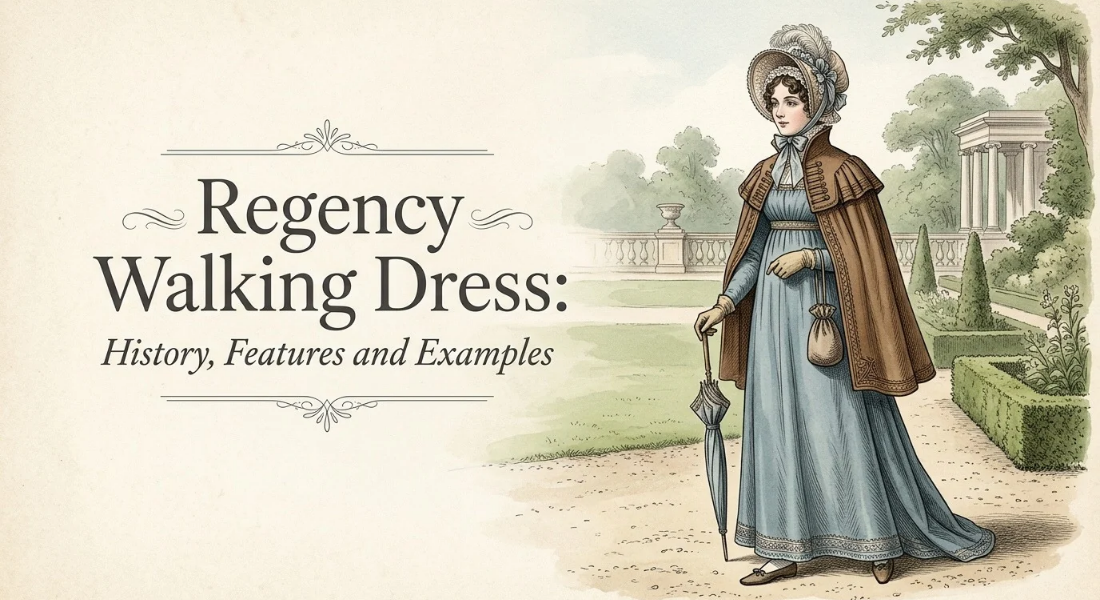
A Regency Walking Dress combined fashionable design with practical details for outdoor daytime activities. Its silhouette, fabrics and accessories reflected the wearer’s activity, weather and changing fashion preferences.
These gowns often featured a raised waist, a fitted bodice and a long skirt although designs varied across the Regency period. Historical fashion plates and surviving garments reveal their distinctive details.
This article explores the dress’s construction, fabrics, decoration, outerwear and documented historical examples. See our complete Regency Fashion guide → for the broader historical context and other clothing styles.
A Regency walking dress was intended for outdoor daytime activities, including walking and promenading.
Its design could include a high waist, fitted bodice and long skirt but construction varied.
Historical examples document different fabrics, colours, trims and outerwear.
Bonnets, capes, pelisses, shawls, gloves and other accessories could complete the ensemble.
Fashion plates show published styles; surviving garments provide different evidence about construction.
Verify dates, captions and catalogue records before drawing conclusions about a particular gown.

A Regency walking dress was a fashionable gown intended for outdoor daytime activities such as walking and promenading. It was designed to look appropriate in public while working with the weather and the wearer’s planned activity.
The term describes the dress itself not necessarily every item worn with it. A complete walking ensemble could include a bonnet, outer garment, gloves, footwear and accessories. The exact combination depended on the season, the occasion and contemporary taste.
The distinction rested mainly on intended use. Outdoor wear might require more coverage, a protective layer and accessories suited to walking outside whereas a dress for domestic daytime activities did not necessarily need the same combination.
This was not a rigid rule. A gown could serve more than one daytime purpose, so its caption, accompanying garments and historical context help establish whether a source identifies it as walking dress.
“Promenade dress” referred to fashionable clothing associated with walking or appearing in public for leisure. The terms overlap although their use depended on the publication and date.
For example historical fashion publications used labels such as “Walking Dress” and “Promenade Dress”. Read each caption in context rather than assuming the terms always described two separate formally defined garment categories.
A walking dress often had a raised waist, a fitted bodice and a long skirt, but its precise appearance changed between designs and dates. Period illustrations show variation in sleeves, collars, skirt decoration and outer layers.
When identifying one, look at the whole outfit rather than relying on a single feature. The dress’s shape, its caption and its accompanying accessories provide stronger evidence together than any isolated detail.
The bodice generally fitted the upper body while the waist sat high beneath the bust. The skirt then fell from that raised waistline creating the elongated appearance associated with early nineteenth century gowns.
However fit and proportions were not identical across every example. Compare dated illustrations and garment records before describing a particular bodice as typical of the entire period.
Necklines ranged from relatively high collars to lower openings while sleeves varied in length, fullness and finish. Some outdoor examples also show ruffs, cuffs or decorative edging around the neck and wrists.
The July 1815 walking dress described by the Morgan Library & Museum, for instance, included a full ruff and open fronted bodice. This is evidence for that documented design not proof that every walking gown shared those features.
Skirts generally fell from the high waist with the hem and trim contributing to the gown’s overall shape. Some published designs featured flounces or decorative borders while others relied on simpler finishes.
The 1815 description preserved by the Morgan Library mentions triple flounces at the feet. Do not assume every skirt had this detail, or that every illustrated hem accurately records the construction of a surviving garment.
Use this short visual checklist as a starting point:
A gown with a recognisable early nineteenth century silhouette.
Outerwear or accessories suited to outdoor wear.
A printed caption identifying it as a walking dress or promenade dress.
A publication date and source record that can be checked.
No single feature proves the garment’s purpose. A dated caption and the full illustration provide important context.
Walking dresses were not restricted to one textile, shade or level of ornament. Contemporary descriptions and fashion plates record different combinations of dress fabrics, trims and outerwear, reflecting changes in taste and individual designs.
Use the wording attached to each historical example wherever possible. A source may identify a gown’s material precisely while an illustration alone may show colour and surface decoration without establishing the fabric.
Documented descriptions include muslin, cotton based fabrics, silk and materials such as sarsnet or kerseymere. The precise fabric depended on the individual garment; heavier outerwear could use a different material from the gown beneath it.
The Morgan Library’s account of the July 1815 example names French cambric or jaconot muslin. Treat that as evidence for the described dress not as a universal recipe for walking attire.
No. Pale gowns appear in surviving fashion plates but darker and more strongly coloured designs also appear. A February 1816 plate held by the Los Angeles County Museum of Art shows a deep plum pelisse over a striped dress a December 1818 plate shows a brown walking dress with blue trim.
These examples demonstrate colour variation in the published images. They do not establish how frequently each colour was worn by women in everyday life.
Decoration could include flounces, embroidery, braiding, cords, contrasting borders or ornamental details on the bodice and sleeves. The effect might be restrained or conspicuous depending on the design.
A fashion plate from December 1818 for example depicts a brown walking dress with blue decorative trim along the front, bodice and sleeves. Such details should be described from the dated image rather than assumed to be standard features of every walking dress.

Outerwear and accessories formed a separate part of the complete walking costume. A gown might be paired with a short jacket or longer coat, while headwear, footwear and other accessories completed the appearance.
Historical illustrations are useful for identifying visible combinations. They cannot by themselves prove that every woman wore the same accessories or that each item was necessary for every outdoor occasion.
A spencer was a short jacket while a pelisse provided a longer outer layer. Cloaks and capes also appear in walking dress illustrations, offering additional coverage and changing the outline of the ensemble.
The June 1812 walking dress plate catalogued by the London Museum depicts a white high waisted gown with a brown cape tied by a yellow ribbon. London Museum: Walking Dress 1812. This example shows how an outer layer could shape the complete outfit.
Bonnets and hats are prominent in period walking dress illustrations. Their shapes, trims and ties could complement the gown while some images also show veils or other face coverings.
The 1812 London Museum plate includes a veil over the wearer’s face. Other examples depict feathered or decorated headwear so it is safer to describe what appears in a particular image than to prescribe one universal style.
Footwear and gloves varied with the outfit. The July 1815 description recorded by the Morgan Library gives a choice of slippers or half boots in specified colours while other fashion plates show different combinations.
These records demonstrate options presented in fashion publications not a single footwear standard. When discussing a specific ensemble, identify the shoes or boots only where the illustration or accompanying description supports the claim.
Shawls, parasols, muffs and small bags or reticules could appear as part of an outdoor ensemble. Their role varied: a shawl added a visible layer, while a parasol or muff altered the outfit’s overall appearance and could serve a practical purpose.
The May 1814 LACMA plate depicts a white gown with a green lined, fringed shawl and a wide brimmed hat. LACMA: Walking Dress 1 May 1814. Use individual examples to show these combinations without turning the article into a catalogue of every accessory.
Dated fashion plates help show how walking dress varied across the early nineteenth century. They record fashionable designs published at particular moments, including the cut of a gown, its outer layer and its accessories.
The examples below are not a complete survey of what women wore. They offer documented snapshots, and the details should be read alongside the publication date, caption and collection record.
A June 1804 fashion plate reproduced and discussed in a University of Idaho research document is captioned “Walking Dress”. The document describes the illustrated gowns as muslin but this is secondary analysis rather than a museum catalogue record.
The example is useful for establishing that the label was in use before Ackermann’s Repository began publication in 1809. For a final image caption, verify the original plate and its publication details rather than relying on a reproduced image alone.
The dated examples show changes in the combinations presented to readers. A 1812 plate in the London Museum depicts a white gown with a brown cape and face veil LACMA’s May 1814 plate shows a white gown with a fringed shawl and wide brimmed hat.
The July 1815 description records a gown with flounces a ruff and a bonnet. Together these sources illustrate variety in layers, trims and accessories.
They do not prove that one design replaced another across Britain, or that published fashions reflected what every woman wore.
The specific Victoria and Albert Museum object described in the initial research notes could not be matched confidently to an exact catalogue record. It would be misleading to attribute particular materials or construction details to that unverified object.
A verifiable related source is LACMA’s 1 December 1817 walking dress fashion plate a hand coloured engraving published under Rudolph Ackermann’s name.
It provides evidence of a dated fashionable design but a fashion plate is not a surviving dress and cannot establish how all walking gowns were made.
Fashion plates, written descriptions and surviving garments answer different questions. A plate records a published look; a contemporary description may specify materials and construction a surviving garment can provide physical evidence of textiles, seams and workmanship.
Reliable interpretation depends on keeping these forms of evidence distinct. Attribute specific claims to the source that supports them, and avoid turning one example into a rule for the entire period.
A fashion plate presents a published fashion image, often with an accompanying caption or description. It can reveal the intended appearance of an outfit but it may simplify details or emphasise an idealised design.
A surviving garment provides material evidence, including construction and textile details that an illustration may not show. Neither source represents every wearer, social setting or occasion so compare sources where possible.
For each example record the institution or publication, the object or plate title, its date and the catalogue or archive link. Place citations beside the claims they support, especially when naming a fabric, trim or construction feature.
Check whether a date refers to publication, manufacture or a museum’s estimated period. If the source does not establish a detail label it as uncertain rather than presenting an interpretation as a documented fact.

Walking dress was associated with outdoor daytime activity, so its combination of gown, outerwear and accessories reflected that purpose. Morning dress and evening dress served different settings, although actual garments varied and historical terminology was not always consistent.
The comparison below is functional rather than an absolute dress code. Use dated descriptions and illustrations to interpret individual examples rather than assuming every gown followed fixed rules.
Feature | Walking dress | Morning dress | Evening dress |
Primary context | Outdoor daytime activity | Informal daytime or domestic activities | Evening social occasions |
Main consideration | Outdoor suitability and presentation | Informality and daily routine | Occasion appropriate formality |
Accompanying items | Suitable outerwear and outdoor accessories | Items suited to its particular setting | Accessories appropriate to the event |
These categories help distinguish intended use but the label and context of a specific historical source remain important. Avoid classifying a gown from its silhouette alone.
A Regency walking dress was defined chiefly by its outdoor daytime purpose, not by one fixed cut, colour or accessory combination. Fashion plates and written descriptions record varied silhouettes, textiles, trims and outer layers across the period.
To interpret an example reliably, check its date, caption, provenance and source record. These details help separate documented features from assumptions about how every woman dressed.
A fashionable gown worn for outdoor daytime activities such as walking and promenading often paired with suitable outerwear and accessories.
It often featured a raised waist, fitted bodice and long skirt, with variations in sleeves, necklines and decoration.
Documented fabrics included muslin, cambric and silk-based materials, depending on the garment and period.
Women’s ensembles could include bonnets, capes, pelisses, shawls, gloves, footwear and muffs.
No Historical fashion plates show both pale and darker gowns sometimes with contrasting decorative trims.
Check dated fashion plates, contemporary descriptions and museum records to verify the garment’s features and historical context.


Reader Discussion
Leave a Reply