- by Daily Talkin Staff
- July 8, 2026
-

-
-
Loading
Loading
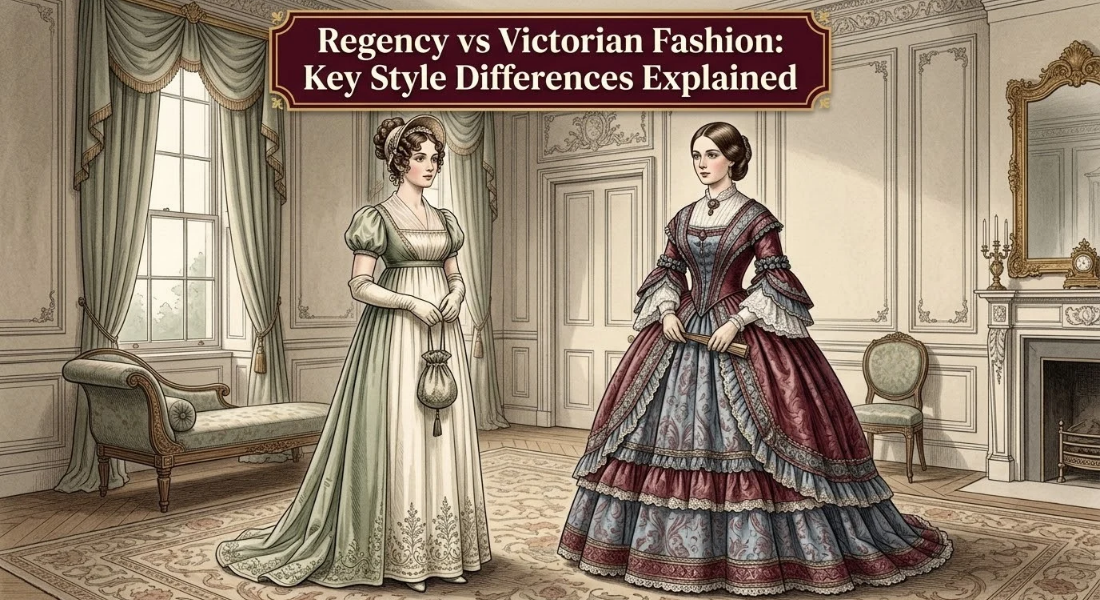
Regency vs Victorian Fashion are easiest to distinguish by their silhouettes, construction and changing dress conventions. Regency clothing featured a raised Empire waist while Victorian styles developed more structured bodices, fuller skirts and changing proportions.
This comparison is part of our complete Regency Fashion guide → see the full guide here.
Regency women’s fashion is associated with a raised Empire waist and a long, flowing skirt.
Victorian clothing generally used a more defined natural waist and increasingly structured silhouettes.
Victorian skirt shapes changed from broad crinoline supported volume to bustle styles that emphasised the back.
Both eras used foundational garments, but Victorian corsetry and skirt supports evolved to create different fashionable proportions.
Men’s fashion retained an emphasis on tailoring across both periods, although cuts and conventions changed.
Waistline, skirt volume, bodice construction and dated historical evidence are the most useful clues when identifying a garment.

Regency fashion featured a raised Empire waist, long flowing skirts and a relatively narrow silhouette. Victorian fashion developed more structured bodices, lower waistlines and changing skirt shapes, including wide skirts and styles emphasising the back.
Regency fashion is associated with the late 1790s through the 1820s while the Victorian era lasted from 1837 to 1901. These changes happened gradually rather than overnight.
The clearest differences appear in the position of the waist the shape of the skirt and the way garments create their outline. Victorian fashion also changed significantly across the decades so its defining features depend on the date of the clothing.
These are broad tendencies not rules that apply to every garment. A formal gown, outdoor outfit or working day ensemble might look different from the fashionable examples most often displayed in museums.
Regency dresses typically featured a raised waistline and flowing skirts while Victorian dresses used fitted bodices, natural waistlines and fuller skirts. These differences in proportions are among the clearest ways to distinguish the two periods.
Regency gowns had a raised waist just below the bust with the skirt falling loosely from that point. Victorian dresses generally defined the waist lower on the torso, using fitted bodices and corsetry to create a more structured shape.
The transition began before Queen Victoria’s reign in 1837 as fashion gradually moved away from the high waisted Regency silhouette.
Regency skirts generally fell in a relatively narrow line from the raised waist without the extensive support used for later Victorian skirt shapes.
Victorian skirts became wider during the crinoline period spreading volume around the body. Later bustle styles shifted much of the fullness towards the back creating a distinctive silhouette.
Regency and Victorian clothing both used supportive undergarments but Victorian fashion developed more elaborate structures to shape the torso and skirts. Corsets shaped the waist while crinolines and bustles created different skirt silhouettes over time.
Regency undergarments supported the bust and helped maintain the gown’s raised Empire waist. Stays and other foundations varied in design so not every woman wore the same style.
The overall silhouette emphasised a high waist and flowing skirt rather than the defined waist and structured volume associated with many Victorian dresses.
Victorian corsets shaped the torso while skirt supports changed throughout the era. According to the Victoria and Albert Museum the cage crinoline emerged in 1856 using steel hoops to support wide skirts.
From the late 1860s skirt fullness increasingly shifted towards the back. Bustles became prominent during the 1870s and returned in new forms during the 1880s creating distinctive rear focused silhouettes.
Regency clothing often created an elongated look through raised waistlines and flowing skirts. Victorian fashion combined fitted bodices, fuller skirts and changing decorative details with the overall appearance varying across the decades.
Regency gowns featured short bodices and long skirts falling from a high waist. Fabric drape created an elongated silhouette, while embroidery, trims and other details varied by garment and occasion.
Regency dresses were not always plain. Their defining feature was the relationship between the raised waist and flowing skirt, rather than a particular colour or level of decoration.
Victorian dresses often featured lace, pleats, bows and layered fabrics that complemented the silhouette. Decoration could emphasise wide skirts or the back of a bustle dress depending on the decade.
The Metropolitan Museum of Art documents an 1885 evening dress with a bustle silhouette, back fullness and elaborate decoration. This example illustrates one Victorian style rather than the entire era.
Regency men’s fashion featured fitted coats, waistcoats and carefully arranged cravats. Victorian men retained tailored layers, but coat cuts, trousers and formal dress conventions evolved throughout the century.
Tailoring remained important in both periods the main differences lay in garment proportions and styling. Clothing also varied by occasion, occupation and wealth so fashionable portraits do not represent every man’s wardrobe.

Victorian fashion was not one fixed style. Across the reign, waistlines, sleeve shapes, skirt supports and the placement of volume changed substantially making the decade of a garment important when comparing it with Regency clothing.
Early Victorian women’s dress generally used fitted bodices a more natural waistline and skirts that grew fuller. The shape was already distinct from the raised waist Regency outline although the exact proportions varied by year and occasion.
These changes established a more structured silhouette without yet representing the very broad skirts associated with the height of the crinoline period.
During the 1850s and 1860s crinolines supported increasingly wide skirts. The V&A identifies 1856 as the emergence of the cage crinoline which used steel hoops to hold the skirt out while reducing the need for numerous heavy petticoats.
By the later 1860s, fashionable fullness began shifting towards the back, preparing the way for bustle silhouettes. This change shows why “Victorian skirt” is too broad a description for one specific shape.
Bustles became a defining feature of several late Victorian styles projecting fullness behind the wearer. Their form changed through the 1870s and 1880s; by the 1890s the pronounced bustle had largely given way to a different outline with greater visual emphasis often placed on the sleeves.
The Met’s 1885 dress is a useful dated example of bustle era fashion, while the V&A’s collection documents the broader sequence of changing supports and silhouettes.
Regency and Victorian fashion differed because fashionable silhouettes, garment construction and dress conventions changed over time. Regency clothing emphasised raised waistlines and flowing skirts while Victorian styles increasingly featured fitted bodices and structured skirt shapes.
As silhouettes changed, designers adapted corsets, skirt supports and decorative details to suit the preferred look of each decade. Museum collections show that neither era had one fixed style throughout its duration.

Start with the waistline, then examine the skirt volume, bodice structure and placement of fullness. A raised waist and long relatively narrow skirt may suggest Regency fashion a fitted natural waist with a broad or rear projecting skirt may point towards a Victorian style.
Use this checklist when examining a historical image:
Is the waist visibly raised near the bust?
Is the skirt narrow and flowing, or broadly supported?
Is fullness spread around the skirt or concentrated at the back?
Do the bodice and sleeves resemble a particular Victorian decade?
No single feature can date a garment with certainty. Fashion overlapped and changed gradually, and illustrations may idealise or reinterpret clothing. Where possible compare several clues with a dated museum object or a reliable historical fashion record.
Regency and Victorian fashion are most easily distinguished by silhouette. Regency dress is associated with a raised waist and flowing proportions while Victorian styles used fitted bodices and changing skirt supports to create fuller or back focused shapes.
Because Victorian fashion evolved across six decades, the waistline, skirt volume and date of the garment together offer a more reliable comparison than any single detail.
Yes Regency fashion dates broadly from the late 1790s to the 1820s while the Victorian era lasted from 1837 to 1901.
Regency dresses feature raised waistlines and flowing skirts while Victorian dresses have lower waistlines and more structured silhouettes.
The Empire waist was uncommon as a defining Victorian style which generally favoured fitted bodices and natural waistlines.
Yes However corset designs and their role in shaping fashionable silhouettes changed between the periods.
Victorian skirts widened during the early decades with cage crinolines emerging in 1856. Later styles often emphasised the back.
Look at the waistline, bodice and skirt shape then compare the garment with dated museum records.


Reader Discussion
Leave a Reply