- by Daily Talkin Staff
- July 8, 2026
-

-
-
Loading
Loading
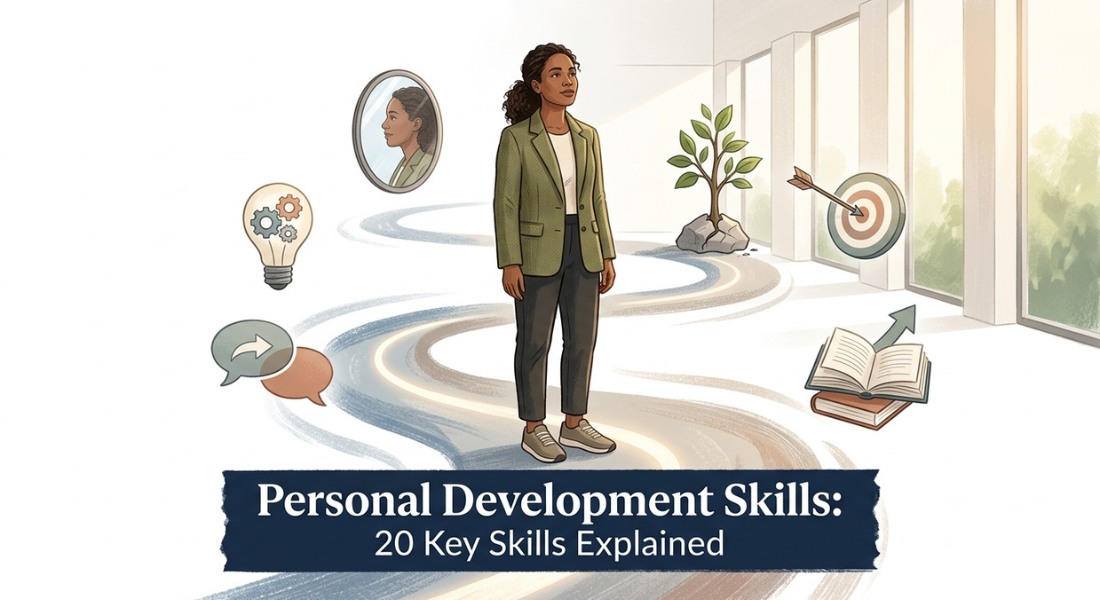
Knowing you want to improve is one thing; knowing which capability to strengthen is another. Personal development skills are learnable capabilities that shape how you manage yourself, think, communicate, relate to others and keep learning.
This guide groups the key skills into four practical categories and explains what each one means. Personal development is the broader process of intentional growth across skills, behaviours, knowledge and self awareness.
This is part of our complete guide on Personal Development → see the full guide here.
Personal development skills are learnable, transferable capabilities rather than traits or goals.
Four useful categories are self management, thinking and decision making, interpersonal skills, and learning and growth skills.
Self awareness, self discipline and emotional regulation concern internal behaviour and responses.
Critical thinking, problem solving and decision making support considered thinking and choices.
Communication, empathy, collaboration and conflict resolution shape interpersonal effectiveness.
Goal setting, self reflection and continuous learning support ongoing capability development.

Personal development skills are transferable capabilities that influence how effectively you manage yourself, process information, respond to challenges, interact with people and continue learning. Unlike fixed labels, skills can be strengthened and applied across different situations.
A skill is a capability that can be learned, practised and improved. Communication, critical thinking and emotional regulation are examples because each involves behaviours or abilities that can become more effective with development.
A trait is different. It describes a relatively enduring characteristic, such as being naturally outgoing or cautious. A person can use skills to manage or adapt how a trait appears in different situations.
A goal is an outcome rather than a capability. Becoming more confident may be an objective while communication, self awareness or emotional regulation are skills that can support that outcome.
The strongest examples are capabilities that can be deliberately strengthened and transferred between situations. They include self management, thinking and decision making, interpersonal skills, and learning and growth skills.
Personal Growth Skills and Self Development Skills are closely related labels for this same broad set of capabilities.
There is substantial overlap between the two terms but they are not identical. Life skills generally describe abilities used to handle everyday demands and challenges while personal development skills place greater emphasis on strengthening the individual's capabilities, behaviour and effectiveness.
UNICEF similarly describes life skills as cognitive, personal and interpersonal abilities for dealing effectively with everyday life.
Self management skills concern how you understand and direct your own behaviour, emotions, attention and responses. They provide the internal control needed to respond deliberately rather than automatically.
Self awareness means recognising your emotions, behaviours, strengths, limitations, values and recurring patterns. It helps you notice what is happening internally and understand how your responses affect your actions.
This skill provides a useful foundation for personal development because other capabilities depend partly on recognising what needs attention.
For example noticing that frustration repeatedly affects your communication can help you distinguish the emotional response from the behaviour that follows.
Self awareness is therefore more than simply knowing your personality. It involves recognising patterns in how you think, feel and behave across situations.
Self discipline is the ability to maintain intentional behaviour despite distractions, discomfort or short term impulses. Emotional regulation concerns managing emotional responses appropriately rather than allowing emotions to dictate behaviour.
The two skills overlap but serve different functions. Self discipline is primarily about behavioural consistency; emotional regulation is about responding to feelings in a controlled and appropriate way.
For example continuing with a chosen task despite distraction demonstrates self discipline while pausing before responding angrily demonstrates emotional regulation.
The distinction matters because controlling behaviour and managing emotion are related capabilities not interchangeable terms.
Adaptability is the ability to adjust your behaviour or approach when circumstances change. Resilience is the capacity to respond constructively to setbacks, difficulty or disruption.
Adaptability is therefore closely connected with change, while resilience is particularly concerned with recovering and responding effectively when circumstances become difficult.
A person might adapt to a changed situation without experiencing a major setback whereas resilience becomes especially relevant when facing failure, disappointment or sustained pressure.
Both capabilities support flexible responses rather than rigid reactions. UNICEF also identifies adapting to change and building resilience among the functions associated with life skills.
Thinking skills help you evaluate information, question assumptions and work through challenges. Decision making turns that reasoning into considered choices while problem solving applies it to situations that require a workable response.
Critical thinking involves evaluating information, assumptions and reasoning before accepting a conclusion. It encourages you to ask whether evidence supports a claim whether an assumption is justified and whether another interpretation is possible.
This makes critical thinking useful beyond academic settings. It can influence how you assess advice, interpret disagreements, judge information and reconsider conclusions when new evidence appears.
UNICEF includes critical thinking within its description of life skills, alongside problem solving, communication and other cognitive capabilities.
Problem solving focuses on finding ways to address a challenge while decision making focuses on selecting among available options. They often work together but they answer different questions.
For example deciding which response to take is decision making identifying possible responses to a difficult situation is problem solving.
Creativity can support both when generating alternative solutions or considering options that are not immediately obvious.
WHO groups decision making and problem solving together within established life skills frameworks while also identifying critical and creative thinking as related cognitive skills.

Interpersonal skills shape how you express ideas, understand other people and handle interactions. They extend beyond speaking well because effective relationships also depend on listening, perspective taking, cooperation and constructive responses to disagreement.
Communication is the ability to express and receive information clearly. It includes more than speaking written, verbal and non verbal communication can all affect whether a message is understood as intended.
Active listening is a distinct component because it involves deliberately trying to understand another person's message rather than simply waiting for a chance to reply.
Together these abilities make communication more balanced. Expressing yourself clearly matters but understanding what another person means is equally important.
WHO's life skills framework specifically identifies communication and interpersonal skills alongside active listening and feedback related abilities.
Empathy involves understanding another person's perspective or emotional experience. It does not require agreeing with that person; the skill is recognising how they may see or experience a situation.
Collaboration means working constructively with others towards a shared outcome. It requires cooperation, consideration of different contributions and a willingness to coordinate rather than simply act independently.
Conflict resolution involves addressing disagreement constructively. Instead of treating conflict as something that must always be avoided the skill focuses on understanding the issue, communicating clearly and working towards a workable response.
These capabilities are closely connected because effective interaction requires both understanding others and responding appropriately.

Learning and growth oriented skills support the ability to develop knowledge and capability over time. They focus on directing learning and extracting useful insight from experience rather than on a broader personal development programme.
Goal setting is the ability to translate an intended outcome into a clear direction for action. It is a skill because effective goal setting involves defining what you are trying to achieve clearly enough to guide behaviour.
The distinction is useful the goal is the desired outcome while goal setting is the capability involved in defining and directing attention towards that outcome.
This article does not treat goal setting frameworks, measurement systems or personal development objectives as separate skills because those belong to different aspects of personal development.
Self reflection means deliberately examining experiences, decisions and behaviour to gain useful insight. Rather than simply remembering what happened reflection involves considering what the experience reveals about your responses or assumptions.
Continuous learning involves regularly developing knowledge or capability rather than treating learning as something that ends after formal education.
Together these skills support lifelong capability development. Reflection helps turn experience into insight while continuous learning expands what you can understand and do. They therefore complement the practical and interpersonal skills described throughout this article.
Personal development skills are learnable capabilities covering four connected areas: self management, thinking and decision making, interpersonal interaction, and learning and growth.
Understanding these categories makes it easier to recognise the abilities you already use and identify those that may need further development. The key is to distinguish a genuine skill from a trait, goal or general aspiration.
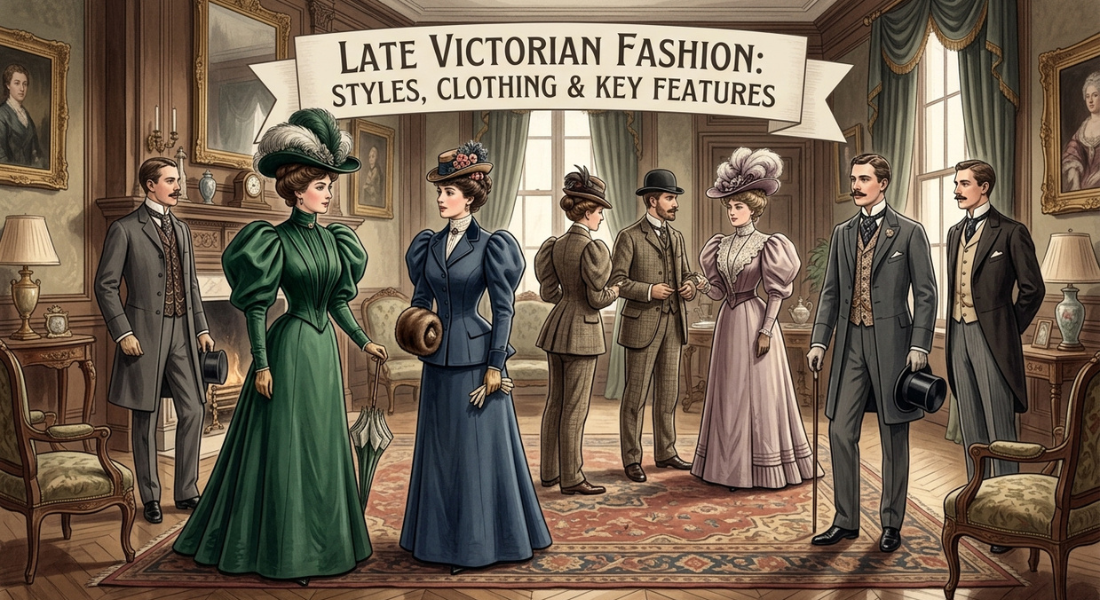
Late Victorian fashion refers mainly to 1880s and 1890s clothing, known for fitted waists, controlled skirts and dramatic sleeves.
Women wore fitted bodices, skirts, shirtwaists, dresses and tailored jackets with outfits varying by occasion.
Men wore suits, coats, waistcoats, trousers, shirts and neckwear, often completed with top hats or bowlers.
Everyday 1890s clothing was simpler and more practical than formal dress, varying by occupation, income and social class.
Late Victorian styles emphasised controlled skirts, fitted waists and dramatic sleeves rather than broad lower body volume.
Large gigot or leg of mutton sleeves became a defining feature of fashionable 1890s women's dress.


Reader Discussion
Leave a Reply