- by Daily Talkin Staff
- July 8, 2026
-

-
-
Loading
Loading
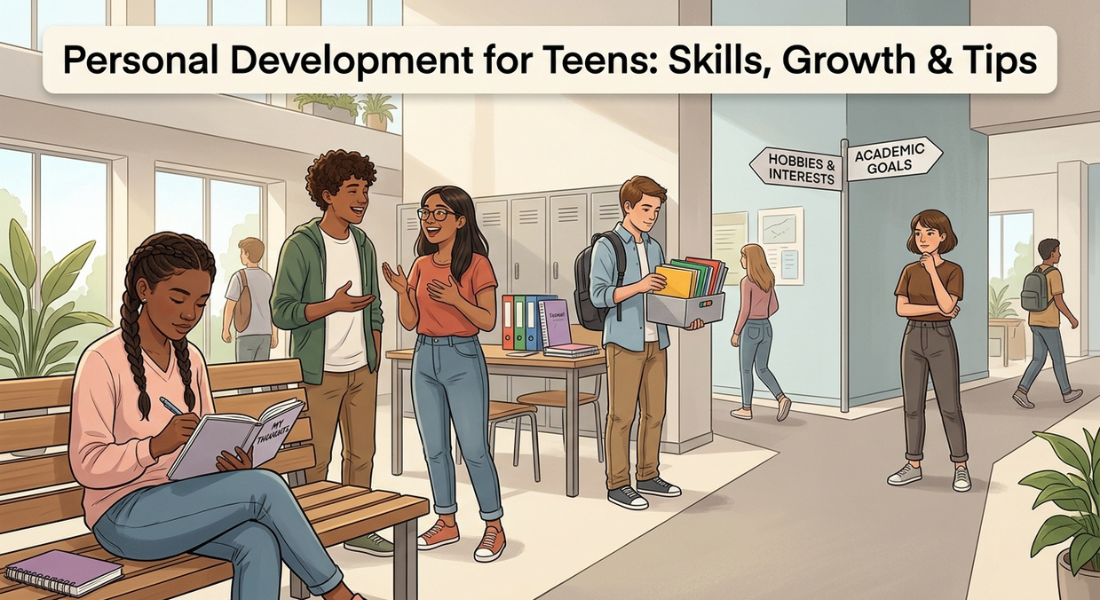
School, friendships, emotions and growing independence can make the teenage years challenging. Personal development for teens means building age appropriate self awareness, emotional skills, confidence, communication and practical capabilities while navigating adolescence.
This guide covers key development areas, everyday examples, common challenges and appropriate support. For the broader framework, see the complete Personal Development guide for skills, goals, habits and self awareness.
Teenage development should be age appropriate rather than based on adult self-improvement expectations.
Key areas include self awareness, identity, confidence, resilience, emotional skills, communication and growing independence.
Everyday situations at school, home and with friends provide practical opportunities to develop these capabilities.
Peer pressure, comparison, setbacks and changing priorities can make development more difficult.
Healthy development allows experimentation, mistakes, reflection and gradual responsibility.
Trusted adults can provide useful guidance, particularly when challenges become difficult or serious.

Personal development during the teen years is about building age appropriate awareness, behaviours and capabilities while a young person is still developing emotionally, socially and cognitively. It is not simply applying adult self improvement systems to a younger audience.
Teenagers are also gaining independence, navigating changing relationships and becoming more capable of considering consequences before making decisions. These changes can affect how confidence, emotional regulation, communication and responsibility develop.
Progress will not look identical for every teenager. One person may become more comfortable speaking up, while another may be learning to manage frustration, make decisions independently or understand what matters to them.
Experimenting with interests, changing direction and feeling uncertain can be normal parts of adolescence.
The American Psychological Association describes adolescence as involving physical, cognitive, emotional, social and behavioural development, with these areas influencing one another rather than developing in isolation.
Teen development is best viewed as a group of connected areas rather than a checklist that every teenager needs to master at once.
Growth in one area can influence another: understanding emotions can improve communication while healthier relationships can strengthen confidence and self awareness.
Self awareness means recognising emotions, strengths, preferences, values and behavioural patterns, then considering how they influence choices and relationships.
During adolescence, identity development in adolescence and identity formation in adolescence can involve exploring interests, roles, relationships and possible future selves. Developing identity in adolescence does not require having a fixed answer about who you are.
Exploration can be a healthy part of growing up. A teenager who changes interests or questions earlier assumptions may be learning more about themselves rather than failing to define an identity.
Confidence is not feeling certain or capable in every situation. It can develop when a teenager handles a specific challenge, learns from the result and becomes more willing to try again.
Resilience involves recovering from mistakes, disappointment or difficulty rather than expecting everything to go smoothly. Emotional skills include recognising feelings, expressing them appropriately and learning ways to respond without being controlled by every emotion.
These abilities support everyday development but they should not be presented as protection against anxiety, depression or other mental health conditions.
Communication development can mean listening carefully, expressing disagreement without attacking someone, setting a boundary or asking for help when a situation becomes difficult.
Relationships also give teenagers opportunities to practise trust, respect and conflict management. Peer and family experiences can influence a young person's developing sense of self, so belonging and relationships matter alongside individual choices.
Growing independence does not mean handling everything alone. It means gradually taking more responsibility while recognising when guidance or support is useful.
Personal development becomes meaningful when teenagers can recognise it in ordinary situations rather than treating it as an abstract self improvement project. Small changes in behaviour can reveal whether a skill is actually developing.
A teenager might notice that they communicate more clearly after practising how to disagree respectfully, or become more responsible after recognising the consequences of repeatedly postponing schoolwork.
The aim is not to create a perfect routine. It is to give teenagers opportunities to practise useful behaviours in situations that already occur at school, at home, with friends and during everyday decisions.
A teenager developing self management might ask a teacher to explain an unclear instruction instead of pretending to understand. They might divide a difficult assignment into smaller actions rather than waiting until the deadline.
Accepting constructive feedback is another practical example. Instead of treating correction as a personal criticism, a teenager can identify what needs changing and try again.
Recognising that constant phone notifications or other distractions are affecting concentration can also build useful self awareness.
Development can appear in a difficult conversation: saying “I’m not comfortable with that” listening to another person's view or pausing before responding angrily.
It can also mean thinking about consequences before making a choice apologising after a mistake or asking someone trustworthy for another perspective.
These situations matter because they allow teenagers to practise responsibility in real circumstances. There is no single routine that every teenager needs to follow.

Teenagers can face obstacles that are closely connected to adolescence itself. Peer expectations, changing relationships, social comparison, academic pressure and uncertainty about the future can all affect how a young person sees their abilities and choices.
Difficulty developing a skill should not automatically be interpreted as laziness or a lack of motivation. A teenager may need more practice, clearer feedback, greater independence or appropriate support.
The goal is to understand what is getting in the way and respond proportionately rather than expecting constant confidence or rapid progress.
Peer pressure can make a teenager change behaviour to gain acceptance even when the choice does not fit their own values. Social media can add another layer by encouraging comparisons with carefully presented versions of other people's lives.
These pressures can complicate self awareness and confidence. An identity crisis in adolescence should not be used as a label for every period of uncertainty; questioning identity can be part of normal development.
The useful response is to notice outside influence and consider whether a choice genuinely reflects the teenager's own values and circumstances.
Interests, goals and confidence can change during adolescence. A teenager might lose interest in an activity, perform poorly on an assessment or handle a disagreement badly.
Those experiences can still provide useful information. A missed goal may reveal that the approach was unrealistic; a difficult conversation may show where communication needs work.
Healthy development allows room to adjust. The objective is not to avoid every mistake but to recognise what happened learn from it and make a better informed choice next time.
Personal development should match a teenager's maturity, circumstances, responsibilities and developing level of independence. A 13 year old and a 19 year old may face very different expectations, choices and support needs.
Adult ideas about productivity, career achievement, financial success or long term life planning should not automatically become measures of teenage progress.
Development at this stage can be much more immediate handling a disagreement better, understanding a strong emotion or taking responsibility for an appropriate decision.
There is also a difference between supporting growth and controlling it. Teenagers need opportunities to make reasonable choices, experience consequences and reflect on what happened. Adults can provide boundaries and perspective without taking over every decision.
What is identity development? It is not simply selecting a permanent label or having your entire future figured out. Adolescence can involve exploring interests, values, relationships and possible directions while understanding oneself gradually changes.

Personal development does not require teenagers to solve every problem independently. Parents or caregivers, teachers, mentors, counsellors and other trusted adults can provide perspective when a situation is confusing or difficult.
Support can be useful when a teenager is struggling with a decision, relationship conflict, persistent self doubt or a challenge that feels too difficult to handle alone. Asking for guidance is not a failure of independence; knowing when to seek help is itself a useful capability.
Evidence also shows why supportive relationships matter. CDC data from U.S. adolescents aged 12 to 17 in 2021 to 2023 found that 79% reported having at least one adult in their life who made a positive difference while 58% reported usually or always receiving social and emotional support.
For serious or persistent emotional distress, safety concerns, self harm, abuse or other significant problems, self development advice is not a substitute for professional care.
The [World Health Organization's adolescent mental health guidance] supports early attention to adolescent mental health and supportive environments at home, school and in the wider community.
Personal development for teens is about gradually becoming more self aware, capable, emotionally skilled and responsible while navigating adolescence. It is not about becoming perfect or following an adult productivity system.
Small, age appropriate changes can build useful capabilities when teenagers reflect on experience, learn from mistakes and seek support when a challenge is too difficult to manage alone.
It is developing self awareness, emotional skills, communication, confidence, responsibility and decision making during adolescence.
Examples include setting boundaries, handling disagreements, accepting feedback, making thoughtful decisions and taking responsibility for mistakes.
Key skills include self awareness, emotional skills, communication, resilience, decision making, responsibility and healthy self management.
Choose one area, practise it in everyday situations reflect on the result and use helpful feedback to improve.
It involves exploring interests, values, relationships and possible future directions while developing a clearer sense of self.
Ask a trusted adult for support when a challenge feels difficult to manage, especially during persistent distress or serious problems.


Reader Discussion
Leave a Reply