- by Daily Talkin Staff
- July 8, 2026
-

-
-
Loading
Loading
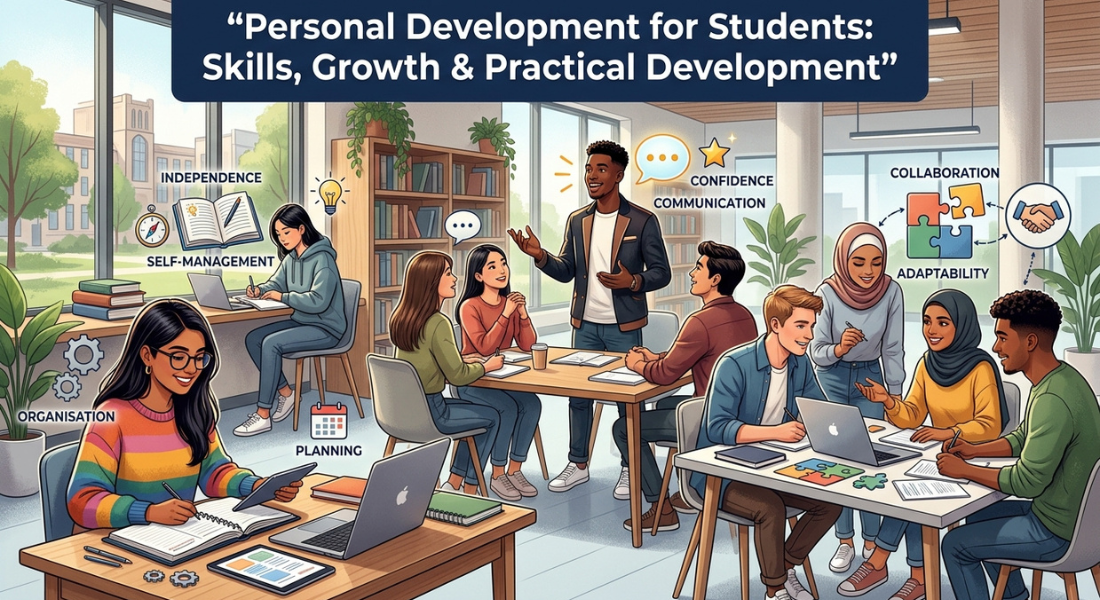
A student can earn strong grades yet struggle with confidence, communication, organisation or new responsibilities. Personal development for students means intentionally building the personal, social and practical skills needed to manage student life.
This guide covers the key areas of student development their everyday applications and practical ways to recognise meaningful progress.
Personal development for students extends beyond grades into self awareness, communication, responsibility, adaptability and decision making.
Student growth is best understood through changes in real behaviour, not feelings or academic results alone.
Students can develop through ordinary situations such as classes, group work, responsibilities and changing schedules.
Choosing one specific development need makes improvement more manageable than trying to change everything simultaneously.
Reflection and appropriate feedback can help students recognise progress and adjust their approach.
Realistic development fits around existing student routines rather than requiring a completely separate lifestyle.

Students manage classes, assignments, relationships, decisions and increasing independence. Personal development helps them become more organised, responsible, adaptable and capable of handling these demands not just better at studying.
A student may develop by improving communication, managing deadlines, working with others or adapting to a new environment. These skills can remain useful beyond a single course or academic year.
Academic development focuses on knowledge and learning while personal development also covers communication, responsibility, decision making and responding to challenges.
Grades do not fully measure personal growth. A student can improve their confidence, independence, organisation or adaptability even when those changes are not reflected in academic results.
Personal Development provides a broader framework for intentional growth across skills, behaviours, goals and self awareness. This guide applies that framework specifically to student life as part of our complete guide to Personal Development. → see the full guide here.
Important areas include self awareness, communication, confidence, relationships, responsibility, adaptability, emotional regulation and decision making. Their importance depends on a student's circumstances and daily challenges.
Students can focus on the areas that affect their current needs. For example missed deadlines may point to self management while avoiding group work may indicate a need to improve communication or confidence.
Self awareness helps students recognise their strengths, limitations, emotional patterns and reactions to challenges. This can help them identify specific behaviours they want to improve.
Understanding personal patterns does not mean placing students into fixed personality types. It helps them recognise behaviours that may affect learning, relationships and everyday decisions.
Communication is essential for group projects, classroom participation and asking teachers for help. Students develop these skills by listening, expressing ideas clearly and handling disagreements respectfully.
Confidence does not mean always feeling comfortable. A student can feel nervous about speaking or presenting while still communicating effectively. Building confidence often means becoming more willing to participate despite discomfort.
Self management helps students handle schedules, responsibilities, changing demands and everyday challenges. It becomes increasingly important as students gain more control over their time and commitments.
Time management involves tracking commitments, prioritising tasks and allowing enough time for important work. Responsibility includes meeting deadlines, completing agreed tasks and communicating early when problems affect commitments.
Adaptability helps students respond to changes in workload, routines, courses and social circumstances without abandoning their responsibilities.
Emotional regulation means recognising feelings such as frustration or pressure and responding thoughtfully rather than reacting immediately. This can help students handle criticism, disagreements and unexpected problems.
Good decision making involves considering likely consequences before acting. This is useful when managing competing commitments, group conflicts, missed work or limited time.
Personal growth becomes meaningful when an intended improvement appears in observable behaviour. A student does not need a major programme to develop; ordinary situations can provide repeated opportunities to practise a capability.
Someone working on communication might contribute one useful point during a discussion rather than deciding to “be more confident”. A student improving organisation might prepare for an upcoming deadline earlier rather than simply promising to manage time better.
The useful question is therefore: “What would this improvement look like in something I actually do?” That turns an abstract intention into behaviour that can be noticed and adjusted.
A development goal becomes more practical when it connects to a behaviour that can occur during normal student routines. The behaviour should be specific enough to recognise afterwards.
For example a student could ask one question during a lesson, review upcoming deadlines at the start of a study period, or reflect briefly after a difficult group interaction.
The purpose is not to create a perfect routine. It is to give personal growth a visible form. Repeated behaviour provides something concrete to observe rather than relying entirely on whether the student feels motivated on a particular day.
Personal growth training can take several forms, including workshops, mentoring, student development programmes, group activities and guided learning. Schools and universities may offer opportunities through teachers, student support teams, clubs or organised development programmes.
These opportunities can provide structure and feedback but formal training is not a requirement for development. A student can also practise communication during group work, adaptability during a new course or responsibility through a student society.
The most useful support is usually connected to a genuine student need. Training should help students practise relevant behaviours rather than simply collecting another certificate or attending sessions without applying what they learn.

Trying to improve everything at once can make personal development unrealistic. Students already manage academic demands, social commitments and changing responsibilities so choosing one meaningful area can produce a clearer starting point.
The strongest priority usually comes from a recurring situation rather than a vague judgement about personality. If the same problem appears repeatedly it provides useful information about where development could have the greatest practical value.
A student does not need to identify every weakness. The aim is to find one capability that would make an important part of student life easier, more effective or more manageable.
Look for patterns in actual behaviour. Repeatedly missing responsibilities may point towards self management. Avoiding classroom participation may indicate a confidence or communication challenge.
Frequent conflict in group work could highlight communication or emotional regulation. Difficulty coping with a changed schedule could suggest an opportunity to develop adaptability.
This approach is more useful than broad self criticism. “I am bad at everything” gives no practical direction while “I regularly leave group tasks until the last day” identifies a behaviour that can be examined and improved.
Once the challenge is clear connect it to the capability most closely related to the behaviour. A communication problem may involve listening or confidence; repeated disorganisation may involve responsibility and self management.
This makes systematic self improvement techniques more focused. Instead of attempting to transform every part of student life, the student works on one relevant area and observes how it affects real situations.
The same challenge can sometimes involve more than one capability. That is normal. The priority is simply to choose the most useful starting point rather than creating an unnecessarily large personal development project.
Student growth is often easier to recognise through behaviour than through a sudden change in how someone feels. A student may still experience nervousness, frustration or uncertainty while responding to those experiences more effectively.
Useful evidence can include preparing more consistently, communicating more clearly, taking responsibility sooner or handling setbacks with less impulsive behaviour.
Growth is also relative to the student's starting point. The relevant question is not whether someone has become perfect but whether their response to familiar student life situations has changed in a useful direction.
Confidence can fluctuate so feeling confident is not always a reliable indicator by itself. A student might still feel nervous before speaking but now contribute instead of remaining silent.
Other visible changes may include starting assignments earlier, responding more calmly to criticism, asking for clarification sooner or completing agreed responsibilities without repeated reminders.
These behaviours provide stronger evidence because they can be observed over time. Feelings still matter, but development becomes clearer when internal intentions are reflected in what a student actually does.
Reflection can draw on ordinary experiences such as classes, group projects, extracurricular activities, friendships and responsibilities. After an event, a student can consider what worked, what caused difficulty and whether their response differed from previous situations.
Feedback can add another perspective. A teacher may notice clearer participation, a mentor may identify greater independence, or a trusted peer may notice improved cooperation.
The purpose is not to collect constant evaluations. Occasional relevant feedback can help students notice changes they might overlook themselves.

Student development has to fit around real schedules. Workloads change, exams create pressure, group projects depend on other people and personal responsibilities can interrupt carefully planned routines.
That makes dramatic self improvement plans difficult to maintain. A more realistic approach connects development to situations that already occur rather than requiring students to create an entirely separate lifestyle.
The aim is steady development that can survive an ordinary busy week not a perfect routine that works only when everything goes according to plan.
Small behaviours are easier to repeat than major changes. A student working on communication could use an existing class discussion to practise contributing rather than creating an elaborate daily confidence routine.
Someone developing organisation could check upcoming commitments during an existing weekly planning session. A student improving responsibility could review group project commitments immediately after meetings.
Connecting development to established routines reduces the need for extra time. It also makes progress easier to recognise because the new behaviour occurs in a familiar student context.
A setback can show that a behaviour was too ambitious, poorly timed or difficult to maintain under real conditions. Missing one planned action does not automatically mean the development effort has failed.
Instead examine what happened. Perhaps an assignment deadline changed, another responsibility took priority or the chosen behaviour was too difficult to repeat consistently.
The useful response is adjustment rather than self criticism. Student development becomes more realistic when setbacks provide information about what needs changing instead of becoming a reason to abandon the effort.
Personal development for students is most useful when it connects directly to real responsibilities, relationships, learning demands and growing independence. Students do not need to improve everything at once.
A clearer approach is to recognise one meaningful need, practise an appropriate behaviour and notice how responses change over time. Progress does not require perfection; it requires useful development that can withstand ordinary student life.
It is the intentional development of personal, social, emotional and practical abilities that help students manage responsibilities, relationships and challenges.
It helps students manage responsibilities, communicate effectively, adapt to change and make better decisions in everyday student life.
Examples include self awareness, communication, confidence, emotional regulation, time management, adaptability and responsible decision making.
Identify one recurring challenge and choose a small manageable behaviour to practise in everyday student life.
Academic development focuses on learning and performance while personal development covers broader behaviours, relationships, self management and personal capabilities.
Notice changes in behaviour, reflect on experiences and use occasional feedback from teachers, mentors or trusted peers.





Reader Discussion
Leave a Reply