- by Daily Talkin Staff
- July 8, 2026
-

-
-
Loading
Loading
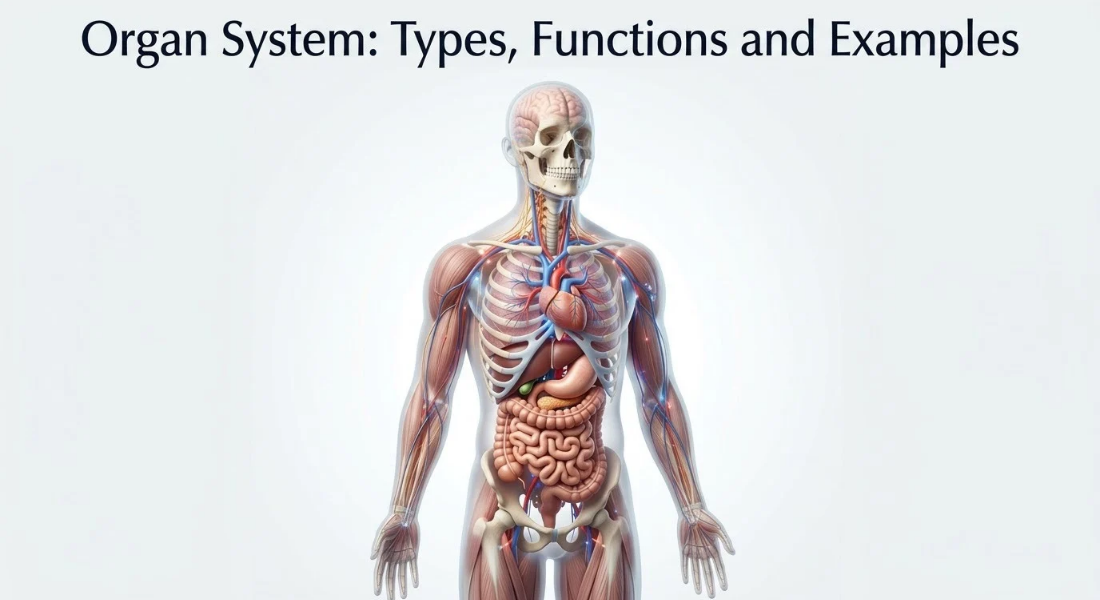
Breathing, movement and digestion rely on different body structures working together. An organ system is a group of organs and related structures that cooperate to perform major physiological functions.
This guide explains the 11 commonly recognised systems, their main roles and how they coordinate to support the body. This article focuses on how the body's organ systems coordinate their functions rather than providing a full anatomical reference.
For a broader overview of individual organs and their roles see our complete Human Organs guide →
An organ system is a group of organs and related structures that cooperate to perform physiological functions.
Eleven major systems are commonly recognised in educational anatomy.
Each system has a primary role but their functions overlap.
Organ systems coordinate through the movement of materials and signals.
Feedback mechanisms help regulate internal conditions and maintain homeostasis.

The 11 system model is a practical framework used to study human physiology. Each system has a primary role but none works entirely alone body functions depend on the exchange of materials, signals and regulatory responses between systems.
The table uses “lymphatic/immune” as a convenient educational grouping. Some references describe the lymphatic and immune systems separately because fluid transport and immune defence are related but distinct functions.
The integumentary system forms the body's external interface with its surroundings. Skin and associated structures help block harmful environmental exposures, limit water loss and detect touch, pressure and temperature.
Its role extends beyond protection. Responses such as sweating and changes in blood flow near the skin help regulate body temperature working with signals from the nervous system to adjust heat loss.
The skeletal system provides the framework that supports the body while joints allow connected bones to move relative to one another. Skeletal muscles generate force and transmit it through tendons to produce movement.
Their roles complement each other: the skeleton provides support and leverage, and muscles create the force that moves body segments. Muscle activity also helps maintain posture and produces heat particularly during physical activity.
The nervous system receives sensory information processes it and sends signals that help the body respond. The brain and spinal cord process information while peripheral nerves carry signals between the central nervous system and the rest of the body.
For example when you detect an obstacle while walking sensory input helps trigger a change in movement. This rapid communication allows muscles and other structures to adjust before the situation develops further.
The endocrine system uses hormones chemical messengers released by glands and other tissues to regulate processes such as growth, metabolism and reproduction. Hormones travel to responsive cells and influence their activity.
Nervous signalling can produce rapid targeted responses while hormonal effects may develop more gradually and last longer. The two systems interact allowing the body to coordinate immediate reactions with changes that require sustained regulation.
The cardiovascular system acts as a transport network. The heart drives blood through blood vessels, allowing oxygen and absorbed nutrients to reach tissues while hormones travel to their target cells.
Blood also carries metabolic products away from tissues for processing or removal. This transport role connects the activities of multiple systems without making the cardiovascular system responsible for every process it supports.
Lymphatic vessels collect excess fluid from tissues and return it to the circulation. Lymph nodes and other lymphatic structures also provide sites where immune cells can encounter material from tissues and participate in defence.
These functions overlap but they are not identical. Lymphatic transport concerns fluid movement and return, whereas immune defence involves cells, tissues and mechanisms distributed throughout the body.
The respiratory system moves air through the airways to the lungs where oxygen enters the blood and carbon dioxide leaves it. Breathing muscles help move air in and out supporting continuous gas exchange.
The system depends on circulation to carry oxygen from the lungs to tissues and return carbon dioxide for exhalation. Gas exchange and blood transport are separate tasks that must work together to meet the body's needs.
The digestive system breaks food into substances the body can absorb and use. The digestive tract processes food while accessory organs contribute secretions that help digestion proceed effectively.
After absorption, nutrients pass into circulation and become available to tissues. This makes digestion more than food breakdown: it supplies materials needed for energy, growth, repair and routine cellular activity.
The urinary system produces and eliminates urine. The kidneys filter blood and adjust how much water and electrolytes the body retains or excretes; the ureters carry urine to the bladder, and the urethra provides the route out of the body.
These processes help regulate the body's fluid composition. Their activity is coordinated with circulation and other regulatory signals allowing the body to respond to changes in water and electrolyte availability.
The reproductive system supports the production of reproductive cells and the processes required for reproduction. Depending on the person's reproductive anatomy its structures may contribute to fertilisation, pregnancy and birth.
Reproductive function also involves hormonal regulation linking this system with endocrine signalling. Its main role differs from systems that maintain immediate functions such as gas exchange or circulation although it remains integrated with overall physiology.
Organ systems coordinate by exchanging materials and signals. One system may detect a change, another may transport what the body needs, and another may carry out the response.
These relationships become clearer when you follow a physiological process from its starting point to its result.
The respiratory system brings air into the lungs, where oxygen passes into the blood and carbon dioxide moves out. The cardiovascular system then transports oxygen rich blood to tissues that need it.
After cells use oxygen, blood carries carbon dioxide back towards the lungs for exhalation. Neither system completes this task alone: one enables gas exchange, while the other distributes gases between the lungs and body tissues.
Digestion breaks food down into absorbable substances, and the digestive tract transfers many of these nutrients into the blood or lymph. Circulation then carries absorbed nutrients towards tissues that use them for energy, growth and repair.
This partnership links food intake with cellular needs. Digestion makes nutrients available; transport distributes them. The process also depends on regulation, because the body must coordinate nutrient availability with changing demands.
The nervous and endocrine systems communicate in different but complementary ways. Nerve signals can trigger rapid changes while hormones travel through the bloodstream to influence target cells and can sustain an effect for longer.
For example adapting to a change in activity can involve immediate nervous signals alongside hormonal adjustments to metabolism.
Together these systems help align a quick response with the body's wider regulatory needs. Their interaction is described in MedlinePlus's overview of endocrine glands.

Homeostasis is the regulation of internal conditions within ranges that support normal function. It depends on feedback the body detects a change, coordinates a response and adjusts activity to limit the disturbance.
This regulation involves several systems rather than one isolated structure. OpenStax explains the role of feedback in homeostasis.
Blood circulation delivers blood to the kidneys where filtration and selective adjustment help control water and electrolyte levels. The kidneys alter how much water and certain dissolved substances leave the body in urine.
Changes in water and electrolyte handling can affect blood volume while circulation supplies the kidneys so they can continue regulating the internal environment. The two systems therefore contribute to a connected process of fluid regulation rather than acting independently.
During exercise, working muscles require more oxygen and energy. Breathing and circulation adjust to help deliver oxygen and remove carbon dioxide while the nervous system coordinates changes in activity.
Muscle contractions also produce heat. Temperature regulating responses, including sweating and changes in blood flow near the skin help release excess heat.
This example shows how movement, transport, communication and temperature regulation respond together to a changing demand.
The 11 system model is a widely used educational framework not a claim that every body function fits into a completely separate compartment. Systems overlap, and teaching references may group related functions differently to explain anatomy or physiology clearly.
A classification is useful when it helps learners understand the body's organisation. In practice, the systems remain interconnected, and the labels used to teach them do not change the underlying physiological relationships.
No The lymphatic system provides pathways for returning excess tissue fluid to the circulation and includes structures that support immune activity. The immune system refers more broadly to the cells, tissues and processes that defend the body.
Because many immune functions involve lymphatic structures educational references sometimes combine them into one system. Others discuss them separately to distinguish fluid transport from defence. Both approaches can be useful when the distinction is explained clearly.
Yes System boundaries reflect a structure's functions not always a strict one organ to one system rule. For example the thymus is a lymphatic associated organ that also supports immune development by helping certain immune cells mature.
This overlap does not make the classifications contradictory. It shows that systems describe connected functional roles, and a structure can contribute to more than one process.

To trace a physiological process, focus on the body's immediate need and follow the contribution of each system. Look for what is being transported which signals coordinate the response and how the combined activity supports normal function.
Use this four step learning framework:
Identify the immediate demand. For example the body may need more oxygen during exercise.
Identify the systems involved. Consider which systems detect the change, transport materials or produce a response.
Trace the exchange. Follow the movement of substances such as oxygen or signals such as nerve impulses and hormones.
Explain the outcome. Describe how the combined response supports the body's normal activity.
This is a way to understand physiology not a method for diagnosing a medical problem.
Organ systems are functional networks with distinct primary roles but their activity depends on cooperation. Transport, movement, protection, regulation and reproduction all involve relationships between different structures and systems.
Understanding these connections gives you a clearer picture of human physiology than treating each system as entirely independent. The central principle is simple: each system contributes a specialised function while their coordination helps the body operate as a whole.
An organ system is a group of organs that work together to perform specific body functions.
Eleven major organ systems are commonly recognised although some sources classify them differently.
They support movement, protection, communication, circulation, digestion, breathing, regulation, immunity and reproduction.
They exchange materials and signals. For example the respiratory system supplies oxygen, and the cardiovascular system transports it around the body.
They work closely together in fluid transport and immune defence although some sources classify them separately.
An organ performs specific functions while an organ system combines organs to carry out broader functions.


Reader Discussion
Leave a Reply