- by Daily Talkin Staff
- July 8, 2026
-

-
-
Loading
Loading
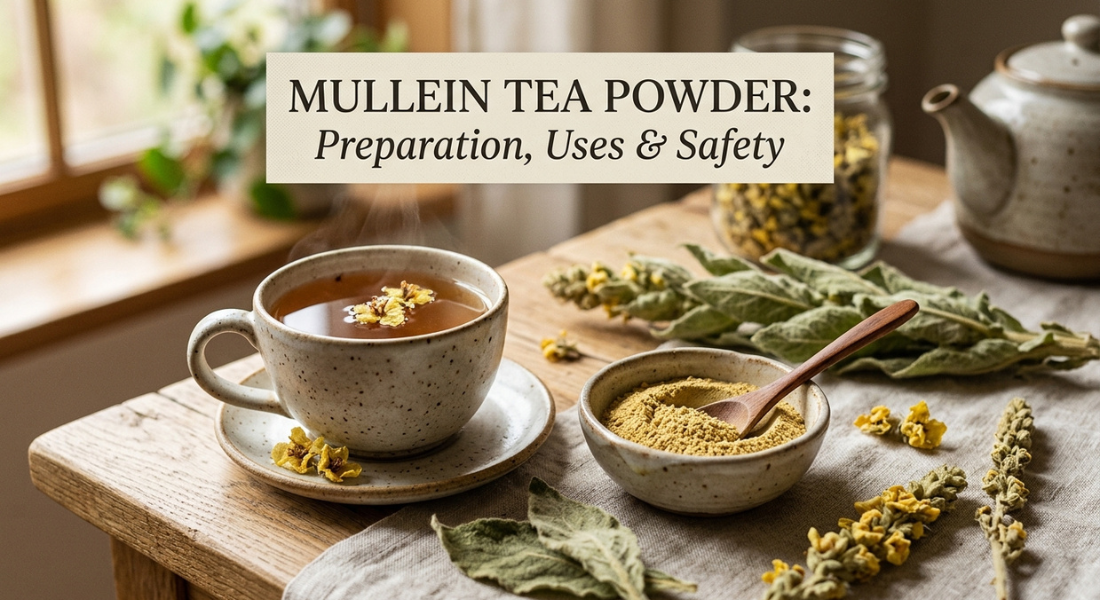
Not every “mullein powder” is made for tea, and choosing the wrong type can change how you prepare it. Mullein tea powder generally refers to powdered plant material intended for an infusion while leaf powder and extract powder are different products.
Before making a cup it helps to know exactly what is in the package and how it should be used. This guide covers identification, preparation, straining, selection, storage and practical safety considerations.
Mullein leaf powder is ground plant material, while extract powder is produced from an extracted and dried preparation.
Check the plant part, botanical ingredient and intended use before preparing powdered mullein.
Follow the product's own amount, water and preparation directions rather than using a universal ratio.
Fine particles can remain suspended and settle as sediment, so a suitably fine strainer may be useful.
Keep the powder sealed and protected from moisture, heat and unnecessary light.
Supplement products can differ from products studied in research, so label information and appropriate professional advice matter.

Mullein tea powder is finely ground mullein plant material intended to be mixed with water to make an herbal infusion. The important detail is the ingredient's form ordinary powdered leaf is different from a concentrated mullein extract powder so the product label should be checked first.
The plant identity matters because “mullein” can refer to more than one Verbascum species. The European Medicines Agency's mullein flower monograph identifies three species Verbascum thapsus, V. densiflorum and V. phlomoides.
Mullein tea is the broader category covering herbal infusions made from mullein plant material while this guide focuses specifically on powdered forms. For the wider topic see our complete guide on Mullein Tea → see the full guide here.
Mullein leaf powder is ground plant material while mullein extract powder is made by extracting constituents and then concentrating and drying that extract. They are therefore not interchangeable simply because both appear as powders.
The distinction can affect processing, concentration and intended use. A product labelled “extract”, “standardised extract” or similar terminology should not automatically be treated like ordinary powdered leaf when preparing tea.
Start with the ingredient itself. Look for the plant part, botanical ingredient, serving size or preparation directions, additional ingredients and manufacturer information.
For products sold as dietary supplements in the United States, FDA labelling rules require information including the product name, manufacturer or distributor details, Supplement Facts, other ingredients and net quantity.
A label that simply says “mullein powder” gives you limited information. It does not, by itself, establish the plant part, concentration, quality or suitability for making an infusion.
Prepare powdered mullein according to the product's own directions rather than applying a universal powder to water ratio. Measure the stated amount combine it with the recommended hot water mix thoroughly allow the preparation to steep as directed then strain before drinking if fine particles remain.
A powder behaves differently from intact dried plant material because the ground particles can disperse throughout the water. This means the preparation method needs to account for both mixing and the particles that remain afterwards.
If the product provides a specific water volume amount of powder or preparation time use those instructions first. Avoid replacing a manufacturer's directions with a generic recipe simply because another powdered product uses a different method.
The final drink may not become completely clear. Fine botanical particles can remain suspended and gradually settle so checking the cup before drinking helps you decide whether additional straining is appropriate.
There is no reliable universal measurement for every powdered mullein product. Products can differ in plant material, processing, concentration, serving size and intended use.
That is especially relevant when comparing ordinary leaf powder with an extract powder. A measurement suitable for one product should not automatically be transferred to another.
If the label gives an amount, water volume or steeping instruction those directions should take priority over generic internet recipes. This keeps preparation tied to the product you actually have.
Add the measured powder gradually while mixing rather than dropping a large dry clump into the water. Stirring as the powder contacts the liquid can help distribute the material more evenly.
Because finely ground plant material can disperse quickly some particles may remain suspended instead of sinking immediately. Allowing the mixture to hydrate and settle according to the product's instructions can make the final preparation easier to handle.
Before drinking check the texture and use a suitable fine strainer if the preparation instructions permit or recommend straining.

Mullein tea powder can leave fine particles or sediment because it contains ground plant material rather than intact leaves that can be removed after steeping. Some particles may remain suspended in the drink creating a different texture from a strained loose leaf infusion.
The finer the material the more likely small particles are to pass through an ordinary kitchen strainer. Some may stay suspended initially and then settle at the bottom as the drink stands.
Sediment therefore does not automatically mean the powder has spoiled or that the preparation has failed. It is often simply a consequence of using ground botanical material.
The practical question is whether the product's instructions call for straining and whether the remaining particles make the drink unpleasant to consume.
Use a suitably fine strainer when the preparation calls for removing suspended plant particles. A coarse tea strainer may allow fine powder to pass through leaving noticeable material in the cup.
Pour the prepared liquid through the strainer without aggressively forcing the solids through the mesh. The aim is to separate unwanted fine particles while allowing the liquid to pass normally.
After straining check the drink before serving. If substantial powder remains the strainer may simply be too coarse for the fineness of the particular product.
A suitable product should clearly identify the botanical ingredient, plant part and intended use. Check the ingredient list, preparation or serving directions, packaging information and manufacturer details before deciding whether the product fits your intended use.
This is particularly useful when shopping online where product names can provide less information than the full label. A listing that uses “mullein powder” without identifying the plant part deserves closer inspection.
For US dietary supplements the FDA requires key label information such as a Supplement Facts panel and an “Other Ingredients” list.
Quality terms also need context. Words such as “natural” or “organic” may describe particular attributes, but they should not automatically be treated as proof that a product is effective or suitable for tea.
Look for clearly stated ingredients, an intact package, storage guidance and identifiable manufacturing information. The product should also explain how it is intended to be used.
Third party verification can provide additional information about what a supplement contains. NCCIH notes that independent testing programmes can offer useful assurance about label accuracy and contamination or adulteration.
No single certification should be treated as a guarantee of overall product quality. Use testing information alongside the ingredient label, packaging and preparation directions.
Store the powder according to the manufacturer's instructions, protecting it from moisture, excessive heat and unnecessary light exposure. A well sealed container can help preserve dry plant material while repeated exposure to air or humidity may affect freshness and handling.
Powdered material has a relatively large surface area compared with larger pieces of dried plant material. Keeping moisture away is therefore particularly useful for maintaining a dry manageable texture.
Reseal the original package securely after each use. If the packaging becomes damaged, repeatedly exposed to humidity or otherwise fails to protect the contents reconsider using the product.
Avoid inventing a universal shelf life period. The appropriate storage period depends on the specific product, packaging and manufacturer's instructions.

The main practical concern is using the correct product for its labelled purpose and following its preparation directions rather than assuming all mullein powders are equivalent. People taking medicines, pregnant or breastfeeding, or managing health conditions should seek appropriate professional advice before use.
Do not substitute an extract powder for ordinary leaf powder simply because both products are labelled “mullein”. Their processing and concentration can differ so the intended use needs to match the actual product.
This distinction also matters when interpreting research. NCCIH notes that dietary supplements sold to consumers may differ in important ways from products examined in research studies.
If you take medicines or have a health condition discuss botanical supplements with a qualified healthcare professional or pharmacist. NCCIH also advises considering possible supplement medicine interactions.
The key step with powdered mullein is knowing exactly what the product contains before preparing it. Check the plant part, intended use and whether it is leaf powder or an extract.
Follow the product's preparation directions and strain fine particles when appropriate. Store the powder securely away from moisture, excessive heat and unnecessary light.
No Mullein powder is ground plant material while extract powder is a concentrated preparation.
Yes if the product is intended for tea. Follow the label's preparation instructions.
Fine plant particles can settle at the bottom when powdered mullein is mixed with water.
Yes Straining can remove fine particles and make the tea smoother.
Keep it sealed and protected from moisture, heat and excessive light.
Check the label for the plant part, ingredient details and clear tea preparation instructions.


Reader Discussion
Leave a Reply