- by Daily Talkin Staff
- July 8, 2026
-

-
-
Loading
Loading
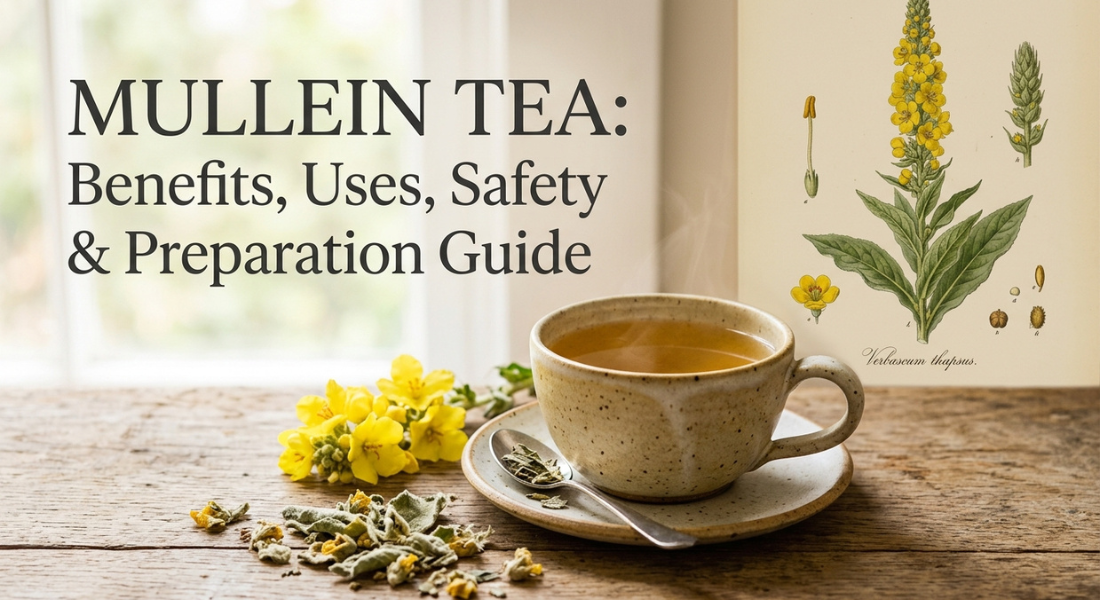
People often search for mullein tea after hearing that this traditional herbal drink may support respiratory comfort. But how much of what you hear about it comes from tradition, and how much is actually supported by scientific research?
Mullein tea is an herbal infusion commonly prepared from the leaves or flowers of mullein particularly Verbascum thapsus. It has a long history in herbal preparations but traditional use should not automatically be treated as proof of a medical benefit.
This guide explains what mullein tea is how it relates to the mullein plant what research has investigated, how it is prepared, and what to consider before using it.
Mullein tea is a herbal infusion commonly made from mullein leaves or flowers.
Verbascum thapsus is one species commonly associated with mullein herbal preparations.
Traditional use and laboratory findings should not be confused with proven human clinical benefits.
Tea, powder, extracts and tinctures can differ in composition and concentration.
Thorough straining is important when preparing mullein tea from hairy plant material.
People with health conditions, medication use, or pregnancy and breastfeeding concerns should seek professional advice.

Mullein tea is an herbal infusion made from parts of the mullein plant most commonly dried leaves or flowers. One species frequently associated with herbal preparations is Verbascum thapsus also called common or great mullein.
Unlike black or green tea mullein tea is not made from Camellia sinensis so it is better understood as a botanical infusion. Mullein has been used traditionally in herbal medicine for respiratory and throat related complaints.
Historical use provides useful context for understanding why the plant remains popular but it does not establish that drinking mullein tea can treat or cure a medical condition. Modern research is therefore important when evaluating health claims.
Leaves and flowers are commonly used in herbal preparations while roots may appear in other traditional preparations. Dried plant material is also sold as loose herbs, tea ingredients or powdered products.
These parts should not automatically be treated as interchangeable. Different plant parts can contain different chemical constituents, and the preparation method can affect what reaches the final drink.
Mullein may be sold as tea, dried leaves, powder, extracts or tinctures. These forms are not automatically equivalent because their concentration, preparation and composition can differ.
For that reason evidence about a mullein extract should not automatically be presented as evidence that an ordinary cup of mullein tea produces the same effect. Product labels and preparation instructions also matter.
From an evidence perspective it is useful to distinguish traditional use scientific investigation and established human evidence rather than placing all three in the same category.
A PubMed indexed review of Verbascum thapsus describes its traditional uses and experimental research while also showing the breadth of investigation surrounding the plant.
Mullein tea is traditionally associated with respiratory and throat related uses which helps explain much of its current popularity. Researchers have also investigated compounds found in Verbascum thapsus for various biological activities.
However the strength of evidence varies considerably. Findings from laboratory experiments or studies of plant extracts do not automatically demonstrate that drinking mullein tea provides the same effects in humans. The form and concentration studied also matter.
For a complete evidence based breakdown of mullein tea benefits see our full guide on Mullein Tea Benefits →
Mullein tea is a caffeine free herbal infusion generally prepared from dried mullein leaves or flowers. Verbascum thapsus commonly called common mullein is one species associated with traditional herbal preparations.
The plant has a long history of traditional use particularly in preparations connected with the throat and respiratory system. However historical use and modern scientific evidence should be considered separately when evaluating what the tea can realistically do.
For a complete guide to what mullein tea is its plant source and traditional background see our full guide on What Is Mullein Tea →
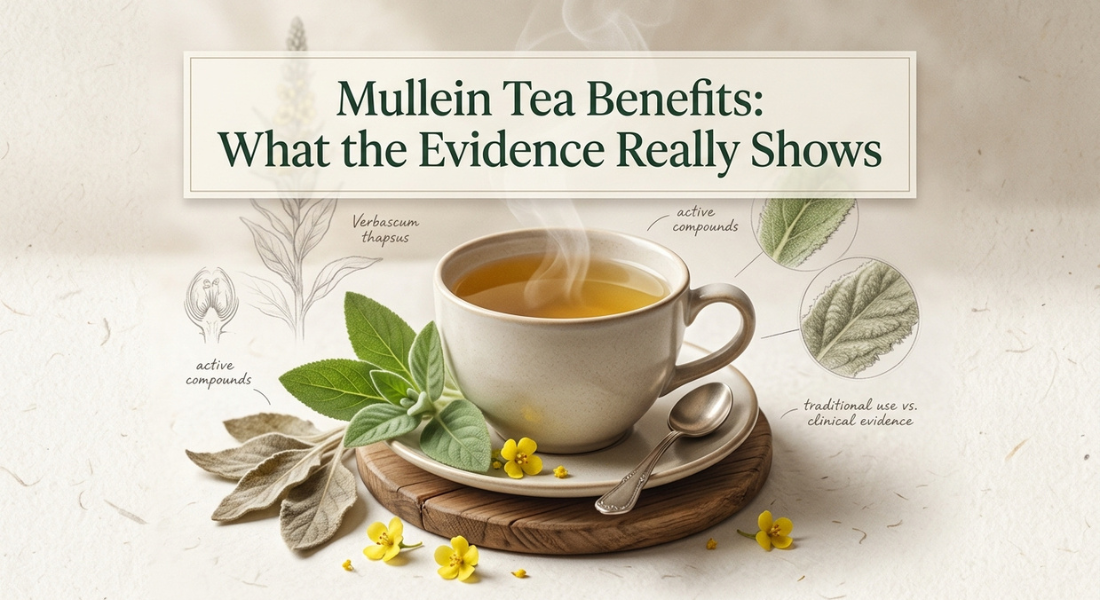
Evidence surrounding mullein tea is not equal across all claims. Research involving mullein can be divided broadly into laboratory research, animal research and human research with each level answering different questions.
Laboratory studies can identify biological activity in cells or isolated compounds. Animal studies can provide additional clues while human clinical research is more directly relevant to whether a particular preparation produces a meaningful effect in people.
Traditional use can explain why a plant has been used for generations but it does not by itself establish clinical effectiveness. Similarly promising laboratory findings should be treated as preliminary rather than as proof that mullein tea treats a condition.
Researchers have investigated Verbascum thapsus and its constituents for properties such as antioxidant, antimicrobial and anti inflammatory activity. A scientific review indexed by PubMed describes multiple experimental areas of research involving common mullein.
Such findings can help researchers identify compounds worth studying further but they do not show that a normal serving of mullein tea will produce the same biological effect in a person.
Human evidence is especially important when a health claim concerns symptom relief, disease prevention or treatment. Evidence from cells, test tubes or animals cannot simply be transferred to humans without appropriate clinical research.
For mullein tea specifically readers should therefore be cautious with strong claims about treating respiratory diseases, infections, asthma or other medical conditions when those claims are based mainly on preliminary research.
A simple way to interpret herbal claims is to consider the evidence in stages:
Traditional use → laboratory findings → animal research → human clinical evidence
Moving further along this sequence generally provides stronger evidence about effects in people. It also helps prevent traditional reputation or promising laboratory findings from being mistaken for established medical treatment.

Preparing mullein tea generally involves combining dried mullein plant material with hot water, allowing it to steep and then straining the drink carefully. Thorough straining is particularly important because fine hairs on mullein leaves can be unpleasant or irritating in the mouth or throat.
Preparation can affect taste and texture, and different products may provide their own brewing instructions.
A simple infusion is therefore best approached according to the specific plant material and product directions rather than assuming every mullein product should be prepared identically.
For the complete recipe, measurements, brewing methods and straining instructions see our full guide on How to Make Mullein Tea →
Mullein tea may be tolerated by some people but limited safety research means it should not automatically be considered risk free simply because it is a natural product. Fine plant hairs may cause throat irritation if the tea is not strained properly.
People with allergies, existing health conditions, or concerns about pregnancy or breastfeeding should seek appropriate professional advice before using it. The same caution applies when herbal products are combined with medicines.
For a complete guide to mullein tea side effects, precautions and safety considerations see our full guide on Mullein Tea Side Effects →
Mullein tea is traditionally associated with respiratory discomfort, including concerns involving cough, mucus and congestion. This traditional association is one reason the beverage is often discussed in connection with respiratory comfort.
However traditional respiratory use should not be confused with evidence that mullein tea clears the lungs, removes toxins or treats an underlying respiratory disease. Persistent or serious respiratory symptoms require appropriate medical assessment.
For a complete evidence based discussion of mullein tea and congestion see our full guide on Mullein Tea for Congestion →
Some people may choose herbal tea as an evening beverage because a warm caffeine free drink can fit naturally into a relaxing bedtime routine. That does not establish mullein tea as a proven sleep treatment.
There is not strong clinical evidence establishing a reliable sedative effect from ordinary mullein tea. Anyone experiencing persistent sleep problems should consider the underlying cause rather than relying on an unproven herbal remedy.
For a complete discussion of mullein tea, sleep and evening use see our full guide on Mullein Tea for Sleep →
There is no scientifically established universal timeframe for mullein tea to “work”. The expected timeframe would depend on what effect someone is looking for, and evidence for specific effects may be limited.
A person's experience after drinking an herbal infusion should therefore not be presented as a predictable clinical response. Traditional use may describe expected effects but that is different from having a clinically established onset time.
For a detailed explanation of timing, expected effects and evidence limitations see our full guide on How Long Does Mullein Tea Take to Work →
Mullein tea is often described as earthy and herbal with the possibility of a mild bitterness depending on the plant material and preparation. Its texture can also be affected by how finely the leaves are processed and how thoroughly the finished tea is strained.
Simple flavour additions such as lemon or honey can change the overall taste without changing what the underlying herbal infusion is. Preparation therefore plays an important role in the drinking experience.
For a complete guide to mullein tea taste and ways to improve its flavour see our full guide on Mullein Tea Taste →
Choosing mullein tea involves more than selecting a product labelled “mullein”. Check which plant part is used, review the ingredient list, follow the preparation instructions and consider whether the manufacturer provides clear information about the product.
It is also important to distinguish tea from powder, extracts and tinctures. These forms can differ in concentration and composition so evidence or serving information for one form should not automatically be applied to another.
Look for clearly labelled ingredients and information identifying the plant material used. Manufacturer details, storage instructions and clear directions can make a product easier to evaluate.
Organic or loose leaf descriptions may be useful purchasing considerations but they should not automatically be interpreted as proof of greater effectiveness. Where applicable, quality testing or certification information can provide additional context.
There is no universally established medicinal dose for mullein tea. Preparation strength can vary considerably, and product instructions may differ depending on the form and ingredients.
Taking more does not automatically mean receiving greater benefits. If you have a health condition, take medicines, or are considering regular use discuss the product with a qualified healthcare professional.
Plain mullein tea is an herbal infusion rather than traditional tea made from Camellia sinensis so it is generally considered caffeine free. However blended products can contain other ingredients so check the label rather than assuming every product is identical.
A plain caffeine free herbal infusion can fit into an evening routine but that does not mean mullein tea has a proven sleep inducing effect. If sleep difficulties are persistent the underlying problem deserves attention.
Mullein flowers can be used in herbal preparations and may appear in tea products alongside or instead of leaves. The plant part matters because flowers and leaves are not necessarily chemically or practically identical.
When buying or preparing a flower based product check the label so you know which part of the plant is actually being used. This distinction is especially important when comparing products or interpreting research.
For a complete guide to mullein flower tea, its preparation and uses see our full guide on Mullein Flower Tea →
Mullein root is a different part of the plant from the leaves and flowers, and traditional uses involving the root should not automatically be treated as evidence for ordinary mullein leaf tea.
Because preparation, plant part and product form can change what is consumed claims about mullein root should be assessed separately rather than grouped together with every other mullein preparation.
For a complete guide to mullein root tea and how it differs from other mullein preparations see our full guide on Mullein Root Tea →
Mullein tea powder generally refers to powdered plant material rather than intact dried leaves used directly in an infusion. It should also be distinguished from concentrated extracts which can have a different composition and strength.
Product labels are particularly important with powders because serving sizes and preparation instructions can vary. The word “powder” alone does not indicate a specific concentration or health effect.
For a complete guide to mullein tea powder, its forms and practical considerations see our full guide on Mullein Tea Powder →

There is no universal “best” mullein tea brand for every consumer. A sensible comparison starts with ingredient transparency, the identified plant part, manufacturer information, clear directions and available quality or testing information.
Packaging and storage instructions also matter because plant material can be affected by moisture, heat and storage conditions. Brand popularity alone should not be treated as proof of quality or effectiveness.
For a detailed comparison of what to look for when choosing a mullein tea brand see our full guide on Best Mullein Tea Brand →
Mullein tea is a herbal infusion commonly prepared from mullein leaves or flowers particularly Verbascum thapsus. Its traditional reputation is strongest around throat and respiratory uses but tradition is not the same as clinical evidence.
Research into mullein includes laboratory and experimental work while stronger conclusions about health effects require appropriate human evidence. Preparation, plant part and product form also matter when interpreting claims.
Mullein tea should therefore be viewed as a traditional herbal beverage rather than presented as a proven treatment for a medical condition.
Mullein tea has limited safety research. People with allergies, health conditions, or those who are pregnant, breastfeeding or taking medicines should seek professional advice before use.
Plain mullein tea is generally caffeine free because it is a herbal infusion rather than tea from Camellia sinensis. Check blended products for additional caffeinated ingredients.
There is no universally established medicinal daily amount for mullein tea. Follow the product's instructions and seek professional advice if regular use is a concern.
Mullein tea is generally earthy and herbal sometimes mildly bitter. The final taste and texture can vary with the plant material, preparation and thoroughness of straining.





Reader Discussion
Leave a Reply