- by Daily Talkin Staff
- July 8, 2026
-

-
-
Loading
Loading
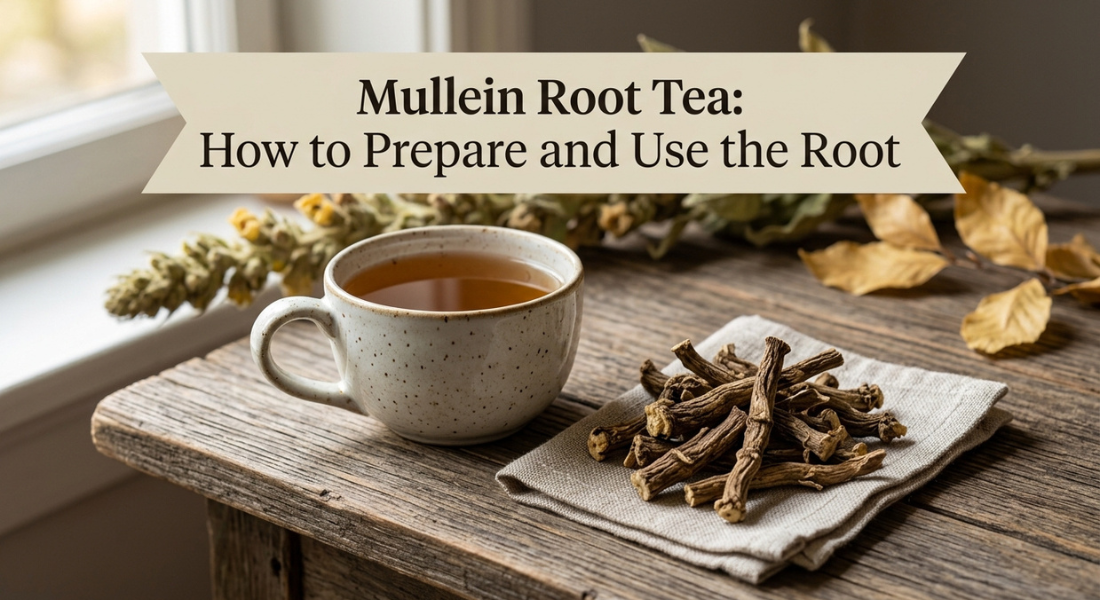
Mullein root tea is different from products simply labelled “mullein tea” because the ingredient comes specifically from the plant’s root. This guide explains how to identify dried root, approach preparation, interpret root specific research, and understand the main safety boundaries before drinking it.
For broader information about mullein as an herbal tea, including general preparation, evidence, taste and safety see our complete mullein tea guide → explore the full guide for context on the plant tea preparations and responsible use of related products.
Mullein root tea is made specifically from mullein root material not simply any mullein labelled tea.
Verbascum thapsus is one mullein species investigated in root specific research.
Dried root may be cut or powdered, and preparation should match the material's physical form.
Research on root extracts does not prove clinical benefits from drinking homemade root tea.
The EMA's mullein tea dosage applies to flowers not root.
Root specific safety and herb medicine interaction evidence remains limited.

Mullein root tea is a botanical preparation made specifically from mullein root material rather than the leaves or flowers. It may be prepared as an infusion or a more extraction focused root preparation depending on the form of the material and the product directions.
One species frequently investigated in research is Verbascum thapsus commonly known as common or great mullein. However the label “mullein” alone does not tell you which plant part is present.
That distinction matters because root research cannot automatically be applied to leaf or flower preparations. Likewise evidence involving a concentrated root extract does not automatically demonstrate what happens after drinking a household cup made from dried root.
The safest way to understand the product is therefore to start with the ingredient identity. Look for a label that clearly identifies the plant material as root or Verbascum root rather than relying on the general word “mullein”.
The defining ingredient is the root or dried root material of the mullein plant. A product labelled only “mullein” may not be specific enough to establish that it contains root.
Plant part identity matters because different organs can have different chemical profiles. A 2026 analysis of V. thapsus identified 61 active biomarkers across plant organs with 29 detected in the root.
No Root, leaf and flower are separate plant materials and should not automatically be treated as interchangeable. Their chemistry, physical structure and preparation can differ.
That distinction is especially relevant when interpreting research because evidence involving one plant part does not necessarily establish the same effect for another.
The most useful identification step is to check exactly what the product contains. For a root preparation the packaging should identify the plant part as root or provide an equivalent botanical description rather than simply saying “mullein”.
Dried root may be sold as cut pieces, chips, coarse material or powder. Its appearance can change substantially after washing, drying, cutting and grinding so there is no single colour or shape that reliably proves authenticity.
The botanical name can provide additional clarity. When Verbascum thapsus is specified you have more information than you would from a label using only the common name. This is particularly useful because common names can be applied to related species.
Research has also examined the morphology and anatomy of V. thapsus roots showing that root material has identifiable structural characteristics under scientific examination.
For everyday purchasing however you should not be expected to authenticate a dried root by sight alone. A clearly labelled ingredient from a reputable supplier is more practical than trying to identify an unfamiliar plant material yourself.
Dried root may appear as cut or processed root material rather than a recognisable living root. Processing can alter its size, colour and texture.
The key consumer level check is the label: it should clearly identify the botanical material and plant part. Avoid assuming that any dried material sold simply as “mullein” is root.
Powdered root is still root material but it behaves differently from larger cut pieces during preparation. Fine particles can remain suspended in the finished drink and may require more effective filtration.
For that reason check the product instructions before using powdered material. Do not assume that directions intended for cut root, leaf, flower or a concentrated extract automatically apply to a powder.
Root material should not automatically be prepared exactly like delicate leaf or flower material. The root is a denser plant structure so the practical preparation approach may need to allow more thorough extraction from the material.
The exact quantity preparation time and method should come from reliable product directions where available. There is not a universally established medicinal recipe for homemade mullein root tea that can be applied to every product.
This distinction is important because research on V. thapsus roots has used controlled extraction methods that are quite different from making a household beverage.
A 2022 study for example investigated root material using water and methanol under ultrasound assisted extraction conditions.
That type of laboratory extraction should not be presented as a normal tea recipe. Instead prepare the root according to its physical form and the directions supplied for that specific material.
Root material is structurally different from soft aerial plant parts so the practical extraction process can differ. Cut root may need more thorough contact with hot water than delicate material.
This is a preparation consideration not evidence that root produces stronger or better health effects. Extraction mechanics and medicinal effectiveness are separate questions.
There is no universally validated medicinal dose for homemade mullein root tea. The appropriate quantity can depend on whether the material is cut, powdered, blended or supplied as a prepared product.
Follow the package directions when they are available rather than borrowing a dose from another mullein preparation.
In particular do not use the European Medicines Agency's mullein flower tea dosage as a root tea dosage. The EMA monograph concerns Verbasci flos, meaning mullein flower, and specifies finely cut dried flowers for its tea preparation.

The final preparation stage should separate as much unwanted plant material as practical from the drink. How much filtration is needed depends on the physical form of the root.
Larger cut pieces are generally easier to remove after preparation while finely ground root can produce smaller particles that pass through a basic strainer. A finer filter may therefore be useful when the material is powdered.
This is a practical preparation issue rather than a claim about the medicinal value of the finished drink. The goal is simply to produce a cleaner beverage and avoid unnecessarily swallowing loose plant particles.
If the product comes with specific preparation or filtration directions those instructions should take priority. Avoid assuming that a method designed for a different plant part will produce the same result with root material.
It depends on the form of the root. Coarsely cut material can usually be separated more easily while powdered root may require finer filtration.
The practical objective is to remove loose plant particles before drinking. Use the filtration method appropriate to the material rather than assuming every root product needs identical straining.
There is not enough consistent evidence to describe one universal flavour profile for dried mullein root tea. Taste can vary with the plant material, particle size, preparation method and concentration.
That makes it more useful to describe flavour as product dependent rather than borrowing the general taste profile of leaf based mullein tea.
Research has investigated V. thapsus root chemistry and root extracts but that evidence needs to be matched carefully to the preparation being discussed.
A 2022 study examined water and methanol extracts of the roots and reported antioxidant and antimicrobial activity in laboratory testing. It also measured several experimental enzyme related activities.
These findings demonstrate scientific investigation of the root not proven clinical benefits from drinking root tea. A separate 2022 review of V. thapsus describes traditional root related uses alongside experimental research involving the plant.
The review itself illustrates why traditional use extract research and evidence for a particular beverage should be kept separate.
The form of the evidence matters. An isolated extract can have a different chemical composition and concentration from a cup prepared from dried root.
Researchers have studied root morphology, phytochemical composition and extracts of V. thapsus. One 2022 investigation used aqueous and methanolic root extracts and evaluated antioxidant and antimicrobial activity in laboratory models.
These findings show that the root contains compounds of scientific interest but they do not establish that a household tea produces the same biological effects.
No Root specific laboratory and extract research does not prove that drinking mullein root tea produces a clinically established benefit.
The evidence form mismatch is crucial: researchers may use controlled extraction solvents, concentrated samples or laboratory models while tea uses a different preparation.
A 2022 review likewise discusses traditional root uses and experimental evidence rather than establishing clinical effectiveness of root tea.

Root specific human safety information is limited so mullein root should not be treated as risk free simply because it is a natural botanical.
The first safety step is correct identification. An incorrectly identified plant or an ambiguously labelled product creates a different risk from a clearly identified commercial ingredient.
Product quality also matters. Processing, contamination, storage and differences between dried root, powder and extracts can affect what you actually consume.
People taking medicines should be especially cautious before regular use. The National Center for Complementary and Integrative Health (NCCIH) notes that herbal products can interact with medicines and that safety information is limited for many botanical products.
The same principle applies to concentrated products evidence or safety information for a root extract should not automatically be transferred to a tea, and tea information should not automatically be transferred to an extract.
Root specific human safety evidence is limited. Use correctly identified material, follow available product directions and avoid inventing medicinal doses based on research using extracts.
NCCIH advises that “natural” does not necessarily mean safe and recommends considering product quality, potential side effects and interactions when using herbal products.
There are no reliable grounds here to claim a specific drug interaction unique to mullein root tea. However uncertainty is itself a reason for caution.
If you take prescription or over the counter medicines speak with a healthcare professional or pharmacist before regular use. NCCIH notes that information about many herb–medicine interactions remains limited.
Mullein root tea is made specifically from mullein root not simply any product labelled “mullein”. Always check the plant part and use preparation directions suited to the root’s form.
Keep laboratory or extract research separate from evidence about the finished tea. This helps ensure preparation choices and health claims remain grounded in what is actually known.
Mullein root tea is a beverage made specifically from mullein root not its leaves or flowers.
Follow preparation instructions suited to the root's form and the product directions.
Yes if it is correctly identified and intended for oral preparation. Follow the supplier's directions.
No They are different plant parts with different chemical profiles and preparation considerations.
No Root extract and laboratory research does not prove clinical benefits from drinking the tea.
Root specific safety evidence is limited. If you take medicines consult a healthcare professional before regular use.


Reader Discussion
Leave a Reply