- by Daily Talkin Staff
- July 8, 2026
-

-
-
Loading
Loading
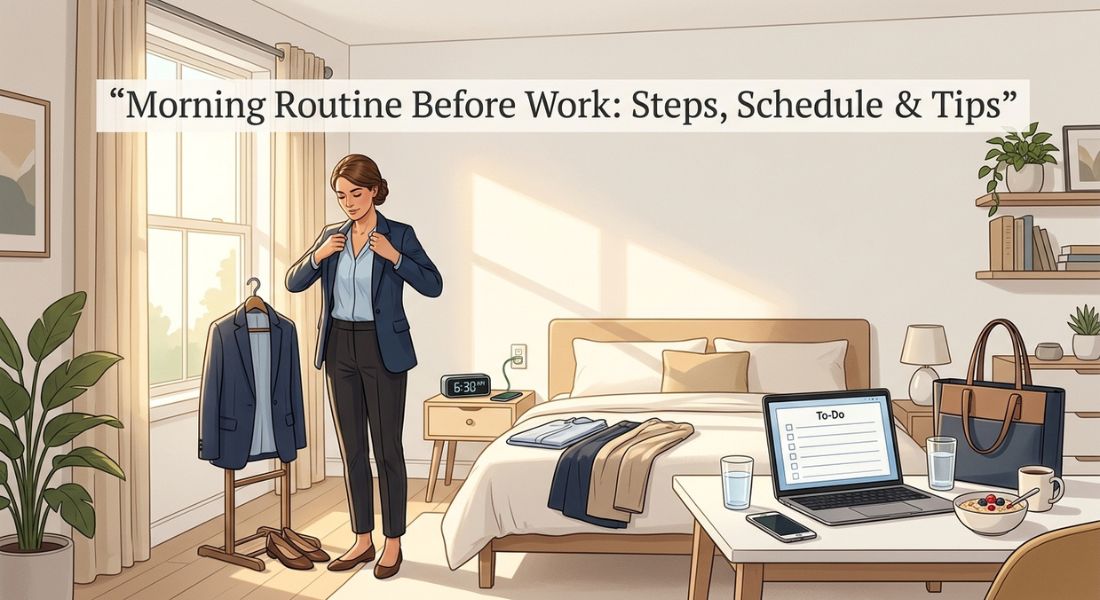
A rushed morning can make getting ready for work feel harder than it needs to be. A practical morning routine before work moves from waking and essential preparation to checking work requirements and getting ready to leave or start.
The key is to work around your actual start or departure time. This article covers a flexible sequence, realistic time blocks and a shorter version for mornings when time is limited.
Build the routine backwards from your work start or departure time.
Complete essential preparation before optional morning activities.
Check only immediate work requirements before starting.
Commuters should protect travel and departure time; remote workers need a clear start point.
Use a minimum routine when the available time is limited.
Avoid extending the routine by unnecessarily reducing sleep.

A practical before work sequence is: wake up, complete essential preparation, handle necessary food or hydration, check immediate work requirements, gather what you need, then leave or transition into work. The order can stay consistent while the time spent on each stage changes.
Work backwards from your required start or departure time. If you need to leave at 8:00 build the routine around that fixed point rather than choosing an arbitrary early wake up.
Allow a small buffer for delays such as finding keys preparing a device or getting out of the door. The goal is to arrive or start on time not to make the morning longer.
Handle the practical preparation required for work first. Personal care and dressing belong here but they do not need to become an extended part of the routine.
Think in two categories: must do and nice to do. Reading, journalling, exercise or a longer breakfast can stay only when they fit without crowding out fixed work preparation.
Before leaving or starting work check only what you need immediately. This might include the day's first meeting, an appointment, a deadline or one important priority.
Gather your work bag, device, charger, access card or other essentials. Once these are ready finish the routine rather than adding more tasks.
A broader morning routine can include many different activities based on personal needs and schedules. This article focuses specifically on the period before work. This is part of our complete Morning Routine guide → see the full guide here.
The simplest approach is to anchor the morning to your work start or departure time. Place essential preparation backwards from that point, leave a small margin, and avoid filling every available minute with additional activities.
Your work start time or departure time is the main anchor. If you commute calculate backwards from when you need to leave if you work remotely calculate from your actual start time.
For example a 9:00 start might require a 7:45 wake up for one person and 8:20 for another. The difference depends on preparation and travel not on a universal ideal.
Keep the work check short and immediate. Review the calendar for an early meeting, confirm anything you must bring, and identify the first requirement when work begins.
There is no need to build a detailed task management system into the morning. The purpose is simply to know what the workday requires at the point you start.
Commuters should finish essential preparation early enough to leave without rushing. The departure time becomes the clear boundary between getting ready and travelling to work.
Remote workers can remove travel time but they still benefit from a defined transition. Decide when personal morning activities end and when the workday begins.

A realistic schedule uses time blocks rather than forcing everyone into the same wake up time. The sequence stays similar while the length of each block changes according to work hours, preparation needs and commute.
Time before work | Focus |
60 to 90 minutes | Wake and essential preparation |
45 to 60 minutes | Breakfast/hydration or necessary personal tasks |
20 to 30 minutes | Workday check and essentials |
10 to 20 minutes | Final preparation and departure/transition |
Work start | Begin work |
These are example blocks not requirements. A longer commute may require an earlier departure while a remote worker may need less time between waking and starting.
The key is to protect the final preparation and transition period rather than treating every available minute as usable routine time.
A commuter needs to work backwards from departure time and include realistic travel margin. A remote worker can remove that travel block and shorten the physical preparation period.
The core sequence remains the same: become ready, check immediate work requirements, gather essentials and reach a defined start point.

When the morning runs short reduce the routine rather than trying to complete every planned activity faster. Keep only the steps required to become ready, meet immediate work needs and leave or start on time.
A minimum before work routine can follow five steps:
Wake up.
Complete essential personal preparation.
Gather required work items.
Check immediate workday requirements.
Leave or start work.
Optional reading, journalling, exercise or a longer breakfast can be removed when time is limited. They should not determine whether you are ready for work.
Remove optional activities first. Do not repeatedly cut into sleep simply to preserve a longer morning routine. The CDC recommends at least 7 hours of sleep for adults aged 18 to 60.
A shorter routine is therefore preferable to turning an already limited morning into a reason to reduce necessary sleep.
A useful before work routine is built backwards from the time you need to leave or start working. Keep essential preparation first, check only immediate work requirements, gather what you need and protect a clear transition into work.
When time is limited use the minimum version instead of rushing through unnecessary activities. The best routine is the one that gets you ready on time without making the morning unnecessarily rushed.
There is no fixed duration. It depends on your work start time, preparation needs and commute while still allowing enough time for sleep.
Wake, complete essential preparation, handle necessary food or hydration, check immediate work requirements, gather essentials and transition into work.
Use the minimum version: essential preparation, required work items, an immediate workday check, then departure or work start. Remove optional activities first.
Check only information needed for immediate preparation. Extended inbox or message management falls outside the narrow purpose of the routine.
Remove commute time while keeping essential preparation and a clear transition point that marks the start of the workday.
Wake and complete the essential preparation needed to be ready on time. Add optional activities only if sufficient time remains.


Reader Discussion
Leave a Reply