- by Daily Talkin Staff
- July 8, 2026
-

-
-
Loading
Loading
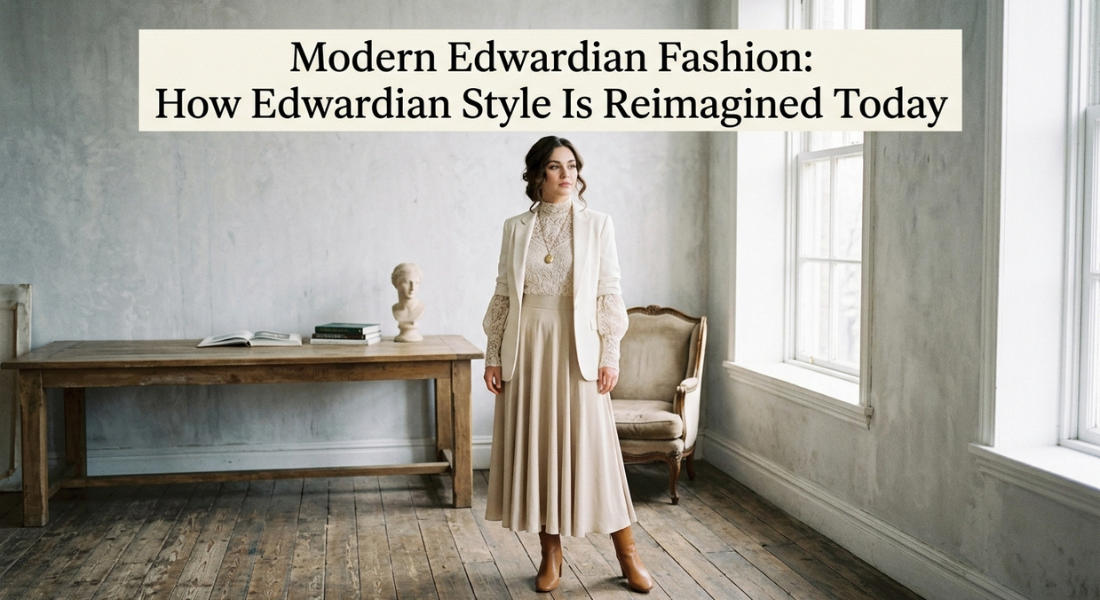
An outfit can suggest Edwardian fashion without resembling a historical costume. Modern Edwardian Fashion selectively translates period references into contemporary clothing, using details such as lace, high necklines or flowing proportions with current construction and styling.
This article explains how to recognise that influence and distinguish modern interpretation from historical reproduction.
The broader Edwardian Fashion guide covers the period and its wider clothing history while this article focuses specifically on its contemporary interpretation and adaptation. See our complete Edwardian Fashion guide →
Modern Edwardian fashion translates selected historical references into contemporary clothing rather than reproducing period dress.
High necklines, lace, fuller sleeves, flowing proportions and structured bodices can signal Edwardian influence.
Modern fabrics, construction, proportions and layering help distinguish interpretation from historical reproduction.
Edwardian references can appear in everyday clothing, occasionwear, bridal fashion, romantic styling and editorial looks.
Recognition depends on the combination of historical cues with a clearly contemporary overall context.
Historical fashion can be revisited selectively without recreating the original garment system.

Modern Edwardian fashion describes contemporary clothing that selectively translates Edwardian references rather than reproducing a complete historical outfit. The reference may appear through a neckline, sleeve, decorative treatment, proportion or styling choice while the garment itself remains modern.
The defining feature is the relationship between the historical reference and the current garment. A modern blouse with a high neckline and lace trim can suggest the period without following historical construction or proportions.
Historical Edwardian dress belonged to a specific period and dressing system. Modern Edwardian style borrows selected visual cues from that context and places them within present day clothing.
This distinction matters because the same detail can function differently in each setting. Lace or a high collar may be historically characteristic but its use on a contemporary garment creates an interpretation rather than a reproduction.
Modern proportions, current garment construction and simplified combinations help separate inspiration from historical dress. Contemporary fabrics can also change how a familiar detail looks and moves.
An Edwardian reference feels more current when it works with today's fits, lengths and styling habits rather than forcing every element into a period like arrangement.
Modern designers and stylists can retain recognisable Edwardian references while changing their scale, placement or combination. The most useful clues are decorative and structural details that remain visually distinctive after being placed on contemporary garments.
The aim is not to reproduce an entire feature list from historical dress. Instead individual details can act as signals that connect a modern outfit with an earlier visual language.
High or structured necklines can immediately suggest historical influence, particularly when paired with lace edging, decorative trims or a more elaborate surface treatment. Fuller sleeves can create a similar reference without requiring period construction.
Modern garments often simplify these details. A fitted top might use a high lace collar while a contemporary blouse could retain fuller sleeves but use modern cuffs, seams and fabric.
Flowing or elongated skirt proportions can create an Edwardian reference when combined with contemporary construction. The effect depends less on copying a historical silhouette exactly and more on retaining an impression of length, movement or shaping.
Structured bodice details can work similarly. Seams, panels or a shaped upper section may suggest historical tailoring while remaining part of a modern dress or separate.
One carefully selected accessory can strengthen the historical reference without making the whole outfit resemble period costume. The accessory works best when it supports an existing detail rather than introducing several competing historical signals.
For example a vintage looking piece can reinforce a lace neckline or flowing dress while contemporary footwear and outerwear keep the overall appearance current.
Modern fashion rarely copies an Edwardian silhouette literally. Instead, designers and wearers can retain its visual ideas while changing proportions, structure and movement to suit contemporary clothing.
This translation allows historical influence to remain visible without requiring the body shaping systems or complete outfit arrangements associated with historical dress.
Exaggerated historical proportions can become softer, straighter or easier to wear in contemporary garments. A flowing skirt may retain an elongated impression without reproducing its historical volume or foundation.
Likewise a fuller upper shape can be reduced into a modern sleeve or blouse. The result preserves a visual reference while allowing the garment to follow current expectations of fit and movement.
Modern construction can suggest historical shaping without reproducing period foundation garments or construction methods. Current pattern cutting, closures, lining and finishing allow the garment to function as contemporary clothing.
This is one of the clearest boundaries between fashion interpretation and costume reproduction. The visual reference remains deliberate but the garment is designed for present day use.
Modern Edwardian fashion can preserve decorative or structural cues while changing how those cues behave through present day fabrics, construction and layering. The result may look lighter, cleaner or more relaxed than a historical garment.
This is why recognising the reference requires looking at the whole outfit rather than judging one detail in isolation.
Fabric weight, drape, surface finish and ease can substantially alter the appearance of a historical reference. A soft modern fabric may make a high neckline feel understated while a crisp material can make the same shape appear more formal.
The historical cue therefore survives through form or decoration rather than identical material. Contemporary textiles can make an Edwardian reference easier to integrate into everyday clothing.
Layering allows a historical looking blouse, neckline or decorative layer to sit alongside unmistakably contemporary pieces. A lace trimmed top, for example, can work beneath a modern jacket or over a current skirt shape.
This approach reduces the need for an entire outfit to carry the historical reference. One layer establishes the connection while the surrounding garments determine the modern context.

Edwardian influence does not need to appear as a complete outfit. It can surface selectively in everyday clothing, occasionwear, bridal design, romantic styling and editorial fashion.
These contexts differ in how strongly they display the historical reference. Subtle combinations can make the influence barely noticeable while editorial styling can make it a deliberate visual focus.
Contemporary blouses, skirts, dresses and layered outfits can use one or two Edwardian references while remaining recognisably modern. A high neckline, lace trim or fuller sleeve can provide the historical connection without dominating the outfit.
The modern context usually comes from the surrounding pieces. Current footwear, outerwear, fabric choices or simplified proportions can prevent the outfit from becoming a period recreation.
Formalwear can accommodate stronger historical references because lace, high necklines, flowing shapes, structured bodices and decorative detailing already work naturally within occasion dressing.
In bridal fashion these details may appear as selective design features rather than historically accurate construction. The result can reference Edwardian aesthetics while following contemporary expectations for fit, fabric and garment structure.
Romantic and editorial styling can use more noticeable historical references because the outfit does not necessarily need to function like ordinary everyday clothing. Decorative surfaces, pronounced sleeves or elongated shapes can therefore become stronger visual statements.
The distinction is one of intensity. Everyday interpretation may use a single cue while editorial styling can combine several cues while still using contemporary construction.
Recognition comes from the combination of details rather than one supposedly definitive garment. A contemporary outfit may feel Edwardian when several visual references work together while its proportions, construction or styling clearly belong to the present.
The strongest clues are usually visible when decorative and structural elements reinforce one another without requiring a historically complete outfit.
A high or decorative neckline combined with lace, fuller sleeves, an elongated skirt or structured bodice can create a recognisable historical reference. No single element has to carry the entire association.
The modern effect comes from how those details interact. Contemporary fabric, fit, footwear or layering can keep the outfit current while the combined visual language points towards Edwardian influence.
An outfit can move towards costume or historical recreation when numerous period like elements appear together with historically recognisable proportions and reproduction style construction.
The issue is not simply the number of historical details. It is whether the outfit still operates as contemporary clothing or instead attempts to recreate the appearance and structure of an earlier period.
Modern Edwardian fashion prioritises contemporary wearability and selective visual references while historical reproduction attempts greater fidelity to period appearance or construction. The difference is therefore one of purpose as much as appearance.
A modern interpretation can borrow a neckline, sleeve shape or decorative treatment without reproducing the historical garment system surrounding it.
No Edwardian inspired clothing can use historical references selectively while historical reproduction aims for substantially greater accuracy in appearance, materials, construction or proportions.
The terms can overlap because a modern garment may be deliberately inspired by Edwardian dress. However inspiration does not require the same level of historical fidelity as reproduction.
Selective adaptation allows historical influence to coexist with contemporary proportions, construction and styling. Copying every historical detail would move the design closer to recreation rather than modern interpretation.
This selective approach also gives individual references greater visual clarity. A single strong historical cue can be easier to recognise when contemporary elements surround it.
The visual balance depends on integrating historical references into a contemporary fashion context. A modern Edwardian outfit should feel intentional rather than like a complete period recreation.
Current garment proportions, construction, layering and styling can provide that context. The historical influence then becomes part of the design rather than the entire identity of the outfit.
One dominant Edwardian cue can establish the historical connection while the remaining elements stay contemporary. This might be a high lace neckline, a fuller sleeve, an elongated skirt proportion or a distinctive decorative treatment.
Keeping one reference dominant prevents the outfit from becoming visually overloaded. The surrounding garments can then provide contrast and make the historical element easier to identify.
Current lengths, fits and garment combinations help prevent historical details from overwhelming the outfit. A flowing skirt can be paired with a simpler modern top, or an elaborate blouse can sit within an otherwise restrained combination.
The principle is balance rather than strict styling rules. Contemporary proportions provide the visual framework in which Edwardian references can remain noticeable without taking over the entire outfit.

Historical references can continue to inform contemporary design because individual shapes, decorative treatments and proportions can be separated from their original context. Edwardian references therefore do not need to be reproduced literally to remain useful.
Museum collections also show that fashion repeatedly revisits earlier styles. The V&A notes that fashion can be cyclical with historical clothing referenced through modern treatment.
Fashion designers can look backwards for shapes, decoration, craftsmanship and visual contrast then reinterpret those elements through contemporary design. This does not require a direct copy of the original garment.
The V&A describes historical fashion as capable of returning with a modern twist while its Arts and Crafts material shows how historical references could be absorbed into changing approaches to clothing.
Individual details can be isolated from their original setting. A neckline, sleeve treatment, decorative surface or flowing proportion can become a design feature within a modern garment.
Historical fashion itself was not completely static. FIT's Fashion History Timeline records subtle silhouette changes during 1900 to 1909 followed by movement towards simpler forms as the 1910s began.
Modern Edwardian fashion translates selected historical references into contemporary clothing rather than reproducing period dress. Modern proportions, construction and materials keep the overall look current.
Details such as lace, high necklines, fuller sleeves and flowing shapes can create a recognisable Edwardian connection. Their effect depends on how naturally they work within the modern outfit.
The key is selective interpretation. When historical cues are balanced with contemporary styling the result can reference Edwardian fashion without becoming a historical reproduction.
Modern Edwardian fashion uses selected Edwardian details in contemporary clothing, with modern construction, materials, proportions and styling.
A combination of details such as lace, high necklines, fuller sleeves, flowing shapes and structured bodices can create an Edwardian inspired look.
They overlap but modern Edwardian fashion specifically adapts Edwardian references for contemporary clothing and styling.
Yes Individual Edwardian references can be incorporated into everyday outfits without recreating historical dress.
Modern interpretations use contemporary proportions, materials, construction and styling rather than following historical dress exactly.
Yes Individual historical details can be adapted into contemporary garments without reproducing the original period style.


Reader Discussion
Leave a Reply