- by Daily Talkin Staff
- July 8, 2026
-

-
-
Loading
Loading
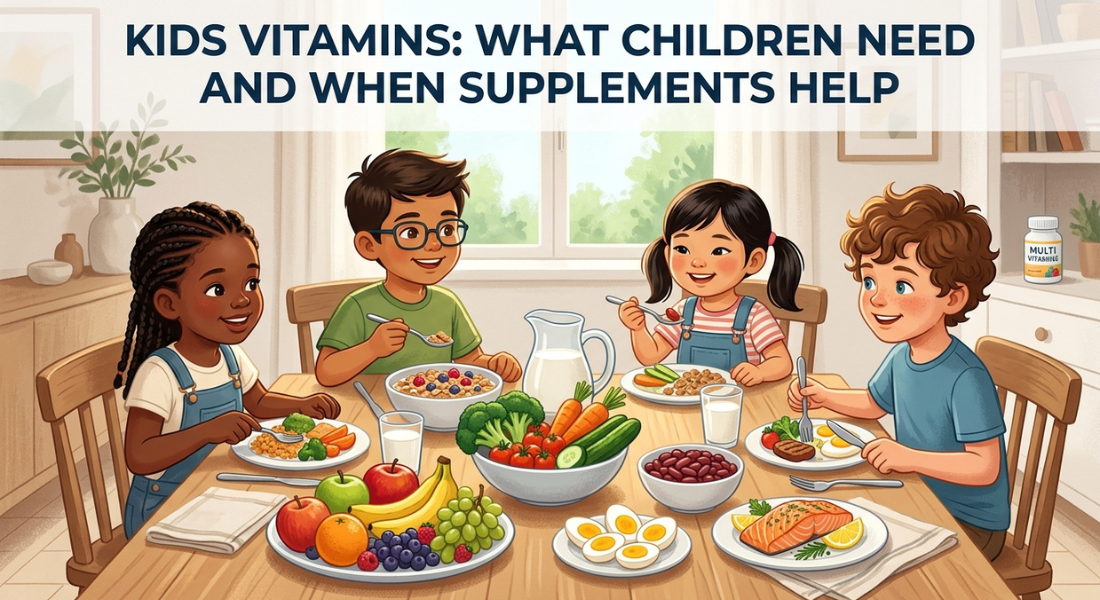
A picky eater can leave parents wondering whether food alone provides enough nutrition. Kids vitamins are supplements formulated for children but most healthy children eating a varied diet do not routinely need them.
Some children have specific nutritional needs that make supplementation worth discussing. This guide covers nutrients, ages, safe choices and supplementation.
Most healthy children with varied diets do not routinely need multivitamins.
Restrictive diets, deficiencies and certain health conditions may increase the need for supplementation.
Vitamin D, iron, calcium and B12 can deserve particular attention depending on the child's circumstances.
Infant and toddler supplementation can differ from that of older children.
Choose age appropriate formulations and check nutrient amounts before combining products.
Store supplements safely and never treat them as candy.

Most healthy children who eat a reasonably varied diet can get the nutrients they need from food. Children's vitamin supplements are designed to fill specific nutritional gaps not replace meals or compensate automatically for selective eating.
A child who refuses several foods at one meal may still receive adequate nutrition across the week. What matters more is whether the overall diet is highly restricted whether the child is growing appropriately and whether there is a known nutritional concern.
Mayo Clinic similarly states that most healthy children do not need multivitamins when they eat a variety of foods and grow normally.
Supplementation may be worth discussing with a paediatrician or dietitian when a child follows a highly restrictive diet has a diagnosed nutritional deficiency has a condition affecting nutrient absorption, has poor growth, or consistently eats very little.
The goal is to identify an actual nutritional need rather than choosing a supplement simply because it seems beneficial.
No. Selective eating is common, particularly during the toddler years, and does not automatically mean a child needs a multivitamin.
Concern is greater when a child's accepted foods are extremely limited or entire food groups are consistently missing. In that situation professional advice can help determine whether dietary changes or supplementation are appropriate.
Vitamins are essential nutrients with different roles across the body. For broader vitamin science, types, food sources and general supplement guidance see our complete Vitamins Guide →.
Parents do not need to memorise every vitamin to make a sensible supplementation decision. A few nutrients deserve particular attention because children's diets, feeding patterns and stages of growth can affect how much they receive.
The relevant nutrient depends on the individual child. A supplement should therefore address a genuine dietary or clinical need rather than provide unnecessarily high amounts of multiple nutrients.
Vitamin D supports calcium absorption and normal bone development. The NIH states that children aged 1 to 13 generally need 600 IU (15 mcg) of vitamin D daily while infants from birth to 12 months need 400 IU (10 mcg).
Iron supports normal blood formation and is particularly relevant when a child's diet contains few iron rich foods. Calcium is also important during childhood because bones are developing rapidly.
Useful dietary sources include fortified dairy or alternatives, beans, iron fortified cereals, meat and fish.
Vitamin B12 may need particular attention when a child's diet excludes or severely limits animal foods. Other nutrients can become relevant when restrictive eating, medical conditions or absorption problems limit dietary intake.
A multivitamin with iron for kids should not be chosen simply because iron sounds beneficial. Iron supplementation can be appropriate for some children but should be guided by their diet, age and healthcare professional where necessary.

Age matters because children's nutritional needs and appropriate supplement formulations change as they grow. A product designed for an older child should not automatically be used for an infant or toddler.
The most important distinction is not finding a universal “best” vitamin for every age but choosing an age appropriate product only when supplementation is actually needed.
Infants can have specific supplementation needs that differ from older children. For example the NIH reports that breastfed infants should receive 400 IU (10 mcg) of vitamin D daily while recommendations also apply to certain non breastfed infants who consume insufficient vitamin D fortified formula or milk.
For toddlers toddler vitamins should be considered according to diet and individual circumstances rather than age alone. Feeding pattern, restricted diets and professional advice can all influence the decision.
School age children and teenagers still need age appropriate nutrition but their supplement needs can differ as diets, growth and eating patterns change.
A children's supplement should clearly identify its intended age group. Teenagers should not automatically use an adult formulation simply because they are older particularly when the nutrient amounts differ substantially.
If a supplement is appropriate choosing one should begin with the child's actual nutritional needs. Look for an age appropriate formulation check the nutrient amounts and avoid products that provide unnecessarily high doses.
There is no single product that qualifies as the best vitamins for kids in every situation. A suitable choice depends on the child's age, diet, nutritional gaps and when necessary professional advice.
The best multivitamin for kids is not necessarily the one with the longest ingredient list or highest doses. A sensible product should match the child's age group and provide nutrients in appropriate amounts.
Parents should also check whether the child is already getting vitamins and minerals from fortified foods or another supplement. Overlapping products can unintentionally increase total intake.
Gummies chewables and liquids can make supplementation easier for some children but the format does not determine whether a product is nutritionally suitable.
Check the actual nutrients, amounts and serving instructions rather than choosing a product based mainly on taste or appearance. Gummies can also resemble sweets, so children should learn that vitamins are supplements rather than candy.

Children's supplements should be treated like other products that require careful dosing. More vitamins are not automatically better, and combining several fortified products can increase total nutrient intake without parents realising it.
The NIH advises checking total intake when using multivitamins alongside fortified foods, drinks or other supplements so that nutrient levels do not exceed established upper limits.
Yes Excessive intake can cause harm particularly when supplements overlap or a child consumes a high dose product. Check the label before combining a multivitamin with individual vitamin or mineral supplements.
This is especially important for nutrients such as iron and fat soluble vitamins which can create risks at excessive levels.
Keep supplements securely out of children's reach and follow the serving instructions for the child's age. Never encourage a child to think of vitamins as sweets.
If a child accidentally consumes more than the recommended amount seek appropriate medical advice rather than assuming that a vitamin product is harmless because it is sold over the counter.
Most healthy children with varied diets do not automatically need daily supplements. However supplementation may be worth discussing when a child has a highly restricted diet nutritional concern, medical condition, or specific age related need.
When supplements are appropriate choose an age suitable product and follow the recommended serving instructions. Children's vitamins should complement nutritious food not replace it.
Kids vitamins are child formulated supplements that may help fill specific nutritional gaps but should not replace a varied diet.
No. Most healthy children with varied diets do not routinely need a multivitamin.
There is no single best option. Choice depends on age, diet and nutritional needs.
Supplementation may be considered for restrictive diets, diagnosed deficiencies, poor absorption, affected growth or certain medical conditions.
Yes they can differ by age and nutritional needs. Always choose an age appropriate product.
Yes when used as directed. Avoid excessive doses and overlapping supplements.






Reader Discussion
Leave a Reply