- by Daily Talkin Staff
- July 8, 2026
-

-
-
Loading
Loading
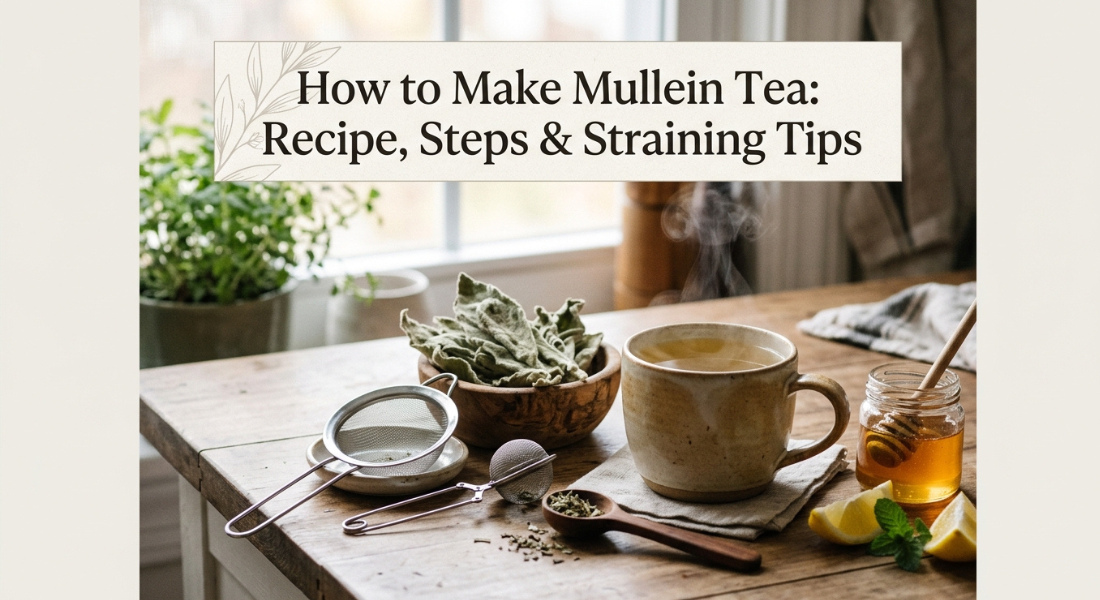
Many herbal teas are simple to brew but learning how to make mullein tea involves one extra step that affects the finished cup. Combine dried or prepared fresh leaves with hot water steep them then filter the infusion carefully through a fine strainer.
This guide shows you how much mullein and water to use, how to prepare fresh or dried leaves, and how long to steep them. You’ll also learn the right way to strain, serve and troubleshoot the finished tea.
Use dried mullein leaves for the most consistent measuring, or prepare fresh leaves separately before brewing.
A practical starting ratio is about 1 tablespoon of dried leaves per approximately 240 mL of hot water.
Steep the leaves for around 10 to 15 minutes unless packaged preparation directions specify otherwise.
Remove the larger plant material after steeping, then use a fine mesh strainer.
If small particles remain, filter the infusion a second time before serving.
Adjust an overly strong cup with additional hot water rather than making the next batch increasingly concentrated.

For a straightforward cup, you need mullein leaves, hot water, a heat safe tea cup or mug, and a reliable way to filter the finished infusion. Dried mullein leaves are the easiest option because they are simple to measure and ready to place in an infuser.
Fresh leaves can also be prepared but they contain more water and therefore should not be measured by copying the volume used for dried material. Prepare fresh leaves before brewing rather than placing large unprepared leaves directly into the cup.
A tea infuser can make removing the main plant material easier. However an infuser alone may not catch every fine particle so keep a fine mesh strainer available for the final filtering stage.
If very small particles remain after the first pass use a second fine filter. The goal is a clean cup without loose plant material floating in the finished drink.
As a practical kitchen starting point use about 1 tablespoon of dried mullein leaves for one cup around 240 mL of hot water. This is a preparation ratio not a medically established dose.
Dried leaves are more concentrated by volume than fresh leaves so do not simply substitute the same spoonful of fresh material. If packaged mullein provides preparation instructions use those quantities instead.
A simple dried leaf recipe follows a short sequence: measure the leaves, heat the water, combine them, cover and steep remove the larger plant material then fine strain the infusion before serving.
Start with approximately 1 tablespoon of dried mullein leaves for one cup of water. Place the leaves inside a tea infuser or directly into the mug if you plan to filter the drink afterwards.
Heat the water until it is freshly boiled then pour it over the leaves. Cover the cup while the tea steeps. Covering helps keep the brewing process contained and prevents the infusion from cooling too quickly.
Let the leaves steep for around 10 to 15 minutes. When the steeping period is complete, remove the infuser or pour the tea through a fine mesh strainer.
Do not stop after removing the larger leaves. Fine particles can remain in the liquid so perform the additional filtration step before serving. This gives the finished mullein leaf tea a cleaner texture.
If your packaged product gives different brewing instructions follow those directions rather than automatically applying the kitchen ratio above. Different prepared materials may require different handling.
Freshly boiled water is a practical choice for a normal herbal infusion. You can pour it over the leaves soon after boiling rather than trying to maintain an exact laboratory temperature.
There is no need to claim a single universally optimal temperature for mullein tea. Use hot water suitable for an ordinary herbal infusion and follow any temperature guidance supplied with packaged material.
A practical steeping window is about 10 to 15 minutes for dried mullein leaves. Shorter steeping produces a lighter infusion while extending the time can make the resulting cup more concentrated.
Use the stated product instructions if your packaged leaves specify a different steeping period. The steeping time should work together with the amount of plant material and water rather than being adjusted in isolation.
Fresh mullein leaves require a little more preparation before they reach the cup. First select suitable leaves and remove visibly damaged or unsuitable material. Rinse the leaves appropriately to remove surface dirt.
Large leaves can be cut or torn into smaller pieces so they fit comfortably inside an infuser or cup. Avoid treating a fresh leaf as a direct volume for volume replacement for dried material because fresh leaves contain substantially more water.
For a fresh leaf infusion place the prepared pieces in the brewing vessel and add hot water. Cover and allow the material to steep using the same basic hot infusion approach.
After steeping remove the larger pieces and pass the liquid through a fine mesh strainer. Fresh material can still leave small particles behind so the final filtering step remains part of the preparation rather than an optional finishing touch.
Neither should be treated as a direct volume equivalent. Dried leaves contain less water and are easier to measure consistently making them the simpler option for a repeatable cup.
Fresh leaves need cleaning and preparation first, and their quantity should be adjusted rather than copied from a dried leaf measurement. Choose the form that matches the material and instructions you actually have.

Straining is one of the most important practical stages of preparing mullein leaf tea. A standard loose leaf strainer may remove larger pieces but still allow very small particles and fine hairs to pass through.
After steeping first remove the infuser or larger pieces of plant material. Then pour the liquid slowly through a fine mesh strainer positioned over a clean cup.
If you can still see fine particles in the liquid filter it a second time. A second fine filter is particularly useful when the leaves have broken into very small pieces during brewing.
Avoid pouring loose plant material directly into the serving cup and relying on the cup itself to separate it later. Filtering before serving is easier and produces a cleaner final drink.
Once strained, look at the surface and sides of the cup. If visible loose material remains pass the infusion through the filter again rather than accepting a coarse first strain as sufficient.
Using an infuser followed by fine straining gives you two stages of separation: the infuser handles the larger plant material while the fine filter catches smaller remnants.
Mullein leaf material can contain fine surface hairs that may remain suspended in the infusion after steeping. Ordinary strainers are designed mainly to catch larger pieces and may not remove all of these finer materials.
Fine mesh filtration therefore serves a practical purpose. It helps separate small plant particles and hairs from the liquid before the tea reaches the serving cup.
Once the infusion has been thoroughly filtered, serve it warm in a clean cup or mug. If you prefer a little sweetness or brightness a small amount of honey or lemon can be added after straining.
Keep additions simple. Honey and lemon change the flavour of the finished drink but they do not replace the basic brewing or filtration process.
If the next cup is too strong adjust the preparation itself rather than adding increasingly large amounts of flavouring. Changing the quantity of leaves, water or steeping time is a more direct way to alter the next batch.
The same principle applies to a weak infusion. Correct the brewing variables during the next preparation instead of trying to compensate afterwards with numerous ingredients.
If the finished tea is too strong dilute it with additional hot water until the cup reaches a suitable strength. Avoid repeatedly adding more ingredients simply to disguise an overly concentrated infusion.
If it is too weak adjust the next batch by changing the amount of plant material or the steeping period within the preparation instructions you are following. Stronger is not automatically better.
The most common preparation problems come from treating fresh and dried leaves as interchangeable, using excessive plant material, or skipping the final filtration step.
Avoid guessing a fresh leaf quantity from a dried leaf measurement. Fresh leaves contain considerably more water so the same volume does not represent the same amount of dried material.
Another common mistake is relying only on a coarse strainer. Removing the visible leaves does not necessarily remove the smallest particles so fine filtration should remain part of the process.
Covering the cup during steeping can also help maintain a consistent infusion. After steeping, remove the plant material and filter the liquid rather than leaving loose leaves in the finished cup.
Finally do not make the tea unnecessarily concentrated. If you are using a packaged mullein product its preparation directions should take priority over a generic kitchen method.
You can technically reuse brewed leaves but the second infusion may be weaker because the first brewing cycle has already extracted some soluble material.
For a consistent cup using fresh plant material for each preparation is the more straightforward approach. If a packaged product gives specific reuse instructions follow those directions instead.

Before serving confirm that you used the intended mullein material and that the larger leaves have been completely removed. Look closely at the finished liquid for loose particles or visible plant material.
If anything remains pass the tea through the fine filter again. The final drink should be adequately filtered rather than relying on the initial infuser alone.
Let freshly prepared tea cool to a comfortable drinking temperature before serving. When using packaged mullein check its preparation directions once more and use those instructions where they differ from a general recipe.
The final check is simple: the infusion should be properly brewed thoroughly filtered and ready to serve without loose plant material remaining in the cup.
Making mullein tea is a straightforward sequence: measure the leaves, heat the water, combine, steep, remove the plant material, fine strain and serve.
The two details worth remembering are that fresh and dried leaves should not be measured identically, and fine filtration deserves a separate step after ordinary straining. Those small adjustments make the preparation more consistent from cup to cup.
Use about 1 tablespoon of dried mullein leaves for approximately 240 mL of hot water. This is a preparation ratio not a medicinal dose.
Steep dried mullein leaves for about 10 to 15 minutes. Follow the package instructions if they specify a different time.
Yes Rinse and prepare fresh leaves before steeping but do not use the same quantity as dried leaves.
Fine straining removes small plant particles and fine hairs that may remain after ordinary straining.
You can add a small amount of honey or lemon after straining to adjust the flavour.
Dilute it with additional hot water. For the next cup use less plant material or adjust the steeping time.





Reader Discussion
Leave a Reply