- by Daily Talkin Staff
- July 8, 2026
-

-
-
Loading
Loading
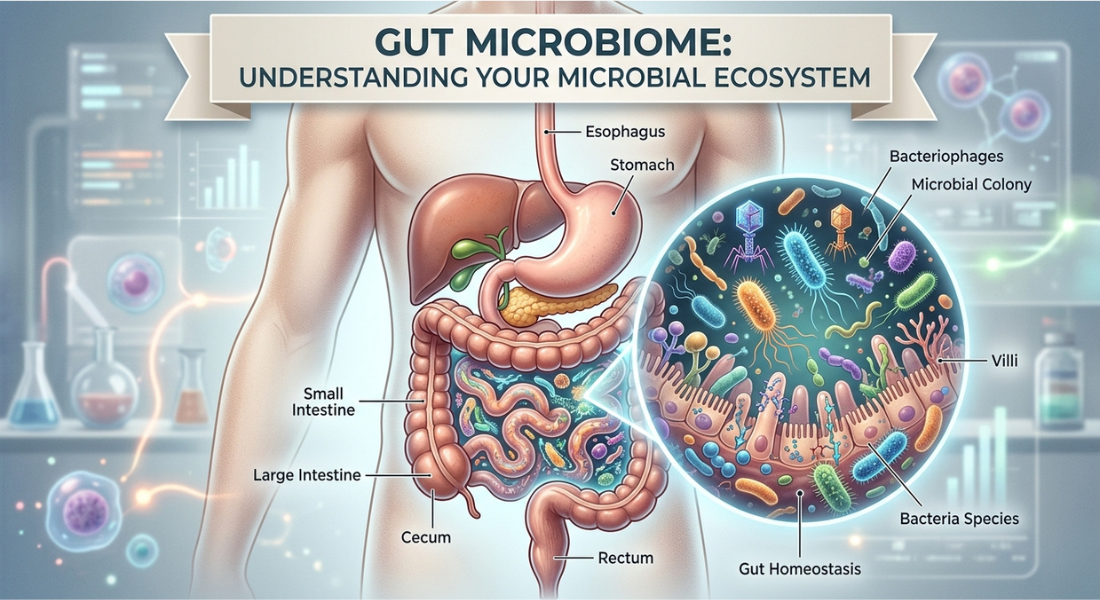
Trillions of microorganisms live inside your digestive tract, forming a complex ecosystem known as the gut microbiome that scientists continue to study.
This microbial community includes bacteria, fungi, viruses, and other microorganisms in the gastrointestinal tract, along with their genetic material and surrounding environment.
This guide explains how the gut microbiome is structured, how it functions, how microbes interact, and what current research reveals about its limitations.
The gut microbiome is a microbial ecosystem containing bacteria, viruses, fungi, and other microorganisms.
Microbiome research studies microbial communities, genetic material, and interactions rather than individual organisms alone.
Microbial diversity helps scientists understand how different organisms contribute to ecosystem functions.
Dysbiosis describes changes in microbial community structure but is not a standalone disease.
Researchers use DNA sequencing and other methods to study microbial composition and behaviour.

The gut microbiome is the ecosystem of microorganisms living throughout the gastrointestinal tract including their genetic material and interactions with their environment.
Unlike a simple collection of bacteria it functions as a complex community where microbes compete, cooperate, and influence each other. Microbial composition differs between individuals due to factors such as age, genetics, and environment.
The National Institutes of Health Human Microbiome Project has supported research into how microbial communities interact with humans and vary across different body locations.
Although often used interchangeably these terms describe different concepts.
Microbiota: The collection of microorganisms living in a specific environment.
Microbiome: The microorganisms, their genetic material, and the ecosystem where they interact.
Researchers study the microbiome beyond individual microbes by analysing microbial functions, genes, and the compounds they produce.
The gut microbiome exists throughout the gastrointestinal tract, including the stomach, small intestine, and colon. The colon contains the highest concentration of microorganisms because it provides conditions that support microbial growth.
The small intestine has fewer microbes due to faster movement and digestive processes.
The gut microbiome contains different groups of microorganisms that work together as a complex ecosystem. Although bacteria receive the most attention, viruses, fungi, and other microbes also influence microbial interactions.
Microorganism | General Role |
Bacteria | Produce metabolites and interact with food components |
Viruses | Influence microbial communities |
Fungi | Contribute to ecosystem balance |
Other microbes | Support complex microbial interactions |
Bacteria are the most studied group and include species with different functions. Some break down compounds while others communicate through chemical signals. Viruses including bacteriophages that affect bacteria can influence microbial populations.
Fungi and other less studied microbes also contribute to ecosystem complexity. According to the National Institute of General Medical Sciences microbiome research explores microorganism diversity and how microbial communities interact with human biology.
Gut bacteria are the largest and most researched part of the microbial ecosystem. Different species perform different roles based on their genes, environment, and interactions with other microbes.
Scientists avoid simply classifying bacteria as “good” or “bad” because their effects depend on context. Research focuses on microbial diversity, balance, and functions rather than finding one perfect bacterial profile.
Microbial diversity refers to the variety of microorganisms and their genetic differences within an ecosystem. A diverse community allows different microbes to perform different biological roles.
Researchers study diversity patterns to understand how microbial communities function. However science has not identified one universal microbiome pattern that represents an ideal state for every person.

The gut microbiome works through ongoing interactions between microorganisms, their environment, and human cells. Microbes compete for resources, exchange chemical signals, and produce compounds that shape the ecosystem inside the gastrointestinal tract.
A key research area is microbial metabolism which explains how microorganisms process nutrients and create biological compounds. These microbial products help scientists understand how different microbes function within their environment.
The relationship between humans and microbes is dynamic. The body provides a habitat for microorganisms while microbes influence biological processes that researchers continue to investigate through DNA sequencing and laboratory studies.
Gut microbes interact with human cells through host microbe relationships. Microorganisms communicate with intestinal cells and influence biological pathways within the surrounding environment.
The intestinal lining acts as a connection point between microbes and human tissues. Scientists study these interactions to understand how microbial signals affect cellular processes and immune pathways.
This relationship is often described as symbiotic because humans and microorganisms coexist in the same ecosystem. However microbial effects depend on the species involved and the conditions of the environment.
Microbial metabolites are compounds created when microorganisms process substances in their environment. These compounds help researchers understand microbial activity and ecosystem behaviour.
Short chain fatty acids (SCFAs) are one example of microbial metabolites studied extensively by scientists. Certain bacteria produce these compounds during microbial processes providing insights into microbe host interactions.
However metabolite research remains complex because different microbes produce different compounds and their effects depend on the wider microbial community.
The gut microbiome is important because it functions as a complex ecosystem where microorganisms interact with each other and with human cells. Its stability depends on relationships between many microbial groups rather than one specific organism.
Researchers study this ecosystem because microbial communities are linked with digestion related processes, immune interactions, and metabolic pathways. However scientific understanding is still developing, and many microbial functions require further research.
The Human Microbiome Project has expanded knowledge of how microorganisms live alongside humans and contribute to biological systems.
The gut microbiome is one part of the wider topic of gut health which includes digestive function, lifestyle factors, testing, and supportive strategies. This is part of our complete guide on Gut Health: Complete Guide to Improving Your Digestive Wellness → see the full guide here.
Microbial activity continuously changes the environment inside the intestine. Different microorganisms interact with resources, produce compounds, and influence conditions within their communities.
Scientists study these relationships because ecosystem balance depends on interactions between many organisms. Changes in microbial composition can affect community patterns making researchers focus on overall microbial behaviour rather than individual species.
However there is no single “healthy” microbiome pattern for everyone. Individual differences mean researchers continue exploring how microbial activity relates to intestinal conditions and biological processes.
The gut microbiome is not static and changes throughout life. Microbial communities naturally shift due to internal and external influences, including genetics, environment, medication use, and biological changes.
These changes can happen gradually or occur after major events. Researchers study microbiome variation because differences between individuals are normal, and a change in microbial composition does not always indicate a problem.
The complexity of these influences makes it difficult to predict how a person’s microbiome will respond to a specific factor. Scientists focus on broader patterns to understand how microbial ecosystems adapt over time.
Antibiotics can change microbial communities because they target bacteria including some that are part of the normal gut ecosystem.
Their effects depend on factors such as medication type, treatment duration, and individual microbiome characteristics. Some microbial communities may recover over time while others may experience longer lasting changes.
Researchers study antibiotic effects to understand how microbial ecosystems respond to disruption and why recovery patterns vary between individuals.
The gut microbiome changes across different stages of life from early development to adulthood and older age. Each stage can be associated with shifts in microbial composition.
Genetics influence how microorganisms interact with the human body while environmental exposure also shapes microbial communities. These differences explain why each person has a unique microbiome profile.
Scientists therefore focus on understanding microbial patterns and ecosystem functions rather than identifying one universal microbiome.
Dysbiosis describes a change or disruption in the structure of a microbial community. In gut microbiome research the term refers to differences in microbial composition, diversity, or activity compared with expected patterns.
However dysbiosis does not have one universal definition. Researchers measure it differently depending on the study, population, and specific microbial changes being analysed.
Dysbiosis does not simply mean the presence of “bad bacteria.” Microbial ecosystems are complex, and changes can involve shifts in microbial balance, abundance, or interactions between organisms.
Scientists continue studying dysbiosis to understand how microbial changes relate to biological conditions. Current research focuses on identifying meaningful patterns rather than treating every microbial difference as the same.
Dysbiosis is not a standalone disease or medical diagnosis. It is a scientific term used to describe changes in microbial community structure.
Researchers study dysbiosis because altered microbial patterns may appear alongside different health conditions. However scientists are still exploring whether these changes contribute to conditions, result from them, or occur with other factors.
The relationship between microbial changes and human biology remains an active area of microbiome research.

Scientists study the gut microbiome using methods such as DNA sequencing which allows researchers to identify microorganisms and analyse their genetic information.
The Human Microbiome Project helped map microbial communities in the human body and provided valuable data for future research.
Modern studies combine genetic analysis, laboratory experiments, and human research to understand microbial interactions, community structures, and the compounds microorganisms produce.
Microbiome science has advanced significantly but researchers still face key challenges. There is no universally accepted definition of a “perfect” microbiome because microbial communities naturally vary between individuals.
Factors such as genetics, age, and environment make comparisons difficult. Researchers also face challenges in determining whether specific microbial changes directly cause biological effects or simply occur alongside them.
According to research published in Nature Reviews Gastroenterology & Hepatology, defining a universally healthy microbiome remains difficult due to differences in microbial composition across individuals and populations.
The gut microbiome is a complex ecosystem made up of bacteria, fungi, viruses, and other microorganisms that interact with each other and the human body.
Scientists continue discovering how these microbial communities function while many questions about their long term effects remain unanswered.
Understanding the microbiome requires evidence based research rather than simplified explanations.
The gut microbiome is the community of microorganisms living in the gastrointestinal tract along with their genes and interactions.
It includes bacteria, viruses, fungi, and other microbes that interact within a complex ecosystem.
Microbiota refers to the microorganisms themselves while microbiome includes microbes their genetic material and their environment.
Microbial diversity allows different organisms to perform various roles within the ecosystem and helps researchers study microbial functions.
Yes antibiotics can alter microbial communities with effects depending on the medication, duration, and individual factors.
No Researchers have not identified one universal ideal microbiome because it differs between individuals.






Reader Discussion
Leave a Reply