- by Daily Talkin Staff
- July 8, 2026
-

-
-
Loading
Loading
Many people use a gut health test to understand their microbiome but these tests do not provide a complete picture of digestive health.
A gut health test analyses samples such as stool to measure microorganisms, microbial patterns, and specific digestive markers. This guide explains test types, methods, accuracy, results, and limitations.
Gut health tests analyse stool samples to identify microbiome patterns and digestive markers.
Consumer microbiome tests provide insights but are not designed to diagnose most diseases.
Sequencing methods such as 16S rRNA and shotgun metagenomics provide different levels of microbial information.
Test results require personal context because microbiome patterns change over time.
Clinical testing remains important when digestive symptoms require medical evaluation.
A gut health test evaluates specific biological markers linked to the digestive system rather than measuring your complete gut health. Most tests focus on analysing microorganisms found in stool samples especially bacteria and other microbial patterns.
Consumer microbiome tests mainly examine the composition and diversity of microorganisms living in the gut. They can show patterns in microbial communities but cannot provide a complete assessment of digestive function.
Clinical digestive tests have a different purpose. Healthcare providers may use stool analysis, blood markers, or other investigations to examine specific concerns such as inflammation, infections, or digestive abnormalities.
The results from these tests provide measurable information about certain gut related features. However they should be interpreted alongside symptoms, medical history, and professional guidance when needed.
A gut test can reveal information about microbial composition including the types and relative amounts of microorganisms detected in a sample.
Some reports include bacterial diversity scores the presence of specific microorganisms, and possible microbiome patterns linked to current research.
These findings can help users understand their microbial profile but they represent research based insights rather than a complete diagnosis of digestive health.
A gut test cannot identify a single “perfect” microbiome because healthy microbial patterns vary between individuals. Most consumer tests cannot diagnose digestive diseases or confirm medical conditions.
Their results require context because factors such as diet, lifestyle, and health history influence microbiome measurements. Gut health covers the wider relationship between digestion, microbiome balance, and overall digestive wellness.
This guide focuses specifically on testing methods and interpretation. For a complete overview explore our Gut Health guide → see the full guide here.
Different types of gut health tests are designed for different purposes. Some focus on analysing microbiome composition while others investigate specific digestive concerns through clinical methods.
The main categories include microbiome sequencing tests, clinical stool testing, blood based digestive markers, and healthcare investigations recommended by professionals.
Understanding the difference between these approaches helps prevent confusion between wellness focused testing and medical evaluation.
Microbiome sequencing tests analyse stool samples to identify genetic material from microorganisms living in the gut. These tests commonly use techniques such as 16S rRNA sequencing or shotgun metagenomic sequencing.
16S rRNA sequencing examines specific genetic regions to identify bacterial groups while shotgun metagenomics analyses genetic material from many microorganisms to provide broader information.
These tests may measure microbial diversity, bacterial composition, and possible functional characteristics. Consumer microbiome kits use similar approaches to provide personal microbiome reports.
However these tests are designed to provide insights into microbial patterns rather than diagnose diseases.
Clinical digestive testing is usually requested by healthcare professionals when there is a specific medical concern.
These investigations may include stool tests for infections, inflammation markers, blood detection, or other digestive related assessments.
Unlike many consumer microbiome reports clinical tests are designed around medical questions and patient symptoms.
For example a doctor may recommend testing to investigate persistent digestive problems rather than simply analyse general microbiome composition.
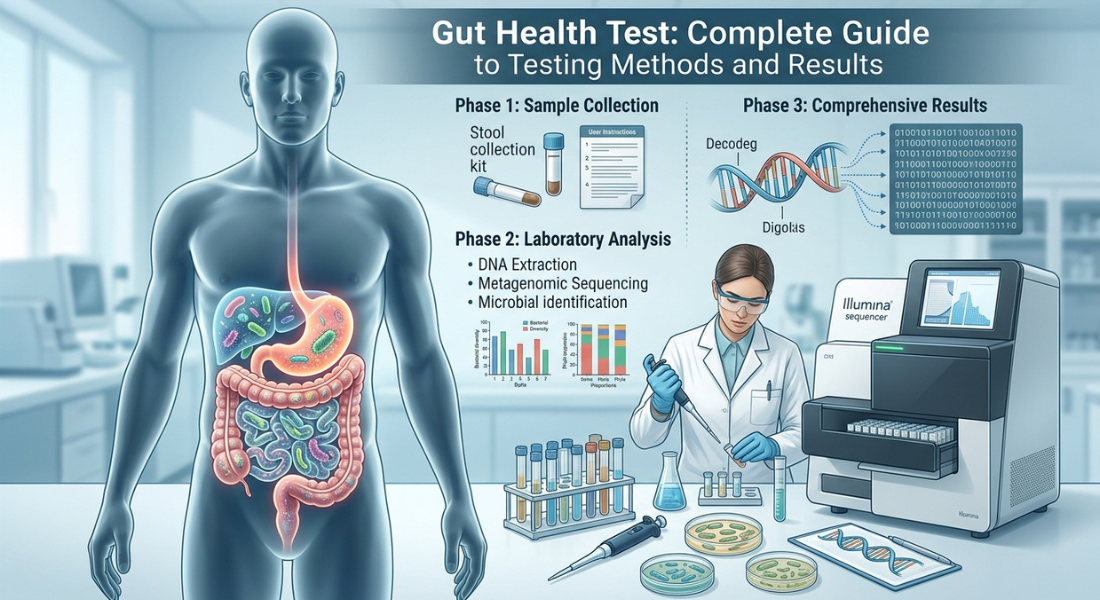
An at home gut health test usually follows a simple process starting with ordering a kit and ending with receiving a digital report. Most consumer kits involve collecting a small stool sample and sending it to a laboratory for analysis.
The laboratory then examines the sample using techniques such as DNA extraction and sequencing. After processing the data the company provides a report showing microbiome related findings and possible interpretations.
The sample collection process begins after receiving the testing kit which normally includes collection tools and instructions. Users collect a stool sample and place it into the provided container.
Following storage guidelines is important because temperature and handling conditions can affect sample quality. The sample is then shipped to the laboratory using the required packaging method.
Careful collection helps reduce contamination risks and improves the reliability of laboratory analysis.
Laboratories begin by extracting DNA from the stool sample to identify genetic material from microorganisms. Sequencing methods are then used to analyse microbial information and identify different organisms present.
After sequencing specialised software processes the data to estimate microbial composition, diversity, and related patterns. Laboratory quality controls help ensure that testing procedures follow consistent standards.
Reliable testing depends on accurate sample handling, validated laboratory methods, and transparent reporting practices. Standards such as those followed by accredited laboratories help improve confidence in testing processes.
Gut health test results provide information about microbial patterns and measured markers but they should not be treated as a complete diagnosis. Reports often present complex data that requires careful interpretation.
A result showing certain bacteria or diversity levels does not automatically indicate a health problem. Microbiome findings need to be considered alongside symptoms, lifestyle factors, and professional medical evaluation where appropriate.
Gut test reports commonly include microbial diversity scores, bacterial groups, and relative abundance measurements. These results show which microorganisms are detected and how their proportions compare within the sample.
Some advanced reports provide species level information or functional predictions about possible microbial activities. These insights can help researchers and users understand microbiome patterns.
However the presence or absence of specific microorganisms does not always explain digestive symptoms or confirm a medical condition.
Microbiome results can change over time due to diet, lifestyle, medication use, and other personal factors. A single test represents one point in time rather than a permanent picture of the gut.
Two people can have different microbiome profiles while both being healthy. This is why test results need context rather than simple comparisons against an assumed ideal microbiome.
Symptoms, medical history, and professional guidance remain important when interpreting findings.
Gut health covers the wider relationship between digestion, microbiome balance, and overall digestive wellness. This guide focuses specifically on testing methods and interpretation. For a complete overview explore our Gut Health guide → see the full guide here.
The accuracy of gut health tests depends on the technology used, laboratory methods, and how results are interpreted. These tests can measure microbial DNA and identify patterns but accuracy does not mean they provide complete answers about digestive health.
Consumer microbiome tests have improved through advances in DNA sequencing but researchers continue to study how microbiome measurements relate to health outcomes.
The National Institutes of Health (NIH) highlights that microbiome research is still developing with many areas requiring further investigation. A reliable test should clearly explain what it measures, how samples are analysed, and the limitations of its results.
Several factors can affect the reliability of microbiome testing. The sample itself can vary because microorganisms are not always distributed evenly throughout stool.
Laboratory methods also influence results. Different companies may use different sequencing technologies, databases, and analysis methods which can lead to variations between reports.
Key factors include:
Sample collection and storage methods
DNA extraction quality
Sequencing technology used
Laboratory standards
Data interpretation methods
Testing companies that provide transparent methods and explain their scientific approach make it easier for users to understand what their results actually represent.
A test can accurately identify microorganisms in a sample without being able to diagnose a disease. Measuring microbial composition is different from confirming a medical condition.
The scientific understanding of the microbiome is still evolving, and researchers have not established one universally accepted “healthy” microbiome profile.
For this reason microbiome results should support understanding rather than replace medical evaluation. Clinical decisions usually require symptoms, medical history, and appropriate diagnostic testing.
Choosing a gut health test requires looking beyond marketing claims. A reliable option should clearly explain what it measures, how samples are analysed, and what limitations apply to the results.
The testing method is one of the first factors to review. Microbiome sequencing approaches, laboratory standards, reporting quality, and scientific transparency can affect how useful the final report is.
Data privacy also matters because some testing companies store genetic information from biological samples. Review how your data is handled before submitting a sample.
Before selecting a test check the technology used for analysis and whether the laboratory follows recognised quality standards.
Reports should explain findings clearly rather than presenting microbiome scores as a complete measure of health. Transparent companies also explain the limits of their testing approach.
Important factors include:
Testing method used
Laboratory quality standards
Scientific evidence behind reporting
Data privacy policies
A clear report should help users understand patterns without suggesting unsupported medical conclusions.
Gut health tests can provide useful information about microbiome patterns and digestive markers but they do not replace medical diagnosis.
Different testing methods serve different purposes so understanding accuracy limits and choosing evidence based options helps users make better decisions.
A gut health test analyses a stool sample to examine microorganisms, microbiome patterns, and digestive markers. It provides insights but not a complete diagnosis.
A microbiome test measures bacteria and other microorganisms including microbial diversity and composition patterns.
Accuracy depends on testing methods, laboratory quality, and interpretation. Microbiome science is still developing so results need context.
Most consumer tests cannot diagnose IBS or diseases. They show microbial patterns, not confirmed medical conditions.
Seek professional advice for ongoing symptoms, blood in stool, severe pain, weight loss, or major bowel changes.






Reader Discussion
Leave a Reply