- by Daily Talkin Staff
- July 8, 2026
-

-
-
Loading
Loading
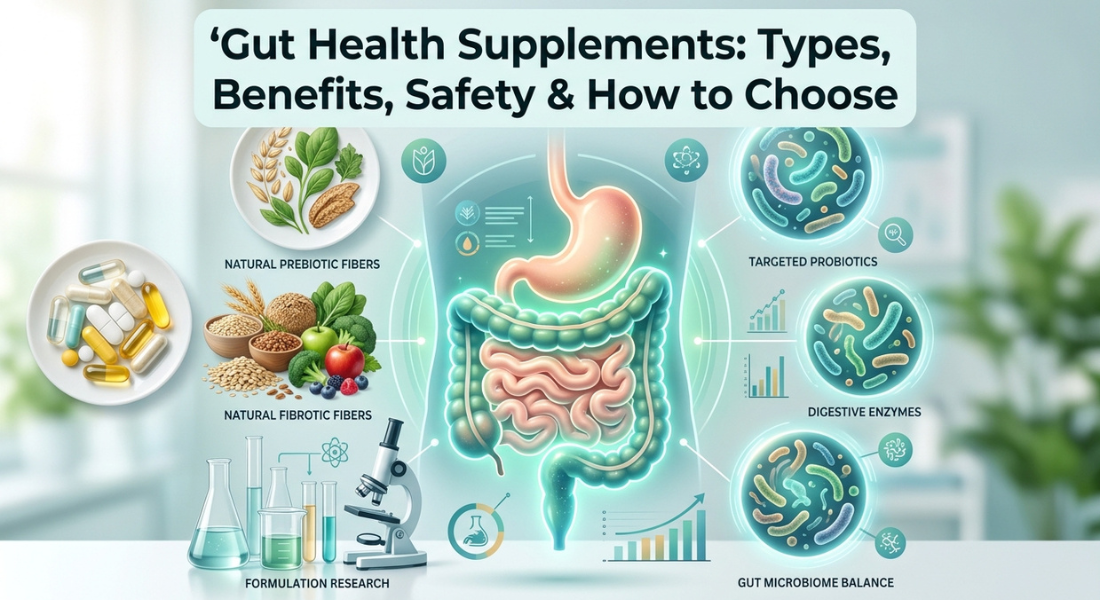
Many people take gut health supplements hoping to improve digestion but choosing the right option can be confusing. Gut health supplements are products designed to support digestive function through ingredients such as probiotics, prebiotics, fibre, enzymes, and other targeted compounds.
This guide explains supplement types, evidence, safety considerations, and how to select the right option.
Gut health supplements include probiotics, prebiotics, fibre supplements, enzymes, and targeted compounds.
Evidence varies depending on the ingredient, dosage, strain, and individual situation.
Probiotic benefits are usually linked to specific strains rather than all probiotics.
Quality supplements provide transparent labels, testing information, and clear dosage details.
Supplements should support healthy habits rather than replace balanced lifestyle choices
Gut health supplements are products that contain specific ingredients designed to support digestive processes. They may include beneficial microorganisms, fibres, enzymes, or targeted compounds that influence different aspects of digestive function.
Unlike general wellness products these supplements focus on specific mechanisms such as introducing selected probiotic strains providing nutrients that support existing microorganisms, or helping break down certain food components.
The effectiveness of a supplement depends on several factors including the ingredient type, dosage, product quality, and the individual using it. A supplement that works for one person may not provide the same results for another.
Research from organisations such as the International Scientific Association for Probiotics and Prebiotics highlights that different supplement categories have different definitions and evidence standards.
The main categories of gut health supplements include probiotics, prebiotics, synbiotics, fibre supplements, digestive enzymes, and targeted compounds such as butyrate, glutamine, and zinc carnosine.
Probiotics contain live microorganisms that may provide benefits when specific strains are used appropriately. Prebiotics provide compounds that support existing beneficial microorganisms.
Synbiotics combine probiotics and prebiotics while fibre supplements increase fibre intake. Digestive enzymes and targeted compounds work through different pathways related to digestion and intestinal support.
Evidence strength varies significantly between supplement categories. Some supplements have well studied uses for specific situations while others require more research before broad claims can be made.
Probiotics have one of the largest research bases but benefits depend on the exact strain rather than probiotics as a single category. A product containing one strain may have different effects from another product with different microorganisms.
Prebiotics and fibre supplements also have supporting evidence because certain fibres can influence digestive function and provide substrates for beneficial microorganisms.
The National Institutes of Health (NIH) Office of Dietary Supplements notes that probiotic effects depend on factors such as the specific microorganisms, health condition being studied, and available evidence rather than a universal benefit for everyone.
When evaluating any supplement look beyond marketing claims. Research quality ingredient transparency, dosage, and individual needs provide a more reliable basis for choosing an option.
According to the NIH Office of Dietary Supplements, probiotic supplements commonly contain between 1 billion (10⁹) and 10 billion (10¹⁰) colony forming units (CFUs) per serving, although higher CFU counts do not necessarily mean greater effectiveness.
Probiotic supplements contain live microorganisms selected for their potential benefits. Common examples include strains from the Lactobacillus and Bifidobacterium groups.
The strain name matters because research findings usually apply to specific strains rather than all probiotics. For example two products may both contain Lactobacillus but have different research outcomes.
Colony forming units (CFU) indicate the number of viable microorganisms in a product. However a higher CFU count does not automatically mean a supplement is more effective.
A suitable probiotic depends on factors such as the strain studied, dosage used in research, product stability, and the person’s individual goals.
The International Scientific Association for Probiotics and Prebiotics (ISAPP) notes that trillions of microorganisms naturally live in the human digestive tract, and probiotic benefits are strain specific rather than shared by all probiotic products.
Prebiotic supplements provide compounds that support beneficial microorganisms already present in the digestive system. Common prebiotic ingredients include inulin fructo oligosaccharides (FOS), and galacto oligosaccharides (GOS).
Fibre supplements such as psyllium work differently from probiotics because they do not add microorganisms. Instead they increase fibre intake which can support normal digestive processes.
Prebiotics and fibre supplements may be useful for people who struggle to reach recommended fibre levels through diet alone. However increasing fibre too quickly may cause temporary digestive changes.
The best choice depends on the ingredient, dose, tolerance, and the specific purpose behind using the supplement.
Beyond probiotics and prebiotics several targeted supplements are studied for their potential role in digestive support. These options often receive less attention but may be relevant depending on individual needs.
Digestive enzymes, butyrate, glutamine, and zinc carnosine are examples of supplements investigated for specific digestive functions. However evidence strength differs between ingredients, and they should not be viewed as universal solutions.
Scientific research continues to evaluate how these compounds may support areas such as digestion, intestinal function, and gut related processes.
The quality of evidence matters more than the popularity of a supplement. Ingredients with promising research still require careful interpretation because results may depend on dosage, formulation, and the person using them.
Digestive enzyme supplements contain enzymes that help break down certain components of food, including carbohydrates, proteins, and fats.
Some people consider enzyme supplements when they experience difficulty digesting specific foods or want additional digestive support.
However enzyme supplements are not designed to treat medical conditions. Their usefulness depends on the type of enzyme included and whether it matches the individual’s needs.
Choosing a product with clearly listed enzymes and appropriate dosages is important because different enzymes serve different purposes.
Butyrate is a short chain fatty acid studied for its relationship with intestinal cell function and gut lining support. Some research has explored its potential role in maintaining intestinal health.
Glutamine is an amino acid involved in many body processes including research related to intestinal cells and digestive function. Evidence for supplementation benefits varies depending on the situation.
Zinc carnosine has been studied for its potential role in supporting the intestinal lining. While these compounds show scientific interest more research is needed to determine their wider applications.
Choosing the right supplement depends on your goal the evidence behind the ingredients, and the quality of the product rather than popularity alone.
Start by identifying what you want support with such as fibre intake, probiotic supplementation, or digestive support. A reliable supplement should provide clear information about ingredients, dosage, research support, and manufacturing standards.
The World Gastroenterology Organisation provides evidence based guidance on probiotic use and highlights the importance of considering specific strains and research quality.
Review the label for active ingredients, dosage amounts, and strain details where relevant. Probiotic research is usually linked to specific strains not probiotics as a whole category.
Choose products with transparent labelling, realistic claims, and evidence supported ingredients.
Different supplements may suit different purposes. Fibre supplements may help increase fibre intake, probiotics focus on selected microorganisms, and digestive enzymes provide targeted digestive support.
Your goal should guide your choice rather than relying only on marketing claims.
A high quality supplement should provide clear details about its ingredients, dosage, quality standards, and purpose. A specific ingredient alone does not guarantee effectiveness.
Look for transparent labels, evidence supported claims, and products that explain active ingredients and amounts clearly. Quality also depends on manufacturing standards, ingredient accuracy, and product stability.
Third party testing can help verify ingredient quality and product accuracy. Check for manufacturing standards, expiration dates, and storage instructions.
Some probiotic supplements require refrigeration while others are designed for room temperature storage to maintain stability.
A reliable label should clearly list ingredients, dosage information, probiotic strains where relevant, and any added fillers.
Transparent labelling makes it easier to compare products and judge whether claims are supported by evidence.
Gut health supplements are generally safe for many healthy adults when used correctly but safety depends on the ingredient, dosage, product quality, and individual health needs.
Some people may experience temporary effects such as bloating, gas, or changes in bowel habits, especially with probiotics, prebiotics, or fibre supplements.
Individual responses vary so starting with appropriate amounts and following product instructions can help reduce unwanted digestive changes.
People with existing medical conditions, those taking medications, or anyone with ongoing digestive symptoms should seek professional advice before starting new supplements.
Choosing between supplement types depends on the purpose, ingredient evidence, and personal goals. There is no single option that works best for everyone because different supplements support different functions.
Probiotics focus on introducing selected microorganisms while prebiotics support existing microorganisms through specific compounds. Fibre supplements can help increase fibre intake, and digestive enzymes provide targeted digestive support.
Targeted compounds such as butyrate, glutamine, and zinc carnosine are usually considered based on their specific research areas rather than general use.
A supplement choice should begin with understanding the purpose behind using it, then comparing ingredients, evidence, quality, and suitability.
Gut health supplements are one part of supporting digestive wellness. For a wider understanding of gut health, including foods, lifestyle factors, microbiome science, and testing, see our complete guide on Gut Health →.
Supplement Type | Main Purpose | Common Uses |
Probiotics | Adds beneficial microorganisms | Microbiome support |
Prebiotics | Feeds existing bacteria | Microbial support |
Fibre supplements | Increases fibre intake | Regular bowel function |
Digestive enzymes | Supports digestion | Specific digestive needs |
Butyrate | Supports gut lining research | Intestinal health research |
Gut health supplements can support digestive wellbeing when selected carefully based on ingredients, evidence, quality, and individual needs. The right choice depends on understanding what each supplement does and whether it matches your goal.
Supplements should complement healthy habits rather than replace them. Reviewing research quality and seeking professional guidance when needed helps create a more informed approach.
The best option depends on your specific goal, the evidence behind the ingredients, and your personal response. Probiotics, prebiotics, fibre, and other supplements may suit different needs.
Some probiotic strains may provide benefits for specific situations but results vary depending on the strain, dosage, product quality, and individual factors.
Probiotics provide live microorganisms while prebiotics provide compounds that support beneficial microorganisms already present in the digestive system.
Fibre supplements can help increase fibre intake and may support normal digestive function for people who do not get enough fibre from their diet.
No. Supplements are not necessary for everyone. Their usefulness depends on dietary intake, personal goals, supplement quality, and individual health considerations.
Review the ingredients, dosage information, evidence behind claims, testing standards, storage requirements, and overall transparency before choosing a product.






Reader Discussion
Leave a Reply