- by Daily Talkin Staff
- July 8, 2026
-

-
-
Loading
Loading
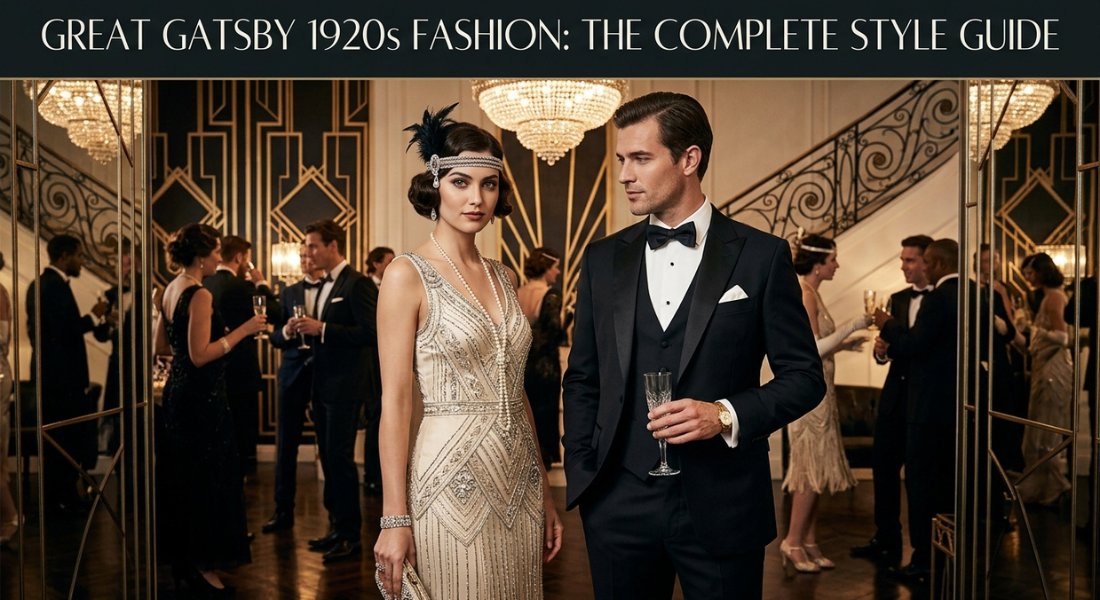
A beaded dress tailored suit or Art Deco inspired detail can instantly create a Gatsby atmosphere. Great Gatsby 1920s Fashion is a glamorous interpretation of 1920s style shaped by Fitzgerald’s world and its screen adaptations.
This guide explains what makes the look distinctive, where history ends and cinema begins, and how to build women’s and men’s outfits.
For broader historical context beyond the Gatsby aesthetic explore our complete guide to 1920s fashion, covering the decade's wider clothing, cultural influences and style development. This is part of our complete guide on 1920s fashion → see the full guide here.
Gatsby style is a glamorous interpretation of 1920s fashion not a complete representation of everyday dress.
Sleek clothing paired with beading, sequins, fringe, metallics and geometric details creates the strongest visual connection.
Women's looks centre on coordinated evening dresses and refined finishing details.
Men's looks rely on polished tailoring, suits, tuxedos, waistcoats and formal accessories.
The easiest styling formula is strong foundation + two or three Gatsby details + controlled glamour.

Great Gatsby 1920s Fashion describes a Gatsby inspired interpretation of 1920s glamour rather than a complete picture of everyday clothing from the decade.
It combines elegant eveningwear, polished tailoring, decorative surfaces and the affluent party atmosphere associated with The Great Gatsby.
The aesthetic draws its strength from contrast: streamlined clothing is paired with sparkle, movement and carefully controlled ornament. The result feels luxurious without requiring every possible period detail.
Gatsby styling selectively heightens the most glamorous parts of the period. It emphasises luxury, spectacle, polished tailoring and eveningwear creating a mood of sophisticated nightlife rather than representing the full range of ordinary 1920s wardrobes.
That distinction matters. A Gatsby outfit is designed to communicate an atmosphere immediately, so reflective decoration, formal dressing and refined coordination carry more visual weight than historical completeness.
The Great Gatsby established the fictional world of Jay Gatsby and Daisy Buchanan but later screen adaptations gave audiences a powerful visual shorthand for that world.
The 2013 adaptation directed by Baz Luhrmann intensified associations with lavish parties, sparkling clothing and theatrical glamour. Costume designer Catherine Martin worked with Miuccia Prada and Brooks Brothers on Twenties inspired costumes.
Gatsby fashion is historically inspired but it is not identical to everyday 1920s dress. Period grounded silhouettes, embellishment and tailoring provide the foundation while cinematic styling can intensify fit, sparkle, colour and visual drama for storytelling.
This is why a Gatsby party outfit can look more glamorous than an ordinary historical wardrobe. The aesthetic borrows recognisable period signals and then concentrates them into a highly polished impression.
The historical foundation is substantial. The Metropolitan Museum of Art’s 1925 to 28 dress record describes loose sleek evening dresses decorated with glass and metallic components that captured and refracted light.
The V&A likewise documents the connection between Art Deco and 1920s fashion, including geometric forms, reflective surfaces and luxurious clothing. Its collections also include a 1926 geometric dress and a 1925 garment with gold thread decoration.
Film costume can make period references more dramatic by refining silhouette increasing sparkle, strengthening colour and coordinating every character’s wardrobe with the visual world of the story.
Martin’s approach to the 2013 adaptation illustrates this distinction. She worked to preserve Twenties references while creating costumes that felt dynamic and contemporary to audiences rather than simply reproducing historical garments.
The production itself involved more than 1700 1920s outfits showing the scale of the cinematic interpretation rather than a typical historical wardrobe.
Feature | Historical 1920s Dress | Gatsby Inspired Interpretation |
Purpose | Everyday + occasion specific clothing | Glamorous visual styling |
Decoration | Varied by garment and occasion | Often deliberately heightened |
Silhouette | Period specific | Period inspired,and sometimes modernised |
Men's styling | Broad range of real world dress | Usually polished,and affluent formalwear |
Overall impression | Diverse historical reality | Luxury, nightlife and cinematic glamour |
For women the Gatsby interpretation starts with an elegant evening dress or streamlined 1920s inspired design. Decorative surfaces, refined proportions and glamorous finishing details then turn the foundation into a recognisable Gatsby look.
The aim is not simply to wear a historically styled dress. The strongest result comes from coordinating the clothing with the level of decoration and formality associated with an extravagant evening setting.
Beading, sequins, fringe and metallic accents are particularly effective because they create movement and reflected light. The Met records 1920s eveningwear in which glass and metallic embellishment counterbalanced sleek simple construction.
That combination is central to the Gatsby effect: a relatively streamlined foundation becomes visually rich through surface decoration. Geometric motifs can strengthen the Art Deco connection without turning the dress into a historical costume replica.
Think of the dress, headpiece, jewellery and footwear as one composition rather than four separate decisions. If the dress already has substantial sparkle keep the remaining pieces refined enough to preserve visual balance.
A restrained headpiece, coordinated jewellery and polished footwear can complete the impression without competing for attention. The goal is controlled glamour not maximum decoration.

The men's Gatsby aesthetic is polished, affluent and formal. A well cut suit or tuxedo provides the foundation, supported by a dress shirt, tie or bow tie and carefully selected finishing details.
The key is character. The outfit should suggest the sophisticated social world of Gatsby rather than looking like any generic vintage suit.
Sharp tailoring, coordinated separates, waistcoats, pinstripes and restrained contrast can create the right impression. A structured jacket paired with a considered shirt and tie combination feels more deliberate than mixing unrelated vintage looking pieces.
The Gatsby effect also benefits from polish. Clean lines intentional proportions and formal accessories communicate wealth and confidence without requiring excessive decoration.
The 2013 film provides a useful cinematic reference: Brooks Brothers supplied 500 suits for the production demonstrating how strongly tailored menswear contributed to its visual world.
Keep the visual cues rather than forcing an uncomfortable historical silhouette. Choose a contemporary suit with clean tailoring then introduce period influence through a waistcoat, pinstripe fabric, bow tie or carefully coordinated accessories.
This approach keeps the outfit wearable while preserving the affluent formal character associated with Gatsby. Fit should look intentional and comfortable rather than like an oversized costume.
Gatsby styling works through the relationship between colour, shine and geometry. Controlled contrast, reflective surfaces and carefully selected decorative details suggest luxury without requiring every recognisable 1920s element in one outfit.
The effect is strongest when one visual idea leads. A dark foundation can support metallic decoration while a pale evening palette can let silver, pearls or crystal like details provide the contrast.
Black with gold creates a dramatic evening combination while ivory with metallics feels lighter and refined. Champagne with silver produces a softer version of the same luxury effect.
Restrained pastels can also work when paired with understated metallic or pearl details. The purpose of these combinations is not strict historical accuracy it is creating a polished atmosphere associated with Gatsby’s fictional world.
Beading, sequins, fringe, geometric decoration, pearls and metallic accents are strong visual signals because they catch light and introduce movement.
The Met’s period examples demonstrate how glass and metallic embellishment could make evening garments shimmer as the wearer moved. The V&A also connects Art Deco fashion with geometry, reflective materials and elegant surface treatment.

The simplest approach is to start with a strong foundation and adjust the amount of decoration to the occasion. Daytime Gatsby styling should feel polished and restrained while evening dressing can introduce more shine, movement and formal elegance.
For women use a streamlined dress or polished period inspired separates with one decorative detail such as pearls or a subtle geometric accent. For men choose a well fitted suit or coordinated separates with a dress shirt and restrained tie.
Keep the palette controlled and avoid stacking multiple theatrical details. The daytime version should suggest Gatsby sophistication rather than recreate a party scene.
Women: streamlined evening dress + beading or fringe + coordinated jewellery or headpiece + polished footwear.
Men: tailored suit or tuxedo + dress shirt + tie or bow tie + refined finishing details.
For evening events increase reflective surfaces and formal elegance while keeping the pieces visually coordinated. This creates a clear Gatsby impression without making every element compete.
Use selective styling. Choose one strong foundation, add two or three recognisable Gatsby details then stop.
A coordinated dress or suit will usually communicate the period more effectively than piling on every stereotypical accessory. The best interpretation feels intentional, polished and glamorous rather than theatrical.
Great Gatsby 1920s Fashion works best as a stylised interpretation of the era combining recognisable period details with the heightened glamour of Fitzgerald’s fictional world and cinematic adaptations.
The distinction between historical dress and Gatsby styling is useful begin with a strong foundation coordinate decorative details and increase the level of evening glamour only as the occasion demands.
A glamorous interpretation of 1920s style inspired by The Great Gatsby, fictional wealth, elegant parties and cinematic glamour.
It is historically inspired but often more glamorous, fitted and decorative than everyday 1920s clothing.
Elegant dresses with decorative embellishment, jewellery, headpieces and polished finishing details.
Tailored suits or tuxedos with formal shirts, ties or bow ties, waistcoats and refined details.
Black, ivory, champagne, metallics and restrained pastels create a sophisticated Gatsby atmosphere.
Choose a strong period inspired foundation, add two or three coordinated details, and adjust the glamour for the occasion.



Reader Discussion
Leave a Reply