- by Daily Talkin Staff
- July 8, 2026
-

-
-
Loading
Loading
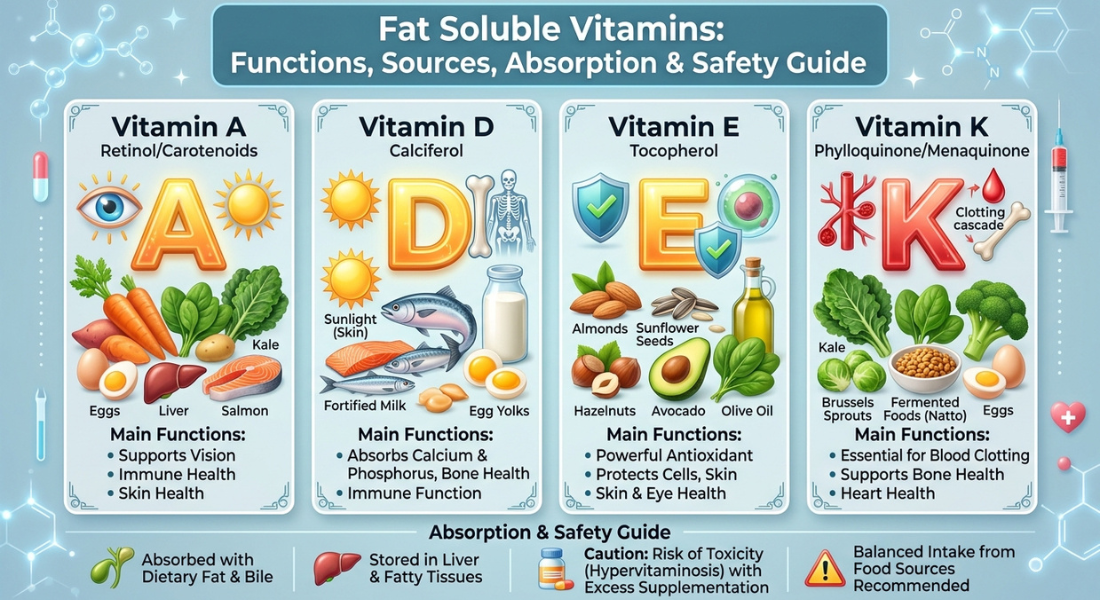
Some vitamins are used differently by the body because they can be stored and used later when needed. Fat soluble vitamins are vitamins A, D, E, and K that dissolve in fat, require dietary fat for absorption, and can be stored in body tissues.
This storage ability affects how they are absorbed, managed, and balanced through diet. This guide explains their functions, food sources, absorption, storage, and safety considerations.
Fat soluble vitamins include vitamins A, D, E, and K.
These vitamins dissolve in fat and require dietary fat for absorption.
The body can store them in the liver and fatty tissues for later use.
Vitamin A supports vision and immune function, while vitamin D supports calcium absorption and bone health.
Vitamin E provides antioxidant protection, and vitamin K supports blood clotting and bone metabolism.
Excessive intake from high dose supplements may create safety concerns because these vitamins are stored.

Fat soluble vitamins are nutrients that dissolve in fats instead of water and include vitamins A, D, E, and K. This affects how the body absorbs, transports, and stores them.
Dietary fat helps the intestine absorb these vitamins which are then transported and stored mainly in the liver and fatty tissues. This allows the body to use them later but also means excessive intake may create concerns.
According to the National Institutes of Health (NIH) Office of Dietary Supplements, vitamins A, D, E, and K have important roles in normal body functions and require balanced intake.
The term “fat soluble” means these vitamins dissolve in fats and oils rather than water. This property helps the body absorb and manage them during digestion.
The four fat soluble vitamins are:
Vitamin A
Vitamin D
Vitamin E
Vitamin K
Each has different functions but shares the same absorption and storage characteristics.
The body processes these vitamins through a simple pathway:
Foods containing vitamins A, D, E, or K are consumed.
Dietary fats help dissolve them during digestion.
The intestine absorbs these nutrients.
They are transported and stored in body tissues.
This storage ability helps maintain vitamin levels over time but also means high intake from supplements can increase the risk of excessive amounts.
The four fat soluble vitamins are vitamin A, vitamin D, vitamin E, and vitamin K. They support key functions such as vision, calcium regulation, cell protection, and blood clotting.
Vitamin | Main Role | Common Food Sources |
Vitamin A | Vision and immune function | Eggs, dairy, orange vegetables |
Vitamin D | Calcium absorption and bone health | Sunlight, fish, fortified foods |
Vitamin E | Antioxidant protection | Nuts, seeds, oils |
Vitamin K | Blood clotting and bone metabolism | Leafy greens |
Vitamin A supports vision, vitamin D helps calcium use, vitamin E protects cells, and vitamin K supports blood clotting. According to the NIH Office of Dietary Supplements vitamin D can be produced through sunlight exposure and obtained from foods.
These vitamins are grouped together because they share similar absorption and storage patterns even though their functions differ.
Vitamin A is a fat soluble vitamin that supports vision, immune function, and normal cell growth. It is found in both animal and plant foods in different forms.
Animal foods provide retinol while plant foods contain carotenoids that the body can convert into vitamin A. Common sources include eggs, dairy products, liver, carrots, sweet potatoes, and spinach.
Because the body stores vitamin A balanced intake is important. A varied diet usually provides enough while unnecessary high dose supplements may increase risks.
Vitamin A mainly exists as retinol and carotenoids. Retinol comes from animal foods and is ready for the body to use.
Carotenoids such as beta carotene are found in plant foods and can be converted into vitamin A when needed. Sources include carrots, sweet potatoes, leafy greens, and pumpkin.

Vitamin D is a fat soluble vitamin that helps the body absorb calcium, supporting bone health and normal muscle function. Unlike most vitamins it can also be produced after sunlight exposure.
Food sources include fatty fish, fortified foods, and some dairy products. Dietary fat helps the body absorb and transport vitamin D which is why it belongs to the fat soluble group.
According to the NIH Office of Dietary Supplements, vitamin D helps regulate calcium and phosphorus levels which are important for maintaining healthy bones.
Vitamin D is unique because the body can produce it through sunlight exposure. UVB rays trigger vitamin D production in the skin.
While vitamins A, E, and K mainly come from foods, vitamin D has both dietary and sunlight sources. Its absorption and storage process still classify it as a fat soluble vitamin.
Fat soluble vitamins and water soluble vitamins differ in how they dissolve, absorb, and are stored in the body. Fat soluble vitamins include vitamins A, D, E, and K.
They dissolve in fats, are absorbed with dietary fat, and can be stored in tissues such as the liver and body fat.
Water soluble vitamins dissolve in water and are stored in smaller amounts. This group includes vitamin C and B vitamins which generally require regular intake.
Fat soluble vitamins are one part of our complete vitamins guide which covers the wider role, types, sources, and safety considerations of essential nutrients. This is part of our complete guide on Vitamins → see the full guide here.
Feature | Fat Soluble Vitamins | Water Soluble Vitamins |
Examples | A, D, E, K | Vitamin C and B vitamins |
Absorption | With dietary fat | With water |
Storage | Stored more easily | Limited storage |
Intake pattern | Remain in the body longer | Usually need regular intake |
The main difference is storage behaviour which affects how the body manages each vitamin category.
Vitamin E and vitamin K complete the four main fat soluble vitamins. Although they have different functions both rely on the same absorption and storage characteristics that define this vitamin category.
Vitamin E acts mainly as an antioxidant that helps protect cells from oxidative damage. It supports normal cell function and is commonly found in plant based foods.
Common vitamin E sources include:
Nuts such as almonds
Seeds
Vegetable oils
Green vegetables
Vitamin K plays an important role in normal blood clotting and bone metabolism. The body uses vitamin K to support proteins involved in these processes.
Common vitamin K sources include:
Leafy green vegetables
Spinach
Kale
Other plant foods
According to the NIH Office of Dietary Supplements vitamin E includes compounds called tocopherols and tocotrienol while vitamin K includes forms such as phylloquinone and menaquinones. These different forms contribute to how each nutrient functions in the body.
Together vitamins E and K show why the fat soluble category includes nutrients with very different roles. Their shared feature is how the body absorbs and stores them not identical biological functions.

Fat soluble vitamins can build up in the body because they are stored more easily than water soluble vitamins. The liver and fatty tissues act as storage areas, allowing the body to maintain supplies over time.
This storage ability can be useful because it helps maintain vitamin availability between periods of lower intake. However it also means excessive intake may remain in the body longer.
The main concern usually comes from unnecessary high dose supplementation rather than normal food consumption. A balanced diet typically provides appropriate amounts of vitamins A, D, E, and K for most people.
The U.S. National Library of Medicine explains that vitamin safety depends on factors such as the nutrient involved, the amount consumed, and whether intake comes from food or supplements.
Understanding storage behaviour helps explain why recommended amounts matter. More of a stored nutrient is not always better especially when intake exceeds what the body needs.
When intake of fat soluble vitamins becomes excessive the body may store more of these nutrients than it requires. Unlike water soluble vitamins they are not removed from the body as quickly.
High amounts are more commonly linked with excessive supplement use rather than naturally occurring foods. This is why vitamin products containing high doses should be used carefully.
Maintaining appropriate intake through a balanced diet helps reduce the chance of unnecessary excess while still supporting normal vitamin functions.
Fat soluble vitamins A, D, E, and K have unique roles because they dissolve in fat, require dietary fat for absorption, and can be stored in the body.
Understanding their functions, food sources, and storage behaviour helps explain why balanced intake matters. A varied diet remains the foundation for obtaining these nutrients safely.
The four fat soluble vitamins are vitamins A, D, E, and K. They dissolve in fat require dietary fat for absorption, and can be stored in the body.
They are called fat soluble because they dissolve in fats instead of water affecting how the body absorbs and stores them.
The body absorbs them with dietary fats during digestion then transports and stores them mainly in the liver and fatty tissues.
Common sources include eggs, dairy products, fatty fish, nuts, seeds, vegetable oils, leafy greens, and fortified foods.
Yes Since the body stores them excessive intake from high dose supplements may increase the risk of unwanted effects.
Fat soluble vitamins are stored more easily while water soluble vitamins have limited storage and usually require regular intake.






Reader Discussion
Leave a Reply