- by Daily Talkin Staff
- July 8, 2026
-

-
-
Loading
Loading
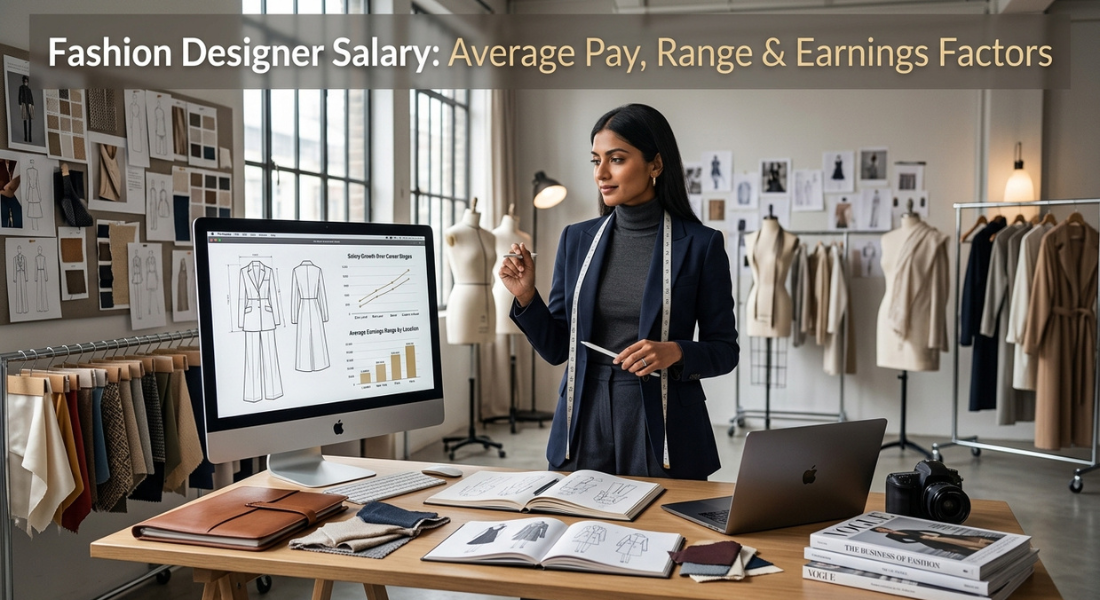
A fashion designer’s income can vary widely depending on experience, location, employment type, and market position. The average fashion designer salary depends on several measurable factors rather than one fixed figure.
This guide explains current salary ranges, earning levels, compensation differences, and what influences fashion designer pay. Fashion designer salary is one part of understanding the wider profession, including roles, skills, education and career paths.
This article focuses only on earnings and compensation. For the complete profession overview see our Fashion Designer guide →
Fashion designer salaries vary based on experience, location, and employment type.
The U.S. median annual wage for fashion designers was $80,690 in May 2024.
Entry level designers typically earn less while experienced designers can access higher compensation.
Freelance income offers flexibility but can fluctuate more than employee salaries.
Major fashion markets such as New York, London, Paris, and Milan often provide stronger earning opportunities.

The average fashion designer salary varies by country, experience level, and data source. In the United States the U.S. Bureau of Labor Statistics (BLS) reported a median annual wage of $80,690 for fashion designers in May 2024.
Salary figures differ because average and median salaries measure earnings differently. The median shows the middle point where half of designers earn more and half earn less.
Actual income depends on location, employment type, experience, and whether earnings come from employment, freelance work, or independent business activity.
Fashion designer salaries vary widely because earnings differ by experience, employer, location, and employment type.
Entry level designers usually earn lower salaries while building experience and industry credibility. Experienced and senior designers may earn more through specialised expertise, stronger reputation, and higher value employers.
Salary reports often show a clear gap between lower and higher earners with top performing designers earning well above median levels.
Entry level fashion designers usually earn lower salaries because employers are paying for developing experience, practical knowledge, and early professional contribution.
Junior designers may receive compensation below the industry median while they build stronger portfolios, production knowledge, and workplace experience. Their earnings often increase as they gain responsibility and demonstrate consistent results.
Experienced fashion designers can earn higher salaries because employers often value proven results, specialised expertise, and the ability to contribute at a higher level.
Senior level designers may receive compensation above average market rates especially when working with established brands, luxury companies, or specialised segments where expertise has greater financial value.
Experience is one of the biggest factors influencing fashion designer earnings. Designers with more industry experience often access higher paying opportunities than those entering the field. Entry level designers usually earn less while building professional credibility.
As experience grows, salaries can increase through stronger expertise, proven results, and greater responsibility. Industry reputation, portfolio strength, and specialised knowledge can also improve earning potential by making designers more valuable to employers and clients.
Experience Level | Typical Salary Range | Main Factors |
Entry level | Lower salary range | Early experience and developing expertise |
Mid level | Moderate salary range | Industry knowledge and proven performance |
Senior level | Higher salary range | Leadership, reputation and specialised expertise |
Salary growth is not determined by time alone. The type of work completed, market demand, employer, and professional reputation all influence how compensation develops.
Fashion designer pay depends on multiple factors rather than a single measurement. Location, specialisation, employer type, experience, and market demand all influence how much a designer can earn.
A designer working in a major fashion market may receive different compensation compared with someone working in a smaller regional market. Similarly, luxury fashion companies and specialised segments often have different salary structures from mass market apparel businesses.
Education and technical ability can influence earning potential when they support stronger professional results but salary is usually connected more directly to experience, industry value, and the type of work performed.
Location plays a major role in salary differences because fashion hubs often contain more employers, luxury brands, and higher value opportunities.
Cities such as New York, London, Paris, and Milan are recognised fashion centres where compensation may reflect stronger industry demand and higher living costs.
Regional salary differences can also appear within the same country because local market conditions, business concentration, and available employers affect pay levels.
Specialisation can influence salary because different fashion segments have different levels of demand and commercial value.
Luxury fashion, premium brands, apparel companies, costume design, and independent labels may offer different compensation structures depending on market position, company size, and customer base.
Technical expertise, digital design knowledge, and industry experience can support salary growth by increasing a designer’s value to employers and clients.
Skills should be viewed as salary factors rather than separate career requirements. Stronger expertise can help designers qualify for higher paying opportunities.

Employment type can significantly affect fashion designer income. Salaried designers usually receive a fixed income with benefits while freelance designers often have more variable earnings based on projects, clients, and workload.
Employee roles provide greater financial stability but freelance designers may earn more during periods of strong demand or higher value projects.
However freelance income can fluctuate because earnings depend on finding clients, managing contracts, and maintaining consistent work opportunities.
Employment Type | Income Pattern | Main Considerations |
Employee | Fixed salary | Stability and benefits |
Freelancer | Variable income | Clients, workload and project availability |
Independent brand owner | Business based income | Sales performance and market demand |
The highest earning option depends on individual circumstances, market position, and the ability to generate consistent income.
Fashion designer salaries vary significantly between countries because local fashion industries, employer demand, and cost of living affect compensation levels. Markets with established fashion sectors often provide access to higher paying roles and more specialised opportunities.
The United States remains one of the strongest salary markets for fashion designers. According to the U.S. Bureau of Labor Statistics fashion designers had a median annual wage of $80,690 in May 2024 with the highest 10% earning more than $169,620.
Major fashion cities such as New York, London, Paris, and Milan can offer stronger earning potential because they host luxury brands, fashion houses, design studios, and global industry networks.
However a higher salary does not always mean higher financial value. Living costs, taxation, employment type, and personal market position also influence how much income a designer retains.
Increasing fashion designer income depends on improving market value, specialised expertise, and professional credibility. Designers who work with premium brands, high value projects, or specialised segments often have stronger earning potential.
Building industry connections can create access to better roles and freelance opportunities. Understanding customer demand, production costs, and commercial goals can also increase a designer’s value.
Salary growth is often linked to:
Stronger professional experience
Industry connections
Specialised expertise
Ability to contribute to successful projects
The key is becoming more valuable in the market not simply gaining more years of experience.

Fashion designer salaries are influenced by changes in technology, consumer behaviour, and industry demand. While compensation remains dependent on individual markets new opportunities are emerging through digital design, sustainable fashion, and direct to consumer business models.
Digital tools and virtual design platforms may create new ways for designers to deliver value, while sustainability focused brands may increase demand for designers with relevant expertise.
According to the U.S. Bureau of Labor Statistics employment for fashion designers is projected to grow 2% from 2024 to 2034 with around 2,300 openings expected each year on average.
Future earning potential will likely depend on how effectively designers adapt to changing industry needs while maintaining strong creative and commercial value.
Fashion designer salaries depend on experience, location, employment type, and market position. Average salary figures provide a useful benchmark but actual earnings vary based on individual circumstances and industry demand.
Understanding these salary factors helps designers evaluate earning potential while keeping compensation separate from the wider profession.
The U.S. BLS reports a median annual wage of $80,690 for fashion designers in 2024 but salaries vary by location and experience.
Entry level designers usually earn less than experienced professionals while building skills, experience, and industry reputation.
Yes experience can increase earning potential through stronger expertise, reputation, and higher value opportunities.
Major fashion markets like the U.S., UK, France, and Italy often offer higher salaries especially in global fashion cities.
Freelancers may earn more through projects but employee roles usually provide more stable income and benefits.
Experience, location, specialisation, expertise, and working with premium brands can improve earning potential.






Reader Discussion
Leave a Reply