- by Daily Talkin Staff
- July 8, 2026
-

-
-
Loading
Loading
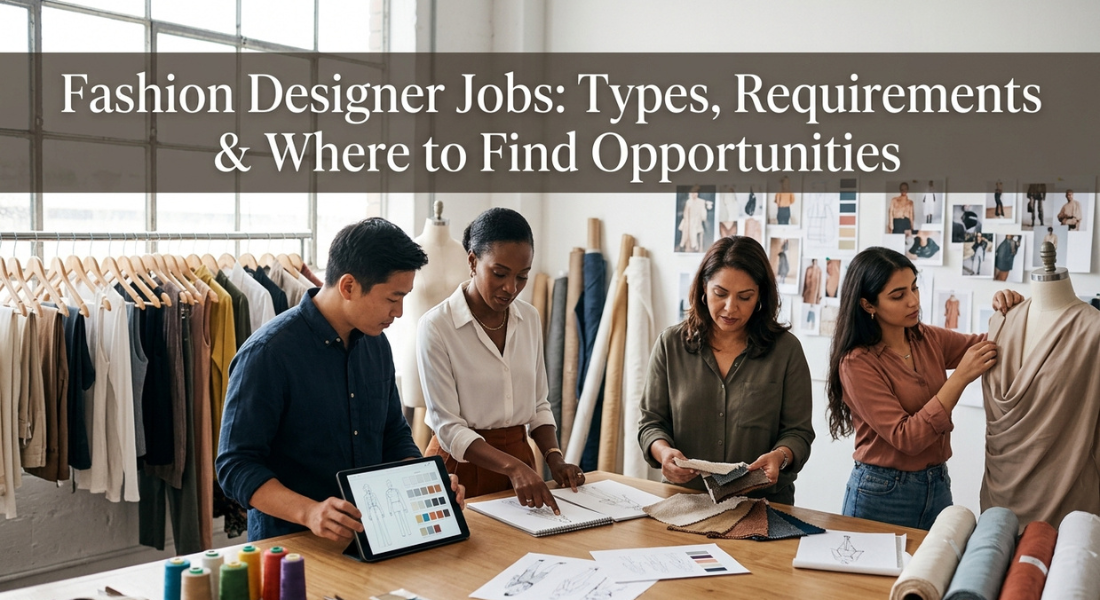
Many aspiring designers know they want a fashion career but are unsure which job roles actually exist. Fashion designer jobs include employment opportunities where professionals create and develop fashion products for brands, studios, manufacturers, or independent businesses.
This guide explains job types, hiring requirements, workplaces, and ways to find opportunities.
Fashion designer jobs include roles in apparel, technical design, costume design, and freelance work.
Employers often evaluate portfolios, technical skills, and practical industry experience.
Fashion opportunities can be found through job boards, brand websites, internships, and networking.
Career progression commonly moves from assistant designer roles to senior creative positions.
Strong applications combine creative ability with workplace readiness.

Fashion designer jobs vary based on product focus, employer type, and level of responsibility. Some roles involve creating clothing collections while others support technical development, production coordination, or specialised design projects.
The most common opportunities exist across apparel design, technical design, costume design, and freelance work. Each role requires a different combination of creative input, industry knowledge, and collaboration with other professionals.
Entry level positions often provide exposure to design teams and production workflows while experienced roles involve greater responsibility for collections, brand direction, or client projects.
Apparel designer roles focus on creating clothing products for brands, retailers, manufacturers, and private labels. Designers may work on womenswear, menswear, childrenswear, sportswear, or commercial fashion collections.
These positions often involve developing concepts that match a company’s target customers and market direction. Commercial apparel designers usually balance creative decisions with production timelines, pricing expectations, and customer demand.
Technical designers focus on the practical accuracy of garments, including measurements, fit specifications, construction details, and production communication. They help ensure designs can move from concept into manufacturing.
Assistant designer roles are common entry points for new professionals. These positions support senior designers through research, sample coordination, design updates, and preparation of materials needed for collection development.
Costume designers create clothing for film, television, theatre, and performance projects. Their work requires understanding characters, production requirements, and visual storytelling.
Freelance fashion designers work independently with brands, clients, or creative teams on contract based projects. These roles can include custom clothing, design consulting, independent labels, and short term collaborations.
Daily responsibilities depend on the employer, position level, and type of products being developed. Most roles involve contributing to design projects while working closely with other teams involved in production and business decisions.
Designers may support collection goals, communicate ideas, review samples, and adjust designs according to brand requirements. The exact workload changes between a large fashion company, a small studio, and independent work.
Fashion designers working in employment roles often collaborate with creative directors, product teams, manufacturers, and other specialists.
Their responsibilities may include developing design concepts, preparing visual materials, reviewing product samples, and communicating updates throughout the development process.
Strong collaboration is essential because fashion projects usually involve multiple departments working towards the same collection or product launch.
Professional designers must create work that aligns with a brand’s identity and customer expectations. A luxury fashion house, sportswear company, and independent label may have very different design goals.
Employers expect designers to understand deadlines, market needs, and commercial priorities while maintaining creative quality. Successful designers balance original ideas with practical requirements.

Fashion designers can find employment across different business environments depending on their preferred role and career goals.
Opportunities exist with established fashion companies, retail organisations, design studios, manufacturers, entertainment businesses, and independent ventures.
Fashion designer jobs are one part of the wider fashion designer profession, covering employment opportunities, career paths, and industry roles. For a complete overview of the profession see our full Fashion Designer guide →
Fashion brands employ designers to develop collections that match their customer base and market position. Large companies may have separate teams for different product categories, seasons, or customer segments.
Retail companies also hire designers who understand consumer preferences and commercial fashion requirements. These roles often focus on creating products that fit specific retail strategies.
Design studios provide opportunities for designers who work on specialised projects, collaborations, or collections for multiple clients.
Garment manufacturers may hire designers who work closely with production teams to develop products for brands and retailers.
Entertainment companies employ costume designers for film, television, and theatre projects where clothing supports storytelling and character development.
Independent businesses also create opportunities for designers who develop their own labels, accept client projects, or provide freelance services.
Employers usually evaluate candidates based on practical ability, relevant experience, and evidence that they can contribute to real design projects.
Requirements vary by company and position but most hiring managers look for a strong portfolio, technical understanding, communication ability, and awareness of professional workflows.
The U.S. Bureau of Labor Statistics notes that fashion designers typically need creativity, communication skills, and knowledge of materials and production methods as part of their professional responsibilities. U.S. Bureau of Labor Statistics
A fashion portfolio is often one of the most important parts of an application because it shows how a candidate develops ideas and completes projects.
Employers may review sketches, technical drawings, finished garments, concept development, and examples that demonstrate problem solving ability.
A strong portfolio should show more than final designs. It should also communicate the designer’s thinking process, attention to detail, and ability to create work suitable for professional environments.
Hiring teams often look for candidates with knowledge of CAD tools, garment construction, textiles, and digital design workflows.
Alongside technical ability workplace skills such as communication, teamwork, organisation, and meeting deadlines are valuable in professional design environments.
Designers frequently work with different departments, so the ability to explain ideas clearly and respond to feedback can influence hiring decisions.
Finding suitable opportunities requires more than searching for job titles. Candidates need to identify employers, prepare strong applications, and build connections within the fashion industry.
A practical approach combines online searches, professional networking, internships, and direct applications to companies that match a designer’s interests.
Fashion specific job boards can help candidates discover openings that may not appear on general employment websites. Applicants can also check company career pages directly because many fashion brands advertise roles through their own recruitment systems.
Useful searches include titles such as assistant fashion designer, apparel designer, technical designer, junior designer, and freelance fashion designer.
Professional relationships can create opportunities that are not always publicly advertised. Fashion events, industry communities, internships, and creative collaborations can help candidates connect with employers.
Internships are especially valuable for gaining practical experience and understanding workplace expectations.
The National Careers Service highlights the value of portfolios, experience, and industry knowledge when pursuing fashion design careers. National Careers Service
A successful application should match the employer’s needs rather than using the same materials for every role. Candidates should tailor their CV, select relevant portfolio examples, and prepare to explain their design decisions during interviews.
Clear presentation helps employers understand how a candidate’s experience fits the specific position available.

Career progression in fashion design usually develops through increasing responsibility, experience, and involvement in larger projects.
Many professionals begin in support roles before moving into independent design positions and later leadership roles within design teams. Progression depends on experience, portfolio quality, employer opportunities, and the ability to manage creative and commercial responsibilities.
Entry level positions such as assistant designer or junior designer allow professionals to learn workplace processes and support experienced team members.
With experience, designers may move into roles where they manage specific product areas, contribute more directly to collections, and make independent design decisions.
Mid level designers often take greater ownership of projects while continuing to collaborate with production and business teams.
Senior designers take responsibility for larger design decisions, collection direction, and mentoring junior team members. Experienced professionals may progress into roles such as senior designer, design manager, or creative director.
These positions involve guiding creative strategy, managing teams, and ensuring designs align with brand objectives and customer expectations.
Fashion designer jobs include a wide range of employment opportunities across brands, studios, manufacturers, entertainment companies, and independent businesses.
The strongest candidates combine relevant experience, a focused portfolio, technical ability, and industry awareness. Understanding available roles and where employers search can help aspiring designers choose the right pathway and move towards suitable opportunities.
Common roles include apparel designer, assistant designer, technical designer, costume designer, and freelance fashion designer.
They work with fashion brands, retail companies, design studios, manufacturers, entertainment organisations, and independent businesses.
Employers value portfolios, practical experience, technical skills, CAD knowledge, and communication ability.
Search through fashion job boards, company websites, internships, networking, and industry connections.
Yes, freelance designers work on contracts, custom projects, collaborations, and independent assignments.
A typical path is assistant designer → fashion designer → senior designer → creative director.


Reader Discussion
Leave a Reply