- by Daily Talkin Staff
- July 8, 2026
-

-
-
Loading
Loading
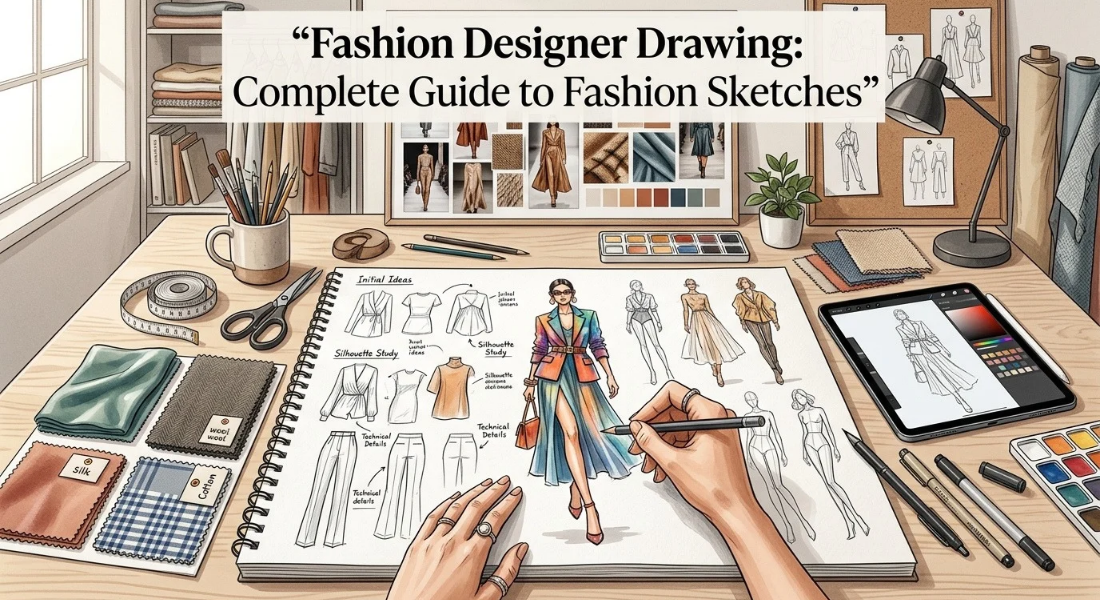
Turning a garment idea into a visual sketch helps transform imagination into a clear design concept. A fashion designer drawing is a visual sketch used to communicate clothing ideas, proportions, silhouettes, details, and overall design direction.
This guide explains drawing types, techniques, tools, and the process of creating effective fashion sketches.
Fashion designer drawings communicate clothing ideas through sketches, proportions, silhouettes, and garment details.
Different drawing types serve different purposes, including concept development, presentation, and production communication.
A fashion croquis provides a foundation for creating balanced clothing sketches.
Traditional and digital tools both support fashion drawing workflows.
Regular practice with proportions, fabrics, and garment structures improves sketch quality.

A fashion designer drawing is a visual representation of a clothing idea created before production. It shows the garment’s shape, proportions, details, and overall design direction.
Unlike a finished garment a sketch allows ideas to be explored and refined by testing silhouettes, colours, textures, and design elements.
This article focuses specifically on fashion designer drawing techniques, types, tools, and sketching methods. This is part of our complete guide on Fashion Designer → see the full guide here.
A fashion drawing communicates key garment features such as shape, proportions, structure, colours, fabric movement, and design details. It helps others understand the intended appearance of a clothing concept before it is physically created.
A fashion sketch focuses on developing a garment idea by showing shape, details, and construction elements. A fashion illustration focuses more on artistic presentation, mood, and visual style while showcasing the overall design concept.
Fashion drawings serve different purposes from exploring early ideas to showing detailed garment information. Rough sketches capture initial concepts by focusing on shape, silhouette, and overall direction.
Flat sketches show garments from front, back, or side views to highlight structure and design details. Technical sketches provide accurate construction information, including seams, closures, and stitching details.
Stylised flat sketches combine garment clarity with creative elements like colour and texture. Fashion illustrations focus on artistic presentation, mood, and the overall aesthetic of a design.
A fashion croquis is a simplified figure template used as a base for creating clothing sketches. It helps maintain consistent proportions and allows designers to focus on how garments fit and appear on the body.
Flat sketches and technical sketches are mainly used for production details. They show garment structure, panels, seams, and construction elements more clearly than expressive illustrations.

Creating a fashion drawing involves building a foundation first and gradually adding garment details. A structured approach helps produce clearer and more realistic design visuals.
Begin by creating a basic figure structure using simple guidelines. Establish the head position, body balance, pose, and overall proportions before adding clothing.
Many fashion sketches use elongated proportions to create a stylised appearance. A strong foundation makes the garment look balanced and easier to develop.
Once the figure is prepared draw the overall shape of the clothing. Focus on the main silhouette, including the length, width, fit, and movement of the garment.
At this stage avoid adding too many small details. The goal is to establish the main design direction and how the clothing sits on the figure.
After the silhouette is clear include specific garment features such as collars, sleeves, seams, buttons, zippers, pockets, and patterns.
These details help communicate the unique characteristics of the design and make the sketch easier to understand.
Fabric affects how a garment moves and appears. Add folds, texture, shading, and surface details to show whether the material looks soft, structured, lightweight, or heavy. Small visual cues can help viewers understand the intended fabric behaviour.
The final stage focuses on improving clarity and presentation. Clean unnecessary lines, adjust proportions, refine colours, and make sure important details remain visible. A polished sketch should communicate the garment idea clearly without becoming difficult to read.
Fashion drawing can be created using traditional materials, digital software, or a combination of both. The choice depends on the purpose of the sketch, personal workflow, and the level of detail required.
Traditional methods remain useful for quickly exploring ideas while digital tools allow easier editing, colour adjustments, and presentation improvements.
Digital platforms such as Adobe creative tools are commonly used for illustration workflows while Autodesk provides design software solutions used across different creative industries.
Traditional fashion drawing usually starts with basic materials that allow quick idea development. Common tools include pencils, paper, rulers, markers, coloured pencils, and watercolours.
Pencils help create initial outlines and shading while markers and coloured pencils add depth and colour direction. Rulers can assist with cleaner lines especially for flat sketches and technical details.
These tools remain valuable because they allow artists to practise proportions, explore ideas, and build confidence through direct sketching.
Digital fashion drawing uses technology to create, edit, and refine sketches more efficiently. Drawing tablets allow artists to create detailed illustrations with pressure sensitive tools.
Software such as Adobe Illustrator and Procreate supports digital sketching, colouring, layering, and design adjustments. CAD based fashion tools can also help create precise digital representations of garments.
Digital workflows are especially useful when designers need to revise concepts or prepare cleaner visual presentations.

Improving fashion drawing skills requires regular practice, observation, and attention to how clothing behaves on the body. Beginners often improve faster when they focus on building strong foundations rather than adding complex details too early.
Practising proportions helps create balanced figures and more believable garment presentations. Studying clothing shapes, folds, and fabric movement helps you understand how different materials influence the appearance of a design.
Creating multiple versions of the same idea can also strengthen creativity. Try changing silhouettes, details, colours, or styling choices to explore different outcomes.
Developing a personal illustration style takes time. Reviewing previous sketches, identifying weak areas, and practising specific techniques can gradually improve accuracy and confidence.
The National Institute of Fashion Technology (NIFT) highlights the role of illustration and design practice within fashion education showing how sketching supports visual communication and creative development.
Beginners often struggle with incorrect proportions which can make garments appear unbalanced. Starting with basic figure guidelines helps avoid this issue.
Another common mistake is focusing on decoration before understanding garment structure. Details should support the design rather than hide weak shapes.
Ignoring fabric movement can also make sketches look unrealistic. Showing folds, texture, and material behaviour helps communicate how the clothing is intended to appear.
Fashion designer drawings help transform clothing ideas into clear visual concepts before a garment is created. Different sketch types serve different communication purposes, from early concepts to detailed garment information.
Learning croquis structure, garment details, and drawing techniques helps create stronger fashion visuals. Consistent practice and careful observation allow sketches to become clearer, more accurate, and more expressive.
It is commonly called a fashion sketch, fashion drawing, or fashion illustration. The term depends on whether the focus is design development or artistic presentation.
Drawing helps communicate clothing ideas through shapes, proportions, and design details making concepts easier to understand.
A fashion croquis is a figure template used to create clothing sketches with balanced proportions and positioning.
Common types include rough sketches, flat sketches, technical sketches, stylised flat sketches, and fashion illustrations.
Fashion drawings can use traditional tools like pencils and markers or digital tools such as tablets, illustration software, and CAD tools.
Beginners should practise proportions, simple figures, garment shapes, and fabric details to gradually improve their sketching skills.





Reader Discussion
Leave a Reply