- by Daily Talkin Staff
- July 8, 2026
-

-
-
Loading
Loading
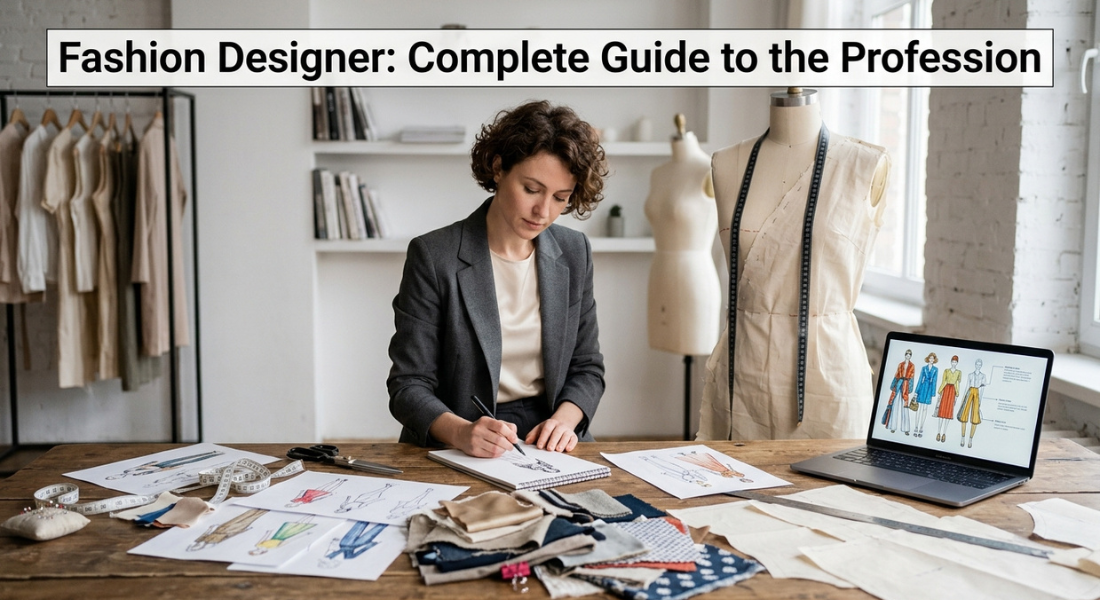
A fashion designer develops the creative and functional concepts behind clothing, footwear and accessories. Their work can span research, sketching, fabric selection, prototyping, fitting and final production.
Fashion design combines creativity with technical knowledge, material understanding, technology and awareness of consumer needs. Designers may specialise in clothing, footwear, accessories or costume, and can work for companies or independently.
This guide explains the profession, design process, required skills, education, career paths, salary, influential designers and the technologies shaping its future.
Fashion designers develop clothing, footwear and accessories from initial concepts through development and production.
The profession combines creative, technical, material and commercial skills.
Designers can specialise in clothing, footwear, accessories, costume, couture, ready to wear or custom design.
Education, practical experience and a strong fashion design portfolio can support entry into the industry.
CAD, 3D tools, sustainability and ecommerce are changing modern fashion design workflows.
Salary and employment conditions vary significantly by country, experience, specialisation and employment model.
A fashion designer creates clothing, footwear or accessories by combining creative ideas with technical design, materials and production knowledge.
The role can involve researching trends, developing collections, creating sketches, selecting fabrics, testing prototypes and working with production teams to bring designs to market.

A fashion designer is a professional who develops the visual, functional and technical concepts for garments, accessories or footwear. Their work transforms ideas about colour, shape, materials and style into products that can be produced and worn.
A designer's role extends beyond drawing. They may research consumers and trends, select fabrics, develop prototypes, review fittings and communicate production requirements. The exact responsibilities depend on the designer's specialisation, employer and position.
Fashion designers can create:
Clothing and complete collections
Footwear and performance shoes
Handbags, hats and other accessories
Ready to wear collections
Haute couture
Custom or one off garments
Some designers focus on a single product category while others develop complete collections containing multiple coordinated pieces.
A fashion designer develops garments, accessories or collections while a fashion stylist selects and coordinates existing pieces to create a particular look.
A textile designer focuses on fabrics, prints and surface patterns whereas a fashion merchandiser concentrates more heavily on product selection, consumer demand and commercial performance.
Fashion designers connect creativity with consumer needs, cultural influences and commercial production. Their decisions can influence silhouettes, materials, colours, construction and the visual identity of a collection.
They also contribute to innovation by responding to changing technology, sustainability concerns and evolving expectations around how clothing is designed and produced.
A fashion designer's responsibilities can extend from initial research to the development and production of finished products. Typical duties include studying trends developing collection concepts, selecting materials, creating designs and reviewing prototypes.
The role varies according to specialisation, employer and seniority. A designer working for a large apparel company may collaborate with a creative director and production team while an independent designer may handle several stages personally.
Designers research fashion trends, cultural influences, consumer preferences and market conditions before developing collections. This research helps identify colours, silhouettes, materials and styles that may appeal to a target audience.
Trend forecasting can also involve studying social behaviour, art, media, retail activity and previous fashion cycles.
Once research is complete designers develop a creative direction. This can include a central theme, inspiration sources, colour palette, silhouettes and a mood board.
For a collection individual garments need to work together visually while still offering variety. Designers therefore consider the overall direction rather than treating every piece as an isolated product.
Material selection affects appearance, comfort, durability, construction and cost. Designers may evaluate fabrics, textiles, embellishments and finishes against the purpose of the product.
Sustainability can also influence these decisions through material sourcing, durability, waste reduction and production methods.
Designers work with patternmakers, tailors and garment technicians to turn concepts into physical samples. Prototypes are fitted, assessed and revised before production.
The process can include quality checks and communication with manufacturers. The U.S. Bureau of Labor Statistics identifies trend research, CAD, fabric selection, prototypes and production oversight among typical fashion designer duties.
Fashion designers can specialise according to product category, customer group or industry. Specialisation affects the materials used, technical requirements, production methods and working environment.
For example a footwear designer must consider fit and movement differently from a couture designer while a costume designer must connect clothing choices with characters, settings and storytelling.
Clothing designers may specialise in:
Womenswear
Menswear
Childrenswear
Sportswear
Eveningwear
Outerwear
Bridalwear
Footwear designers create shoes, boots and performance footwear. Their decisions must balance visual design with comfort, fit, durability, materials and function.
Accessory designers may develop handbags, belts, hats, scarves, eyewear and other products that complement fashion collections.
Costume designers work across film, television and theatre. Their work can require historical research and close attention to character, period, setting and storytelling.
Haute couture focuses on highly specialised often individually constructed garments. Ready to wear collections are produced for broader commercial distribution while custom design creates garments for specific clients or individual requirements.
The fashion design process moves from research and creative development to technical testing and production. Although individual workflows differ successful design connects creative decisions with practical, commercial and manufacturing requirements.
A typical process can involve research, inspiration, concept development, sketching, material selection, pattern development, prototyping, fitting, revision and production. Designers may move back and forth between stages when testing reveals a problem.
Designers can draw inspiration from trends, culture, art, history, travel, architecture and consumer behaviour. Historical fashion collections can also provide valuable references for understanding construction, materials and changing aesthetics.
The Metropolitan Museum of Art's Costume Institute for example maintains a collection spanning seven centuries of fashionable dress and accessories.
Mood boards organise the visual direction of a collection through images, colours, textures, references and silhouettes.
They help designers communicate an idea consistently before individual garments are developed.
Sketches communicate the intended silhouette, proportions, details, colour and overall appearance of a design.
Designers may work with hand sketches, digital illustration or CAD. Fashion illustration can express the creative idea while technical drawings communicate construction details more precisely.
Designers select materials according to appearance, function, cost and construction requirements. Pattern development then translates the design into pieces that can be cut and assembled.
Material testing and construction considerations help identify potential problems before a garment reaches final production.
A first sample or prototype allows designers to assess fit, proportion, movement and construction. Fittings can reveal issues that are difficult to identify in a drawing alone. The design may then be adjusted before quality control and production.
After approval, designs move into manufacturing and collection preparation. Designers may collaborate with manufacturers, retailers, marketers or ecommerce teams during launch.
Successful fashion designers combine creative ability with technical knowledge and commercial awareness. Drawing and visualisation matter but they are only part of the professional skill set.
Designers also need to communicate ideas clearly, understand materials and production constraints, manage deadlines and respond to changing consumer expectations.
Important creative skills include:
Creativity
Drawing
Visualisation
Colour awareness
Understanding shape and proportion
Design thinking
Technical knowledge can include textiles, garment construction, pattern development, sewing principles, CAD and digital design. Understanding how materials behave helps designers create concepts that can actually be constructed and worn.
Designers frequently work with patternmakers, tailors, manufacturers, garment technicians, merchandisers and creative directors. They must explain ideas clearly through presentations, drawings, specifications and direct collaboration.
Commercial designers need to consider consumer demand, production costs, market positioning and deadlines. A visually strong design may still fail commercially if it cannot be produced at the required cost or does not suit its intended customer.
Precision matters in measurements, construction, materials and finishing. Designers also need problem solving skills because prototypes and production samples rarely develop without revisions.
Fashion designer earnings vary by country, experience, specialisation, employer and employment model. Employed, freelance and self employed designers can have substantially different income patterns.
For context the U.S. Bureau of Labor Statistics reports a $80,690 median annual wage for fashion designers in May 2024. This figure applies specifically to the United States and should not be treated as a global salary benchmark.
For a complete breakdown of fashion designer earnings, salary ranges and the factors that affect pay see our full guide on Fashion Designer Salary →
Fashion designers can work for apparel companies, manufacturers, wholesalers, fashion houses, design firms and entertainment companies. Some also operate as freelancers or self employed designers.
Career progression can move from designer or design assistant into senior designer and eventually creative director roles.
BLS data also identifies self employment, apparel manufacturing, wholesale and motion picture/video industries among fashion design employment settings.
For a complete breakdown of fashion designer jobs, workplaces, roles and career opportunities see our full guide on Fashion Designer Jobs →
Common routes into fashion design include university or college study, specialist fashion training, internships and practical industry experience. A portfolio is particularly important because it demonstrates actual design ability.
Requirements vary by country and employer. In the United States BLS reports that fashion designers typically need a bachelor's degree while UK career guidance also highlights portfolios, work experience and relevant education routes.
For a complete step by step guide to entering the profession see our full guide on How to Become a Fashion Designer →
Fashion drawing communicates design ideas visually through hand sketches, digital illustration and CAD based tools. Drawings can show silhouette, proportions, colour, details and construction intent before a garment is produced.
Creative fashion illustration focuses more on presenting an aesthetic idea while technical drawings provide clearer production information.
For a complete guide to fashion designer drawing techniques and examples see our full guide on Fashion Designer Drawing →
There is no universally objective answer to who is the most famous fashion designer. Fame can depend on historical influence, geographic reach, innovation, cultural impact and recognition of a designer's work.
Coco Chanel, Christian Dior, Yves Saint Laurent, Giorgio Armani and Alexander McQueen are among designers with major historical influence. The Met's Costume Institute documents designers and fashion developments across centuries.
For a detailed comparison of influential designers and the question of who is the most famous fashion designer see our full guide on Who Is the Most Famous Fashion Designer? →

Formal education can provide structured knowledge of fashion design, textiles, garment construction and digital tools. Relevant programmes may include fashion design, textiles, fashion merchandising and related disciplines.
Education alone however does not demonstrate everything an employer needs to see. Practical projects, internships and a strong portfolio can show how effectively a designer turns ideas into finished work.
Fashion programmes may cover:
Fashion design and illustration
Textiles and fabrics
Garment construction
CAD
Fashion history
Portfolio development
Industry practice
A portfolio demonstrates creative development and technical ability. It can include sketches, mood boards, technical drawings and completed fashion items.
The UK's National Careers Service specifically recommends portfolios containing mood boards, designs, technical drawings and examples of completed fashion items.
Internships and assistant roles expose aspiring designers to real production schedules, suppliers, fittings and professional collaboration.
They can also help build industry contacts and develop practical knowledge that classroom work alone cannot provide.
Fashion designers work across several professional environments, including fashion companies, design studios, manufacturers and entertainment organisations.
The setting often depends on specialisation, employer and whether the designer is employed or independent.
BLS reports that fashion designers work in wholesale and manufacturing establishments, apparel companies, retailers, theatre or dance companies and design firms.
Large fashion organisations may employ teams of designers working under creative directors. Designers can focus on particular collections, product categories or customer segments.
Manufacturing and wholesale environments connect design decisions with production, distribution and retail requirements.
Retail focused designers may need particularly strong awareness of consumer demand and commercial timing.
Costume designers create clothing for characters and productions. Their work can involve historical research, fittings, collaboration with directors and careful attention to storytelling.
Independent designers may create custom garments develop their own labels or work on contracts for different clients.
Self employed work can offer greater creative control but also requires responsibility for clients, deadlines and business operations.
Schedules can change around collection deadlines, fashion shows, production requirements and client commitments. BLS notes that designers may work long hours when preparing for shows or meeting production deadlines.

Fashion design is increasingly influenced by digital technology, sustainability, changing consumer behaviour and e commerce. These developments are changing how designers research, visualise, test and present products.
Technology is becoming part of the workflow rather than simply replacing traditional design skills. Human judgement remains important when deciding what a collection should communicate how materials should perform and which ideas are commercially appropriate.
CAD allows designers to create and modify digital designs efficiently. Digital workflows can make revisions easier and improve communication between creative and technical teams.
Three dimensional design tools can support virtual garment development and reduce reliance on physical samples during some stages of development.
Sustainability can affect material sourcing, production waste, durability and product lifespan. Contemporary designers also use cultural heritage and traditional craftsmanship as part of sustainable design approaches.
The V&A's documentation of designer Rahemur Rahman for example connects sustainable fashion with traditional techniques, Bangladeshi heritage, natural dyeing and block printing.
Ecommerce allows designerled brands to reach customers without relying entirely on traditional retail distribution.
Social media can also help designers communicate collections, build audiences and receive direct consumer feedback.
AI assisted tools can support ideation, experimentation and workflow tasks but they do not replace the designer's creative direction.
The strongest use of emerging tools is likely to combine faster experimentation with human judgement about aesthetics, function, culture, materials and the intended customer.
A fashion designer combines creative vision with technical, material and commercial knowledge to develop clothing, footwear or accessories. The profession can involve research, concept development, sketching, fabric selection, prototyping, fitting and production.
Designers can specialise across clothing, footwear, accessories and costume with careers ranging from employed roles to freelance and independent work. Education, portfolio development and practical experience can support entry into the field.
Technology, sustainability and changing consumer behaviour are also reshaping fashion design while keeping human creative direction central to the profession.
Creativity, drawing, textiles, CAD, communication and attention to detail are key skills.
Yes depending on the employer and country. A strong portfolio and practical experience can help.
Include sketches, mood boards, technical drawings, design development and finished garments.
Usually not They often collaborate with patternmakers, tailors, manufacturers and creative teams.
They work in apparel, manufacturing, retail, fashion houses, design firms and entertainment.
Yes Independent designers can create labels make custom garments or sell directly to customers.



Reader Discussion
Leave a Reply