- by Daily Talkin Staff
- July 8, 2026
-

-
-
Loading
Loading
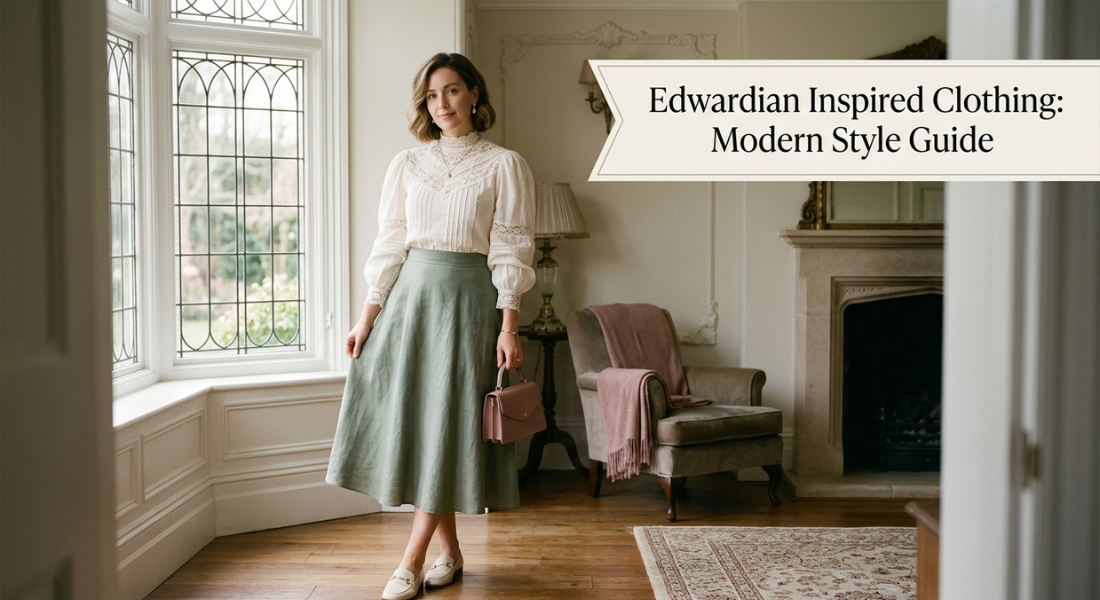
Want the romance of Edwardian style without looking like you are wearing a costume? Edwardian Inspired Clothing combines modern garments with recognisable early 20th century details, such as high necklines, lace and flowing shapes.
Romantic sleeves, delicate fabrics and graceful silhouettes can add an Edwardian feel without making an outfit look historically dressed. This guide shows how to combine these details into wearable outfits today.
Edwardian inspired clothing uses modern garments with selected early 20th century visual references.
High necklines, lace, embroidery, romantic sleeves and flowing proportions are useful style cues.
One dominant Edwardian detail paired with simpler modern pieces can create a wearable outfit.
Contemporary skirts, dresses, blouses, cardigans and jackets can all support the aesthetic.
Accessories should reinforce the clothing rather than make the entire outfit look like historical costume.
The level of Edwardian influence can be adjusted for everyday wear, events, photography or formal occasions.

Edwardian inspired clothing is contemporary dress influenced by visual features associated with early 20th century fashion. Instead of recreating historical garments it adapts selected details through modern cuts, fabrics, proportions and construction.
The result can suggest Edwardian style while remaining practical for contemporary wardrobes and everyday dressing.
Historical reproduction aims to recreate period clothing more closely, including its construction, materials, proportions and distinctive details. Edwardian inspired dressing takes a different approach by selecting individual visual references.
A modern blouse might use a high neckline and lace trim without reproducing historical undergarments or construction. Likewise a contemporary flowing skirt can suggest the aesthetic without forming part of a complete period outfit.
A single detail can suggest the style but several coordinated cues usually make the influence more recognisable. High necklines, romantic sleeves, decorative surfaces, elongated proportions and vintage influenced accessories can work together without making every garment historical.
The visual effect is strongest when the details share a similar mood. A lace trimmed high neck blouse with a flowing skirt feels more intentional than combining unrelated vintage pieces.
Edwardian Fashion provides the broader historical context behind these influences while this article focuses specifically on adapting them for contemporary wardrobes. This is part of our complete Edwardian Fashion guide → see the full guide here.
Modern Edwardian styling depends less on copying a historical silhouette and more on recognising a small group of visual signals. Elevated necklines, romantic sleeves, lace, embroidery, flowing proportions, delicate trims and softly muted colours can create the reference while keeping the clothing contemporary.
A high neckline is one of the easiest ways to introduce an Edwardian reference into a modern outfit. Look for blouses with stand collars, lace edging, ruffles or modest buttoned necklines.
The Metropolitan Museum of Art’s ca. 1910 blouse demonstrates the visual connection between high necklines and lace in early 20th century dress. A contemporary version can borrow that visual language while using modern fabric, shaping and fastening.
Lace and embroidery work particularly well because they add visual interest without requiring an entire outfit to look historical. Modern options include lace panels, embroidered flowers, broderie style details, ribbon trims and small decorative inserts.
Museum collections provide clear historical support for this association. The Met's ca. 1908 dinner dress incorporates antique lace, embroidery and ribbon or beadwork, while the V&A documents embroidery, lace collars and natural motifs in late 19th and early 20th century fashion.
Sleeve shape can carry a strong Edwardian influence even when the rest of an outfit is unmistakably modern. Look for puff, bishop, gathered or softly voluminous sleeves rather than rigid historical constructions.
A full sleeve works particularly well with a relatively simple skirt or pair of trousers. This gives the outfit one obvious romantic feature without making every component decorative.
Modern fitted, gently structured and softly bloused tops can all support the aesthetic. Pairing one with a longer flowing skirt creates an elongated line without attempting to reproduce a historical silhouette.
The aim is visual balance. A softly shaped blouse can provide volume around the upper body while a streamlined or flowing lower half keeps the overall outfit easy to wear.
The easiest way to translate the aesthetic into a current wardrobe is to work with familiar garment categories. High neck blouses, lace trimmed tops, flowing skirts, romantic dresses and understated layers can all carry Edwardian references without requiring authentic period pieces.
A high neck blouse is a useful starting point because the neckline immediately creates a recognisable vintage reference. Choose modern cotton, linen or lightweight fabrics with lace edging, embroidery, gathers, covered buttons or subtle ruffles.
A softly gathered shirt can create a similar impression with less decoration. The key is to select one or two distinctive details rather than searching for a blouse that imitates every historical feature.
Modern midi and maxi skirts can create the longer romantic proportions associated with the aesthetic. Full, softly pleated and flowing styles work particularly well with fitted or high neck tops.
A simpler skirt can also be useful because it gives a highly detailed blouse room to stand out. You do not need a historically shaped skirt; the length, movement and overall proportion can provide enough visual connection.
A modern dress can suggest Edwardian influence through its neckline, sleeves and surface detail rather than its entire construction. Look for high necklines, gently shaped bodices, gathered or full sleeves, lace panels, embroidery and flowing skirts.
The strongest results often come from restraint. A contemporary dress with one or two of these features can feel inspired rather than theatrical, particularly when paired with simple shoes and understated accessories.
Modern layers help balance romantic details. A simple cardigan can soften a lace blouse, while a fitted jacket can give a flowing skirt a cleaner contemporary finish.
These pieces are useful when an outfit contains several delicate textures. The contrast between decorative and straightforward garments helps prevent the overall appearance from becoming too costume like.
Modern cotton, linen, chiffon, silk like fabrics and lace can all support the aesthetic. Soft cream, ivory, dusty pink, muted blue, sage and other restrained shades create a romantic mood without requiring historical fabric choices.
Colour can also control intensity. A neutral outfit with one lace detail feels subtle while several coordinated soft tones can create a more deliberately romantic interpretation.

The easiest approach is to choose one dominant Edwardian reference, combine it with simpler modern pieces, then add one or two supporting details. This keeps the outfit coherent while allowing you to control how strongly the historical influence appears.
Historical examples show why this works visually. FIT's overview of 1900 to 1909 notes the prominence of lace, elaborate embellishment, blousy tops and long skirts during the decade. Modern styling can select these cues without reproducing the complete period wardrobe.
Start with a high neck blouse, a straight or softly flowing modern skirt, simple shoes and understated jewellery. Let the blouse provide most of the historical reference.
Keep the remaining pieces clean in shape and texture. A plain skirt prevents the neckline and lace detail from competing with multiple decorative elements, making the outfit suitable for ordinary daytime wear.
For a stronger interpretation, combine a lace or embroidered blouse with a full length flowing skirt and delicate accessories. Texture becomes the main source of visual interest.
Choose accessories that echo rather than compete with the clothing. A small brooch, fine necklace or restrained hair detail can strengthen the theme without making the outfit look like a complete historical reproduction.
Choose a modern dress with a high neckline, full or gathered sleeves, lace or embroidery and a flowing skirt. These details can provide enough visual character without requiring historically accurate construction.
Keep the finishing pieces restrained. Simple shoes, a small bag and limited jewellery allow the dress to remain the focal point while maintaining a contemporary appearance.
A fitted blouse, structured modern jacket, longer skirt and restrained accessories can translate the aesthetic into a polished daytime outfit. This combination works particularly well when you want romantic details without a highly decorative appearance.
Keep the jacket relatively clean and modern. Its structure creates contrast with the softer blouse giving the outfit a sharper finish while preserving the Edwardian reference.
Lightweight textures, muted colours, floral details, embroidery and flowing proportions can create a softer interpretation. A cotton blouse with subtle embroidery and a flowing skirt can achieve the mood without relying on elaborate accessories.
This approach works especially well when you prefer relaxed clothing. The Edwardian influence comes through the combination of texture, proportion and decoration rather than a strict historical silhouette.
Think of the aesthetic as a flexible spectrum rather than a fixed uniform. A subtle outfit might contain one or two references, such as a high neck blouse and delicate jewellery.
A recognisably inspired outfit can coordinate several cues across clothing and accessories. A highly styled version may use stronger historical references throughout the outfit.
The right level depends on the setting. Everyday dressing may benefit from restraint while photography, themed events, weddings or formal occasions can accommodate more elaborate styling.
Accessories can strengthen the Edwardian reference but they should support the clothing rather than turn the entire outfit into a period costume. Contemporary versions of recognisable accessories are often enough to reinforce the intended mood.
Jewellery, hair details, hats, shoes and bags can also control intensity. Adding one carefully chosen accessory may be more effective than wearing several strongly vintage pieces together.
Delicate necklaces, brooches, cameo inspired pieces, decorative hairpins and ribbons can add a small historical reference without dominating the outfit.
Choose accessories according to the clothing's level of detail. A heavily embroidered blouse may need only one simple piece while a plain high neck dress can accommodate a more noticeable brooch or hair ornament.
A wide brimmed or vintage inspired hat can immediately make an outfit feel more strongly Edwardian influenced. For everyday wear however a simpler hairstyle with one decorative element can be easier to integrate.
A ribbon, understated hairpin or small decorative clip can provide the reference without requiring a complete historical hairstyle. The V&A's collections also show how decorative collars, embroidery and jewellery formed part of the wider visual language of the period.
Modern shoes and bags can either reinforce or neutralise the historical influence. Rounded toes, delicate straps, restrained embellishment and vintage inspired shapes can support the aesthetic.
Alternatively, a very simple contemporary shoe or structured bag can deliberately reduce the historical effect when the clothing already contains several romantic details.
The most reliable way to keep the look contemporary is to balance historical references with modern proportions, construction and simpler wardrobe pieces. Inspiration does not require every element to point towards the same historical period.
Modern styling works particularly well when the Edwardian reference has a clear focal point. Once that focal point is established the surrounding garments can provide contrast rather than additional historical decoration.
Choose one dominant feature, such as a lace blouse, dramatic sleeve or ornate accessory. Let it carry most of the historical character while the remaining pieces stay relatively clean.
For example a high neck lace blouse can work with a plain modern skirt and simple shoes. The outfit still communicates the desired influence but the overall construction remains recognisably contemporary.
An Edwardian inspired blouse does not need an equally historical skirt. Pair it with a contemporary midi skirt, trousers, cardigan or fitted jacket to create deliberate contrast.
This approach makes the source of the inspiration clear without suggesting that you are attempting to recreate a complete period outfit. Modern cuts also make the clothing easier to adapt to different settings.
Combining elaborate lace, oversized headwear, strongly vintage footwear and a highly historical looking silhouette can push an outfit towards costume styling.
That does not mean you must avoid dramatic pieces. Instead consider which detail should lead. If the hat is the statement, the clothing can be simpler; if the dress is elaborate accessories can be quieter.
For work or casual outings reduce the aesthetic to one garment or small detail. A high neck blouse with ordinary trousers, a lace trimmed top with a modern skirt or a vintage inspired brooch can all provide the connection.
This makes the style easier to wear repeatedly. You can change the supporting pieces while keeping the same Edwardian inspired element.
Subtle styling generally fits ordinary daily settings because it relies on familiar modern garments. Stronger references can make sense for photography, themed events, weddings or formal occasions.
The important point is consistency with the setting. An outfit can be highly decorative without needing to reproduce historical clothing literally.

The strongest modern interpretation starts with your existing preferences rather than a fixed costume formula. Colour, comfort, favourite silhouettes and wardrobe staples can determine which Edwardian references feel natural for you.
You can use the aesthetic as a design vocabulary rather than a complete dress code. That makes it easier to build outfits that reflect your own style while retaining recognisable early 20th century influences.
Begin with a blouse, dress, skirt or accessory that already contains the detail you want. A high neckline, lace trim, embroidery or romantic sleeve can provide the starting point.
Build the rest of the outfit around that piece instead of buying an entire themed wardrobe. This also makes it easier to judge how much additional decoration the outfit actually needs.
Modern proportions can remain intact while Edwardian references appear through necklines, sleeves, textures and decorative details.
For example a contemporary straight skirt can work with a romantic blouse while a familiar cardigan can tone down a more elaborate dress. The objective is to adapt the influence to clothing you already understand and wear comfortably.
Cream, ivory, muted pinks, dusty blues and soft greens can create a gentle romantic mood. Deeper neutrals can produce a more restrained interpretation when paired with lace or decorative details.
Colour also helps coordinate separate garments. Keeping the palette controlled can make several Edwardian inspired elements feel connected rather than visually crowded.
Someone who prefers minimal clothing can use a single lace collar, high neckline or decorative accessory. Someone who enjoys maximal styling can combine several compatible references across clothing and accessories.
Neither approach needs to be treated as more authentic. The useful question is whether the finished outfit still feels like something you would naturally choose to wear.
Start with existing blouses, skirts, dresses, cardigans, jewellery and shoes. Identify pieces that already provide a suitable neckline, texture, proportion or decorative detail.
Then add only what fills a genuine gap. This wardrobe first approach keeps the aesthetic personal rather than turning it into a themed collection.
Edwardian inspired clothing works best when it borrows selected visual cues rather than reproducing an entire historical wardrobe.
High necklines, romantic sleeves, lace, flowing proportions and delicate details can provide the connection, while modern garments keep the outfit wearable.
The most flexible approach is to choose a clear Edwardian reference, balance it with contemporary pieces and let your own style determine the final level of influence.
Modern clothing that uses Edwardian details such as high necklines, lace, romantic sleeves and flowing shapes.
Pair one Edwardian inspired piece with simple modern clothing and minimal accessories.
High neck blouses, lace tops, flowing skirts, romantic dresses and embroidered pieces.
Combine one or two Edwardian details with contemporary cuts, simple accessories and balanced proportions.
Cream, ivory, dusty pink, muted blue, soft green and deeper neutral shades work well.
Yes. Add details such as a high neck blouse, lace trim, flowing skirt or brooch to everyday outfits.


Reader Discussion
Leave a Reply