- by Daily Talkin Staff
- July 8, 2026
-

-
-
Loading
Loading
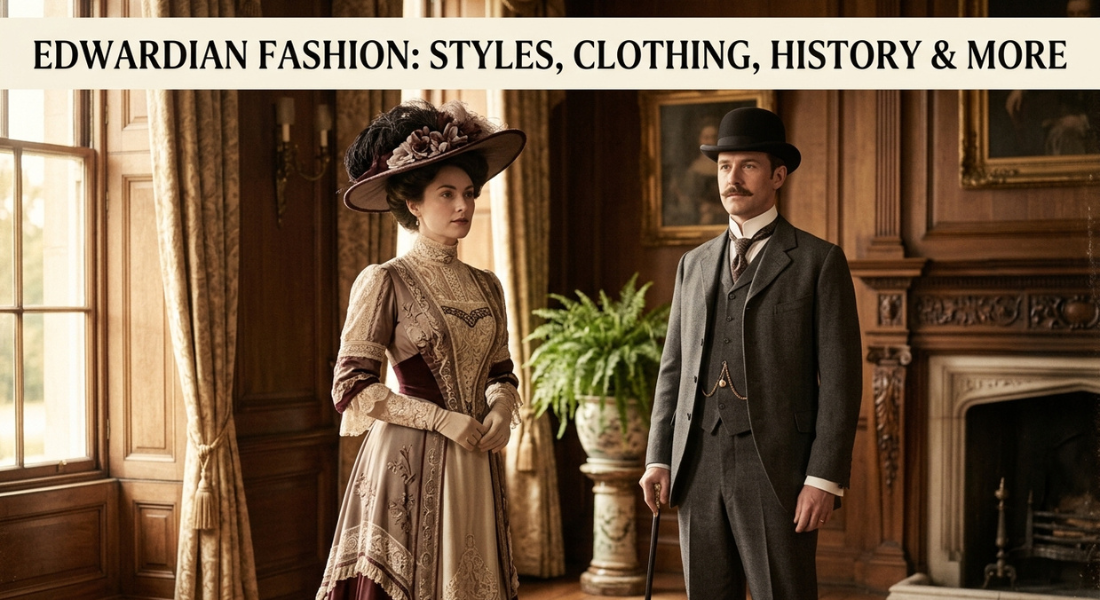
Edwardian fashion was more than corsets, long dresses and oversized hats. It reflected a period when clothing, social expectations and everyday life were changing making its evolution as fascinating as the styles themselves.
Edwardian fashion refers to the clothing, silhouettes and accessories associated with the early 1900s particularly the reign of Edward VII. Its recognisable features include shaped bodices, long skirts, elaborate decoration and the distinctive S bend silhouette.
Edwardian clothing varied by gender, social class, occasion and activity. Women's wardrobes included dresses, blouses, tailored suits and hats while men's fashion centred on suits, waistcoats, shirts and hats as styles gradually became slimmer and more practical.
Edwardian fashion is associated with early 20th century clothing, especially styles around the reign of Edward VII.
Women's fashion was strongly associated with the S bend silhouette, corsetry, long skirts, elaborate decoration and large hats.
Men's fashion centred on suits, waistcoats, shirts, ties and hats, with variations for work, sport and formal occasions.
Social class, occupation and occasion strongly influenced what people wore.
Edwardian fashion evolved from highly shaped early styles towards slimmer and more practical forms before the First World War.
Accessories, hairstyles and foundation garments were essential parts of the overall Edwardian appearance.

Edwardian fashion was the early 20th century style characterised by structured but increasingly fluid clothing, elaborate details and carefully shaped silhouettes.
Women's dress was especially associated with the S bend figure while men's clothing retained formal tailoring through suits, waistcoats and hats.
Edwardian fashion was recognised by a carefully shaped silhouette, fitted or bloused bodices, long skirts and elaborate surface decoration. Women's clothing placed strong emphasis on presentation, with corsetry, petticoats, lace, embroidery and accessories helping create the desired appearance.
The style was not visually static. Fashion in the Edwardian era changed through the early 1900s as silhouettes evolved, practical clothing became more accepted and decorative approaches gradually shifted.
The Victoria and Albert Museum notes that dress reform and less restrictive silhouettes gained importance before the First World War.
The early Edwardian silhouette is strongly associated with the S bend or pigeon breasted figure. The bust projected forward while the hips and back were pushed into a contrasting curve producing a distinctive profile.
The waist remained important but the fashionable line was created through the combined effect of corsetry, bodices, skirts and foundation garments rather than through the outer dress alone.
The straight ront corset helped shape the fashionable Edwardian body. Rather than simply reducing the waist, corsetry influenced the relationship between the bust, waist and hips.
Petticoats and other foundation garments also affected the final outline. Museum research shows that corsetry remained an important part of body shaping during the Victorian and Edwardian period.
Long skirts formed the basis of women's Edwardian dress. Skirt shapes could appear full and structured in the earlier years before gradually becoming narrower and more elongated.
Blousewaists and shirtwaists were especially important for daywear. Pleats, tucks, lace inserts and other decorative construction gave relatively practical garments a fashionable finish.
Edwardian garments used materials such as silk, satin, chiffon, muslin, linen and wool. Lace, embroidery, ribbons and carefully arranged trims added visual richness.
Surviving museum garments demonstrate the variety of fabrics and construction techniques used during the period. The Met for example records an American negligée from 1905 to 10 made from silk and cotton.
Women in the Edwardian era wore dresses, skirts, blouses, tailored clothing and a wide range of accessories. The complete outfit depended heavily on whether a woman was dressing for daytime, work, leisure, travel or a formal social occasion.
Clothing also reflected social position and lifestyle. Wealthier women could maintain extensive wardrobes for different parts of the day while practical and working clothing generally prioritised durability, movement and affordability.
Edwardian dresses commonly combined a fitted or softly bloused bodice with a long skirt. Decorative collars, lace, embroidery, pleats and other details could make ordinary day dresses visually elaborate.
Daywear was not limited to one silhouette. Surviving garments show how proportions and construction changed during the period while individual outfits could reflect personal circumstances and social position.
The blousewaist or shirtwaist was an important component of practical women's clothing. It could be combined with a separate skirt to create a flexible two piece outfit.
Tailored suits offered another practical option. Shaped belts, structured jackets and coordinated skirts allowed women to dress smartly while participating in activities outside formal social settings.
Large hats were a defining feature of fashionable women's appearance. Depending on the occasion, women might also wear gloves, parasols, veils, hatpins and jewellery.
Accessories were not merely decorative. They helped establish the formality and character of an outfit, while hats and veils could also complement the hairstyle and frame the face.
Edwardian hairstyles often created substantial volume around the upper head. The pompadour, coils, buns and braids could be arranged beneath or around fashionable hats.
Decorative combs and other hair accessories contributed to the finished appearance. Hairstyle, headwear and clothing therefore worked together rather than functioning as separate elements.
Men's Edwardian fashion centred on tailored suits, shirts, waistcoats, ties and hats. Compared with women's dress, men's clothing changed more gradually but differences between formal, everyday, sporting, summer and working clothing were still significant.
A man's occupation and social setting affected what he wore. A formal three piece suit served a different purpose from workwear, sports clothing or lightweight summer dress.
Three piece suits consisting of a jacket, waistcoat and trousers were central to men's formal and respectable everyday dress. Sack suits were also widely associated with the period.
Shirts and ties completed the basic outfit while more formal settings called for stricter dress conventions. Men's clothing generally emphasised tailoring, fit and controlled proportions rather than the highly sculpted silhouette seen in women's fashion.
The bowler or derby was an important men's hat particularly for urban and business settings. Boater and Panama style hats provided lighter alternatives for summer and leisure.
Ties, collars and other small accessories helped distinguish formal and everyday combinations. Hat choice could similarly signal setting, season or social activity.
Working men needed clothing suited to occupational demands, including durable garments for factories, manual work and other practical settings.
Sportswear and summer clothing offered greater freedom of movement and lighter materials. Riding, cycling and other activities also encouraged practical adaptations that differed from formal Edwardian dress.

Edwardian fashion developed considerably rather than remaining fixed throughout the period. The highly shaped silhouette associated with the opening years gradually gave way to longer, slimmer and more transitional proportions.
By the years approaching the First World War practicality had become increasingly influential. The V&A describes the broader movement towards more practical women's silhouettes by the outbreak of war in 1914.
Around 1900 to 1903, the S bend and pigeon breasted silhouette were especially prominent. Clothing could feature structured bodices, elaborate decoration and carefully constructed foundation garments.
The resulting appearance was highly controlled with the relationship between corset, bodice and skirt shaping the overall profile.
During the middle years, skirt proportions and sleeve volume changed. Blouses and necklines also developed greater variation while separate skirts and blousewaists provided increasingly practical combinations.
Fashion therefore became less dependent on one exaggerated outline, even though decorative detail and formal dressing remained important.
Later Edwardian styles increasingly favoured slimmer and more elongated proportions. The hobble skirt influence narrowed the lower silhouette and created a striking contrast with some of the fuller earlier shapes.
These changes were part of a wider transition towards the simpler lines associated with the early modern fashion period.
Fashion around 1913 to 1917 was transitional. Proportions changed, practical considerations became more visible and the approach of the First World War affected clothing and daily life.
This period should not be treated as a single uniform style. It represents a movement away from the strongest Edwardian conventions towards newer early 20th century forms.
Aspect | Early Edwardian Fashion | Later Edwardian Fashion |
Silhouette | More pronounced S bend | Increasingly elongated and slimmer |
Skirts | Structured and relatively full | Narrower and transitional |
Decoration | Elaborate | Gradually more restrained |
Practicality | More formal | Increasing practical influence |
Edwardian clothing was strongly influenced by social position, occupation and access to fashionable garments. Wealthier people could afford larger wardrobes, finer materials and clothing designed for specific occasions.
Time of day and activity mattered as well. Work, leisure, sport, travel and formal social events each required different degrees of practicality and decoration.
Upper class wardrobes could include elaborate fabrics, detailed decoration and multiple outfits for different social settings. High fashion and couture influenced the clothing worn by wealthy clients.
The National Trust's surviving Edwardian garments illustrate the relationship between fashion, wealth and social presentation. Its collection includes an Edwardian silk day dress associated with a woman living at Scotney Castle.
Working class clothing generally had to meet practical requirements that elite fashion did not. Durability, affordability and occupational demands influenced fabric, construction and decoration.
This did not mean working people ignored fashion. Popular styles could be adapted into garments that were more economical and suitable for everyday use.
Everyday clothing included practical combinations of blouses, skirts, jackets and sturdy footwear. Workwear had to accommodate specific occupations while leisure activities created their own clothing requirements.
Tennis, cycling, riding and motoring encouraged greater freedom of movement and practical adaptations. These activities contributed to the broader shift towards clothing that could accommodate active lifestyles.
Formal social clothing was more elaborate than ordinary daywear. Evening gowns could feature luxurious materials, intricate decoration and carefully controlled silhouettes.
The Met's collection demonstrates the extensive range of clothing available to women of Edwardian society including specialised garments for different times of day.
For a detailed examination of formal gowns and their development see our complete Edwardian Evening Wear guide →
Edwardian appearance depended on accessories and grooming as much as garments. Hats, hairstyles, gloves, jewellery and other finishing details could transform a relatively simple outfit into a recognisably fashionable ensemble.
Accessories also communicated occasion and social setting. A large picture hat, parasol or elaborate jewellery had a different visual role from practical headwear or everyday accessories.
Large brimmed hats and picture hats were particularly associated with fashionable women's dress. Sailor and boater styles offered another recognisable option while motoring hats and veils provided protection and practical coverage.
Hatpins were important for securing substantial headwear especially when large hats and elaborate hairstyles were combined.
The pompadour created height and volume at the front of the head while buns and coils provided structure behind or around the crown.
Braids, false hairpieces, decorative flowers and combs could increase the scale and ornamentation of the hairstyle. These details helped accommodate the large hats associated with fashionable dress.
Gloves were common accessories for formal and outdoor appearances while parasols combined sun protection with fashionable presentation.
Jewellery added another layer of personal and social expression. The Arts and Crafts movement also influenced early 20th century jewellery, including natural motifs and handmade looking designs.
Children's clothing differed according to age and gender but included recognisable garments such as pinafores, stockings, boots, shorts and jackets.
Babies and younger children often wore practical garments designed for movement and care while older boys and girls increasingly wore clothing reflecting adult conventions without exactly reproducing adult dress.
Edwardian fashion history examines how dress developed within the social and historical conditions of the early 1900s. It considers major chronological changes alongside developments in society, technology, gender roles and the approach of the First World War.
The dedicated history article can therefore examine the period in much greater chronological detail without repeating the broader style overview here.
For a complete breakdown of Edwardian fashion history see our full guide on Edwardian Fashion History →
Edwardian evening wear refers to formal gowns and dresses worn for dinners, balls, receptions and other social occasions. These garments could use luxurious fabrics, elaborate decoration and carefully considered accessories.
Evening clothing formed part of a wider system of occasion based dressing in which formal social events required a more elaborate appearance than ordinary daytime activities.
For a complete breakdown of Edwardian evening wear see our full guide on Edwardian Evening Wear →
Edwardian fashion followed Victorian fashion but introduced different proportions, silhouettes and decorative approaches. The early Edwardian S bend differed from many earlier Victorian shapes while later Edwardian clothing moved towards slimmer and more practical forms.
The transition was gradual rather than an abrupt replacement of one style by another, making the two periods closely connected.
For a complete comparison of the two periods see our full guide on Edwardian vs Victorian Fashion →
Designers, dressmakers and couture houses played an important role in shaping fashionable Edwardian clothing. Their influence could be seen in silhouettes, materials, construction and decorative details adopted by wealthy clients and subsequently wider markets.
Fashion houses therefore helped turn changing ideas about dress into recognisable styles without making the entire period dependent on a single designer.
For a closer look at the designers who shaped the period see our full guide on Edwardian Fashion Designers →
Modern Edwardian fashion refers to contemporary clothing that draws on historical silhouettes, decorative details or accessories associated with the early 1900s.
Designers and costume creators may borrow elements such as high collars, lace, blouses, long skirts or elaborate headwear without reproducing historical clothing exactly.
For a closer look at modern interpretations of the style see our full guide on Modern Edwardian Fashion →

Edwardian inspired clothing adapts historical design features for modern use. Unlike reproduction garments, which attempt to recreate period construction and appearance more closely modern interpretations can selectively borrow details.
Common references include lace, high necked blouses, long skirts, structured bodices and decorative accessories.
For a complete guide to Edwardian inspired clothing see our full guide on Edwardian Inspired Clothing →
Edwardian fashion was a broad early 20th century style shaped by distinctive silhouettes, structured clothing and elaborate finishing details. Women's and men's wardrobes differed substantially, while social class, occupation and occasion affected what people wore.
The period also changed considerably. The early S bend silhouette gradually gave way to slimmer more practical proportions as fashion moved towards the modern era.
Understanding Edwardian fashion therefore requires looking beyond the familiar image of a dress and corset. Its history is also found in men's tailoring, children's clothing, accessories, workwear, sportswear and changing ideas about how clothing should fit everyday life.
Large picture hats and broad brimmed styles were popular with women and were often paired with elaborate hairstyles, veils, flowers and hatpins.
The Edwardian era commonly refers to Edward VII's reign from 1901 to 1910 although fashion from the period is often understood more broadly as early 1900s style.
Women commonly wore corsets, petticoats and other foundation garments to shape the body and support the fashionable silhouette.
Edwardian men commonly wore leather shoes suited to formal, business and everyday settings with styles varying by occasion.
Yes. People wore practical clothing for work, sport, travel and everyday activities although it was generally more structured than modern casualwear.
Changing lifestyles, dress reform and active pursuits encouraged practical clothing and less restrictive silhouettes particularly as the First World War approached.
Yes. Modern fashion continues to reinterpret Edwardian details such as lace, high collars, long skirts, blouses and structured bodices.


Reader Discussion
Leave a Reply