- by Daily Talkin Staff
- July 8, 2026
-

-
-
Loading
Loading
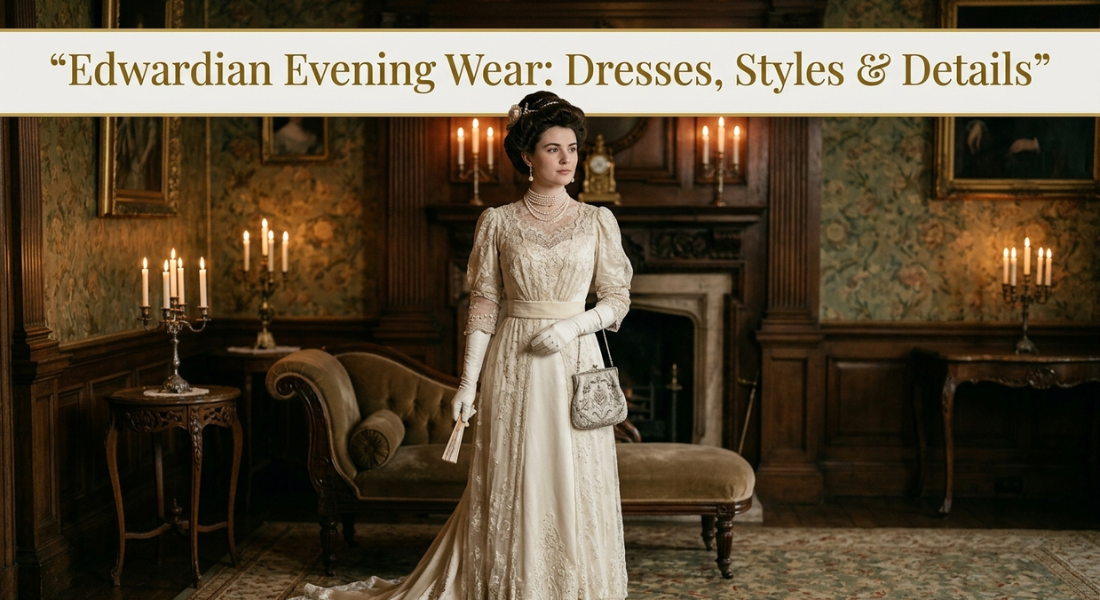
Edwardian evening wear created a noticeably richer appearance after dark. It referred to women’s formal clothing for evening social occasions, especially gowns worn for dinners, dances and receptions.
This article examines gown construction, fabrics, decoration, accessories and how formal dress changed between 1900 and 1914.
Edwardian evening dress centred on long, formal gowns for dinners, dances, receptions and other evening occasions.
Gowns varied in silhouette, but bodice construction, skirt proportion, neckline and decoration were key identifying features.
Silk, satin, chiffon and velvet could create different combinations of sheen, softness, transparency and depth.
Lace, embroidery, beading, ruching, ribbons and applique provided concentrated decorative detail.
Accessories such as gloves, jewellery, small handbags and hair ornaments completed the formal appearance.
From 1900 towards 1914 some evening gowns shifted from strongly shaped forms towards slimmer more elongated proportions.

Edwardian evening wear centred on formal gowns with refined construction, decorative details and coordinated accessories. The gown’s shape, fabric, neckline and ornamentation helped distinguish it from daytime clothing.
Edwardian Fashion provides the wider context for clothing silhouettes and social dress of the period while this article focuses specifically on women’s formal evening clothing. This is part of our complete Edwardian Fashion guide → see the full guide here.
Formal gowns were worn for dinners, dances, receptions and other evening occasions. Their richer materials, decorative finishes and formal construction created a more elaborate appearance than daytime dress.
The gown worked with gloves, jewellery, a small handbag, shoes and hair ornaments to create a coordinated formal appearance. Details were chosen to complement the gown rather than compete with it.
Edwardian evening dresses were long, formal gowns with shaped bodices and full or narrowing skirts. Their proportions changed during the period with later examples often appearing slimmer and more elongated.
The gown was the main element of the outfit, while trains, layered fabrics and decorative details added formality and visual interest.
Floor length skirts were typical of formal evening gowns creating a long vertical line from bodice to hem. Early examples could appear fuller and more elaborately shaped while later gowns moved towards narrower elongated proportions.
The silhouette varied by date and design so several features should be considered when identifying a period gown rather than relying on shape alone.
Bodices could be fitted or softly shaped with decoration often concentrated around the upper body. Skirts ranged from fuller early forms to narrower later styles.
Some highly formal gowns included trains that extended behind the wearer, adding movement and ceremony to the long evening silhouette.
Evening gowns often featured more open necklines and richer decoration than daytime clothing. Lace, embroidery, beads, ribbons and gathered details added texture and emphasis to the formal gown.
Evening necklines could be lower or more open, creating a formal frame around the neck and shoulders. Sleeves varied from short and lightweight styles to layered or decorative treatments.
Neckline design also influenced the placement of jewellery. Simpler necklines could leave room for necklaces while heavily decorated bodices created their own visual focus.
Lace and embroidery added texture while beading, ruching, ribbons and appliqué created decorative accents across bodices, sleeves and skirts.
Layered materials could produce additional depth, with lace overlays and reflective beads catching the light. Museum examples also show combinations such as silk with glass and silver gilt decoration.
Fabric choice shaped how an evening gown looked and moved, particularly under artificial or candlelight. Silk based materials offered sheen and fluidity while lighter fabrics created softer or layered effects.
There was no single Edwardian colour palette. Pale, muted and richer shades all appeared, with texture and fabric choice often contributing as much to the overall effect as colour.
Silk was well suited to formal gowns because of its smooth surface and fluid drape. Satin added sheen, chiffon provided lightness and transparency while velvet created a deeper softer surface.
Different fabrics could also be combined within one gown. The National Trust records an Edwardian evening dress from 1901 to 1910 made from silk and velvet, showing this contrast in surviving clothing.
Evening gowns appeared in both pale and deeper shades so colour alone is not a reliable way to identify a particular period or style.
Texture often added further depth through lace overlays, transparent layers, embroidery and contrasting trims. Later examples could also use reflective materials the Metropolitan Museum records a 1910 to 14 evening dress made with silk and metallic thread.

The gown provided the foundation but accessories helped establish whether the complete appearance looked suitably formal. Gloves, jewellery, handbags, shoes and decorative hair details were selected in relation to the dress rather than treated as unrelated additions.
Their importance was partly visual and partly practical. Small accessories could repeat colours or materials from the gown while gloves and jewellery helped frame the hands, neckline and upper body.
Formal gloves could extend the visual line of the arms and reinforce the refined character of an evening outfit. Their length and material varied, so they should be considered alongside the neckline and sleeve treatment of the gown.
Jewellery provided another concentrated area of ornament. Necklaces, brooches and other pieces could complement decoration already present on the bodice without necessarily matching every detail.
Small evening handbags were also more suitable than large practical bags. Their purpose was primarily to carry essentials while maintaining the compact formal appearance expected with an elaborate gown.
Shoes were generally coordinated with the formal dress rather than selected solely for practicality. Their visibility depended on the length and fullness of the skirt, but colour, material and decoration could still contribute to the overall outfit.
Decorative hair ornaments could provide a finishing point above the neckline. Combs, pins and other ornamental pieces helped connect the arrangement of the hair with the gown and jewellery.
Edwardian hairstyles matter here only because they created the setting for these ornaments. The focus remains the evening outfit as a whole not hairstyling as a separate subject.
Formal gowns changed noticeably during the fourteen year period covered here. Early examples tended towards more elaborate shaping and decoration while later designs could appear slimmer, softer and more elongated.
The change was not abrupt or identical across every garment. Designers and dressmakers used overlapping forms meaning that a surviving gown should be dated through several characteristics rather than one fashionable feature.
Early Edwardian gowns could have strongly shaped bodices, elaborate ornament and substantial skirts. Decoration often concentrated attention around the upper body while the long skirt established the formal character of the garment.
The surviving record confirms that formal evening dress was already diverse at the beginning of the period. The Met, for example, records a French evening dress dated 1900–1901 made from silk and cotton.
These garments should not be reduced to a single silhouette. Construction varied according to designer, wearer, occasion and material even within the same broad period.
By the early 1910s some evening gowns moved towards slimmer and more elongated forms. Raised waistlines, softer draping and more cylindrical proportions appeared alongside continued use of elaborate surface decoration.
The Fashion History Timeline documents a Callot Soeurs evening dress dated 1910–14 with a raised waistline, deep neckline and narrow cylindrical form. Its discussion also links the garment to changing decorative influences of the period.
Fashion of 1912 is therefore useful as a reference point because evening clothing was becoming visibly different from the more heavily shaped gowns associated with the opening years. Fashion Trends in 1910 similarly show a period of experimentation rather than one fixed style.
The clearest difference was the level of formality. Evening gowns were designed for social occasions where greater attention could be given to length, neckline, fabric, decoration and coordinated accessories.
Daywear generally had to accommodate practical movement and daytime activities. Evening clothing could instead prioritise visual effect, richer materials and ornamental construction although individual garments varied considerably.
An evening gown was typically more elaborate in finish and proportion. Floor length skirts, open necklines, decorative bodices and richer fabrics helped distinguish formal dress from clothing intended for ordinary daytime use.
Decoration could also be more concentrated. Beading, lace, metallic details, embroidery or layered materials created effects that were particularly effective under evening lighting.
Accessories reinforced the distinction. Formal gloves, jewellery and small handbags completed the appearance whereas daytime clothing generally required a different balance between decoration and practical use.
Occasion based dressing meant that the same woman could require substantially different clothing for different parts of the day. Evening dress communicated that the wearer was attending a formal social event and had dressed accordingly.
This distinction explains why a long decorated gown cannot simply be treated as a more elaborate version of ordinary clothing. Its construction and styling responded to a specific social setting.
Surviving gowns provide stronger evidence than modern reproductions or costume imagery because their construction, materials and decorative details can be examined directly. Museum records can also provide dates, provenance, materials and measurements.
These records reveal considerable variation within the period. They show why identifying an evening gown should involve several characteristics rather than relying on a single silhouette or colour.
Museum collections preserve individual garments that can be dated to specific years or ranges. The Met, for example records evening dresses from 1900 to 1901, 1907, 1910 to 14 and around 1914 demonstrating how the surviving evidence spans different stages of the period.
The National Trust also records a lady's Edwardian evening dress dated 1901 to 1910 at 1,580 mm in length, made from silk and velvet. That measurement gives useful physical evidence alongside the garment's material description.
Collection records therefore help separate documented features from assumptions based on modern costume.
A historically plausible example should make sense as a combination of features. Look at the gown's length, bodice construction, neckline, fabric, decorative treatment and accessories together.
A single feature is rarely enough. A long silk dress does not automatically make an Edwardian evening gown just as lace alone cannot establish a precise date.
Museum images and collection descriptions are particularly useful because they let you compare construction and materials against documented garments rather than relying solely on modern interpretations.
An Edwardian tea gown should not automatically be classified as formal evening dress. Tea gowns belonged to a different area of domestic and informal dressing, whereas evening gowns were designed for more formal social occasions.
This distinction matters because historical clothing terms can overlap in casual modern descriptions. A garment may look elaborate without fulfilling the same social and dress function as a formal evening gown.
Tea gowns were associated with relaxed settings and could use attractive fabrics, flowing shapes and decorative details. Those qualities can make them visually similar to other elaborate garments.
Formal evening gowns however were specifically associated with evening social dressing. Their construction, neckline, length and coordinated accessories were considered as part of a more formal appearance.
Keeping these categories separate prevents a broad “Edwardian dress” label from absorbing garments that served different purposes.
For historical identification, the occasion, construction and documented description of a garment are more useful than appearance alone. A decorative gown is not necessarily an evening gown.

Recognition works best through a combination of period clues. Look for a long formal gown, appropriate construction, an evening neckline, decorative treatment and accessories that make sense together.
The date should then be considered. A gown from around 1900 may look substantially different from one dated 1912 or 1914 even though both belong within the Edwardian period.
Start with the whole garment rather than one detail. Examine the relationship between bodice and skirt, the length of the gown, the shape of the waist and whether a train or other formal feature is present.
Then examine the neckline and sleeves. Open evening necklines, decorative bodices and lighter sleeve treatments can help establish the garment's formal character. The strongest identification comes from several consistent features appearing together.
Silk, satin, chiffon and velvet can all support an evening interpretation particularly when combined with lace, embroidery, beads, metallic elements or other decorative treatments.
However material alone is not enough to date or classify a garment. The Met's surviving examples show different combinations of silk, cotton, glass, metallic thread and other materials across the period.
Modern costume imagery can exaggerate familiar Edwardian features so documented museum examples provide a better reference point.
Edwardian evening wear was defined by the complete formal appearance rather than by one fixed silhouette. Long gowns, carefully shaped bodices, distinctive necklines, decorative fabrics and coordinated accessories created the evening look, while surviving garments show considerable variation.
The most useful distinction is chronological: formal dress changed from the richly shaped styles of the early 1900s towards slimmer more elongated forms approaching 1914.
Edwardian evening wear was women’s formal clothing for evening occasions centred on long gowns with decorative details and coordinated accessories.
Women wore formal gowns for dinners, dances and receptions, often paired with gloves, jewellery, small handbags and suitable shoes.
Common fabrics included silk, satin, chiffon and velvet, often combined with lace, embroidery, beading or other decoration.
Yes evening gowns could have lower or more open necklines than daytime dresses, although styles varied by period and garment.
Earlier gowns were often more strongly shaped and ornate while later styles became slimmer, longer and softer in proportion.
Common accessories included formal gloves, jewellery, small evening handbags, coordinated shoes and decorative hair ornaments.


Reader Discussion
Leave a Reply