- by Daily Talkin Staff
- July 8, 2026
-

-
-
Loading
Loading
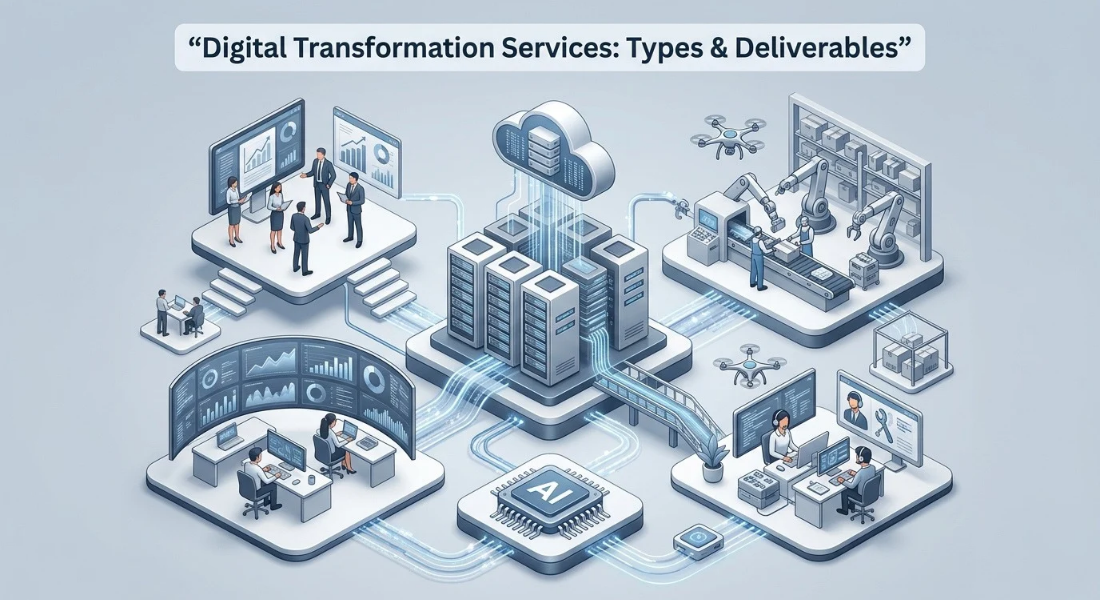
A business may know it needs modernisation but not which support it needs. Digital transformation services provide professional help across consulting, modernisation, cloud, data, automation, integration and ongoing support.
This article explains the main service types, provider deliverables, engagement models and factors to assess before choosing a service.
Digital transformation services cover professional support for specific modernisation and digital capability needs.
Common categories include consulting, modernisation, cloud, data, automation, AI enablement, integration and managed support.
Provider deliverables can include assessments, designs, implementation, integrations, testing, documentation and ongoing support.
Engagements may be advisory, project based or recurring.
Smaller businesses can use targeted services, while enterprises may require broader multi-system support.
Service selection should focus on actual requirements, provider capabilities, deliverables, ownership and post implementation support.

Digital transformation services are professional services that help organisations plan, modernise, integrate, implement and support digital capabilities. They are delivered by external providers or specialist internal teams for specific business and technology requirements.
Unlike the broader concept of digital transformation the term focuses on the work performed by service teams.
That work can range from assessing legacy environments and preparing migration plans to implementing integrations, configuring platforms, automating workflows and providing post launch support.
Digital Transformation is the broader discipline covering organisational change enabled by digital capabilities while these services describe the professional support used to enable specific transformation needs. This is part of our complete guide on Digital Transformation → see the full guide here.
The scope varies by provider but services commonly cover consulting, infrastructure and application modernisation, cloud work, data transformation, automation, AI enablement, systems integration, security related support, adoption assistance and managed services.
The exact combination depends on the organisation's requirements. A company replacing a legacy application may need migration and integration expertise while another may primarily need data, automation or ongoing platform support.
A provider should produce defined outputs rather than only recommendations or broad promises. Depending on the engagement deliverables can include:
Assessments, requirements and recommendations
Architecture or migration plans
Platform configuration and implementation
Application and system integrations
Data solutions and reporting environments
Automation workflows
Testing and deployment support
Technical documentation
Training or adoption support
Monitoring and managed support
The specific deliverables should be agreed before work begins so responsibilities, ownership and acceptance criteria are clear.
Digital transformation services are professional consulting, implementation and ongoing support that help organisations modernise systems, processes, data and digital capabilities.
Providers package services differently but most offerings fall into practical categories based on the capability being addressed.
The distinction matters because a business needing application modernisation requires a different service scope from one needing data integration or managed support.
Consulting services typically begin with discovery and assessment rather than implementation. A provider may review existing systems, identify requirements, assess capability gaps and recommend suitable services or technical approaches.
Typical outputs can include assessment findings, requirements documentation, architecture input and prioritised recommendations. The engagement can remain focused on specialist advice without extending into a full transformation strategy or roadmap.
These services address older infrastructure and applications that require migration, restructuring or technical improvement. Provider work can include reviewing legacy environments, identifying dependencies, preparing migration plans and selecting suitable modernisation approaches.
For applications, the work may involve replatforming, refactoring or rebuilding components where appropriate. Microsoft describes modernisation work as covering applications, infrastructure and data with assessment helping organisations identify suitable modernisation opportunities.
Cloud focused services can include workload assessment, migration preparation, cloud architecture support, workload optimisation and operational assistance.
The provider may assess existing workloads, identify dependencies, prepare target environments and support migration activities.
NIST's cloud definition identifies three service models SaaS, PaaS and IaaS which provides a useful terminology baseline when discussing cloud service scope.
Data services can cover integration between systems, data platform modernisation, data quality work, analytics implementation and reporting environments. The emphasis is on making data usable across the systems and processes that depend on it.
Data transformation services can therefore be treated as a distinct service area rather than simply another name for analytics. Depending on scope a provider may deliver data pipelines, platform configuration, integration work, reporting environments or data quality improvements.
Some services concentrate on connecting existing systems and reducing manual work rather than replacing an organisation's entire technology environment. They are particularly relevant when disconnected applications, repetitive processes or fragmented data flows create operational friction.
Automation services can cover workflow design, robotic process automation (RPA), AI integration and implementation support. A provider may identify suitable processes, configure automation workflows, integrate an AI capability and support testing before deployment.
The service focus is the practical application and operation of the capability, not an explanation of AI itself. Deliverables may include configured workflows, integrations, testing results, deployment support and documentation for internal teams.
Systems integration services connect applications, platforms, APIs and data flows so information can move between systems reliably. Providers may begin by assessing existing interfaces and dependencies before developing or configuring the required connections.
Typical work includes interface development, API integration, data mapping, testing and deployment. This service is particularly useful where an organisation has several applications that need to exchange information without replacing every system involved.
Digital innovation consulting provides specialist support for identifying and developing new digital capabilities, products or customer facing solutions.
The provider may help evaluate an idea, define requirements, assess technical feasibility or support development. The scope should remain tied to a specific innovation requirement rather than becoming a broad discussion of digital innovation.
Transformation work does not always end when a system goes live. Some providers continue supporting the resulting environment through monitoring, maintenance, optimisation and specialist assistance.
Managed services can provide continuing technical support after implementation. Depending on the agreement, this may include monitoring, maintenance, optimisation, managed cloud or platform services and specialist troubleshooting.
The distinction from general managed IT services is the connection to the transformed systems, platforms or capabilities being supported. Service levels, response times, responsibilities and escalation arrangements should be defined in the agreement.
From a provider perspective end to end services span multiple service stages or capabilities. A single provider or coordinated team may support discovery, design, implementation, integration and post launch support.
This model can reduce the number of separate service relationships but the scope still needs to be defined clearly. “End to end” describes how much of the service lifecycle a provider covers; it does not describe a particular transformation methodology.
End to end digital transformation services are provider support spanning multiple service stages or capabilities, potentially from assessment and design through implementation and ongoing support.

Businesses commonly engage providers through advisory work, defined implementation projects or recurring support arrangements. The right model depends on whether the organisation needs specialist expertise, execution capacity or continuing operational assistance.
An advisory engagement suits organisations that primarily need specialist assessment, recommendations, architecture input or expertise before committing to implementation.
The provider may work for a defined period and produce documented findings, requirements, designs or recommendations. Internal teams can then use those outputs to make subsequent decisions.
Project based services are used when an organisation has a defined requirement such as migration, application modernisation, integration, automation or platform implementation.
The agreement normally establishes scope, milestones, responsibilities, deliverables and acceptance criteria. Microsoft, for example, describes migration services that support assessment, planning and execution across infrastructure, databases, web applications and data.
Recurring arrangements continue after implementation and can cover monitoring, maintenance, optimisation and specialist assistance. This model is useful when internal teams need continuing external capability rather than a one time project.
The service agreement should specify what is supported, how incidents are handled and which activities remain the organisation's responsibility.
Service requirements depend more on legacy complexity, internal capability and the specific problem being addressed than on company size alone. A smaller organisation may need one specialist service while an enterprise may require coordinated support across several environments.
Smaller organisations may use targeted services instead of large multi service programmes. Common examples include cloud migration, workflow automation, systems integration, specialist consulting or outsourced technical support.
The scope can be limited to one business problem allowing the organisation to obtain expertise that may not exist internally without establishing a large permanent technology team.
Enterprise digital transformation services often involve larger and more complex provider scopes. These may include legacy application modernisation, integration across multiple systems, large data environments, cloud programmes and managed support.
Enterprise architecture expertise can also become important where multiple applications, platforms, business units and technical dependencies must work together.
Traditional IT outsourcing generally transfers or supports defined IT functions while digital transformation services are typically engaged to modernise, redesign or introduce capabilities that change how technology enabled work is delivered.
These services are usually tied to a defined modernisation or capability requirement. They can include application changes, cloud migration, systems integration, automation, data work and implementation of new digital capabilities.
The engagement may be project based, advisory or ongoing, depending on the provider's role and the organisation's requirements.
Traditional IT outsourcing commonly focuses on operational functions such as infrastructure management, help desk services, maintenance or other outsourced IT activities.
The distinction is not absolute. A provider can offer both operational outsourcing and transformation services, so the contract scope and intended outcome matter more than the provider's label.

Evaluation should start with the actual capability you need, then move to provider expertise, deliverables, integration requirements and ongoing support. A clearly defined service is easier to compare than a broad package with unclear responsibilities.
First identify whether the requirement is consulting, modernisation, cloud, data, automation, integration, implementation or managed support.
Avoid buying a wider package simply because it includes more services. The useful question is whether the provider's scope directly addresses the systems, processes or capability that requires specialist support.
Assess the provider's relevant technical expertise, industry experience and implementation capability. Look for documented deliverables rather than relying only on general service descriptions.
Integration experience, security practices, architecture capability and evidence of comparable work can also help establish whether the provider can handle the technical requirements involved.
Before engagement, define project boundaries, responsibilities, documentation requirements, data and system ownership, service levels and post implementation support.
A provider should make clear what its team will deliver, what remains with the client and what happens when the initial project ends. This prevents ongoing responsibilities from becoming unclear after deployment.
Digital transformation services span advisory work, modernisation, cloud, data, automation, integration, innovation and managed support. The practical choice depends on the specific capability or problem requiring specialist help.
Clear deliverables, defined responsibilities and appropriate provider expertise make it easier to select a service that fits the organisation rather than an unnecessarily broad package.
No Small businesses can use targeted services such as cloud support, automation, integration or consulting.
Packages may include consulting, modernisation, cloud, data, integration, automation, implementation and ongoing support.
It provides transformation capabilities through an ongoing or packaged external service rather than one standalone project.
Yes Businesses can outsource selected activities while keeping internal control of key decisions and requirements.
Timing depends on the service scope, systems involved, integrations and whether support is project based or ongoing.
Providers should deliver agreed outputs such as recommendations, implementation work, integrations, documentation and support.


Reader Discussion
Leave a Reply