- by Daily Talkin Staff
- July 8, 2026
-

-
-
Loading
Loading
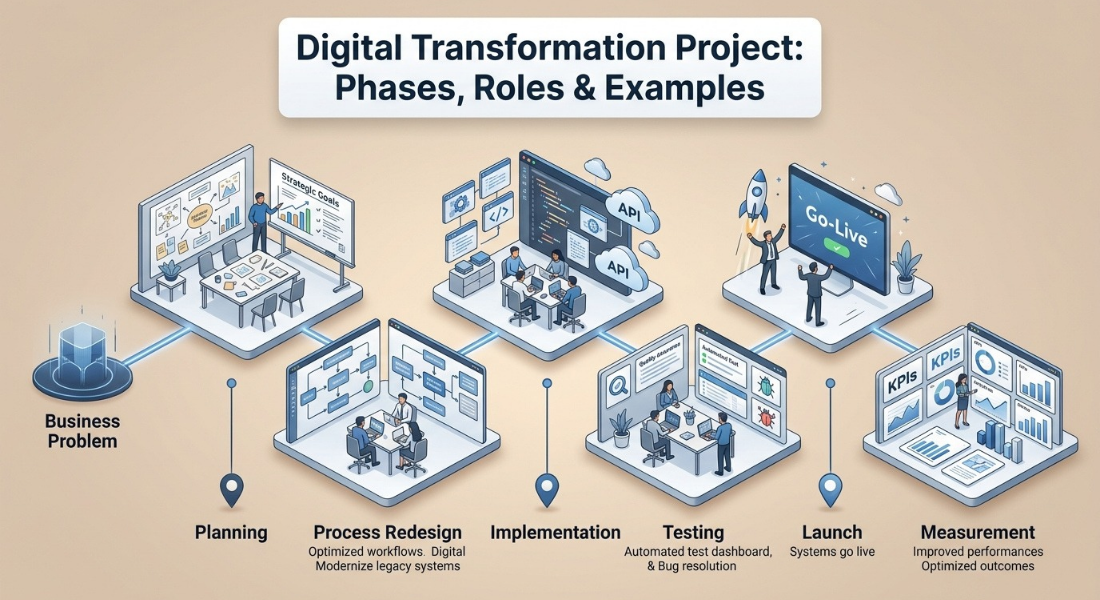
A digital transformation project can fail before implementation starts if the technology is clear but the project outcome is not. A digital transformation project is a bounded initiative that combines digital capability and process change to produce a measurable result.
This guide explains its structure, phases, roles, deliverables, timelines, practical examples and project success measures.
A digital transformation project is a bounded initiative with a defined problem, outcome, scope and completion criteria.
Core project components include objectives, scope, deliverables, dependencies, constraints and acceptance criteria.
Delivery commonly moves from definition through design, implementation, testing, launch, handover and measurement.
Project timelines depend on scope, integration, data, testing, dependencies and organisational readiness.
Project level measurement should connect directly to the defined outcome rather than broad transformation metrics.
Real projects can modernise processes, infrastructure or customer experiences while combining digital capability with operational change.

A digital transformation project is a time bounded initiative built around a defined business problem, intended outcome, scope, deliverables, participants and measurable completion criteria.
Unlike an organisation wide programme, it focuses on delivering one defined change that can be planned, implemented, tested and evaluated. The project may involve technology, but technology alone does not define it.
The defining feature is the combination of a digital capability with a meaningful change to a process, workflow, service, user experience or operational capability.
A clear project definition also gives the team a basis for making decisions when requirements, timelines or technical constraints change. PMI links effective scope definition with project objectives, deliverables and justification.
A standard IT project may upgrade infrastructure, deploy software or replace a system. A transformation project goes further by changing how work is performed or how a capability operates.
For example installing a new application is primarily technology delivery. Redesigning the workflow around that application, changing responsibilities and measuring the resulting improvement makes the initiative transformation focused.
A well defined project combines business requirements with delivery controls. Its core anatomy normally includes the intended objective, boundaries, requirements, deliverables, resources, dependencies, milestones, acceptance criteria and measures.
These elements should connect logically. The objective explains what must change the scope defines where the change applies, deliverables show what the team must produce, and acceptance criteria establish when those outputs are complete.
The relationship matters because a project can technically deliver its planned system while failing to produce the intended operational result. Clear project documentation keeps the team focused on the defined outcome rather than adding unrelated work.
The objective should describe the intended change in observable terms. Instead of saying “improve the process” a stronger objective might specify reducing manual processing time or increasing successful digital transactions by a defined amount.
Success criteria then provide evidence that the objective has been met. PMI notes that useful project objectives should contain an attribute, yardstick and measure rather than relying on vague statements.
Project scope establishes what the initiative will change and what it will leave untouched. It can define affected processes, systems, teams, locations, user groups and specific exclusions. Explicit boundaries are particularly useful when new requests appear during delivery.
A request may be valuable but still fall outside the approved project. PMI identifies scope definition as an important control against uncontrolled project expansion.
Deliverables are tangible or verifiable outputs that demonstrate what the project has produced. Depending on the initiative, these could include a configured capability, integrated workflow, migrated data set, tested system, training materials or operational handover.
Each major deliverable should have acceptance criteria. These criteria tell the responsible stakeholders what must be completed, tested or approved before the output is considered finished.
Dependencies are conditions or activities outside a deliverable that can affect its completion. Examples include legacy integrations, data availability, vendor work, security approval or staff availability.
Constraints may include budget, procurement rules, regulatory requirements or fixed deployment windows. Assumptions should also be recorded because an incorrect assumption can later become a delivery problem.
The project sits within the broader field of Digital Transformation, where organisations connect digital capabilities with business and organisational change.
For the wider strategic organisational context, please see our complete Digital Transformation guide → see the full guide here today.
A transformation project normally requires people from several functions because the change affects both digital capability and the way work is performed.
Project level accountability should therefore connect business ownership, delivery management, technical expertise and affected users.
The exact structure varies with project size but responsibilities should be clear from the beginning. Each important decision, approval, deliverable and operational handover should have an identified owner.
The project sponsor provides senior accountability and supports major decisions. The project manager coordinates delivery while the business or process owner represents the operational outcome.
Technical or architecture leads guide the solution, supported by delivery, data and security specialists. Representatives of affected users provide practical input about how the changed process will work in real conditions.
Decision makers approve scope, priorities and significant changes. Contributors provide requirements, process knowledge or technical input while approvers validate specific outputs.
End users are particularly important during requirements, testing and acceptance. Their involvement can expose workflow problems that technical testing alone may miss.

An individual project usually moves through a controlled sequence from definition to operational use. The exact activities vary but the core flow is to establish the problem, design the response, implement the change, validate it and transfer responsibility into normal operations.
This project lifecycle should remain distinct from a broad transformation approach. It describes what happens to one approved project and what evidence is needed to move from one delivery stage to the next.
Start by documenting the problem, intended outcome, scope, stakeholders, constraints and initial success measures. This creates a shared reference point before detailed solution work begins.
The project should also identify major exclusions so the team understands what it is not expected to deliver.
Translate requirements into a practical solution and identify which processes, systems and teams will be affected. At this point, dependencies should become clearer.
The team can then define the work needed before implementation, including design decisions, data preparation, integration activities, approvals and other prerequisites.
The delivery team configures or develops the required capability and completes applicable integration, migration or process changes.
Implementation should follow the approved scope rather than becoming an open ended technology exercise. Where several components interact, integration testing and dependency management become especially important.
Testing should cover both technical behaviour and the affected business process. Functional testing can identify system defects while process validation checks whether the new workflow works as intended.
User acceptance, readiness checks and targeted training help confirm that people can operate the changed process before wider operational use.
Go live introduces the completed capability into operational use. The team should confirm completion criteria, transfer ownership and monitor early performance against the project's defined measures.
Formal closure should record outstanding issues, accepted deliverables and lessons relevant to the completed project.
There is no universal duration for a digital transformation project. A focused workflow change may require substantially less time than an initiative involving multiple systems, complex data migration, regulatory requirements or several business functions.
The timeline should therefore reflect the actual work and dependencies rather than an arbitrary number of weeks. A project involving legacy integration and user acceptance may need considerably more preparation than a contained process change.
Scope is one of the strongest timing factors, followed by the number of systems, integration complexity and data quality. Testing requirements, dependencies, procurement, organisational readiness and regulatory constraints can also extend delivery.
External vendors and internal resource availability may affect sequencing as well. A dependency that cannot start until another team finishes its work can become a critical path item.
A useful timeline shows phases, milestones, dependencies, decision points, testing windows, deployment dates and handover activities.
It should make sequencing visible rather than simply stating a start and finish date. This helps stakeholders understand when decisions or approvals are needed and where delays could affect later activities.
Project level risks usually arise when the defined work cannot proceed as planned. Common causes include unclear scope, changing requirements, legacy dependencies, data problems, integration failures, vendor delays and limited user participation.
The aim is not to eliminate every uncertainty. It is to identify important delivery conditions early, assign ownership and create controls that reduce the likelihood or impact of disruption.
Unclear scope can create rework while changing requirements can disrupt planned delivery. Legacy system dependencies, poor data and integration failures can prevent otherwise completed components from working together.
Security approvals, vendor dependencies, insufficient user participation and unrealistic schedules can also affect implementation.
Large technology projects may face several of these conditions simultaneously McKinsey's documented MAPFRE case highlights data issues, scope control, integration and user readiness as project considerations.
Define acceptance criteria early and maintain clear scope boundaries. Identify dependencies before implementation, assign owners to important risks and involve affected users during requirements and testing.
Incremental testing can expose defects earlier than a single final test. Clear decision rights also prevent unresolved issues from remaining with the delivery team until they become schedule problems.
Real projects show how the same project structure can apply to very different business problems. The useful comparison is not the technology itself but the relationship between the problem, intervention, affected users or processes and documented outcome.
IBM documents several examples that illustrate this structure. Frito Lay modernised tools around retailer and frontline workflows, Water Corporation migrated critical SAP infrastructure, and other projects focused on customer service and digital channel changes.
Frito Lay worked with IBM and Salesforce to create modernised tools for retailers and frontline employees. The project addressed ordering and logistics workflows rather than simply adding another application.
The example demonstrates how user research, new digital capability and redesigned processes can form one project intervention.
Water Corporation moved critical SAP systems from ageing on premises infrastructure towards AWS supported cloud infrastructure. The project involved extensive data and integration dependencies.
IBM reports approximately 1,500 hours of manual infrastructure support labour saved annually and roughly 150 metric tons of annual carbon emissions reduction.
State Bank of India worked with IBM to develop YONO a mobile financial marketplace intended to bring multiple customer needs into one digital channel.
The project combined customer experience design, technical development, security work and cross disciplinary collaboration rather than treating the mobile application as an isolated technology output.

Completion should first be assessed against the project's predefined objectives and acceptance criteria. After delivery operational measures can show whether the new capability produced the intended change in actual use.
This creates two related measurement points: whether the project delivered what it promised, and whether that delivered capability performs as intended. Keeping those measures connected to the original objective prevents irrelevant KPI collection.
Choose measures directly connected to the project's objective. Depending on the initiative, these may include process cycle time, adoption, transaction completion, error rates, productivity, service response time, customer experience or cost change.
For example a workflow project may measure processing time and errors while a customer service project may examine response time and successful digital completion. The metric should demonstrate the specific change the project was designed to create.
A digital transformation project is defined by its boundaries, intended outcome, deliverables and measurable completion criteria, not by technology alone.
A clear lifecycle connects definition, design, implementation, testing and handover while defined roles and dependencies keep delivery controlled.
When each project has a specific purpose and evidence of completion a larger transformation initiative becomes easier to manage without losing focus.
A defined initiative that combines digital capability and process change to solve a specific business problem or create a measurable capability within agreed project boundaries.
Typical phases include project definition, assessment and design, implementation, testing and user preparation, followed by launch, handover and measurement.
A project manager typically coordinates delivery, while sponsors, business owners, technical specialists, users and other stakeholders contribute decisions, requirements and approvals.
Deliverables vary by project but may include a configured solution, integrated workflow, migrated data, tested capability, documentation, training materials or operational handover.
Duration depends on scope, integration, data, dependencies, testing, organisational readiness and other project constraints. Focused projects can differ substantially from multi system initiatives.
Measure the predefined project objectives and acceptance criteria, then track relevant outcomes such as adoption, cycle time, errors, productivity, service performance or cost.


Reader Discussion
Leave a Reply