- by Daily Talkin Staff
- July 8, 2026
-

-
-
Loading
Loading
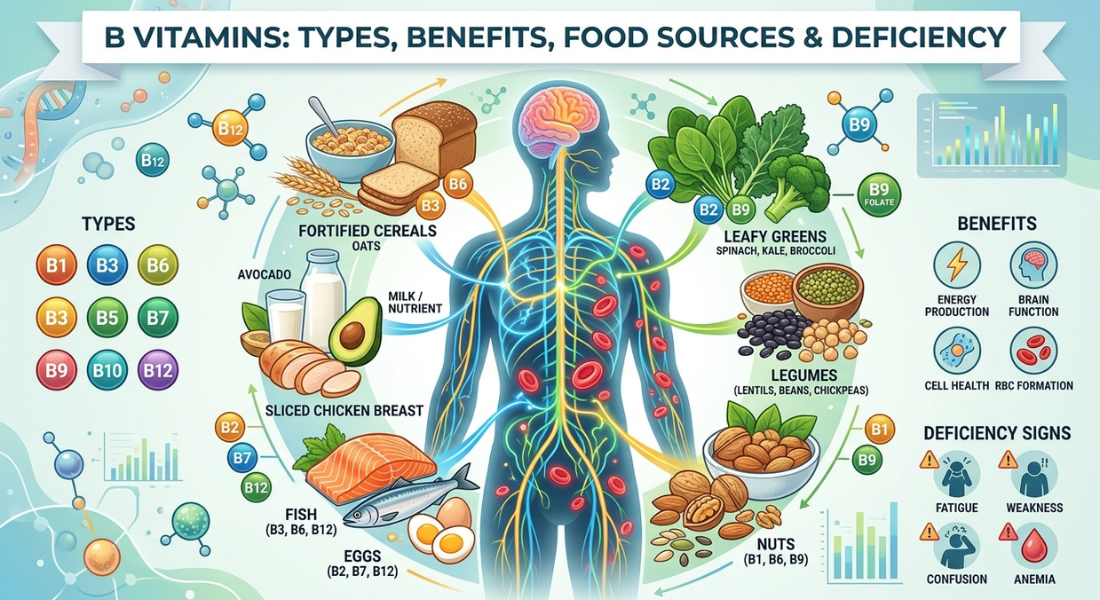
Feeling tired, having trouble concentrating, or wondering which nutrients support energy and brain function. B vitamins are a group of eight water soluble nutrients that help convert food into usable energy, support nerve function, and maintain healthy cells and blood formation.
This guide explains the different B vitamins, their roles in the body, food sources, deficiency signs, and supplement considerations.
B vitamins are a group of eight water soluble nutrients with different roles in metabolism, nerve function, and cell health.
The eight B vitamins include B1, B2, B3, B5, B6, B7, B9, and B12.
Foods such as fish, meat, eggs, legumes, whole grains, nuts, and fortified foods provide B vitamins.
Deficiency symptoms depend on the specific B vitamin involved and may include fatigue, nerve symptoms, or anaemia.
Supplements can support specific nutritional needs but are not required for everyone.

B vitamins are a group of eight watersoluble nutrients that support metabolism, cell function, and nervous system health. Unlike a single nutrient this group contains different vitamins that work together to support essential body processes.
The B vitamin complex includes B1 (thiamine), B2 (riboflavin), B3 (niacin), B5 (pantothenic acid), B6, B7 (biotin), B9 (folate), and B12. Each vitamin has a specific role from nutrient metabolism to DNA production, red blood cell formation, and nerve function.
B complex supplements combine multiple B vitamins, while individual supplements focus on specific nutrients such as B12 or folate.
B vitamins help the body convert carbohydrates, fats, and proteins into usable energy. They do not provide calories directly but support the chemical reactions that allow cells to use nutrients effectively.
They also support nervous system communication, DNA metabolism, and healthy blood formation. For example, B6 helps neurotransmitter production while folate and B12 support new cell formation.
The B vitamin family contains eight recognised nutrients each with different roles in maintaining normal body functions. Understanding these individual vitamins helps explain why a varied diet is important.
B Vitamin | Main Role | Common Food Sources | Deficiency Concerns |
B1 (Thiamine) | Energy metabolism and nerve function | Whole grains, pork, and legumes | Nerve problems, and fatigue |
B2 (Riboflavin) | Energy production and cell function | Dairy, eggs, and meat | Mouth sores, and skin issues |
B3 (Niacin) | Metabolism and skin health | Meat, fish, and nuts | Pellagra |
B5 (Pantothenic Acid) | Hormone and energy metabolism | Meat, eggs, whole and grains | Rare deficiency |
B6 | Brain chemicals and blood formation | Poultry, fish, and potatoes | Nerve symptoms |
B7 (Biotin) | Nutrient metabolism | Eggs, nuts, and seeds | Hair and skin issues |
B9 (Folate) | DNA production and cell division | Leafy greens, and beans | Anaemia, and pregnancy risks |
B12 | Nerve health and red blood cells | Animal foods, andfortified foods | Anaemia, and neurological issues |
Although these nutrients are grouped together each B vitamin has a distinct biological role. Some are especially important for metabolism, while others are closely linked with nerve health, blood cells, or cell growth.
Each B vitamin has a specific role in supporting metabolism, nerve function, and normal cell processes. Together they help the body use nutrients, produce cellular components, and maintain healthy functions.
B1, B2, B3, and B5 support nutrient metabolism while B6 helps with protein processing and brain chemical production. B7 supports nutrient breakdown, and folate (B9) with B12 helps with DNA production and blood cell formation.
Vitamin B1 helps convert carbohydrates into usable energy and supports normal nerve function. Sources include whole grains, pork, legumes, and fortified foods. Low levels may contribute to fatigue and nerve related symptoms.
Vitamin B2 supports energy production and healthy cells, including skin and eye tissues. It is found in milk, eggs, meat, and dairy products. Low intake may affect the mouth, skin, and energy levels.
Vitamin B3 helps form NAD and NADP compounds involved in energy metabolism and cell function. Sources include meat, fish, poultry, and nuts. High dose supplements should be used carefully due to possible side effects.
Vitamin B5 helps produce coenzyme A which supports energy metabolism and fat breakdown. It is found in meat, eggs, whole grains, and vegetables. Deficiency is rare because it is widely available in foods.
Vitamins B6, B7, B9, and B12 support important processes including brain function, nutrient metabolism, DNA production, and blood cell formation. Each vitamin has a different role, so a deficiency can affect the body in different ways.
B6 supports neurotransmitter production, biotin helps process nutrients, and folate with B12 contributes to healthy cell formation and red blood cells.
Vitamin B6 helps produce neurotransmitters, supports protein metabolism, and contributes to red blood cell formation. Food sources include poultry, fish, potatoes, and fortified cereals. Low levels may affect nerve function and cause symptoms such as tingling or weakness.
Biotin helps the body process carbohydrates, fats, and proteins. It is found in foods such as eggs, nuts, seeds, and vegetables. While often linked with hair and nail health benefits are mainly seen when a deficiency exists.
Folate and B12 support DNA production, cell division, and healthy red blood cell formation. Folate is especially important during pregnancy for early development while B12 supports nerve health and is mainly found in animal based foods.

B vitamins are found in animal products, plant foods, and fortified foods. Different foods provide different members of the B vitamin family so a varied diet helps maintain adequate intake.
Animal based sources such as fish, meat, eggs, and dairy provide nutrients including vitamin B12, riboflavin, niacin, and B6. Plant sources like beans, lentils, leafy greens, whole grains, nuts, and seeds provide folate, thiamine, and biotin.
Fortified foods, including cereals and plant based milk alternatives, can also provide added B vitamins, especially vitamin B12 for people with limited dietary sources.
Most people can meet their B vitamin needs through a balanced diet that includes a variety of foods. Different dietary patterns however may affect intake of specific B vitamins.
People with restricted diets, absorption issues, or higher nutritional needs may need to pay closer attention. For example those avoiding animal products may need reliable vitamin B12 sources.
B vitamin deficiency symptoms vary depending on the specific nutrient involved and the severity of the deficiency. Since each B vitamin has different functions signs can differ between individuals.
Common symptoms may include fatigue, weakness, nerve related issues, skin changes, mouth or tongue problems, and changes linked with reduced red blood cell production.
Low vitamin B12 levels can affect nerve health while low folate or B12 may contribute to anaemia because both support normal blood formation.
Some people may also experience changes in mood, concentration, or cognitive function. However these symptoms can have many causes and require proper assessment to identify the underlying reason.
Some groups have a higher risk of low B vitamin levels. Older adults, people with restricted diets, and those with nutrient absorption issues may need closer attention.
Certain medical conditions or medications can affect vitamin levels. Pregnancy also increases the importance of folate because it supports normal cell division and early development.

B vitamin supplements may help people with a confirmed deficiency, increased nutritional needs, or difficulty getting enough from food.
B complex supplements contain multiple B vitamins while individual supplements target specific nutrients such as vitamin B12 or folate. However supplements are not necessary for everyone, and the need depends on personal nutritional requirements.
B vitamins are one important category within the wider world of essential nutrients. For a complete overview of all vitamin types, benefits, and supplement considerations see our complete guide on Vitamins →.
Before using supplements, consider your diet, health conditions, and professional advice. The NIH Office of Dietary Supplements provides reliable information about supplement safety and nutrient needs.
High dose B vitamin supplements are not always better. Excessive intake especially over long periods may cause risks.
For example high amounts of vitamin B6 may affect nerve health while excessive niacin intake can cause side effects. Using supplements based on actual needs and recommended amounts helps reduce unnecessary risks.
B vitamins are eight essential nutrients that each support different processes, including metabolism, nerve function, blood formation, and normal cell activity.
A varied diet containing B vitamin rich foods is usually the best way to maintain healthy levels. Supplements may help in specific situations but they should be used based on nutritional needs rather than general trends.
B vitamins are eight water soluble nutrients that support energy metabolism, nerve function, cell processes, and blood formation.
There are eight B vitamins: B1, B2, B3, B5, B6, B7, B9, and B12.
Sources include meat, fish, eggs, dairy, beans, lentils, leafy greens, whole grains, nuts, seeds, and fortified foods.
Deficiency may cause fatigue, nerve issues, anaemia, mouth changes, and skin related symptoms.
Most people get enough from food but supplements may help with deficiencies or specific nutritional needs.
Folate (B9) supports normal cell division and early development during pregnancy.






Reader Discussion
Leave a Reply