- by Daily Talkin Staff
- July 8, 2026
-

-
-
Loading
Loading
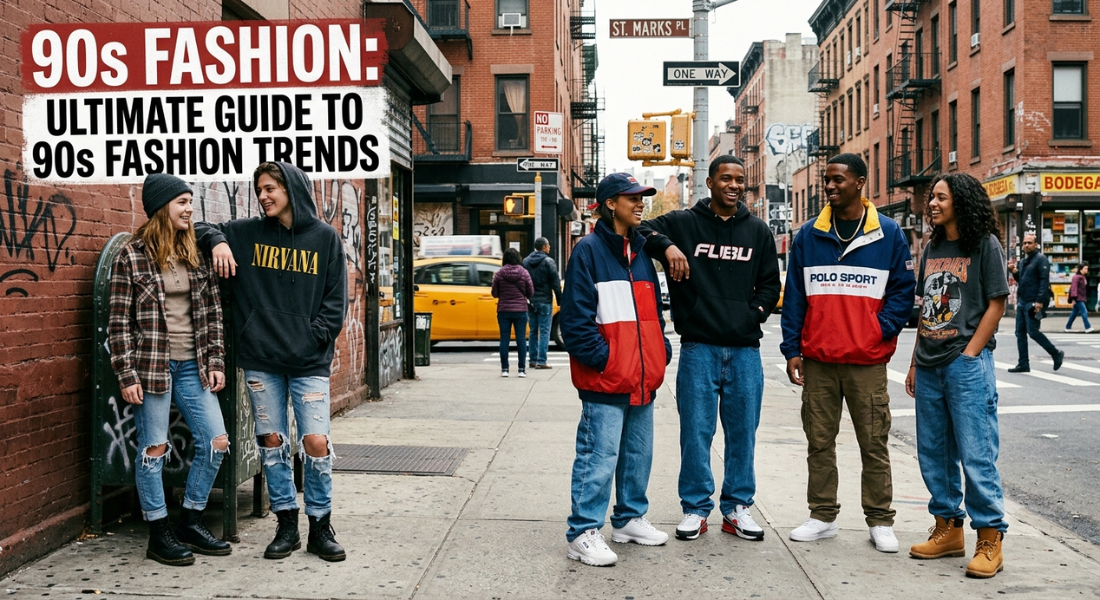
90s fashion defined an era where clothing shifted from excess to expression, shaped by music, culture, and youth identity across global cities like New York, London, and Los Angeles.
It was a decade where individuality replaced uniform luxury, and style became deeply connected to subcultures and social change.
From grunge 90s fashion to bold 90s hip hop fashion, the decade created multiple style identities that still influence modern wardrobes.
Today, designers in areas like Shoreditch (London E1) and SoHo (New York 10012) continue reinterpreting these iconic looks for new audiences.
This guide breaks down 90s fashion trends, exploring early and late decade shifts, menswear, womenswear, and authentic street styles. It also explains how female 90s fashion trends and youth culture shaped what we now call retro style inspiration.
90s fashion was defined by individuality, comfort, and cultural expression through styles like grunge, hip hop, minimalism, and streetwear.
Early 90s fashion focused on relaxed silhouettes, oversized clothing, thrift culture, and rebellious grunge influences.
Late 90s fashion introduced cleaner designs, fitted outfits, futuristic elements, and early Y2K-inspired aesthetics.
90s grunge fashion became iconic through flannel shirts, ripped denim, combat boots, and anti-fashion attitudes.
90s hip hop fashion transformed streetwear by popularising oversized fits, sneakers, bold branding, and statement accessories.
90s fashion women explored diverse styles including slip dresses, minimalism, streetwear, and female-led hip hop aesthetics.
90s fashion men embraced casual dressing through baggy jeans, hoodies, sportswear, and relaxed street styles.
High school 90s fashion trends shaped youth culture with graphic tees, denim jackets, flannels, and pop-culture-inspired outfits.
Modern designers and streetwear brands continue using 90s fashion trends because the decade represents timeless self-expression and creativity.
Early 90s fashion began as a reaction to the bold, exaggerated looks of the 1980s, moving toward simplicity and realism in everyday clothing. Designers in Paris and Milan started embracing minimal silhouettes, while streetwear reflected economic uncertainty and cultural change.
In cities like Manchester and Brooklyn, everyday clothing became more relaxed, shaping what we now recognise as early 90s fashion identity. This period laid the foundation for both grunge and minimalism, two opposing but equally influential directions in style evolution.
Early 90s fashion was heavily influenced by youth rebellion, music scenes, and second-hand clothing culture across urban neighbourhoods. Shoppers in Camden Market (London NW1) and vintage stores in New York’s Lower East Side drove demand for worn, authentic looks.
This period marked the rise of layered outfits, oversized denim, and neutral tones that defined everyday streetwear culture. According to historical archives from the V&A Museum London, fashion during this era reflected a shift toward “anti-glamour realism.”
90s fashion women evolved rapidly as designers redefined femininity through minimalism, slip dresses, and structured tailoring across global runways. Supermodels like Naomi Campbell and Kate Moss became cultural icons, influencing female 90s fashion trends worldwide.
Women’s fashion in this era was not uniform but divided into multiple aesthetics including grunge, minimalist, and glamorous eveningwear. In cities like Paris (75008) and Milan, runway culture heavily influenced what young women wore on everyday streets.
Female 90s fashion trends included slip dresses, crop tops, and oversized blazers paired with simple accessories and natural makeup. This look reflected independence, confidence, and a rejection of overly structured 1980s fashion expectations.
In urban UK areas such as East London, young women blended thrifted pieces with designer items to create hybrid personal styles. Fashion editor Sarah Mitchell notes that “authentic styling came from contrast, not perfection,” especially in female-led street fashion.
90s grunge fashion emerged from Seattle’s music scene, where bands like Nirvana shaped a completely new visual identity. It rejected luxury aesthetics and instead embraced worn textures, layered clothing, and intentionally unpolished styling.
Authentic 90s grunge fashion became a global movement spreading from the US Pacific Northwest to youth cultures in the UK and Europe. This style was not created by designers but by musicians and youth communities living through economic and cultural uncertainty.
Authentic 90s grunge fashion featured flannel shirts, ripped jeans, combat boots, and oversized knitwear that appeared intentionally worn out. The style reflected emotional expression rather than visual perfection, making it one of the most influential movements of the decade.
In London’s Camden music scene, grunge fashion was adopted by indie bands and underground artists throughout the early 90s.
90s hip hop fashion introduced bold colours, oversized silhouettes, and branded sportswear influenced by music culture in New York and Los Angeles. Artists and performers transformed fashion into identity markers, making clothing a symbol of status and cultural belonging.
Womens 90s hip hop fashion added a strong feminine edge with fitted tops, baggy jeans, gold accessories, and street inspired athletic wear. This style became globally recognised through music videos, television, and rising urban fashion brands.
Womens 90s hip hop fashion was shaped by artists like TLC and later Destiny’s Child, who blended comfort with bold expression. Their style influenced teenagers across the United States, especially in urban neighbourhoods like Brooklyn and Queens.
Outfits often included crop tops, oversized denim jackets, and trainers, reflecting both confidence and street identity. In modern fashion districts like Shoreditch (E1), these looks are still referenced in streetwear collections today.
90s teen fashion reflected school culture, music influence, and affordability, making it one of the most relatable style categories of the decade. High school 90s fashion trends were shaped by movies, TV shows, and everyday student life across America and Europe.
Teenagers mixed casual sportswear with expressive accessories, creating looks that were both practical and trend-driven. This era defined what many now consider nostalgic school fashion identity.
High school 90s fashion trends included flannel shirts, baggy jeans, denim jackets, and simple graphic tees inspired by pop culture. Films like “Clueless” and shows like “Friends” influenced teenage wardrobes globally during this decade.
In UK schools, especially in cities like Birmingham and Manchester, students adopted relaxed uniforms and casual layering styles. These fashion choices reflected comfort, individuality, and early signs of globalised youth culture.
90s fashion trends expanded rapidly as subcultures began defining mainstream style rather than traditional fashion houses alone. Music, television, and street culture became the primary drivers of what people wore across cities like London, New York, and Los Angeles.
This shift allowed fashion to become more personal, with individuals choosing identity-based clothing instead of following one dominant trend. As a result, multiple aesthetics coexisted, making the decade one of the most diverse periods in modern fashion history.
Subcultures like skate, hip hop, and grunge influenced global fashion far beyond their local origins. Brands in Soho (NYC 10012) and Camden (London NW1) began adapting these styles for wider commercial audiences.
This blending of underground and mainstream fashion created long-lasting design patterns still visible in today’s streetwear. Fashion historian Daniel Rouse from the London College of Fashion notes that “subculture became the new luxury language.”
90s grunge fashion dominated the early part of the decade, but by the mid to late 90s, style direction began to shift significantly. Minimalism, cyber aesthetics, and polished streetwear slowly replaced the raw, unstructured grunge identity.
This contrast between early rebellion and late refinement defines the full arc of 90s fashion evolution. Designers began moving away from oversized flannel looks toward cleaner silhouettes and futuristic materials.
Late 90s fashion introduced a more polished, commercial style influenced by technology, pop music, and global branding. Outfits became more fitted, and metallic tones, synthetic fabrics, and sleek lines started appearing in mainstream collections.
In cities like Tokyo and London’s Oxford Street, fashion retailers showcased a futuristic aesthetic aligned with the approaching Y2K era. This shift marked the beginning of a more digital and brand driven fashion identity.
90s fashion men was defined by comfort, oversized silhouettes, and strong influences from music genres like hip hop and grunge. Men’s fashion became less formal, especially in workplaces where casual Fridays reshaped office dress codes.
This period gave men more freedom to experiment with identity-based dressing across sportswear, denim, and streetwear categories. Cities like Manchester and Chicago became key cultural centres for men’s casual fashion evolution.
90s mens fashion often included baggy jeans, oversized sweatshirts, bomber jackets, and simple trainers as everyday staples. Brands like Nike and Tommy Hilfiger gained popularity by aligning with urban and athletic aesthetics.
In UK street culture, especially in Birmingham B1 and East London, men mixed sportswear with thrifted vintage pieces. This practical yet expressive style defined how masculinity was visually represented during the decade.
90s hip hop fashion became one of the most influential global style movements, shaping both luxury and streetwear industries. Artists turned clothing into identity, using brands, jewellery, and oversized silhouettes as cultural statements.
This movement spread from New York’s Bronx to global fashion capitals, influencing youth culture across continents. It also redefined luxury, making sportswear and street brands part of high fashion conversations.
Hip hop fashion introduced bold branding, gold chains, tracksuits, and sneakers as everyday essentials in youth wardrobes. Groups like Wu-Tang Clan and artists like Tupac played a key role in popularising these aesthetics.
In London neighborhoods like Brixton, hip hop fashion became part of daily street identity among young communities. This style continues to influence modern brands such as Supreme and Off-White today.
female 90s fashion trends became highly diverse as women adopted multiple identities through clothing across different subcultures. From minimalist tailoring to grunge layering and glamorous red carpet looks, there was no single definition of women’s style.
This diversity reflected broader cultural changes, including career independence and evolving media representation of women. Fashion became a tool for self-expression rather than conformity during this decade.
90s fashion women embraced minimalist slip dresses, neutral tones, and structured blazers influenced by designers like Calvin Klein. At the same time, streetwear introduced oversized denim and casual layering into everyday wardrobes.
In cities like London’s Kensington and New York’s Upper East Side, women mixed luxury pieces with casual street fashion. This blending created a balanced aesthetic that defined late-century women’s fashion identity.
high school 90s fashion trends reflected teenage life shaped by music, film, and peer influence in schools across the world. Students used fashion as a way to express identity while still working within school dress limitations.
This created a unique blend of casual, sporty, and pop-culture-inspired outfits across classrooms and social spaces. Teen fashion became one of the strongest drivers of mainstream retail demand during the decade.
90s teen fashion included oversized jeans, flannel shirts, simple sneakers, and graphic tees inspired by TV and music culture. Films like “Clueless” and “10 Things I Hate About You” strongly shaped teenage styling behaviour globally.
In UK schools across Manchester M1 and Leeds city centres, students adopted relaxed and layered looks influenced by US media. This cultural exchange helped standardise global youth fashion trends by the late 1990s.
90s grunge fashion remains one of the most influential style movements of the decade because it rejected traditional fashion rules completely. It grew from underground music culture in Seattle and quickly spread into global youth identity across Europe and North America.
The appeal of grunge 90s fashion came from its honesty, simplicity, and rejection of polished mainstream aesthetics. Even today, designers in East London (E1) and Brooklyn reinterpret grunge elements in modern streetwear collections.
Authentic 90s grunge fashion focused on layering, oversized silhouettes, and worn textures that looked naturally unstyled and effortless. Key items included flannel shirts, ripped denim, chunky boots, and faded band t-shirts that reflected anti-fashion ideology.
In Camden Market (London NW1), vintage stores still replicate this aesthetic using original thrifted and distressed garments. Fashion experts from the British Fashion Council highlight grunge as “the foundation of modern anti-luxury design thinking.”
The contrast between early 90s fashion and late 90s fashion shows a clear evolution from raw expression to structured modern aesthetics. Early 90s fashion was heavily influenced by grunge and minimalism, while late 90s fashion embraced digital and futuristic styling.
This shift was driven by technology growth, pop culture expansion, and globalisation of fashion media platforms. Cities like Tokyo, London, and New York became centres of experimental late-decade fashion identity.
late 90s fashion introduced metallic fabrics, sleek silhouettes, and futuristic design language influenced by technology culture. This era marked the beginning of Y2K aesthetics, which would dominate the early 2000s fashion landscape.
In London’s Oxford Street retail scene, brands began showcasing glossy materials and digital-inspired fashion campaigns. This transition represented a cultural shift toward optimism and technological fascination in clothing design.
90s fashion men evolved from rugged grunge influences to more structured casualwear influenced by sports and luxury branding. Men’s fashion became more expressive, blending comfort with identity-driven styling across global urban centres.
This evolution also reflected workplace culture changes, where casual dressing became widely accepted in many industries. Cities like Manchester M1 and Chicago Loop played major roles in shaping men’s casualwear identity.
90s mens fashion staples included baggy jeans, hoodies, bomber jackets, and branded sneakers that defined street culture. Hip hop and skate culture strongly influenced how men styled themselves across both casual and performance settings.
In UK streetwear culture, especially in Birmingham B2, layering became a signature styling technique among young men. This practical approach to clothing remains influential in today’s global streetwear industry.
womens 90s hip hop fashion reshaped how femininity was expressed in urban street culture during the decade. It combined bold confidence with relaxed silhouettes, challenging traditional fashion expectations for women.
This style gained visibility through music videos, television appearances, and rising female hip hop artists globally. It became a symbol of empowerment and cultural identity across urban communities.
Women in hip hop fashion wore oversized jackets, baggy jeans, crop tops, and bold accessories as identity markers. Artists like TLC influenced global youth culture by merging comfort with strong visual presence.
In London neighbourhoods such as Brixton and Peckham, this style became part of everyday street identity. Today, its influence is visible in modern streetwear brands and global fashion runways.
90s teen fashion continues to influence modern youth culture because it balanced simplicity, comfort, and personality driven expression. High school environments acted as testing grounds for evolving global fashion trends during the decade.
Teenagers shaped trends through music, film, and peer culture rather than traditional fashion authorities. This made youth culture one of the strongest drivers of 90s style evolution.
high school 90s fashion trends such as flannel shirts, oversized denim, and graphic tees remain popular today. These styles continue to appear in retro collections and vintage-inspired fashion brands worldwide.
In UK student culture, especially in cities like Leeds LS1 and Manchester M2, nostalgia-driven fashion remains strong. This demonstrates how teenage identity in the 90s still influences modern streetwear choices.
90s fashion remains one of the most influential types of fashion styles because it brought together multiple aesthetics within a single decade. From grunge and hip hop to minimalism and preppy fashion, the era proved that personal style could take many different forms.
Understanding these broader style categories helps explain why 90s fashion continues to inspire modern wardrobes and why many of today's fashion trends still draw directly from its diverse style identities.
90s fashion represents a turning point where clothing stopped being only about appearance and became a form of cultural communication. Across early grunge rebellion, hip hop street influence, and late 90s minimalism, the decade created multiple identities within a single era.
This diversity is what makes 90s fashion trends still relevant in today’s global style landscape. Modern streetwear in cities like London, New York, and Tokyo continues to borrow silhouettes, textures, and attitudes from this decade.
What makes the 90s especially powerful is its balance between simplicity and expression, allowing both 90s fashion men and 90s fashion women to explore individuality freely. From high school 90s fashion trends to runway minimalism, every layer of the decade still influences how we dress today.
Even in current retail spaces across Manchester Arndale (M4) and London Oxford Street (W1), vintage-inspired collections continue to reflect 90s aesthetics. This long-lasting influence confirms that the decade was not just a trend cycle, but a permanent shift in fashion thinking.
Music subcultures, grunge, hip hop, and minimalism shaped the decade’s identity. Fashion focused on expression rather than strict style rules.
It includes flannel shirts, ripped jeans, oversized layers, and worn textures. The style comes directly from Seattle’s underground music scene.
Women explored more diversity through minimalism, grunge, and hip hop styles. Men focused more on sportswear, streetwear, and oversized casual looks.
Technology, pop culture, and global branding shaped late decade style evolution. It introduced metallic and futuristic Y2K aesthetics.
Yes, it strongly influences modern streetwear and vintage fashion trends. Many current brands reuse 90s silhouettes and styling ideas.





Reader Discussion
Leave a Reply