- by Daily Talkin Staff
- July 8, 2026
-

-
-
Loading
Loading
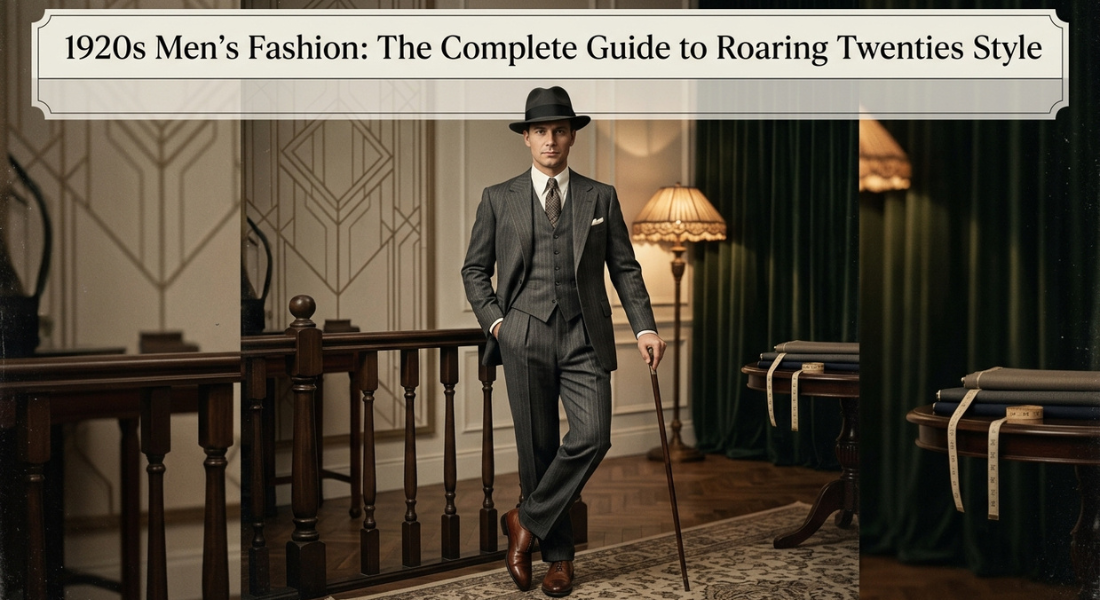
1920s men's fashion combined refined tailoring with greater comfort through high waisted trousers, structured jackets, three piece suits, polished leather shoes, and carefully chosen accessories. These timeless style principles continue to influence modern menswear nearly a century later.
This guide focuses exclusively on how men dressed during the Roaring Twenties, exploring clothing, tailoring, fabrics, footwear, grooming, and authentic outfit styling for historical research or vintage inspiration.
1920s men's fashion centred on refined tailoring, high waisted trousers, and three piece suits.
Hats, shoes, and accessories were essential parts of every gentleman's wardrobe.
Tweed, wool, flannel, linen, and mohair were among the decade's most important fabrics.
British tailoring focused on structure while American styles favoured slightly softer silhouettes.
Authentic vintage outfits rely on accurate proportions, quality materials, and understated accessories rather than costume inspired styling.

1920s men's fashion blended traditional tailoring with modern practicality. Gentlemen wore structured jackets, high waisted trousers, waistcoats, polished shoes, and carefully selected accessories that created an elegant yet comfortable appearance suitable for work, leisure, and formal occasions.
During the decade menswear became less rigid than Edwardian clothing while maintaining a polished silhouette. Tailors introduced softer shoulders, roomier cuts, and lighter fabrics that allowed greater freedom of movement without sacrificing sophistication.
Unlike modern fast changing trends most wardrobes focused on quality craftsmanship. A well made suit could remain fashionable for years with only minor changes in accessories or tailoring.
1920s men's fashion refers to the clothing, footwear, hats, accessories, grooming styles, and tailoring traditions worn by men between 1920 and 1929. It is recognised for combining classic British tailoring with practical everyday elegance that continues to inspire contemporary menswear.
Many staples still worn today became firmly established during the Roaring Twenties. The three piece suit, Oxford shoes, sports jackets, knitwear, and structured overcoats all evolved into enduring wardrobe essentials.
The decade also promoted versatility. Men increasingly owned clothing for business, leisure, sporting activities, and formal occasions instead of relying on a single everyday suit.
Compared with the Edwardian period, clothing became noticeably more comfortable. Jackets featured softer construction, trousers offered a higher rise with fuller legs, and sportswear gained wider acceptance outside athletic settings.
Fashion also shifted towards practicality. Instead of heavily structured garments designed mainly for status, clothing balanced elegance with everyday wearability.
For a broader look at how men's and women's styles, beauty trends, accessories, and cultural influences shaped the decade, explore our complete 1920s Fashion guide → see the full guide here.
The defining features of 1920s men's fashion included softer tailoring, structured jackets, high waisted trousers, coordinated waistcoats, and elegant accessories. Together these elements created a refined appearance suitable for nearly every occasion.
Rather than following extreme fashion trends, gentlemen focused on proportion, fit, and quality materials. Every garment worked together to create a balanced silhouette.
Tailoring gradually became less rigid than earlier decades. Jackets retained structure but draped more naturally across the shoulders and chest allowing improved comfort throughout the day.
This softer silhouette influenced modern tailoring where ease of movement remains just as important as appearance.
Trousers sat at or above the natural waist and were supported with suspenders rather than belts in many formal outfits. The higher rise created longer leg proportions and complemented tailored jackets perfectly.
Pleats and wider leg openings further enhanced comfort while maintaining a clean appearance.
Single breasted and double breasted jackets remained wardrobe staples. Most featured broad lapels, defined shoulders, and carefully balanced proportions that emphasised elegance rather than excess.
British tailoring houses particularly those on Savile Row helped standardise many of these construction techniques.
Waistcoats remained an essential component of formal and business dress. Matching waistcoats completed the three piece suit while adding warmth and visual balance beneath the jacket.
Many gentlemen removed their jacket indoors but continued wearing the waistcoat to maintain a polished appearance.
Accessories were never afterthoughts. Pocket watches, cufflinks, ties, hats, gloves, and polished footwear demonstrated attention to detail and reflected personal style without appearing extravagant.
Small finishing touches often distinguished an ordinary outfit from an exceptional one.
A complete 1920s gentleman's wardrobe included tailored suits, sports jackets, knitwear, formal clothing, and seasonal outerwear. Each piece served a specific purpose while quality fabrics and tailoring created a practical yet elegant style.
Business suits were the foundation of men's fashion in the 1920s. Made from wool or flannel in colours like navy, grey, brown, and charcoal they were worn with crisp shirts and polished leather shoes.
Three piece suits with jackets, waistcoats, and trousers were especially popular for business and formal occasions. Double breasted designs with broad lapels added a structured and confident appearance.
Sports jackets often made from tweed provided a relaxed alternative to formal suits and were ideal for weekends, travel, and outdoor activities. Blazers especially navy styles were also popular for smart casual occasions.
Sweater vests and pullovers became common leisurewear choices particularly for sports like golf and cricket offering warmth while maintaining a refined appearance.
Long wool overcoats including Chesterfields and Ulsters protected men from cold weather while complementing formal clothing. Lightweight raincoats were also worn during travel and wet conditions to preserve a smart appearance.
Shirts and neckwear completed every 1920s men's outfit through crisp collars, tailored dress shirts, silk ties, bow ties, and collar accessories. These details reflected the polished and sophisticated style expected from well dressed gentlemen of the Roaring Twenties.
Men commonly wore fine cotton dress shirts in white or pale blue with styles such as club collars and detachable collars. Rounded club collars created a refined vintage look while detachable collars allowed easier cleaning and maintained a crisp formal appearance.
Silk neckties were the standard choice for business wear often featuring stripes or subtle patterns. Bow ties were reserved mainly for evening dress and formal occasions especially in classic black silk. Collar pins added structure by lifting the tie knot and creating a sharper finish.
High waisted trousers shaped the silhouette of 1920s menswear while Oxford bags, plus fours, and cuffed trousers combined comfort, practicality, and elegance for business, leisure, and sporting activities.
High waisted trousers were a defining feature of the decade, often worn with suspenders, waistcoats, and jackets to create a structured appearance. Turn up cuffs became popular as they improved trouser drape and added durability.
Oxford bags featured extremely wide legs and became popular among British university students before spreading into mainstream fashion. Plus fours fastened below the knee were originally designed for golf but became a favourite choice for country wear and casual outings.

Hats were an essential part of 1920s men's fashion with styles like the fedora, homburg, boater, flat cap, and Panama hat chosen based on occasion, season, and formality.
The fedora became one of the decade's most versatile hats, featuring a soft felt construction, pinched crown, and flexible brim suitable for business and smart casual wear.
The homburg offered a more formal appearance with its structured felt design, curled brim, and centre crease making it a popular choice with suits and overcoats.
The boater hat made from stiff straw was commonly worn during spring and summer events such as garden parties and sporting occasions.
Flat caps provided a practical everyday option especially for travel and country wear while lightweight Panama hats paired well with linen suits for warm weather dressing.
1920s footwear balanced elegance and practicality through Oxford shoes, brogues, spectator shoes, boots, and spats. Quality leather footwear completed business and formal outfits while reflecting a gentleman's attention to detail.
Oxford shoes were the preferred choice for business and formal occasions with their closed lacing design creating a refined appearance. Brogues originally designed as country footwear became a popular everyday option and paired well with tweed suits and sports jackets.
Two tone spectator shoes added a stylish touch to summer outfits, leisurewear, and jazz era social events offering a distinctive alternative to traditional leather shoes.
Leather boots provided warmth and durability for colder weather and outdoor activities while maintaining a polished look. Spats worn over shoes protected footwear from dirt and added a fashionable detail to formal daytime outfits.
Accessories completed a gentleman's 1920s outfit through pocket watches, cufflinks, suspenders, pocket squares, gloves, belts, and walking canes. These details added refinement while complementing classic tailoring.
Pocket watches were a symbol of sophistication often carried in a waistcoat pocket with a decorative chain. Pocket squares added colour and texture to jackets while cufflinks provided a refined finishing touch for French cuffs. Gold, silver, silk, and linen details were popular choices for formal occasions.
Suspenders were the preferred choice for supporting high waisted trousers and created a cleaner silhouette than belts. Leather belts became more common for casual clothing and sportswear later in the decade.
Gloves provided warmth and elegance during formal occasions while walking canes became stylish accessories that reflected personal taste through polished wood and decorative designs.
Fabric choice shaped the comfort, durability, and formality of 1920s menswear. Wool, tweed, flannel, linen, cotton, mohair, and seersucker were among the most commonly used materials for suits, shirts, jackets, and seasonal clothing.
Wool was the foundation of 1920s tailoring due to its durability, breathability, and versatility across different seasons. Tweed was valued for its textured appearance and warmth making it popular for jackets, suits, and country clothing.
Flannel offered a softer finish and became especially popular for grey business suits and trousers. Mohair blends with wool created lightweight suits with a smooth finish and subtle shine making them suitable for warmer formal occasions.
Linen was a preferred choice for summer suits because of its lightweight and breathable qualities with shades like cream, beige, and light grey being common. Cotton was widely used for shirts and casual clothing due to its comfort and easy maintenance.
Seersucker with its unique puckered texture improved airflow and became a practical option for relaxed summer suits and warm weather dressing.
1920s men's fashion favoured elegant colours and timeless patterns. Neutral shades, earth tones, pinstripes, herringbone, houndstooth, windowpane checks, and plaid helped create sophisticated and versatile wardrobes.
Neutral colours such as grey, navy, black, beige, and cream formed the foundation of men's clothing, pairing easily with suits, hats, ties, and leather shoes. Earth tones like brown, olive, tan, and muted green were especially common in tweed jackets and country clothing.
Pinstripes became a popular choice for business suits adding subtle texture and creating a refined silhouette. Herringbone and houndstooth brought character to wool jackets, tweed clothing, and outerwear while windowpane checks and plaid offered a more relaxed style for blazers, sports coats, scarves, and country wear.
Men's fashion gradually evolved from conservative post war tailoring to more relaxed silhouettes, lighter fabrics, and increasingly sophisticated styling between 1920 and 1929.
Although the decade is often viewed as one style period clothing changed steadily as social attitudes, tailoring techniques, and leisure activities evolved.
The early years retained strong Edwardian influences. Jackets remained structured, trousers were relatively conservative, and darker colours dominated business wardrobes. Formal dress codes still played a central role in everyday life.
Tailoring became noticeably softer as fuller cut trousers, sports jackets, and knitwear gained wider acceptance. Men embraced greater comfort while preserving the elegance expected of the period. This phase established many of the decade's signature styles.
By the late 1920s tailoring appeared more refined and fashionable. Patterned fabrics, double breasted suits, lighter materials, and stylish accessories became increasingly common among well dressed gentlemen. These developments laid the foundation for the menswear trends of the 1930s.
British menswear focused on structured tailoring and traditional craftsmanship while American fashion adopted more relaxed cuts for business and everyday wear. Both styles valued quality, comfort, and timeless elegance.
British tailoring emphasised clean lines, durable fabrics, and precise construction with Savile Row representing the highest standard of bespoke menswear. American suits offered fuller cuts and greater comfort while ready to wear clothing became increasingly popular for modern working men.
The main difference was in silhouette and fabric choice. British fashion preferred structured fits and heavier tweeds whereas American style favoured lighter materials and roomier designs. Despite these differences both traditions prioritised craftsmanship and long lasting style.
1920s men's clothing was defined by occasion. Formal events required morning dress, black tie, or white tie while casual settings featured sports jackets, knitwear, plus fours, and country clothing.
Formal occasions included morning dress for weddings, races, and official daytime events, featuring morning coats, striped trousers, waistcoats, and Oxford shoes.
Evening events followed black tie or white tie traditions with dinner jackets, bow ties, white shirts, tailcoats, and white waistcoats representing different levels of formality.
Casual clothing focused on comfort while maintaining a polished appearance. Sports jackets, knitwear, open neck shirts, lighter trousers, and plus fours became popular for weekends and activities like golf, tennis, and cricket. Country clothing combined tweed, flat caps, brogues, and heavy coats for practical outdoor style.
1920s men's seasonal wardrobes combined classic tailoring with practical fabrics. Lightweight materials kept outfits comfortable in warm weather while heavier wool fabrics provided protection during colder months without sacrificing style.
Spring and autumn wardrobes focused on versatile fabrics such as lightweight wool, tweed, and flannel, paired with felt hats, raincoats, and leather gloves for changing temperatures. Summer clothing featured breathable materials like linen, cotton, mohair, and seersucker often styled with Panama hats and unlined jackets.
Winter dressing relied on heavy wool overcoats, thick tweeds, scarves, leather boots, and lined gloves. Darker colours and durable fabrics helped men maintain an elegant appearance during colder weather.
1920s men's grooming focused on neat hairstyles, polished finishes, clean shaves, and carefully maintained moustaches. These details completed the refined appearance of a fashionable gentleman.
Short neatly trimmed hair was the standard style of the decade often featuring a side part with extra length on top for styling. Pomades were commonly used to create a smooth glossy finish while keeping hair in place throughout the day.
A clean shaven face was the preferred look for most men reflecting professionalism and modern grooming standards. Thin well trimmed moustaches remained popular among some actors, businessmen, and military figures.
Royal figures, actors, and sportsmen helped popularise elegant tailoring, sportswear, and formal dress through their public influence.
Edward VIII popularised relaxed tailoring, tweed, and country inspired clothing shaping British menswear.
Valentino made refined suits and eveningwear fashionable through his stylish film appearances.
Fairbanks promoted athletic elegance with sports jackets and practical tailoring.
Babe Ruth combined classic tailoring with comfortable sportswear encouraging a more relaxed style.
Paul Robeson became known for his impeccable tailoring and timeless formal dress inspiring generations of vintage menswear enthusiasts.

An authentic 1920s outfit focuses on tailored fits, classic fabrics, quality shoes, and simple accessories. Proper proportions create a more realistic look than costume style pieces.
A business look can include a grey or navy three piece suit, white shirt, silk tie, Oxford shoes, and a fedora. For formal events choose a tuxedo or dark dinner jacket with a bow tie and polished shoes.
For weddings a charcoal or navy suit with a felt hat creates a refined vintage style. For everyday wear, combine a tweed jacket, flannel trousers, sweater vest, brogues, and a flat cap.
Many recreations rely on Hollywood stereotypes, modern tailoring, or clothing from different decades. Authentic style depends on accurate proportions, fabrics, and period details.
Films often exaggerate gangster suits, bold colours, and oversized accessories. Most men dressed in a more refined and understated way.
Slim fit jackets, low rise trousers, and narrow lapels look out of place. Authentic 1920s tailoring featured higher waists and fuller cuts.
Combining clothing from the 1930s or 1940s with 1920s pieces reduces historical accuracy. Stick to garments and details that match the Roaring Twenties.
A practical capsule wardrobe includes timeless clothing, footwear, and accessories that can be mixed for business, formal events, and everyday vintage style.
Three piece wool suit
Tweed sports jacket
Flannel trousers
White dress shirts
Sweater vest
Wool overcoat
Black Oxford shoes
Brown brogues
Leather boots
Two tone spectator shoes
Fedora or homburg
Pocket square
Silk neckties
Pocket watch
Suspenders
Cufflinks
Leather gloves
1920s men's fashion proved that exceptional style comes from quality tailoring, balanced proportions, and thoughtful details rather than passing trends.
From structured suits and classic footwear to refined accessories and careful grooming, many of the decade's principles remain relevant today.
Whether you're researching fashion history or recreating a vintage outfit focusing on authentic garments and timeless craftsmanship will produce a look that reflects the true elegance of the Roaring Twenties.
Most men wore high waisted trousers, tailored suits, waistcoats, dress shirts, ties, polished leather shoes, and felt hats. Sports jackets and knitwear were also common for casual occasions.
High waisted trousers created balanced proportions worked perfectly with waistcoats and suspenders, and provided greater comfort than lower rise designs.
The fedora, homburg, boater, flat cap, and Panama hat were among the most popular styles with each suited to different seasons and occasions.
Choose a well tailored three piece suit, high waisted trousers, leather Oxford shoes, a classic felt hat, and understated accessories while avoiding modern slim fit tailoring.
Wool, tweed, flannel, linen, cotton, mohair, and seersucker were widely used because they balanced durability, comfort, and seasonal practicality.
British menswear emphasised structured bespoke tailoring and heavier fabrics while American fashion generally adopted slightly looser cuts and lighter materials for business and leisure.




Reader Discussion
Leave a Reply