- by Daily Talkin Staff
- July 8, 2026
-

-
-
Loading
Loading
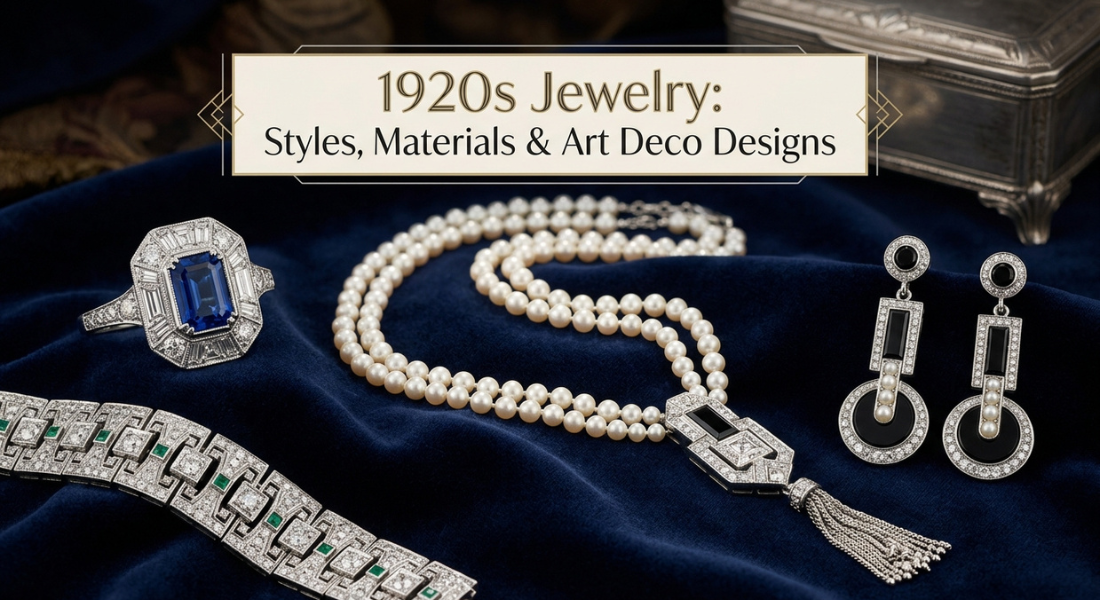
A strand of pearls, geometric ring, or sparkling Art Deco bracelet can instantly reveal the elegance of 1920s jewelry.
Jewellery from this decade featured bold geometric designs, pearls, gemstones, decorative metals, and modern Art Deco influences shaped by changing tastes.
This guide explores its styles, materials, characteristics, and authentic design features.
1920s jewelry was strongly influenced by Art Deco design principles.
Geometric shapes, symmetry, and bold contrasts defined many jewellery pieces.
Pearls, diamonds, platinum, coloured gemstones, and costume materials were widely used.
Popular styles included sautoir necklaces, dog collar necklaces, drop earrings, rings, and bracelets.
Authentic 1920s jewellery can be identified through materials, craftsmanship, and historical design features.

1920s jewelry refers to jewellery worn and created between 1920 and 1929 featuring Art Deco influences, geometric shapes, symmetry, bold contrasts, and detailed craftsmanship.
Popular designs included pearls, diamonds, platinum, coloured gemstones, and decorative metals. The decade included both luxury fine jewellery and affordable costume pieces made with accessible materials.
Jewellery created and worn during the 1920s featuring Art Deco influences, pearls, gemstones, geometric forms, and decorative craftsmanship.
Jewellery styles varied from elegant evening pieces to everyday accessories with necklaces, rings, earrings, and bracelets reflecting the decade’s changing tastes.
1920s jewelry is one part of the wider style changes explored in our complete guide, covering the decade’s clothing, trends, and cultural influences. This jewellery guide focuses specifically on period designs and characteristics → see our complete 1920s Fashion guide here.
The defining features of 1920s jewellery came from a move towards modern design. Unlike earlier delicate styles, designers embraced geometric shapes, symmetry, bold contrasts, and architectural influences.
Art Deco jewellery commonly featured rectangles, circles, triangles, stepped patterns, and strong colour combinations such as diamonds with onyx or emeralds with sapphires.
Common design elements included:
Sunburst and fan patterns
Chevron and angular motifs
Platinum and silver toned finishes
Egyptian Revival influences
The 1925 Exposition Internationale des Arts Décoratifs et Industriels Modernes in Paris helped spread Art Deco ideas in jewellery design, introducing cleaner lines and a more modern aesthetic.
Art Deco changed jewellery by replacing softer decorative styles with structured geometric designs. It focused on symmetry, sharp angles, polished surfaces, and contrasting materials.
The 1925 Paris Exposition became a major influence on jewellery and decorative arts encouraging modern forms and innovative craftsmanship.
Museums such as the Victoria and Albert Museum highlight how Art Deco jewellery used geometric patterns, luxury materials, and modern design principles.
The 1920s introduced expressive jewellery styles from pearl necklaces to bold statement pieces. Long necklaces, dramatic earrings, decorative rings, and bracelets became popular combining luxury materials with affordable alternatives.
Pearl necklaces were among the most iconic styles of the decade. Long sautoir necklaces featuring pearls, beads, tassels, or pendants suited evening occasions and complemented shorter hairstyles.
Both cultured and imitation pearls became popular, making the elegant layered look more accessible.
Dog collar necklaces created a bold close fitting statement around the neck while bib necklaces featured wider designs with beads, gemstones, metalwork, and geometric patterns.
These styles reflected Art Deco influences through symmetry, structure, and decorative details especially for formal evening wear.
Shorter hairstyles made drop and statement earrings more noticeable during the 1920s. Designs often featured diamonds, rhinestones, coloured gemstones, filigree metalwork, and geometric shapes.
Their movement and bold appearance made them one of the decade’s most recognisable jewellery styles.

1920s jewellery used a mix of precious materials and affordable alternatives creating a clear distinction between fine jewellery and costume pieces. Fine jewellery often featured platinum, diamonds, emeralds, sapphires, and rubies.
Other popular materials included pearls onyx for black and white contrasts, jade, coral, and marcasite for decorative details. The Gemological Institute of America provides research on gemstones, jewellery materials, and identification methods used to evaluate historical pieces.
Costume jewellery grew during the decade through materials such as Bakelite, glass, plastic, and imitation stones. These alternatives made Art Deco inspired designs more accessible while maintaining a luxurious appearance.
Costume jewellery changed the accessibility of 1920s style by allowing more people to wear decorative pieces inspired by luxury designs. Instead of relying only on diamonds, platinum, and precious gemstones designers used affordable materials to create bold visual effects.
Materials such as Bakelite, glass beads, imitation pearls, and synthetic stones became popular because they could reproduce the appearance of expensive jewellery at a lower cost.
This expansion did not replace fine jewellery. Instead costume jewellery existed alongside luxury pieces giving people more freedom to experiment with colours, geometric shapes, and statement designs.
The growth of costume jewellery became an important part of 1920s style because it reflected changing consumer culture and the desire for modern expressive accessories.
Bracelets and rings became important statement pieces during the 1920s reflecting the decade’s preference for bold shapes and decorative details.
Jewellery designers moved away from subtle designs and created pieces that attracted attention through geometric forms, gemstone arrangements, and strong contrasts.
Rings often featured large central stones, angular settings, and detailed metalwork. Bracelets ranged from delicate gemstone pieces to wide cuffs and stacked bangles influenced by Art Deco patterns.
These designs showed how jewellery became a form of personal expression rather than only a symbol of wealth or status.
Art Deco rings of the 1920s often featured symmetrical layouts, sharp edges, and colourful gemstone combinations. Diamonds were commonly paired with emeralds, sapphires, rubies, or onyx to create dramatic contrasts.
Cocktail rings began gaining popularity during this period as larger decorative rings suited evening social events. Their oversized appearance and bold settings reflected the decade’s confidence and modern aesthetic.
Filigree details, geometric cuts, and platinum craftsmanship were common features. These characteristics help distinguish authentic period inspired designs from simpler modern reproductions.
Bracelets in the 1920s included stacked bangles, wide cuff styles, and decorative gemstone designs. Many pieces used geometric patterns, engraved surfaces, and contrasting materials to match Art Deco preferences.
Metal bracelets often featured platinum, silver, or gold finishes while costume versions used Bakelite and other affordable materials. Layered bracelets created a fashionable statement especially for evening occasions.
The combination of structure, decoration, and experimentation made bracelets one of the most recognisable accessory categories of the decade.

Recognising authentic 1920s jewellery requires looking beyond appearance alone. A genuine piece should be evaluated through its design features, materials, craftsmanship, and historical context.
The first step is examining the shape. Authentic examples often show geometric symmetry, angular forms, and Art Deco inspired arrangements rather than random decoration.
Materials also provide important clues. Platinum, diamonds, pearls, coloured gemstones, and period appropriate decorative materials can indicate whether a piece matches the era.
Key identification factors include:
Design elements: Look for geometric patterns, symmetry, sunbursts, chevrons, and Egyptian Revival influences.
Materials: Check whether the metals and stones match materials commonly used during the 1920s.
Construction: Examine craftsmanship, settings, clasps, and finishing details.
Historical context: Consider whether the piece was created during 1920 to 1929 or is a later reproduction.
Museums and jewellery specialists often compare construction methods and materials rather than relying only on visual style when assessing historical pieces.
Authentic 1920s jewellery and modern inspired jewellery may share similar designs but their origins and value are different.
Authentic 1920s Jewelry | 1920s Inspired Jewelry |
Made during 1920 to 1929 | Modern reproduction or interpretation |
Uses period materials and craftsmanship | Uses contemporary materials and techniques |
Has historical collectible value | Primarily created for fashion use |
Authentic pieces provide evidence of the design practices and materials of the decade. Modern reproductions can capture the visual appeal of Art Deco but should not be confused with original historical jewellery.
Understanding this difference helps collectors, researchers, and fashion enthusiasts identify pieces more accurately.
1920s jewellery was defined by Art Deco geometry, pearls, gemstones, bold designs, and a combination of luxury and accessible materials.
Understanding these characteristics makes it easier to recognise the distinctive jewellery language of the Roaring Twenties without confusing it with the broader fashion trends of the decade.
Popular styles included pearl necklaces, sautoirs, dog collar necklaces, drop earrings, bangles, cocktail rings, and Art Deco designs.
It featured Art Deco geometry, bold contrasts, statement designs, and a mix of luxury and affordable materials.
Yes Long pearl necklaces and layered pearl styles were iconic jewellery choices during the decade.
Common gemstones included diamonds, emeralds, sapphires, rubies, onyx, jade, coral, and marcasite.
It used geometric shapes, symmetry, bold contrasts, and modern decorative patterns.
Check its materials, design motifs, craftsmanship, construction, and historical details.





Reader Discussion
Leave a Reply