- by Daily Talkin Staff
- July 8, 2026
-

-
-
Loading
Loading
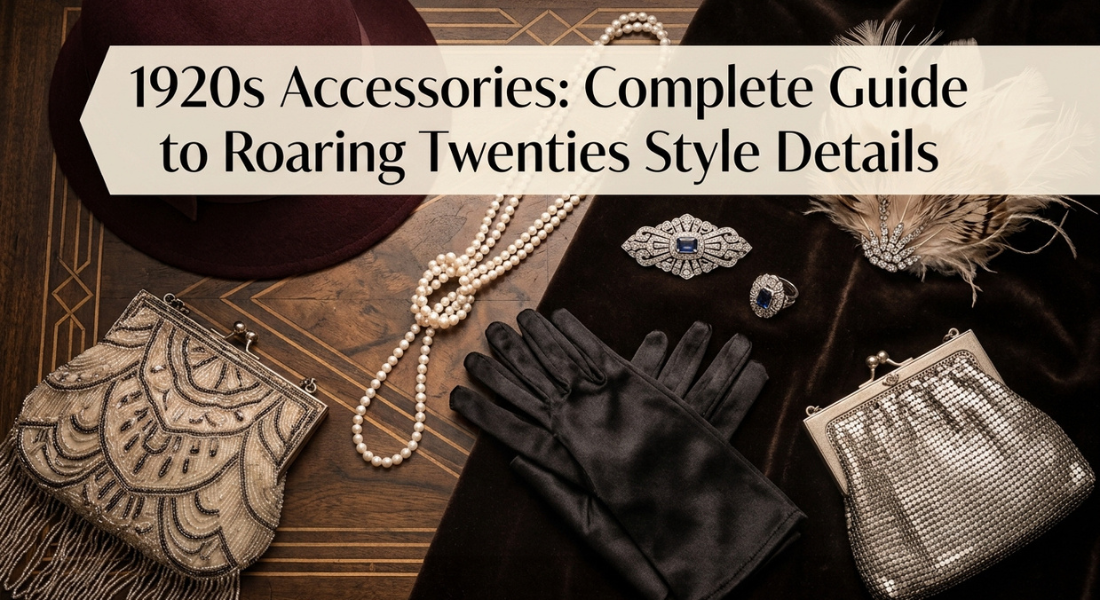
A single accessory could transform a simple outfit into an instantly recognisable Jazz Age look. 1920s accessories were decorative and functional items such as hats, jewellery, handbags, gloves, and hair pieces that completed everyday and evening styles during the decade.
This guide explores the key accessories, materials, meanings, and authentic details behind them.
1920s accessories combined practical function with decorative Art Deco inspired design.
Cloche hats, pearl jewellery, handbags, and gloves were among the era’s defining accessories.
Materials such as pearls, Bakelite, beads, feathers, and metal mesh shaped accessory design.
Men’s accessories focused on craftsmanship through watches, hats, cufflinks, and leather details.
Authentic vintage pieces differ from reproductions through materials, construction, and historical value.

1920s accessories were finishing elements that completed and personalised outfits, including hats, jewellery, handbags, gloves, scarves, stockings, and decorative pieces. They served both practical and decorative purposes.
Accessories gave people an easy way to express individuality. Day pieces focused on practicality while evening accessories used richer materials such as pearls, beads, feathers, and gemstones.
1920s fashion describes the complete style movement of the decade, including clothing, beauty, and cultural influences. This accessory guide focuses only on the finishing details that defined the era. This is part of our complete guide on 1920s Fashion → see the full guide here.
Accessories reflected growing interest in personal expression and modern design. Geometric shapes, symmetry, metallic finishes, and decorative details appeared across jewellery, handbags, and headpieces.
Everyday accessories balanced function with style while evening pieces added glamour through luxurious materials and detailed craftsmanship.
Head accessories were key finishing details of 1920s style. Cloche hats dominated daytime wear while turbans, headbands, and jewelled pieces added variety for formal occasions.
Felt and straw suited practical hats while evening accessories often featured feathers, embroidery, crystals, metallic details, and decorative ornaments.
The cloche was a close fitting bell shaped hat worn low over the forehead. Felt was common while straw appeared in lighter seasonal designs.
Ribbons, bows, embroidery, feathers, and ornaments added decoration. Turban inspired styles offered a more dramatic evening option, often using rich fabrics, jewels, and geometric patterns.
Headbands and hair jewellery added sparkle without dominating the overall look. Designs commonly featured beads, feathers, metallic details, and gemstone like embellishments.
Jewelled bands suited evening occasions with symmetrical and geometric details reflecting Art Deco influence. These pieces added texture and individuality while complementing contemporary hair styling.
Jewellery was a major accessory category in the 1920s with designs becoming more expressive through geometric Art Deco influences.
Popular materials included pearls, gemstones, glass beads, Bakelite, enamel, and polished metals. These materials allowed both luxury and affordable decorative pieces.
Day jewellery was often simpler while evening pieces featured bold shapes, layered necklaces, statement earrings, bracelets, and brooches.
The Metropolitan Museum of Art’s costume collections show how 1920s jewellery combined craftsmanship, innovative materials, and modern design ideas.
Pearl necklaces became one of the most recognisable jewellery styles of the decade. Long strands were often layered to create movement and elegance.
Drop earrings, bracelets, and cocktail jewellery also gained popularity for evening occasions. Designs often combined pearls with coloured stones, glass elements, and metallic settings.
Art Deco introduced geometric shapes, symmetry, and bold decorative patterns to jewellery design. Fan shapes, angular lines, stepped forms, and contrasting colours became common features.
The Victoria and Albert Museum recognises Art Deco as a significant influence on early twentieth century decorative arts including jewellery. These design elements continue to shape vintage inspired jewellery today.
Handheld and wearable accessories added both function and decoration to 1920s outfits. Handbags, gloves, stockings, scarves, wraps, and fans helped create coordinated looks for everyday and formal occasions.
Evening accessories often featured detailed craftsmanship, using materials such as beading, embroidery, silk, and metallic finishes. These pieces balanced practicality with visual appeal.
Small beaded handbags, fabric purses, and metal mesh bags became popular for carrying essentials while adding decorative detail to evening looks.
Opera gloves often made from silk or fine fabrics created a refined formal appearance. Decorative fans, embellished wraps, and ornamental pieces added texture and movement to sophisticated outfits.
Silk stockings became more visible as hemlines changed with patterned designs adding personality. Scarves and wraps provided warmth while introducing colour, texture, and decoration.
Silk or velvet shoulder wraps were especially suited to formal occasions, showing how accessories combined comfort, craftsmanship, and style.

Men’s accessories in the 1920s focused on refinement, craftsmanship, and personal style. Common items included pocket watches, cufflinks, ties, tie clips, hats, gloves, walking sticks, and leather goods.
Materials such as metal, wool, leather, and polished wood were commonly used. Everyday accessories balanced practicality while formal pieces featured finer details and higher quality finishes.
Small elements like a pocket watch, tie accessory, or carefully chosen hat helped create a polished appearance for different occasions.
Everyday accessories included ties, hats, belts, gloves, leather items, and pocket watches designed for regular use. Formal occasions introduced refined pieces such as cufflinks, tie pins, silk accessories, and decorative watches.
Hats were also an important accessory category with styles selected based on occasion and personal preference. These details completed men’s outfits while maintaining a balanced and elegant appearance.
The materials used in 1920s accessories reflected the decade’s interest in luxury, innovation, and decorative craftsmanship. Designers combined traditional materials with newer options to create distinctive pieces.
Common materials included:
Pearls for necklaces and decorative jewellery
Feathers for headpieces and evening accessories
Beads for handbags and ornamental designs
Metal mesh for flexible purses and jewellery
Bakelite for affordable colourful accessories
Gemstones for luxury pieces
Silk for scarves, wraps, and decorative details
These materials allowed accessories to range from affordable everyday items to highly valuable statement pieces.
The combination of craftsmanship and modern design made accessories an important part of the decade’s visual identity.
The The Metropolitan Museum of Art preserves examples of historical costume and accessories that demonstrate the detailed construction and artistic influence of this period.
Art Deco motifs gave accessories their recognisable geometric appearance. Designers frequently used fan shapes, sunbursts, stepped patterns, and symmetrical arrangements.
Metallic accents, contrasting colours, and angular forms appeared across jewellery, handbags, and decorative pieces. These designs reflected a fascination with modern architecture, technology, and streamlined visual styles.
Instead of relying only on traditional decoration accessory designers embraced bold patterns that felt contemporary for the era. The result was a style that combined luxury with a sense of modern movement.

Identifying authentic accessories requires attention to materials, construction methods, and historical details. Original pieces usually show craftsmanship techniques that differ from modern costume reproductions.
Collectors often examine stitching, clasps, materials, wear patterns, and manufacturing methods when evaluating vintage items. A genuine accessory from the period may show signs of age while still maintaining quality construction.
Museum collections and fashion archives provide useful references for understanding authentic designs. The Fashion Institute of Technology Museum offers fashion history resources that help researchers explore historical garments and accessories.
Modern reproductions can still create an accurate vintage inspired appearance but they usually use newer materials and simplified construction methods.
Original Vintage Accessories | Modern Reproduction Accessories |
Period materials and historical construction methods | Contemporary materials and manufacturing |
May show authentic ageing and craftsmanship details | Designed mainly for modern styling |
Collector and historical value | Primarily decorative or costume value |
Original pieces provide direct connections to the past while reproductions make the style easier to recreate today.
Both options can be valuable depending on whether the goal is historical collecting or creating a vintage inspired appearance.
1920s accessories transformed outfits through carefully designed details that combined function, craftsmanship, and artistic expression.
From cloche hats and pearl jewellery to beaded handbags and Art Deco designs, these pieces defined the finishing touches of Jazz Age style. Understanding these accessories reveals how small details shaped personal identity and visual culture during the decade.
Popular accessories included cloche hats, pearl necklaces, beaded handbags, gloves, and decorative headbands that completed everyday and evening looks.
Women wore long pearl necklaces, drop earrings, bracelets, cocktail jewellery, and Art Deco-inspired pieces with beads and gemstones.
Yes. Accessories added personality, decoration, and elegance while helping outfits suit different occasions.
Cloche hats were the defining style, while turbans and decorative headpieces were popular for formal occasions.
Common materials included pearls, beads, Bakelite, feathers, metal mesh, gemstones, and silk.
Use pearl jewellery, geometric designs, vintage-style handbags, and decorative headpieces while keeping the look balanced.



Reader Discussion
Leave a Reply